Salmonella in geese: carriage, food safety and biosecurity
Geese, like other waterfowl, are often symptomless carriers of Salmonella and rarely fall clinically ill — but they are an important link for food safety (meat, eggs, feathers). See where infection comes from on a pasture-and-water range and how to limit it.
verifiedFrom the team that has organised work on poultry farms for years.
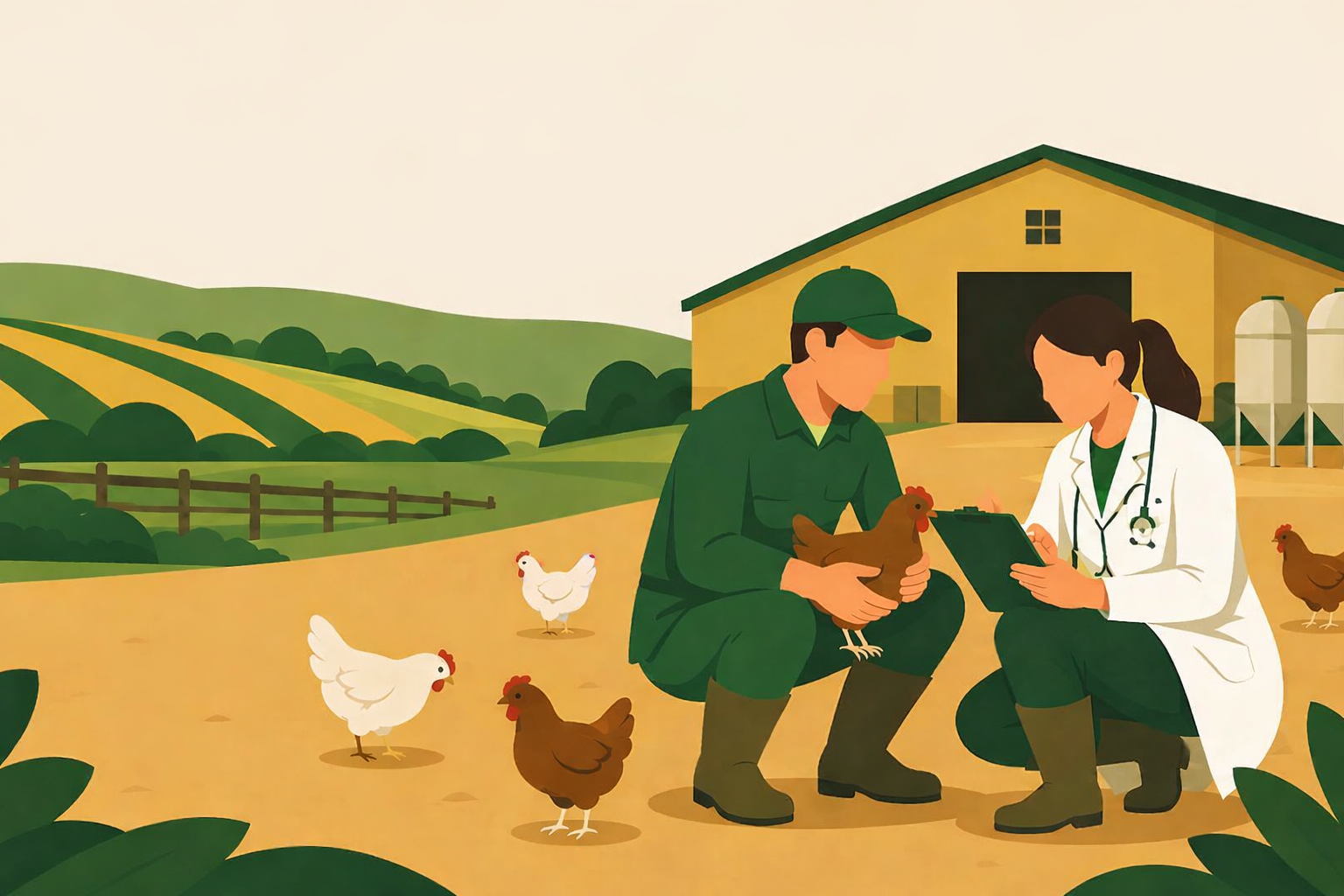
What is salmonellosis in geese?
Salmonellosis is an infectious disease caused by bacteria of the genus Salmonella. In geese, as in other waterfowl, infection most often runs without symptoms — the bird is a carrier and shedder of the bacterium yet looks healthy. Salmonella lives in the digestive tract and is shed in faeces, contaminating litter, water, feed and surroundings. That is why the main significance of Salmonella in geese lies not in clinical losses in the flock but in the threat to the safety of poultry-derived food. You will find an overview of other diseases of this species on the Goose diseases page.
Why do geese matter for food safety?
A goose that is a symptomless carrier of Salmonella can contaminate meat, eggs and the feathers and down collected during slaughter and processing. People are most often infected through undercooked meat or eggs and through contact with a contaminated environment. For this reason salmonella in geese is treated first of all as a public-health problem, not merely a veterinary one. We describe the general rules for limiting Salmonella on a farm in more detail on the Salmonella on a poultry farm page.
Why does pasture-and-water rearing raise the risk?
Geese spend a lot of time on ranges and near water, which is natural for the species and good for welfare, but at the same time increases contact with sources of infection. Open ponds, puddles and wet turf easily connect the farm flock with wild waterfowl, which are a natural reservoir of Salmonella. Contaminated drinking and bathing water, wild-bird droppings on the pasture and wet litter create conditions in which the bacterium circulates in the environment. The rearing system itself is hard to change, so the emphasis is on range hygiene, clean water and controlling access by wild birds. We write about keeping geese on the Goose farming page.
What symptoms may appear in goslings?
Although adult geese usually do not fall ill, young goslings are more vulnerable and salmonellosis can take a clinical course in them. Possible symptoms include diarrhoea (often watery, sometimes with mucus), lethargy, ruffled feathers, reluctance to move and to take feed, and in more severe cases deaths, especially in the first weeks of life. These signs are not specific and may accompany many diseases, so every suspicion calls for a veterinary consultation. You will find a summary of typical poultry-disease signs in the poultry disease symptom table.
Salmonella and other range threats
Salmonella rarely acts alone — the same pasture-and-water rearing that makes it circulate also favours other infections carried by wild birds and contaminated water. Limiting contact with wild birds, keeping water clean and maintaining litter hygiene work preventively against many threats at once. That is why salmonellosis in geese is best considered within whole-farm biosecurity rather than as a single problem. We describe the basics on the Poultry farm biosecurity page.
Where salmonella in geese comes from and how to recognise it
Each of these factors raises the risk of carriage in the flock and should prompt a veterinary consultation.
Wild waterfowl
Wild ducks, geese and other water birds are a natural reservoir of Salmonella. Their droppings on the range and near water introduce the bacterium into the surroundings of farm geese.
Contaminated open water
Open ponds, puddles and drinking water are easily contaminated with droppings. Geese drink and bathe, so contaminated water is one of the main routes of infection.
Rodents and insects
Mice, rats and insects move Salmonella between the feed store, the house and the range. Without pest control they become a constant source of contamination.
Contaminated feed
Feed contaminated during production, transport or storage can introduce Salmonella into the flock. Damp, poorly stored feed additionally favours bacterial multiplication.
Dirty, wet litter
Wet litter soiled with faeces is an environment in which Salmonella survives for a long time. Carriers shed the bacterium in their droppings, closing the cycle of infection within the flock.
Symptoms in goslings
In young goslings, diarrhoea, lethargy, ruffled feathers and deaths in the first weeks of life are possible. In adult geese the infection usually runs without symptoms.
How to limit salmonella in geese and how to act on suspicion
Effective protection rests on biosecurity, controlling wild birds and water, and cooperating with the vet and the Veterinary Inspection.
Farm biosecurity
A defined clean and dirty zone, disinfection of footwear and equipment, and control of vehicle entry and deliveries limit the introduction of Salmonella onto the farm. We cover the basics on the Poultry farm biosecurity and Vehicle entry and deliveries pages.
Controlling wild-bird access
Limiting the flock’s contact with wild waterfowl is a key element of prevention: discouraging wild birds from settling on the range and near water and, where possible, protecting feed and drinkers from outside access.
Clean water and feed
Regular cleaning of drinkers, control of drinking-water quality and correct, dry feed storage limit the routes of infection. Damp feed and contaminated water are an environment that favours Salmonella.
Range rotation and hygiene
Rotating ranges, resting the turf and removing mud and standing water reduce the environmental bacterial load. Range hygiene is as important as building hygiene. More on stocking density: Goose stocking density.
Pest and rodent control
A standing rodent-control programme and limiting insects break the routes by which Salmonella moves from the feed store to the flock. Effective pest control is a lasting part of biosecurity, not a one-off action.
Vet, records and reporting
If salmonellosis is suspected, contact a veterinarian and report the matter to the Veterinary Inspection in line with the regulations. DlaFerm.pl lets you keep digital records of treatment and drug withdrawal, available during inspections.
Frequently asked questions about salmonella in geese
Do geese get salmonellosis?add
Adult geese usually do not fall clinically ill — most often they are symptomless carriers of Salmonella. Symptoms such as diarrhoea, lethargy and deaths may appear in young goslings. Despite the lack of symptoms in adult birds, the infection is highly significant for food safety.
Why is salmonella in geese dangerous if the birds do not fall ill?add
Because carrier geese can contaminate meat, eggs and the feathers and down, and people become infected through undercooked products or contact with a contaminated environment. It is first of all a problem of public health and food safety, not of production losses in the flock.
Where do geese most often catch Salmonella?add
The main sources are wild waterfowl, contaminated open water, rodents and insects, contaminated feed, and dirty, wet litter. Pasture-and-water rearing increases contact with these sources, which is why range hygiene and clean water matter so much.
How can range salmonella risk be reduced?add
The most important steps are limiting contact with wild waterfowl, keeping drinking and bathing water clean, rotating and cleaning ranges, and rodent control. These actions fit into whole-farm biosecurity and also protect against other infections.
What should I do if salmonellosis is suspected in the flock?add
Contact a veterinarian and do not give drugs without a diagnosis and guidance. Suspected salmonellosis is reported to the Veterinary Inspection in line with the applicable regulations. The vet will order tests and decide on further action.
How does DlaFerm.pl help with salmonellosis in geese?add
DlaFerm.pl lets you keep digital records of treatment and drug withdrawal — documentation required for every administration of a veterinary product. The Flock Card lets you note flock observations and biosecurity actions, and the data are always available during a veterinary or inspection visit.
Keep records and biosecurity with DlaFerm.pl
Want to see how the Flock Card and goose treatment records work? Write to us or create an account.
Phone
+48 796 258 151