Salmonella in guinea fowl: carriage, symptoms and food safety
Guinea fowl can be silent carriers of Salmonella bacteria. Although their farming is less intensive than broilers or layers, guinea fowl meat and eggs are still food, and salmonellosis is a zoonosis. Learn how to reduce the risk and keep treatment records.
verifiedFrom the team that has organised work on poultry farms for years.
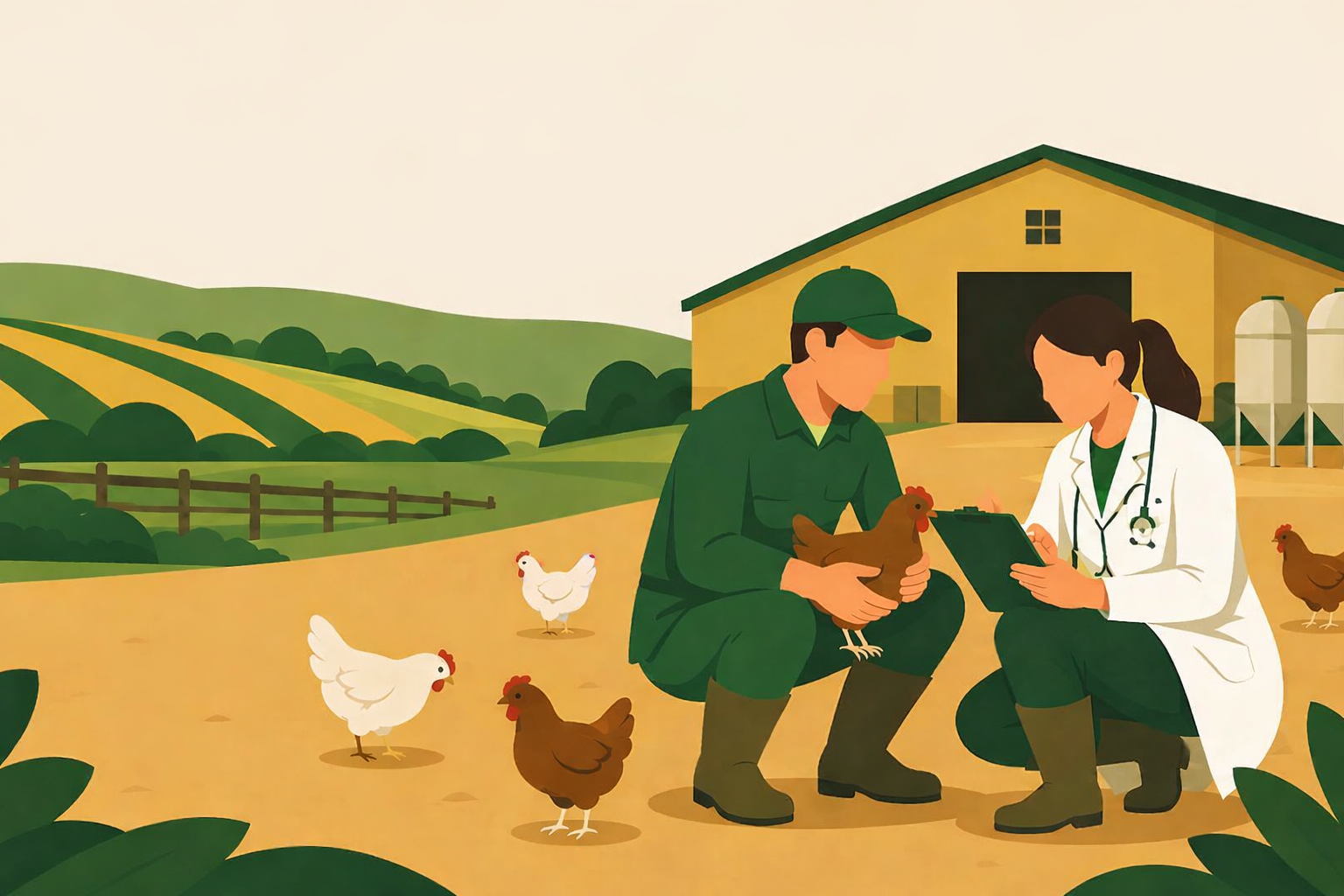
What is salmonellosis in guinea fowl?
Salmonellosis is an infectious disease caused by bacteria of the genus Salmonella — rods that live in the birds’ digestive tract and are shed in the faeces. In guinea fowl the infection is often symptomless: the bird is a silent carrier, looks healthy and yet sheds bacteria into the environment. The most dangerous to humans are zoonotic serotypes, above all Salmonella Enteritidis and Salmonella Typhimurium, because they can cause food poisoning (salmonellosis) in people. For this reason guinea fowl meat and eggs, like any other poultry, are treated as products that matter for food safety.
Why are guinea fowl exposed to infection?
Guinea fowl are timid, active birds, often kept in systems with access to a range. This way of farming increases contact with wild birds, rodents and insects, which are typical carriers of Salmonella. Bacteria reach the farm with contaminated feed, water, litter, on the boots and clothing of staff, and through the droppings of wild animals. The smaller scale of guinea fowl farming is misleadingly associated with lower risk — in practice the lack of strict control and an open range can raise the chance of introducing infection. More about the species: Guinea fowl farming.
How does salmonellosis show up in guinea fowl?
In adult guinea fowl the infection most often runs as silent carriage — without clear symptoms. In young keets the picture can be more severe: diarrhoea, lethargy, ruffled feathers, reluctance to move and to feed, huddling near the heat source, and in severe cases deaths. These signs are not specific to salmonellosis and may accompany other diseases, so the diagnosis is always confirmed by a laboratory test. An overview of other conditions: Guinea fowl diseases and Poultry diseases — symptom table.
Why is carriage dangerous despite the lack of symptoms?
The greatest risk linked to Salmonella in guinea fowl is precisely silent carriage. A bird that looks healthy can constantly shed bacteria and contaminate litter, feed, water and eggshells. Without testing such a situation is hard to detect, and the infection quietly persists in the flock and can pass to people through undercooked meat or eggs. That is why prevention relies not on waiting for symptoms but on consistent hygiene, biosecurity and, where indicated, screening tests ordered by a veterinarian.
Salmonella, legal requirements and public health
Guinea fowl farming in Poland is regulated in less detail than the keeping of layers or broilers covered by the national Salmonella control programme, but the general rules of food safety and hygiene apply just the same. The farmer is responsible for ensuring that the product leaving the farm does not endanger the consumer. Suspected salmonellosis and deaths of unknown cause should be discussed with a vet and, where necessary, reported to the Veterinary Inspection. Farming rules and formal requirements are described in Legal standards — guinea fowl farming.
How Salmonella appears and spreads in a guinea fowl flock
Each of these signals should prompt the farmer to consult a veterinarian.
Silent carriage in adults
Adult guinea fowl often show no symptoms yet shed Salmonella in their faeces. Without laboratory testing the infection stays undetected and persists in the flock.
Diarrhoea and lethargy in keets
In young birds the infection can be more severe: watery diarrhoea, ruffled feathers, apathy and reluctance to feed. This is a signal that calls for a veterinary consultation and diagnostics.
Deaths among young birds
In a severe course, especially in keets and with co-existing infections, mortality in the flock can rise markedly in a short time.
Contact with wild birds and rodents
An open range and the timid nature of guinea fowl favour contact with wild birds, mice and rats — typical Salmonella carriers that bring bacteria onto the farm.
Contaminated feed, water and litter
The bacteria spread by the faecal-oral route. Contaminated feed, dirty water and wet litter become a reservoir of infection from which birds readily pick up the rods.
Eggshell contamination
Guinea fowl eggs can be contaminated with Salmonella on the shell surface in the nest or at collection. This is a direct route of transmission to the consumer with improper handling.
How to reduce the Salmonella risk and what to do when infection is suspected
Effective prevention combines biosecurity, rodent control, egg and slaughter hygiene, and sound documentation.
Farm biosecurity
Tight biosecurity is the foundation of protection: disinfection mats, work clothing and footwear, limiting outside access, equipment disinfection. The rules are described in Poultry farm biosecurity, and delivery control in Vehicle entry and deliveries.
Rodent control and protection from wild birds
Effective rodent control and securing the range and buildings against wild birds break the most important routes by which Salmonella is introduced. Shield feeders and drinkers so that wild animals cannot use them.
Clean feed and water
Use feed from a reliable source, stored in closed, dry containers inaccessible to rodents. Clean and disinfect drinkers and water lines regularly so they do not become a bacterial reservoir.
Egg collection hygiene
Collect eggs frequently, keep nests clean and litter dry, and discard heavily soiled or damaged eggs. Clean shells and proper storage limit the risk of passing Salmonella to the consumer.
Slaughter and meat handling hygiene
When slaughtering for own use or sale, keep the station clean, separate raw material from the finished product and maintain the cold chain. Guinea fowl meat, like any poultry, should be fully cooked before eating.
Diagnostics, the vet and treatment records
If infection is suspected, contact a veterinarian, who will order tests and decide on management. Record every administration of a medicine in your treatment and withdrawal log — DlaFerm.pl lets you keep it digitally and ready for inspection.
Frequently asked questions about salmonella in guinea fowl
Can guinea fowl be carriers of salmonella?add
Yes. Guinea fowl, like other poultry, can be silent carriers of Salmonella. Adult birds often show no symptoms yet shed bacteria in their faeces. So you should not assume that a healthy-looking flock is free of infection without laboratory testing.
Can guinea fowl eggs and meat carry salmonella?add
Yes. Salmonella is a zoonosis, a disease passed from animals to people. Eggshells can be contaminated with the bacterium and meat soiled during slaughter and handling. Fully cooking eggs and meat together with kitchen hygiene effectively reduces the risk of food poisoning.
How can salmonellosis be recognised in guinea fowl?add
In adult birds the infection usually runs symptomless. In keets there may be diarrhoea, lethargy, ruffled feathers, reluctance to feed and, in severe cases, deaths. These signs are not specific to salmonellosis, so the diagnosis is confirmed by a laboratory test ordered by a vet.
Is guinea fowl farming covered by a Salmonella control programme?add
Guinea fowl farming in Poland is regulated in less detail than the keeping of layers or broilers covered by national Salmonella control programmes. Even so, the general rules of food safety and hygiene apply. Formal details are described on the page about legal standards for guinea fowl farming.
What should I do if I suspect salmonellosis in the flock?add
Contact a veterinarian and do not give medicines without a diagnosis and prescription. The vet will order tests and decide on management, and where necessary refers the matter to the Veterinary Inspection. Deaths of unknown cause are also worth discussing.
How does DlaFerm.pl help with salmonella prevention?add
DlaFerm.pl enables digital treatment and withdrawal records — documentation of every administration of a veterinary product. The Flock Card lets you note observations, deaths and biosecurity actions, so the data are always available during a veterinary or inspection visit.
Keep treatment records with DlaFerm.pl
Want to see how the Flock Card and withdrawal records work for guinea fowl? Write to us or create an account.
Phone
+48 796 258 151