Red mite and mites in broilers: symptoms, control and prevention
The poultry red mite (Dermanyssus gallinae) is a blood-feeding mite that feeds on birds at night and hides in cracks of the house and equipment during the day. It is less common in broilers than in layers, but it can lower growth and welfare. Learn how to detect and control it, and how to keep compliant treatment records.
verifiedFrom the team that has organised work on poultry farms for years.
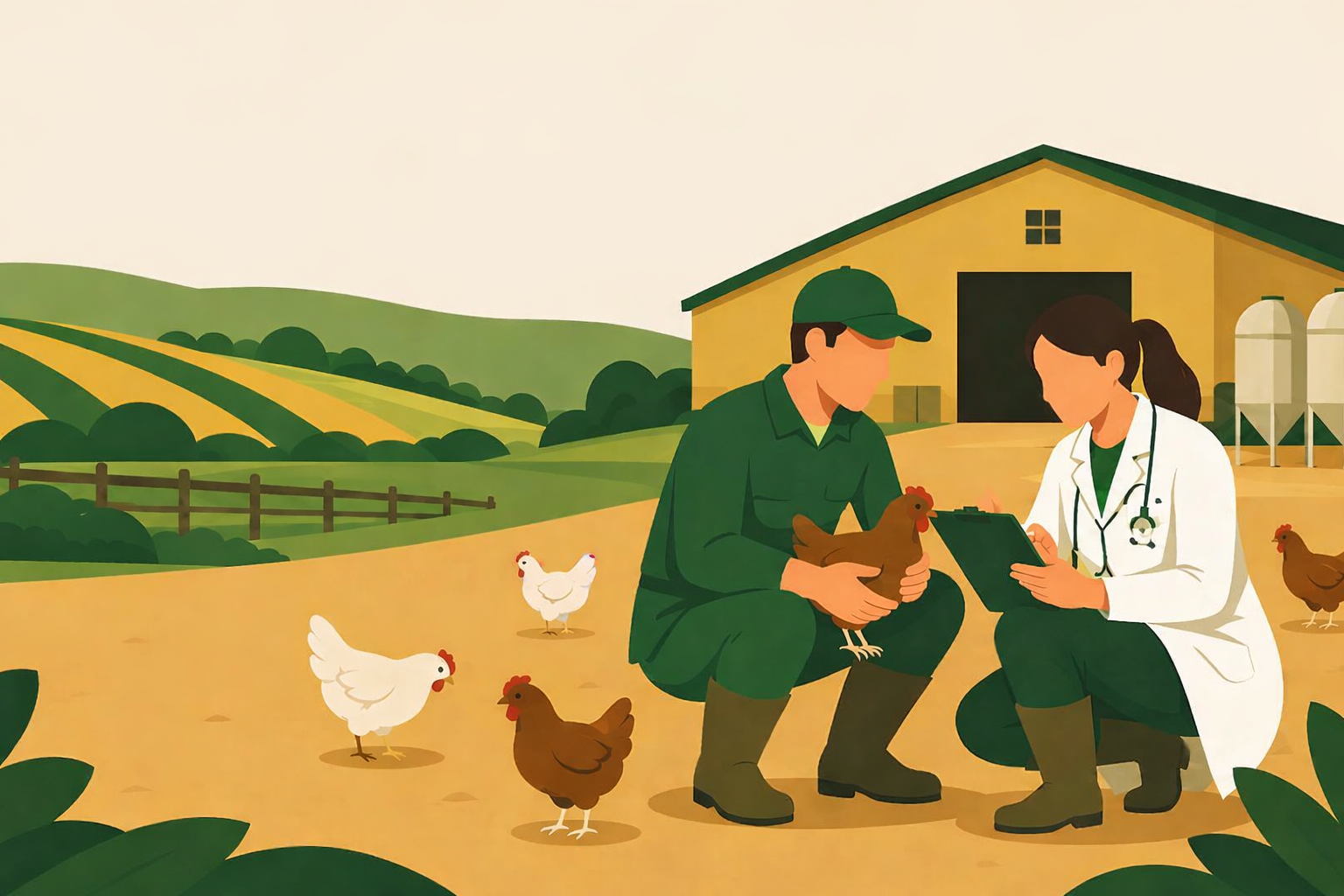
What is red mite in poultry?
The poultry red mite (Dermanyssus gallinae) is a small mite, an arachnid, that parasitises birds. It is an external blood-feeder: it does not live permanently on the bird but stays in the environment and comes out to feed. After a blood meal the mite turns reddish or dark; when starved it is greyish and very small, so it is easy to overlook. Other skin mites may also occur in the house, so when an infestation is suspected it is worth confirming the species together with a veterinarian.
Why does red mite feed at night and where does it hide?
Red mite is a nocturnal parasite: during the day it hides in cracks in walls, the floor, equipment, under battens, in feeders and drinkers, and after dark it comes out onto the birds to take a blood meal. After feeding it returns to its hiding place, where it lays eggs and reproduces. This is why inspections carried out only during the day often find nothing even though an infestation is already underway. It is most reliably detected by night-time inspection of cracks and by traps placed in hiding spots.
What are the symptoms of red mite in broilers?
The first signal is usually restlessness of the flock at night: the birds are agitated, rest poorly and may scratch and peck because of itching. With a heavier infestation, paleness of the combs and skin appears (anaemia from blood loss), feed intake drops, growth slows and the flock becomes uneven. In extreme cases of mass attack the birds weaken and even isolated deaths occur. Mites can also carry some pathogens between birds, which raises the risk of other diseases.
Are broilers less exposed to red mite than layers?
Yes, but they are not free of risk. Broilers are kept on litter in a short cycle and without long-used perches, which are the red mite’s favourite shelter in layers — so infestation is rarer in broilers. The risk rises, however, when equipment is reused between flocks without thorough cleaning and mites from the previous batch survive in the cracks. The key is effective cleaning, disinfection and drying of the house during the downtime. More on managing the flock: Broiler farming and Broiler welfare.
Red mite and other poultry diseases and parasites
Red mite weakens the birds and can make it easier to spread disease, so it is worth viewing it together with the flock’s whole health programme. Other skin mites or parasites may appear alongside it, and the symptoms can be similar. Whenever flock behaviour is worrying, or you see paleness or a drop in growth, always consult a veterinarian. Overview of other disease symptoms: Broiler diseases and Poultry diseases — symptom table.
How red mite hits broilers and production results
Each of these signals should prompt the farmer to do a night-time inspection of the house and to consult a veterinarian.
Flock restlessness at night
The birds are agitated, rest poorly and move about in the dark. This is a common first signal of red mite feeding, as it attacks after dusk.
Itching, scratching and pecking
Mite bites cause itching — the birds scratch and peck their feathers more often. Irritated skin is a sign of external parasites.
Pale combs and skin
With a heavier infestation, blood loss leads to anaemia: the combs and skin turn pale. This shows there are many mites feeding regularly.
Poorer growth and feed intake
Restlessness, itching and anaemia slow the rate of growth. A slower daily gain with no other cause may point to a red mite infestation.
Flock unevenness
Some birds grow noticeably slower and weight differences widen. Uneven growth can result from the chronic stress caused by parasites.
Weakness and isolated deaths
During a mass mite attack the birds are clearly weakened, and in extreme cases deaths occur — a state that needs urgent intervention.
How to prevent red mite and how to act during an infestation
Effective protection combines three elements: cleanliness and drying between flocks, trap monitoring, and products used only on veterinary advice.
Cleaning and disinfection between flocks
Thoroughly removing litter and debris, washing and disinfecting the house and equipment during the downtime remove the mites’ hiding places and eggs. Drying the house further limits their survival. More: Poultry house litter — management.
Sealing cracks and hiding spots
Red mite hides in cracks in walls and the floor, under battens and in equipment. Repairing and sealing cracks, plus smooth, easy-to-clean surfaces, deprive it of shelter. Details on the house: House requirements for broilers.
Trap monitoring and night inspection
Red mite traps placed in cracks and near equipment, plus inspecting hiding spots after dark, let you detect an infestation early before it grows. Regular monitoring is the basis of an early response.
Equipment biosecurity and wild birds
Mites can arrive on used equipment or transport, or be brought in by wild birds and rodents. Clean equipment, traffic control and limiting wild-bird access reduce the risk of introduction. More: Poultry farm biosecurity and Vehicle entry and deliveries — biosecurity.
Products only on veterinary advice
Control uses, among others, diatomaceous earth (silica) acting mechanically and registered acaricides. The choice of product, how to use it and the withdrawal period before slaughter are set exclusively by a veterinarian. Consultation: Veterinarian.
Treatment records and withdrawal
Every use of a veterinary product must be recorded: date, product, dose, method of use and the withdrawal period before slaughter. DlaFerm.pl lets you keep these records digitally. More: Treatment records and drug withdrawal.
Frequently asked questions about red mite and mites in broilers
What is red mite in broilers?add
The poultry red mite (Dermanyssus gallinae) is a blood-feeding mite that feeds on birds at night and hides in cracks of the house and equipment during the day. In broilers it causes restlessness, itching, paleness from anaemia and poorer growth. It can also carry some pathogens between birds.
Why is red mite rarer in broilers than in layers?add
Broilers are kept on litter in a short cycle and without long-used perches, which are the red mite’s favourite shelter in layers. That is why infestation is rarer in them. The risk rises, however, with reused equipment and incomplete cleaning between flocks.
How do I detect red mite in the house?add
The most effective methods are red mite traps placed in cracks and near equipment, and a night-time inspection of hiding spots, because the parasite feeds after dark. Inspections done only by day often find nothing despite an ongoing infestation. When suspected, it is worth confirming the species with a veterinarian.
How do I control red mite between flocks?add
The basis is thorough cleaning, disinfection and drying of the house and equipment during the downtime, plus sealing the cracks where mites hide. Products such as diatomaceous earth or registered acaricides are also used — only on veterinary advice and observing the withdrawal period.
What should I do if I suspect an infestation in the flock?add
Contact a veterinarian and do not use products on your own — some require a withdrawal period before slaughter, and incorrect use can expose the farmer to legal consequences. The vet will confirm the parasite species and choose a safe control method.
How does DlaFerm.pl help with red mite?add
DlaFerm.pl enables digital treatment and withdrawal records — legally required documentation for every use of a veterinary product. The Flock Card lets you track growth and welfare, making early detection of the problem easier. Data are always available for veterinary or inspection visits.
Sources & resources
- linkMSD Veterinary Manual — Poultry mites (Dermanyssus gallinae)
- linkEFSA — scientific opinion on poultry welfare and health
- linkChief Veterinary Inspectorate Poland — information for poultry farmers
- linkNational Veterinary Research Institute — PIWet (Puławy)
- linkWOAH — World Organisation for Animal Health (poultry health)
Keep treatment records with DlaFerm.pl
Want to see how the Flock Card and withdrawal records work? Write to us or create an account.
Phone
+48 796 258 151