Red mite in laying hens: how to recognise, monitor and control it effectively
The poultry red mite (Dermanyssus gallinae) is a blood-feeding mite and the biggest parasite problem on European layer farms. It feeds at night and hides in cracks by day. Learn how to recognise it, how to monitor it with traps and how to control it consistently with veterinary support.
verifiedFrom the team that has organised work on poultry farms for years.
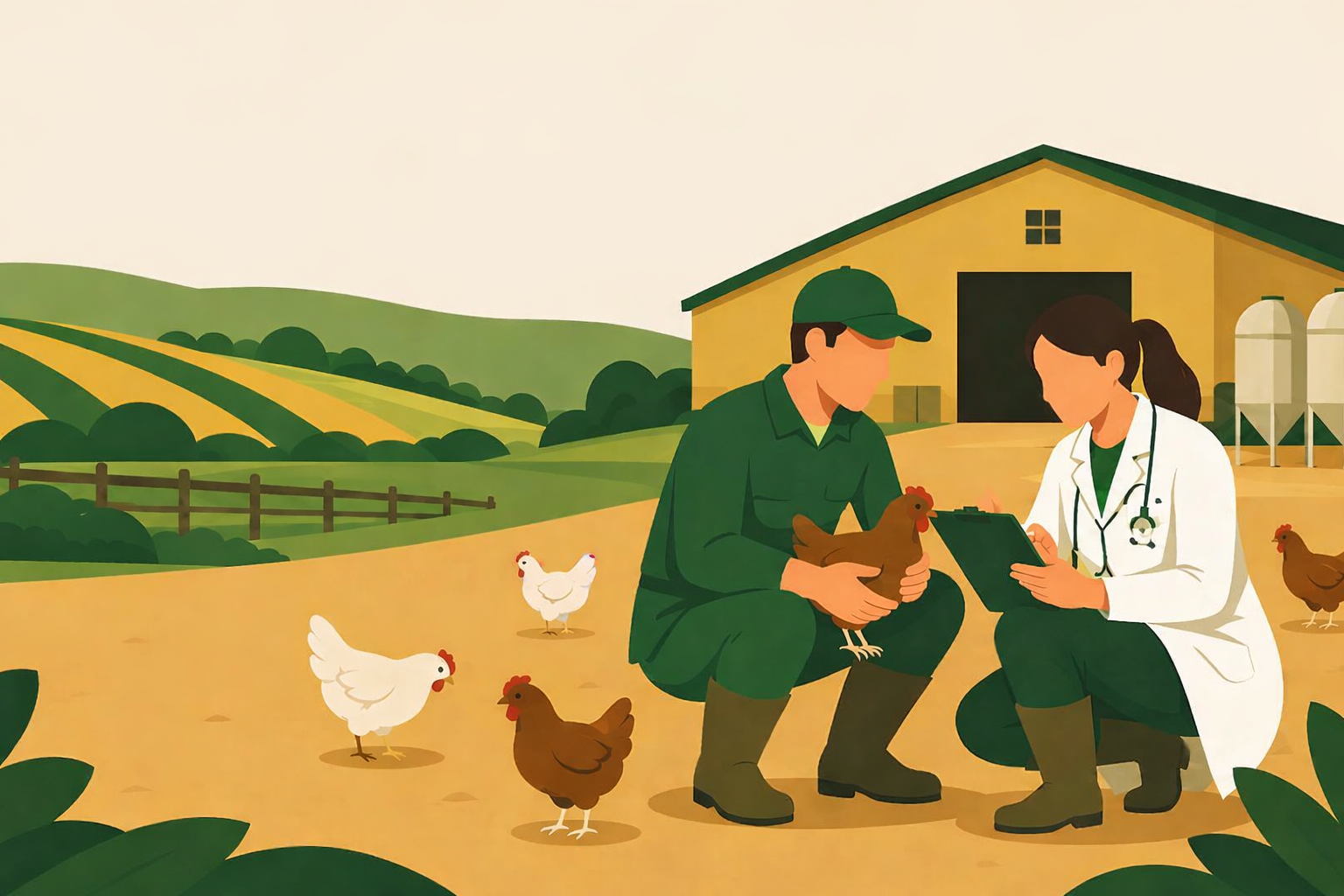
What is the poultry red mite (Dermanyssus gallinae)?
The poultry red mite is a small, blood-feeding mite that parasitises hens and causes the greatest damage across European commercial layer production. When engorged with blood it is dark red and visible to the naked eye; when starved it is grey and almost transparent. A key feature of this parasite is that it does not live on the bird around the clock: it feeds only at night and hides in cracks in the house equipment during the day. As a result it is easy to overlook in daylight even when the flock is already heavily infested. More about the production system: Laying hen farming.
Why is red mite the biggest problem on layer farms?
Two things drive this: the system and the time. Layer houses — cages, aviaries, perches and nests — have countless cracks that give the mite ideal hiding places out of human reach. The second factor is the long production cycle: hens stay in the same building for a year, often much longer. This gives the parasite plenty of time to multiply massively, because under favourable conditions its numbers grow very fast. In practice, once introduced, red mite can stay with a flock throughout the whole production period.
How does red mite harm hens and farm results?
The effects hit both bird health and farm economics. Blood feeding leads to anaemia and pale combs, while night-time feeding disturbs the birds’ rest and sleep — hens are restless, agitated and poorly rested. This translates directly into a drop in egg production. Blood spots and soiling from crushed mites appear on the eggshells, lowering the egg grade (a so-called downgrade to a lower commercial category). In heavy infestations there is itching, weakness and even bird deaths. The red mite can also carry pathogens it may transmit between birds.
How to recognise and confirm an infestation?
Because the mites are not visible on the birds during the day, diagnosis relies on inspecting hiding places and on monitoring. The basis is red mite traps — simple corrugated cardboard pieces or special strips placed on perches and near nests, into which the parasite readily retreats; checking them regularly shows whether and how large the population is. Night inspections complement this: after dark, with a torch, you examine cracks in perches, structural joints and the area around nests, where mites gather in clusters. Pale combs and blood spots on eggs are additional signals that the problem is already present.
Why is red mite so hard to control?
The difficulty comes from the parasite’s biology. The red mite spends most of its life off the bird, hidden deep in cracks, so products that act on the bird have limited reach. It also lays its eggs in those same hiding places, and many products do not act on the egg stage — after treatment new individuals hatch from the eggs and the infestation rebuilds. That is why effective control is always a process, not a one-off action: it requires combining cleaning, sealing hiding places and products under veterinary guidance, plus consistent repetition of treatments. Overview of other diseases: Poultry diseases — symptom table.
How red mite hits laying hens and farm results
Each of these signals should prompt the farmer to monitor with traps and consult a veterinarian.
Anaemia and pale combs
Constant blood feeding leads to anaemia. Pale combs and wattles across many birds in the flock are one of the most important signals of a heavy red mite infestation.
Drop in egg production
Night-time restlessness, poor sleep and bird weakness translate directly into fewer eggs. An unexplained drop in lay is always worth checking for red mite.
Blood spots and soiling on eggs
Crushed, blood-engorged mites leave dark spots and soiling on the shells. This lowers the egg grade (downgrade — moving to a lower commercial category).
Night-time restlessness and itching
A parasite feeding at night does not let the birds rest. Hens are restless, irritable, scratch more often and have ruffled feathers — especially towards morning.
Mites in traps and cracks
Grey or dark-red clusters in traps, on perches and near nests are direct confirmation of an infestation. The more mites in a trap, the larger the population.
Weakness and deaths in heavy infestations
With a very large population, blood loss can be great enough to cause clear weakness and, in the weakest birds, even deaths. The red mite can also carry pathogens.
How to monitor, control red mite and keep records
Effective control combines regular monitoring, cleaning and sealing of cracks, and products used only under veterinary guidance, with the egg withdrawal period observed.
Regular trap monitoring
Permanent traps on perches and near nests, checked on a cycle, allow red mite to be detected early and show whether the population is growing. This is the basis, since the mites are not visible on birds by day. Night inspections of cracks complete the picture.
Cleaning and disinfection between flocks
The gap between flocks is the best time to fight red mite, while the house is empty. Thorough mechanical removal of build-up, washing and disinfection of equipment strongly reduce the population before new hens are placed. More on litter and floor hygiene: Poultry house litter — management.
Sealing cracks and hiding places
The fewer cracks, the fewer hiding places for the mites. Sealing structural joints, eliminating gaps in perches and nests, and simplifying hard-to-reach corners reduces the number of places where red mite hides and breeds.
Products only under veterinary guidance
Control uses diatomaceous earth and silica-based products (which damage the mite’s cuticle and dehydrate it), acaricides and sometimes heat treatment. The choice of product, dose and method is set by the veterinarian — and the egg withdrawal period must be observed. Contact a professional: Veterinarian.
Biosecurity against introduction
Red mite reaches the farm on equipment, transport and packaging, as well as from wild birds. Clean, disinfected equipment, control of entry and deliveries, and protection against wild birds reduce the risk of introduction. Rules: Poultry farm biosecurity and Vehicle entry and deliveries.
Records of treatments and withdrawal
Every use of a product must be recorded: date, product, dose, method and the egg withdrawal period. DlaFerm.pl lets you keep these records digitally and have them ready during inspections. More: Treatment records and drug withdrawal.
Frequently asked questions about red mite in laying hens
What is red mite in laying hens?add
It is the blood-feeding mite Dermanyssus gallinae, the biggest parasite problem on European layer farms. It feeds on the birds at night and hides by day in the cracks of cages, aviaries, perches and nests. It causes anaemia, restlessness, a drop in lay and blood spots on eggs.
How do I recognise a red mite infestation?add
Signals include pale combs (anaemia), restless and agitated birds, an unexplained drop in lay and dark blood spots on the eggshells. Monitoring gives firm confirmation: traps on perches and near nests, plus night inspections of cracks with a torch.
Why is red mite so hard to control?add
Because it spends most of its life off the bird, hidden deep in cracks where it also lays eggs. Many products do not act on the egg stage, so new individuals hatch after treatment. That is why consistency is needed: cleaning, sealing hiding places and repeated treatments under veterinary guidance.
What products are used against red mite?add
Most often diatomaceous earth and silica-based products, acaricides and sometimes heat treatment. The choice of product, dose and method is set by the veterinarian, because the egg withdrawal period must be observed and bird and consumer safety ensured. Experimenting with products on your own is risky.
Are blood spots on eggs always red mite?add
Blood spots and soiling from crushed mites are a typical sign, but not the only possible cause. To be sure, check the traps and perch cracks at night. If mites are visible while lay falls and combs grow pale, the picture is clear and it is worth starting to act.
How does DlaFerm.pl help with red mite?add
DlaFerm.pl lets you keep digital records of treatments and the egg withdrawal period — the required documentation for every use of a product. In the Flock Card you can log trap monitoring results, egg production and observations, making it easier to spot a growing problem and assess how well control is working. The data are available during inspections.
Sources & resources
- linkMSD Veterinary Manual — Mites of Poultry (Dermanyssus gallinae)
- linkEFSA — scientific opinions on the health and welfare of laying hens
- linkChief Veterinary Inspectorate Poland — information for poultry farmers
- linkNational Veterinary Research Institute — PIWet (Puławy)
- linkKRD-IG — Polish Poultry Council Industry Chamber
Monitor and keep treatment records with DlaFerm.pl
Want to see how the Flock Card and withdrawal records help you get red mite under control? Write to us or create an account.
Phone
+48 796 258 151