Keeping laying hens on a farm — egg production step by step
Laying hens are the simplest route to your own, regular egg production on a small or medium farm. We show how to choose a laying breed, set up the house in a deep-litter or free-range system, understand the lay curve and egg quality, and legally sell eggs under agricultural retail trade (RHD).
verifiedFrom the team that has organised work on poultry farms for years.
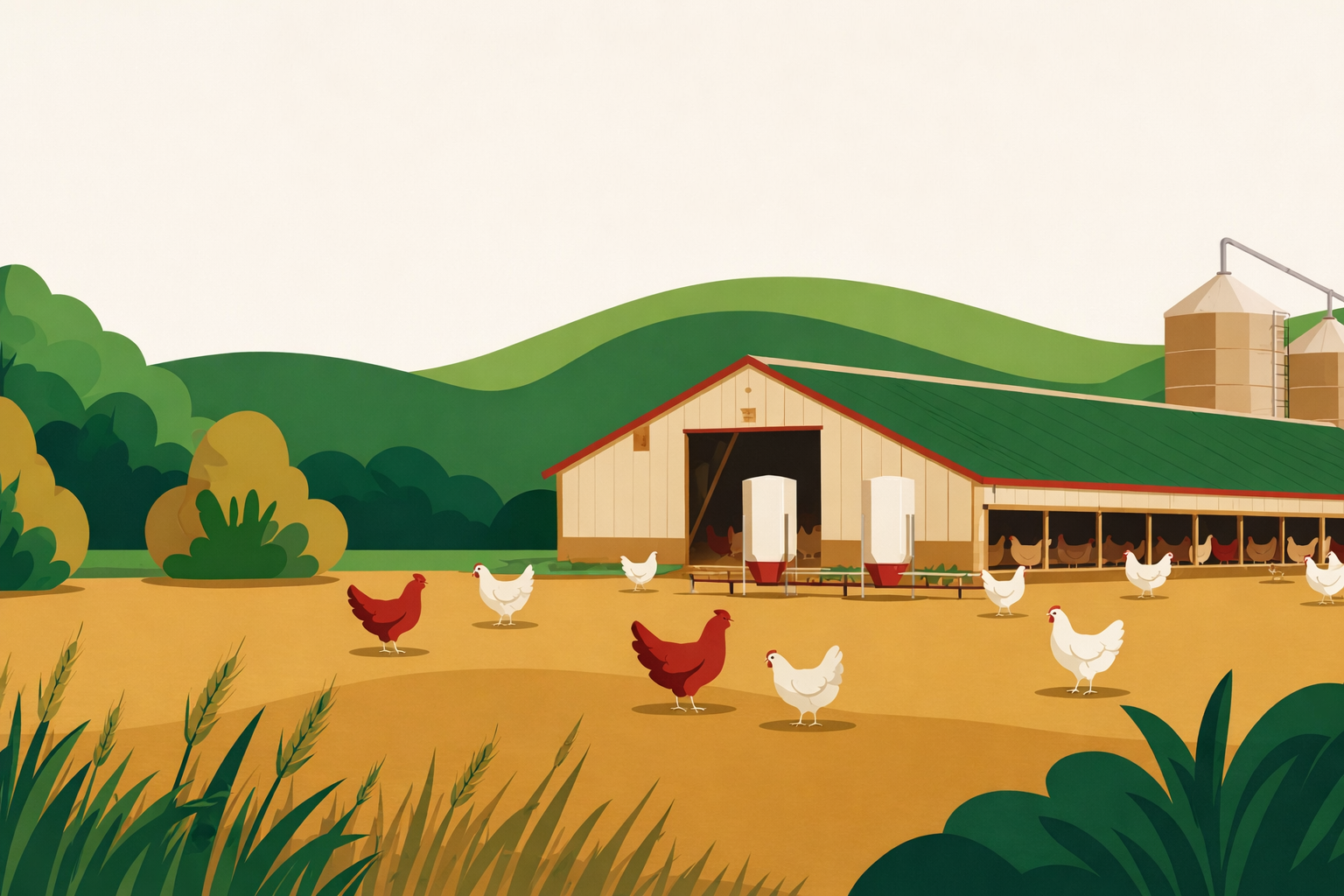
A laying hen on the farm — your own eggs all year
A laying hen is a hen kept for egg production — unlike a broiler, we do not fatten it for meat but keep it for many months for steady laying. A good hen can lay about 280–320 eggs in its first laying year, nearly one egg a day at peak. On a small or medium farm, a dozen, several dozen or several hundred hens give a steady flow of fresh eggs for your own needs and for sale. We collected the basics of the whole topic in the guide on keeping laying hens.
The laying breed decides the result
How many eggs the flock lays depends most of all on the breed and production type. Commercial hybrids selected for laying (e.g. white and brown layer lines) lay the most but are more demanding. General-purpose and native breeds lay less but are calmer, hardier and do well on range. How to recognise a good hen and which breed to choose is described in laying hen breeds and in the guide on how to spot a good layer.
Housing system: deep litter and free range
On a farm two systems are most common: deep litter (hens move over litter inside the house) and free range (hens have constant access to an outdoor run). Both give good-quality, high-welfare eggs if you keep dry litter, perches, nests and clean water. Range improves the birds’ condition and can be a selling point, but it requires protection against predators and wild birds. More on conditions and welfare standards is in laying hen welfare.
The lay curve and egg quality
Laying is not constant — it forms a curve. After reaching maturity (usually about week 18–20 of life), laying rises quickly, peaks after a few weeks and then slowly declines over the following months. Egg quality — weight, shell strength, yolk colour, freshness — is affected by feeding, the hens’ age, light and house conditions. Correct feeding is described in layer feeding standards, and what happens inside the egg in the guide on how an egg is formed.
Everything under control with DlaFerm.pl
Running a laying flock is not only collecting eggs but also records, treatment, withdrawal periods and — when selling — RHD documentation. DlaFerm.pl brings this together in one place: you keep flock records in IRZplus, and if you wish, it will file the flock-change reports to IRZplus for you, without logging in to the cumbersome ARiMR portal. You log daily lay and events, have treatment and withdrawal records at hand and stay ready for an inspection. Whether you even need registration and when keeping birds requires reporting is covered in poultry keeping without a permit.
How to start egg production on a farm
From the breed decision to the first eggs for sale — here are six stages of setting up a laying flock on a small or medium farm.
1. Choose the breed and flock size
Start with the goal: eggs only for your own needs or also for sale. That determines the number of hens and the breed. Laying hybrids give the most eggs, native and general-purpose breeds fewer but are hardier and look good on range. The choice is easier with laying hen breeds.
2. Prepare the house and run
Provide a dry, well-ventilated house with litter, perches and nests (about 1 nest per 5–7 hens). If you plan free range, fence the area and protect it against predators. Take care of light, because day length controls laying. Conditions and standards are in laying hen welfare.
3. Buy healthy pullets or rear chicks
The simplest option is to buy reared pullets just before the onset of lay (about week 16–18) — they start laying quickly. You can also rear chicks from day-olds, which is cheaper but needs more work and warmth in the first weeks. Buy birds only from a trusted, healthy source.
4. Set up feeding and light
A layer needs feed with the right protein, energy and calcium content (for the shell). Feed must match the phase: rearing, pre-lay, full lay. Together with feed, manage the lighting programme — lengthening the light day stimulates laying. The standards are collected in layer feeding.
5. Collect eggs and watch quality
Collect eggs regularly, ideally several times a day, to limit soiling, breakage and brooding. Store them cool, with the dirty side down. Record daily lay — it is the best indicator of flock condition and an early sign of health or feeding problems.
6. Organise egg sales (RHD)
If you want to sell the surplus, the simplest route for a farm is agricultural retail trade (RHD) — selling your own eggs to consumers and locally. It requires reporting and meeting marking and hygiene rules. Details and thresholds are in selling poultry from the farm (RHD).
Formalities, costs and risks of egg production
Before you sell your first egg, check these six areas — from egg marking to flock documentation.
Egg marking
Eggs placed on the market must as a rule be marked with the producer code and the housing-system marking (e.g. free range, deep litter). For the smallest direct sales there are exemptions, but the rules differ depending on scale and sales channel. Always confirm the requirements in the regulations and with the district veterinary officer.
Sales under RHD
Agricultural retail trade lets you sell your own eggs to consumers, but it requires reporting to the competent authority (veterinary inspection), keeping a sales record and observing limits and hygiene rules. We give thresholds and duties cautiously — verify the current state in selling from the farm (RHD) and with the inspection.
Production costs
The largest cost in egg production is feed, then buying pullets, energy (light, heating in winter), litter and veterinary care. Profitability depends on laying, feed cost per egg and the sale price. Our own cost model and example calculations are in laying hen profitability.
Welfare and conditions
Overcrowding, dirty litter, no perches and poor ventilation lead to stress, cannibalism and a drop in laying. Dry litter and a good microclimate are the basis of flock health and shell quality. Welfare requirements and how to meet them are described in laying hen welfare.
Health and biosecurity
Even a small flock must be protected against disease and avian influenza. Limit contact with wild birds, secure feed and water, and carry out prevention. Remember the withdrawal period after treatment — during that time eggs must not be sold or eaten. This is helped by treatment and withdrawal records and poultry farm biosecurity.
Flock documentation
Keeping poultry comes with registration and record-keeping duties — including reporting the flock and keeping documentation. You can do this conveniently through flock records in IRZplus and a digital Flock Card, where you log laying, treatment and events. This is the basis for settlements and inspection readiness.
Frequently asked questions about keeping layers on a farm
How many eggs does a laying hen lay?add
A good hybrid layer can lay about 280–320 eggs in its first laying year, nearly one egg a day at peak. General-purpose and native breeds lay fewer, usually 150–220 eggs a year. The number depends on the breed, feeding, day length and house conditions.
When does a hen start laying?add
Laying hens reach maturity and start laying eggs usually around week 18–20 of life, though it depends on the breed. Laying rises quickly to a peak after a few weeks and then slowly declines over the following months. That is why it is simplest to buy reared pullets just before the onset of lay.
Which system is better: deep litter or free range?add
Both systems give good-quality, high-welfare eggs. Deep litter is simpler and protects better against predators and wild birds, while free range improves the birds’ condition and can be a selling point. The choice depends on the location, scale and how you want to sell the eggs.
Can I sell eggs from my farm?add
Yes — the simplest route for a small and medium farm is agricultural retail trade (RHD), i.e. selling your own eggs to consumers and locally. It requires reporting, keeping records and observing marking and hygiene rules, and quantity limits apply. Check the current thresholds in the regulations and with the veterinary inspection.
Do eggs for sale have to be marked?add
Eggs placed on the market are as a rule marked with the producer code and the housing-system marking. For the smallest direct sales there are exemptions, but the rules depend on scale and sales channel. It is best to confirm the requirements in the regulations and with the district veterinary officer before starting sales.
How much does keeping layers cost?add
The largest cost is feed, followed by buying pullets, energy, litter and veterinary care. Profitability is decided by the ratio of laying to feed cost per egg and the sale price. An example cost model based on public prices is in the guide on laying hen profitability.
Run your egg production in one place with DlaFerm.pl
Want laying, flock records and RHD documentation under control? We will show you how DlaFerm.pl simplifies daily work with layers on a farm. Write to us.
Phone
+48 796 258 151