Keeping chickens for beginners — your first poultry step by step
Chickens are the easiest poultry to start with — hardy, undemanding and quick to repay you with eggs. We show everything from scratch: how to choose a breed, fit out a coop with perches and nest boxes, set up simple feeding, collect eggs and tell that a hen is healthy. No jargon — so your first flock succeeds.
verifiedFrom the team that has organised work on poultry farms for years.
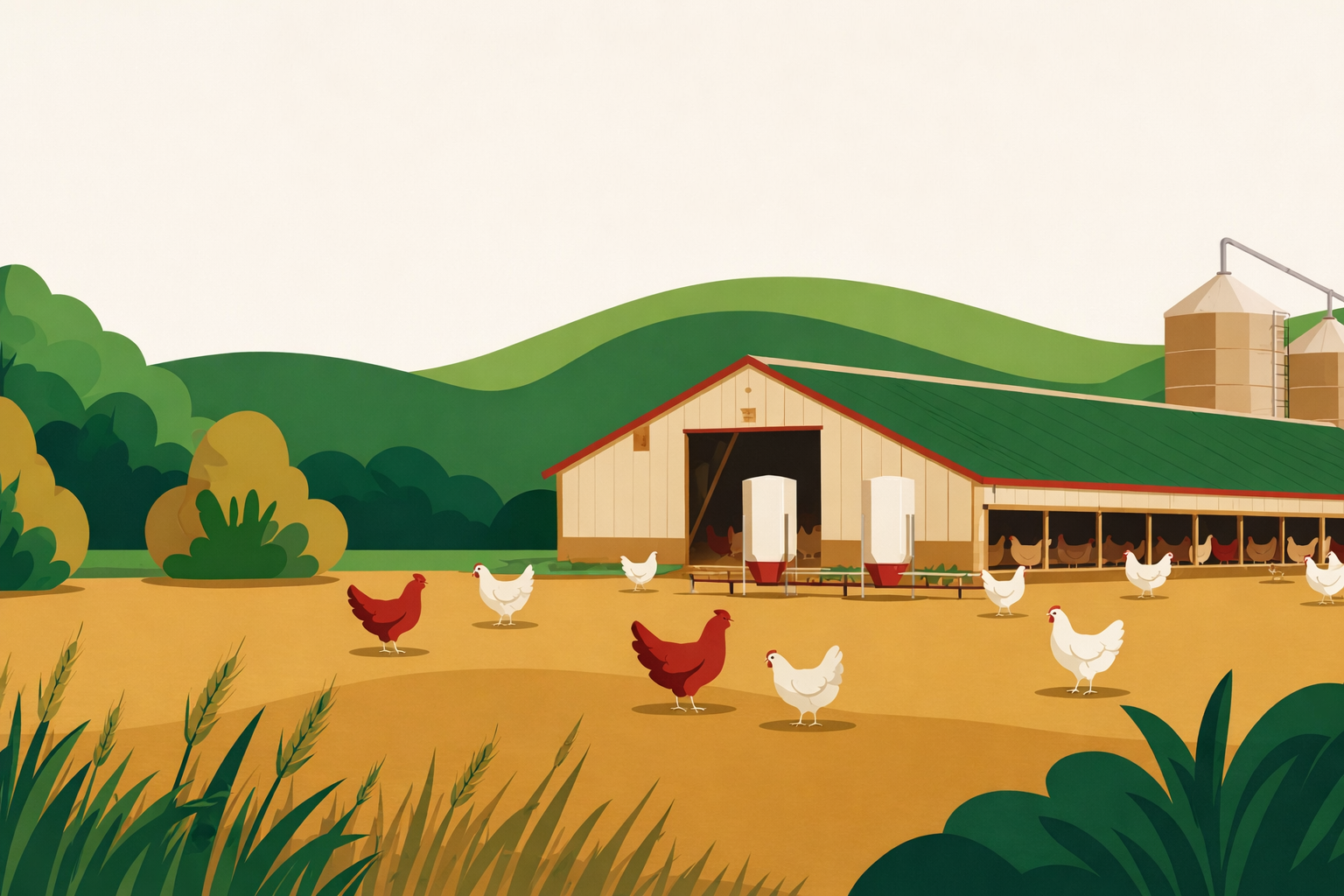
Why a chicken is a good first bird
If you are just starting out with poultry, the chicken is the best choice to begin with. It is disease-resistant, copes well with the Polish climate, is content with a simple coop and, with minimal care, gives fresh eggs almost every day. Unlike ducks or geese it needs no water reservoir, and unlike turkeys it is not as fragile in the first weeks. It is the bird on which it is easiest to learn the daily handling of a flock before you reach for more demanding species.
Laying or dual-purpose hens — which to choose
At the start it is worth deciding why you are keeping chickens. Laying breeds (e.g. Leghorn, layer hybrids) produce the most eggs but are small and not suited to meat. Dual-purpose breeds (e.g. Sussex, the Polish Greenleg Partridge, Rhode Island Red) lay somewhat fewer eggs but are heavier, calmer and more versatile — good for a beginner. If you mainly want eggs, see the guide on laying hen farming, where we describe keeping focused on egg production.
How many hens to start with
For a backyard household a sensible start is 4–6 hens — a single hen lays on average 4–6 eggs a week, so such a small flock comfortably covers a family’s needs. Chickens are flock animals, so do not keep a single bird — three is the minimum. A rooster is not needed for hens to lay; it is only useful when you want to hatch your own chicks. With a small flock you will learn to read the birds’ behaviour and needs before you scale up.
Everything recorded in one place with DlaFerm.pl
Even a small flock is worth running properly — when you placed the hens, what you wormed them with, how many eggs they lay and when you plan to clean the coop. DlaFerm.pl gives you a free farm account and a digital Flock Card in which you record the key events, including treatment and withdrawal records. That way, from your very first hen, you build a good habit of documenting that will pay off as the flock grows.
How to start keeping chickens — six steps
From choosing a breed to your first collected egg. These six stages will take you through setting up and the first weeks of running a flock.
1. Choose a breed and a goal
Decide whether you mainly want eggs (laying breeds) or versatile, calm birds for eggs and meat (dual-purpose breeds). For a beginner the dual-purpose breeds are best — they forgive mistakes, are hardy and less skittish. Buy birds from a trusted source, healthy and of the same age.
2. Prepare the coop and perches
Chickens need a dry, airy (but draught-free) coop with perches to roost on and nest boxes to lay in. Allow about 20–25 cm of perch per hen, and one nest box per 3–4 hens. Line the floor with litter (straw, shavings, sawdust) that absorbs moisture and droppings. Provide access to a run if possible.
3. Place the hens and let them settle in
After they arrive, give the hens a few calm days to get used to the new place — keep them shut in for the first days so they learn where the coop and nests are. Ensure constant access to clean water and feed. The stress of moving can briefly halt laying — this is normal.
4. Set up simple feeding
The basis is a ready complete feed for laying hens, with constant access to water, fine grit to aid digestion and calcium (e.g. ground shells) for strong eggshells. Treat greens and kitchen scraps as a supplement, not the basis. A hen eats about 110–130 g of feed a day.
5. Collect eggs and keep things clean
Collect eggs daily, ideally morning and afternoon, so they stay clean and fresh and so the hens do not learn to peck them. Replace nest litter, keep the floor dry and remove droppings regularly. A clean coop means fewer diseases and parasites, and nicer eggs fit for storage.
6. Watch health and do check-ups
Each day check that the hens are alive, eating, drinking and behaving normally. Now and then look under the feathers near the vent and under the wings for parasites. Plan preventive worming and, if needed, contact with a vet. Catching a problem early in a small flock is simple and cheap.
Costs, formalities and common pitfalls
Before you place your first hens, it is worth knowing what it costs, what must be reported and how to avoid trouble with neighbours or diseases.
Start-up and running costs
The biggest one-off cost is the coop (or its conversion) and the fittings — perches, nest boxes, drinkers, feeders. Then come the hens and the ongoing outlay: feed, litter, any medicines. Feed is the main fixed cost. A small backyard flock rarely “pays for itself” financially — treat it as a source of fresh eggs and learning rather than a business.
Formalities and registration
Even a small poultry flock usually has to be reported to the District Veterinary Officer and a basic flock record kept. Thresholds and duties depend on the number of birds and whether you sell eggs. On-farm sales are governed by agricultural retail trade (RHD). Always check the details and thresholds in the current regulations and with the local inspectorate — this is no place for guesswork.
Neighbours and location
Chickens are quiet poultry, but a rooster can be loud early in the morning, and a badly run coop smells and attracts rodents. Place the coop away from the plot boundary and the neighbours’ windows, keep it clean and consider whether you really need a rooster. Good relations with neighbours are the cheapest way to prevent conflict.
Health and parasites
The most common problems of a small flock are external parasites (including the red mite, which is active at night) and internal ones (worms in the gut), as well as coccidiosis in young birds. Prevention means dry litter, a clean coop, quarantine for new birds and regular check-ups. With medicines, remember the withdrawal period — the time during which eggs must not be eaten after treatment.
Biosecurity and avian influenza
Even with a few hens, basic disease-protection rules apply, especially against avian influenza. During risk periods the veterinary services may order poultry to be kept under cover and contact with wild birds limited. Do not feed wild birds near the coop and do not let strangers into the flock without need.
Documentation from day one
Record where your hens come from, when you placed them, what you treated them with and how long the withdrawal lasts, as well as how many eggs they lay. Even a simple digital Flock Card in DlaFerm.pl organises this information and reminds you of deadlines. It pays off during inspections, when selling eggs and when you decide to expand the flock.
Frequently asked questions from beginner chicken keepers
How many hens is best to start with?add
For a backyard household a sensible start is 4–6 hens. Chickens are flock birds, so do not keep a single one — three is the minimum. A small flock will cover a family’s egg needs and let you calmly learn the daily routine before you scale up.
Do you need a rooster for eggs?add
No. Hens lay eggs regardless of a rooster — these will be unfertilised eggs, perfectly fine to eat. A rooster is only needed when you want to hatch your own chicks. Without a rooster you also avoid the crowing at dawn, which can matter because of neighbours.
Which breed should I choose to begin?add
For a beginner the dual-purpose breeds are best, e.g. Sussex, Rhode Island Red or the native Greenleg Partridge. They are hardy, calm and versatile — they give eggs, cope well with conditions and forgive mistakes. If you mainly want the maximum number of eggs, choose laying breeds, described in the guide on laying hen farming.
What should I feed hens so they lay well?add
The basis should be a ready complete feed for laying hens, with constant access to clean water. Add fine grit to aid digestion and a source of calcium, e.g. ground shells, for strong shells. Treat greens and kitchen scraps only as a supplement, not the basis of feeding.
What does a chicken coop need?add
The coop should be dry and airy but draught-free, with perches to roost on (about 20–25 cm per hen) and nest boxes for laying (one per 3–4 hens). The floor is lined with moisture-absorbing litter. Protection against predators and rodents is useful too, along with access to a run if possible.
Do you have to report keeping a few hens?add
Usually yes — even a small poultry flock should be reported to the District Veterinary Officer and a basic flock record kept, while on-farm egg sales are governed by agricultural retail trade (RHD). The exact thresholds and duties depend on the number of birds and the use of the eggs, so always check the current regulations and ask your local veterinary inspectorate.
Run your first flock of hens properly with DlaFerm.pl
Want records, deadlines and a Flock Card at hand from your very first hen? Create a free farm account in DlaFerm.pl and keep everything in one place. Write to us and we will show you how to start.
Phone
+48 796 258 151