History of Polish poultry farming — from the backyard to EU leader
Poland is today the largest producer of poultry meat in the European Union — but this position did not appear out of nowhere. We came a long way: from hens in every village backyard, through post-war state farms and the difficult transformation of the 1990s, to modern, export-driven poultry farming after joining the EU in 2004. This guide shows step by step how the sector developed and what shaped its present form.
verifiedFrom the team that has organised work on poultry farms for years.
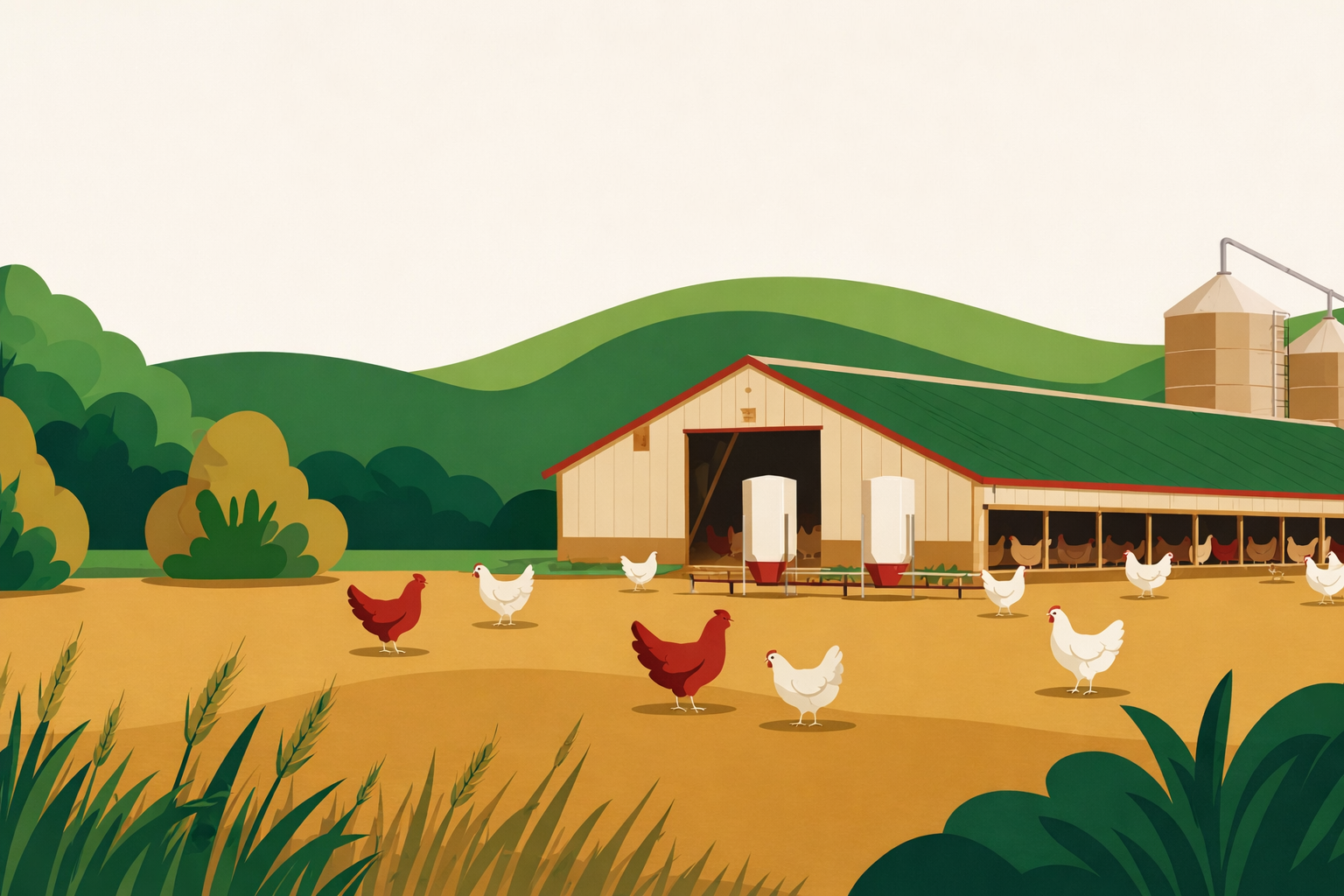
What the history of Polish poultry farming is
Poultry farming is the keeping of utility birds — chiefly hens, but also turkeys, ducks and geese — for meat and eggs. In Poland it began modestly, with a few hens in the yard of almost every farm. Today it is one of the strongest branches of our agriculture. This guide walks through that whole path. If you are looking for explanations of industry terms, see the poultry encyclopaedia, while old folk names for birds and equipment are gathered in the poultry dialect dictionary.
Poland — the largest poultry producer in the European Union
For more than a decade Poland has been the leader in poultry meat production in the European Union, ahead of France, Germany and Spain. According to GUS and the National Poultry Council (KRD-IG), we produce over two million tonnes of poultry meat a year, much of it for export. This is the result of cheap and efficient production, a strong feed industry and thousands of farms — from large plants to smaller family holdings. Poultry is also the cheapest and most frequently bought meat on Polish tables.
Why know the history of the sector
Knowing the history helps you understand why Polish poultry farming looks the way it does — where its cost advantage comes from, why broilers from imported genetics dominate and why export matters so much. This knowledge is useful to anyone entering the sector or simply wanting to look consciously at what they eat. A practical start for beginners is described in poultry keeping on the farm, and the most common questions about modern fattening are gathered in 50 questions about broiler farming.
From self-sufficiency to industry
A hundred years ago poultry in Poland was mainly part of a self-sufficient farm — hens were kept for eggs and meat for the family table, and surpluses sold at the market. Industrialisation, the shift to industrial-scale production, only began after the war and gathered pace in the second half of the 20th century. That is when an organised sector with farms, hatcheries and processing plants started to grow out of the home backyard.
Native breeds and imported genetics
For centuries Polish farms kept native hens well adapted to local conditions — such as the Greenleg Partridge or the Rhode Island Red type. Today commercial production rests almost entirely on specialised breeding lines imported from abroad, and native breeds have survived mainly thanks to conservation programmes and enthusiasts. You can read more about them in native Polish hen breeds.
Present-day challenges and the future
Today’s poultry farming faces avian influenza (HPAI), rising welfare requirements and cost pressure, while at the same time digitising rapidly. Flock documentation, treatment and drug withdrawal records and inspection readiness are now a standard that is easiest to run in one place. DlaFerm.pl helps every farm with this — from a small family holding to a larger commercial one.
The history of Polish poultry farming in six stages
From hens in every village backyard to the position of the largest poultry producer in the European Union. Here are the six stages the Polish poultry sector has gone through.
Beginnings and backyard keeping
For centuries poultry was part of almost every rural household — hens were kept for eggs and meat for the family’s own needs, and surpluses sold at the market. Production was dispersed, based on native breeds and simple conditions. This was the starting point of the whole sector; closest to this form today is poultry keeping on the farm.
Post-war industrialisation and state farms
After the Second World War poultry farming began to be organised on an industrial scale. State farms, hatcheries and processing plants were built, industrial feeds and the first commercial lines were introduced. That is when an organised sector grew out of the home backyard, though still less efficient than in the West.
The transformation of the 1990s
After 1989 the economy moved to market rules. State plants were privatised, weaker ones collapsed, and private farms and growing feed-and-processing companies took their place. The sector modernised quickly, imported efficient genetics and learned to compete on price. A hard but pivotal stage that built the foundation for the later success.
EU accession in 2004 and modernisation
Poland’s accession to the European Union in 2004 opened a huge market and released funds for investment. Farms were modernised and adapted to EU welfare and food-safety standards, and production grew rapidly. Cheap, efficiently produced Polish poultry became competitive across the Community.
Export expansion and EU leadership
In the following years Poland rose to the position of the largest producer of poultry meat in the European Union, ahead of France and Germany. A large part of production goes to export — to other EU countries and beyond. The cost advantage, scale and a strong feed industry made poultry farming one of the flagships of Polish agriculture.
The present — digitisation, welfare and HPAI
Today the sector faces avian influenza (HPAI), rising welfare requirements and cost pressure, while digitising rapidly. More and more farms keep a digital Flock Card and treatment and drug withdrawal records to stay on top of paperwork and be ready for an inspection at any time.
Six forces that built today’s sector
Poland’s position in poultry farming is the sum of many factors — from native breeds, through imported genetics and vertical integration, to export and today’s challenges. Here are the six forces that shaped it.
Native breeds as the foundation
Before commercial production appeared, Polish farms relied on native, hardy hens adapted to local conditions, such as the Greenleg Partridge or the Rhode Island Red type. Today they survive mainly thanks to genetic-resource conservation programmes and enthusiasts. They are the historical foundation of the sector — more in native Polish hen breeds.
Imported efficient genetics
Modern broiler and layer production rests almost entirely on specialised breeding lines imported from abroad. They provide fast growth, good feed conversion and high laying. It is precisely this imported genetics, alongside cheap feed, that gave Polish farms their cost advantage — the workings of modern fattening are explained in 50 questions about broiler farming.
Vertical integration
Much of Polish poultry farming was organised on a vertical-integration model — one company links the hatchery, feed production, farms and slaughterhouse. The farmer receives chicks, feed and a guaranteed offtake of live birds, while the integrator looks after quality and logistics. This model cut costs and stabilised supply, becoming one of the engines of the sector’s export success.
The export market
Export became the driving wheel of Polish poultry farming. A large share of production goes abroad — mainly to European Union countries, but also further afield. Cheap, efficiently produced poultry found buyers across Europe, and the scale of export lets the country maintain large, efficient production and fuels investment in new farms.
Challenges: HPAI, costs and welfare
The sector faces serious challenges. Avian influenza (HPAI) can mean culling whole flocks and closing export markets. Feed and energy costs are rising, and society and regulations place ever higher welfare demands. This pressure forces investment in biosecurity and better keeping conditions for the birds.
Directions for the future
The future of the sector is digitisation, a greater emphasis on welfare and biosecurity, and a drive for greater resilience to disease and cost swings. Documentation and full flock traceability will matter more and more. Keeping records in one digital place — as in IRZplus flock records — is becoming the standard of a modern farm.
Frequently asked questions about the history of Polish poultry farming
Is Poland the largest poultry producer in the EU?add
Yes. For more than a decade Poland has been the largest producer of poultry meat in the European Union, ahead of France, Germany and Spain. According to GUS and the National Poultry Council (KRD-IG), we produce over two million tonnes of poultry meat a year, much of it for export. This is the result of cheap and efficient production and a strong feed and processing industry.
What were the beginnings of poultry farming in Poland?add
For centuries poultry was part of almost every rural household. Hens were kept for eggs and meat for the family’s own needs, and surpluses were sold at the market. Production was dispersed and based on native breeds. Only after the Second World War did poultry farming begin to be organised on an industrial scale, with state farms, hatcheries and processing plants.
What did Poland’s 2004 EU accession change?add
Joining the EU in 2004 opened a huge market and released funds for investment. Farms were modernised and adapted to EU welfare and food-safety standards, and production grew rapidly. Cheap and competitive Polish poultry gained buyers across the Community, which began a stage of strong export expansion.
Why is Polish poultry so price-competitive?add
Several factors came together: cheap and efficient production, a strong domestic feed industry, imported efficient genetics and organisation on a vertical-integration model, where one company links the hatchery, feed, farms and slaughterhouse. Large production scale and an export focus keep unit costs low, making Polish poultry competitive across Europe.
What happened to native Polish hen breeds?add
Native breeds, such as the Greenleg Partridge or the Rhode Island Red type, were for centuries the basis of farm keeping. As commercial production switched to specialised lines imported from abroad, their role in production almost disappeared. They survived mainly thanks to genetic-resource conservation programmes, hobby breeders and farms favouring traditional keeping.
What are the biggest challenges for Polish poultry farming today?add
The most serious are avian influenza (HPAI), which can mean culling flocks and closing export markets, and rising feed and energy costs. Added to this are ever higher welfare requirements and pressure on biosecurity. The sector responds with investment in biosecurity, better keeping conditions for the birds and digitisation of documentation.
Run a modern farm with DlaFerm.pl
Polish poultry farming has come a long way from the backyard to industry, and today its hallmark is order in documentation and readiness for inspection. DlaFerm.pl lets you keep a digital Flock Card and treatment records in one place. Create a free farm account.
Phone
+48 796 258 151