Poultry encyclopedia — poultry farming terms from A to Z
The poultry encyclopedia is an organised collection of terms every farmer meets: from broiler and layer, through FCR, coccidiosis and biosecurity, to IRZplus, the livestock unit and the all-in-all-out system. We explain each entry simply, as for a beginner, but reliably — so you immediately know what a term means in practice on the farm. It is a pillar that grows with our guides and links theory to daily work with the flock.
verifiedFrom the team that has organised work on poultry farms for years.
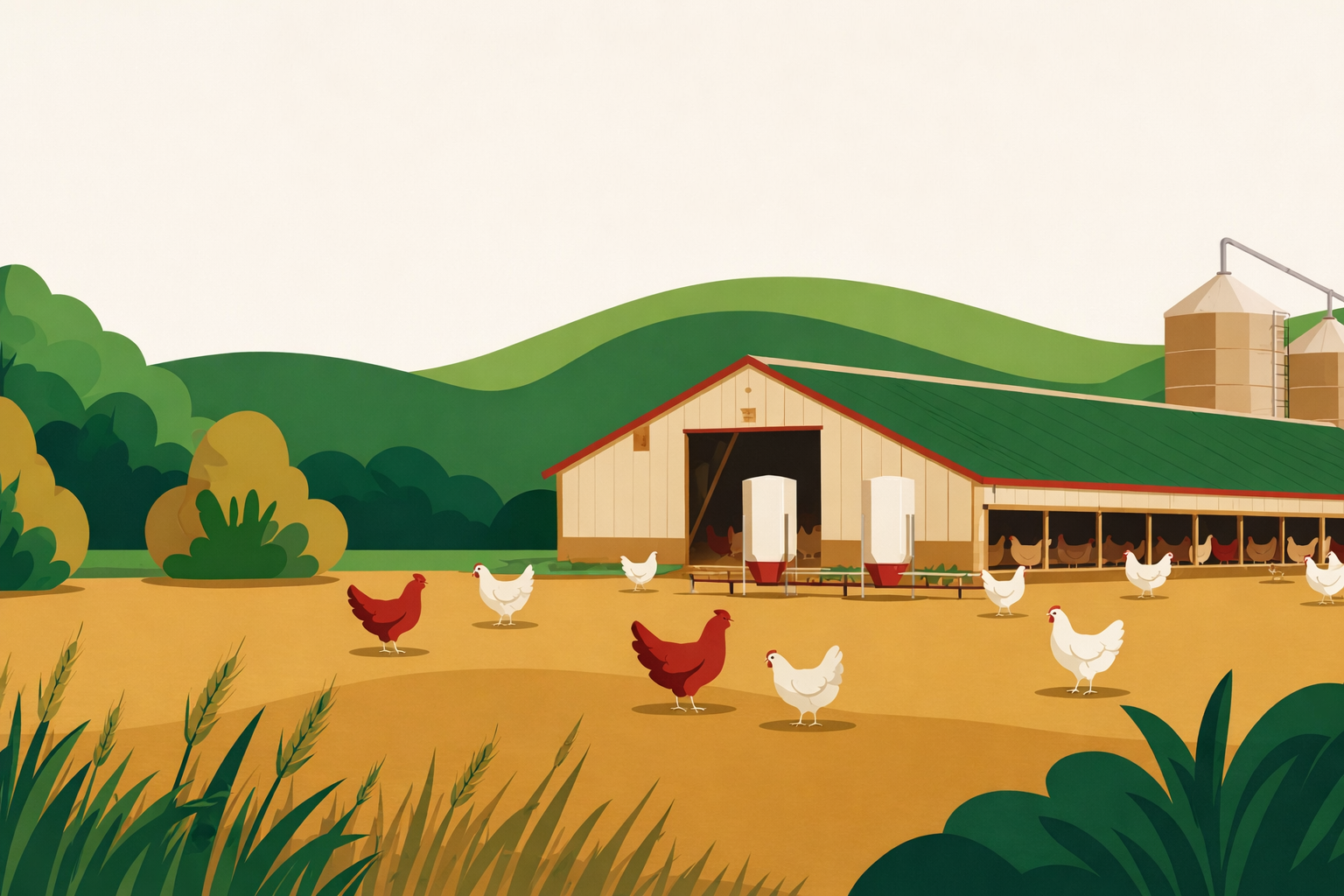
What the poultry encyclopedia is
The poultry encyclopedia is our most extensive body of knowledge about poultry — an organised glossary of terms, definitions and phenomena met at every step of farming. We have gathered entries from different areas: species and breeds, the bird’s anatomy and physiology, feeding, health, technology and regulations. Each entry is explained in plain language but rests on veterinary and animal-science knowledge and breed-guide norms. If you are looking for a term and its background, a good starting point is also the poultry farmer’s guide.
How to use the encyclopedia
The encyclopedia works like a dictionary: you look up a term, read a short definition and immediately know what it means in practice on the farm. Entries are deliberately concise — they explain the core and point to broader guides where the topic is developed with examples. If you meet a word you do not know, check it here or in the poultry slang glossary, where we translate everyday farm expressions into plain language. The encyclopedia and the slang glossary complement each other: one orders technical terms, the other the everyday language of farmers.
Thematic scope
In the encyclopedia you will find entries from six large areas: species and breeds, the bird’s anatomy and physiology, feeding, health and diseases, facility and technology, and economics and law. So one place answers questions of very different kinds — from “what is FCR" and “how does candling work", to “what is a livestock unit" and “what is all-in-all-out". We deliberately keep the scope within poultry, without straying into other animals, so the definitions stay precise and useful in daily work.
Knowledge that separates facts from myths
Many poultry terms are surrounded by misunderstandings — about hormones, antibiotics, housing conditions or the quality of meat and eggs. The encyclopedia gives definitions straight, without simplifications that mislead. If you are interested in common claims about chicken, see the article on facts and myths about chicken, and for historical background of the Polish sector — the article on the history of Polish poultry farming. A sound definition is the first step to discussing farming on the facts.
From definition to action with DlaFerm.pl
Knowledge alone is just the start — in practice terms turn into specific records and decisions at the flock. DlaFerm.pl lets you carry them into daily work: you keep a digital Flock Card, note mortality, FCR, treatment and drug withdrawal, and flock records in IRZplus. DlaFerm.pl can send the flock status-change reports to IRZplus for you — automatically and optionally, without logging in to the ARiMR portal, if you prefer. So terms like “stocking density", “withdrawal" or “all-in-all-out" stop being theory and become figures and dates you control. You can create a farm account for free.
Six sections in which we order poultry knowledge
We group entries into six areas — from the bird’s biology to economics and law. This makes it easier to find a term and see how it connects with the rest of farming.
Species and breeds
Entries on poultry species (hens, turkeys, ducks, geese, guinea fowl) and use types: meat broiler, egg layer, parent flock. Here we explain how the meat direction differs from the laying one and what crossbreed names from the poultry farmer’s guide mean.
Anatomy and physiology of the bird
The structure and working of the bird’s body: the digestive tract with crop and gizzard, the oviduct, thermoregulation, moulting. Understanding physiology explains why a bird eats, grows and lays eggs the way it does — and why microclimate matters so much.
Feeding
Feed, its composition and stages (starter, grower, finisher), water, additives and the key FCR indicator (feed used per kilogram of gain). Feeding is the largest cost of the cycle, so these entries link biology with economics — more figures are in the 50 questions about broiler farming.
Health and diseases
The most important disease entities (coccidiosis, avian influenza, respiratory diseases), prevention, vaccination, drug withdrawal and biosecurity. This section most often decides a flock’s result — well-kept treatment records are worth their weight in gold here.
Facility and technology
The poultry house and its equipment: ventilation, heating, watering, feeding, litter and microclimate. This is where entries on stocking density, the all-in-all-out system and chick brooding in the first days of life belong.
Economics and law
Accounting and formal terms: costs, margin, the livestock unit (LU), flock records in IRZplus, the veterinary number and documentation duties. This section ties farming to paperwork and profitability that you must know before the first placement.
How to read the encyclopedia and how it will develop
The encyclopedia is a living pillar — it links to guides, rests on reliable sources and grows with new entries. Here are six tips on how to use it at different levels.
Links with the guides
Each entry is a summary — the core of a term in a few sentences. When a topic needs more, we point to broader guides, such as the poultry farmer’s guide or 50 questions about broiler farming. The encyclopedia says “what it is", the guides say “how to do it step by step".
Reliable sources
We base definitions on veterinary and animal-science knowledge and on breed-guide norms (e.g. Aviagen, Cobb) and institutions such as EFSA, the National Research Institute of Animal Production or the General Veterinary Inspectorate. We give no data from user accounts — only public knowledge and norms. This keeps the entries neutral and verifiable.
Updates
Knowledge about poultry changes — new regulations, vaccinations and welfare norms appear. The encyclopedia is a pillar we keep expanding: we add entries, refine definitions and add links as new guides are written. If something is missing, it usually means the entry is still being created.
A path for beginners
If you are just starting, read entries from the “species and breeds" and “facility and technology" sections — that is the foundation. When you meet a technical word, check it here or in the poultry slang glossary. You do not need to know everything at once; return to entries when you meet them in practice at the flock.
For advanced users
More experienced farmers will be drawn to entries on the border of feeding, physiology and economics: FCR, growth curve, the livestock unit or feed balancing. Here the encyclopedia works as a quick reminder of definitions and units before you reach for detailed calculations in the breed guides.
Where to look further
The encyclopedia is a map of terms, but it is worth deepening the knowledge. For historical context see the history of Polish poultry farming, and verify common claims in the article on facts and myths about chicken. And when you turn terms into flock records, keep them in the digital Flock Card.
Poultry terms from A to Z — definitions
Broileradd
A broiler is a meat-type chicken bred for fast weight gain. It comes from crossbreeds with high growth potential and reaches slaughter weight in about 35–42 days. Unlike a layer, it directs all the energy from feed into building muscle rather than producing eggs. The broiler is the most commonly farmed meat poultry in Poland and worldwide.
Layeradd
A layer is a laying-type hen kept for the production of table eggs. Laying breeds and crosses are light, with an efficient oviduct, and lay close to one egg a day at peak lay. Unlike the broiler, the layer grows slowly because the body “invests" in egg production. A laying flock is run for many months, not a few weeks.
FCR (feed conversion ratio)add
FCR (feed conversion ratio) is the number of kilograms of feed needed for one kilogram of weight gain in the bird. The lower the FCR, the better — the bird converts feed into meat more efficiently. In broilers good values usually sit around 1.5–1.7. FCR is a key profitability indicator, because feed is the largest cost of the cycle.
Coccidiosisadd
Coccidiosis is a parasitic disease of poultry caused by protozoa of the genus Eimeria, which damage the intestinal lining. It shows as diarrhoea (sometimes bloody), apathy, poorer gain and higher mortality. Wet litter and high stocking density favour it. It is prevented by nutritional prophylaxis (coccidiostats), vaccination and keeping the litter dry and clean.
Biosecurityadd
Biosecurity is the set of rules and safeguards meant to keep diseases out of the farm and prevent carrying them outside. It covers entry control, disinfection mats and sluices, a split into clean and dirty zones, work clothing and protection against wild birds and rodents. It is the basic shield against avian influenza and other diseases. It applies from the flock’s first day.
Incubationadd
Incubation is the hatching of chicks from hatching eggs under controlled temperature, humidity and turning. In hens it lasts about 21 days and takes place in incubators (hatchers) at hatcheries. Success depends on egg quality, parameters and hygiene. Incubation produces the day-old chicks that go to brooding on farms.
Microclimateadd
Microclimate is the conditions inside the poultry house: temperature, humidity, air movement and gas concentration (ammonia, carbon dioxide). It is maintained by ventilation and heating matched to the birds’ age. A poor microclimate — too hot, too humid or too much ammonia — lowers gains and opens the door to disease. A good microclimate is one of the pillars of a healthy flock.
IRZplusadd
IRZplus is the Animal Identification and Registration system run by ARiMR, in which a farmer registers the flock holding and keeps poultry records. It records, among other things, flock size, placements and removals of birds. Registration and ongoing records are a legal duty of every farmer. IRZplus is the basis of traceability and inspection readiness.
Candling (owoskopia)add
Candling is shining a strong light through eggs (with a candler) to assess their state. It lets you check whether an egg is fertilised, how the embryo is developing, and detect shell cracks or air-cell defects. It is used mainly in hatcheries during incubation, to remove unpromising eggs early. It is a simple but important method of hatch quality control.
Livestock unit (LU / DJP)add
A livestock unit is a conventional unit equal to 500 kg of live animal weight, used to convert stocking and assess the scale of farming. Each species and category has an assigned conversion factor. The livestock unit determines, among other things, environmental thresholds and formal duties — the number of units decides which permits and procedures apply to a farm. It is a term on the border of economics and law.
All-in-all-outadd
All-in-all-out is a flock-management system in which the whole house is populated at once with birds of the same age and emptied entirely at the end of the cycle. Between batches there is a break for cleaning, washing and disinfection. This rhythm breaks the chain of infection and evens out the flock. It is the standard in commercial broiler farming.
Drug withdrawal periodadd
The withdrawal period is the time that must pass from giving a bird a drug to slaughter or egg collection, so that products contain no prohibited residues. The drug leaflet and regulations set its length. Observing the withdrawal period is mandatory and subject to control. Every treatment and its withdrawal must be noted in the flock treatment records.
Day-old chickadd
A day-old chick is a freshly hatched chick that, in its first day of life, goes from the hatchery to the house for brooding. At this stage the bird does not yet regulate its own body temperature, so it needs warmth, access to water and feed, and calm. Chick quality and the first days of brooding strongly affect the result of the whole cycle. It is a start that decides the rest of farming.
Litteradd
Litter is the material (most often sawdust, straw or shavings) lining the floor of the house in floor-based rearing. It absorbs moisture and droppings, insulates and gives birds a surface to scratch. Wet, caked litter favours leg diseases and coccidiosis and raises ammonia levels. Keeping litter dry and loose is one of the farmer’s basic duties.
Stocking densityadd
Stocking density is the number of birds or their weight per square metre of house floor. It is expressed in birds per m² or kilograms per m². Maximum density is set by welfare regulations — too dense a flock means a worse microclimate, more disease and slower gain. Choosing density is a compromise between bird welfare and use of the facility.
Avian influenza (HPAI)add
Avian influenza, in its highly pathogenic form HPAI, is a viral infectious disease of poultry and wild birds, very dangerous to flocks. It spreads quickly and causes high mortality. Because of the epizootic threat, detecting an outbreak means culling the flock and restriction zones around the farm. The best protection is rigorous biosecurity and isolation from wild birds.
Broodingadd
Brooding is the first phase of chicks’ life, when they need extra warmth because they do not yet regulate their own body temperature. It usually lasts from the first days up to a few weeks, depending on the species, and requires heating, easy access to water and feed, and proper lighting. Well-run brooding translates into an even, healthy flock. Mistakes from this period carry through the whole cycle.
Flock cardadd
A flock card is a document (paper or digital) in which the farmer keeps ongoing records of one flock: placements, mortality, body weight, feed and water use, treatment and withdrawals. It lets you track results in real time and is the basis of inspection readiness. A digital Flock Card orders this data in one place and calculates the indicators for the farmer.
Pododermatitis (footpad dermatitis)add
Pododermatitis is inflammation of the skin of the birds’ footpads, arising most often from contact with wet, caked litter with high ammonia levels. It shows as lesions and ulcers on the soles, pain and poorer movement of the bird. It is also a welfare indicator assessed at slaughter. It is prevented by dry, loose litter and a good microclimate in the house.
Starter, grower, finisher feedadd
These are the three basic stages of broiler feeding, matched to the bird’s age and needs. Starter is the initial feed, rich in protein, for the first days of intensive growth; grower is the middle phase; finisher is the final feed before slaughter, aimed at weight gain. Changing feeds at the right time improves FCR and results. Each stage has a different composition and pellet structure.
Veterinary numberadd
The veterinary number (farm identification number) is a number issued by the district veterinary officer confirming that the farm is registered and supervised in trade in products of animal origin. It is required when a farmer sells live birds or eggs on the market. It is the basis of legal sale and traceability of the product’s origin. Without it, poultry may not be placed on the market.
Placementadd
Placement is populating the house with a new batch of birds — most often day-old chicks — and the start of a new production cycle. It is preceded by preparing the facility: cleaning, disinfection, heating and setting up watering and feeding. The date and quality of placement are noted in the flock records. The start of the whole batch depends on a good placement.
Mortality (losses)add
Mortality means birds that have died in the flock, usually counted as a percentage of placed birds over the whole cycle or on a given day. Some mortality is natural, but a sudden rise is a signal of a problem — disease, a microclimate or feeding error. Daily recording of mortality lets you catch trouble early. It is one of the most important indicators of flock condition.
Parent (breeding) flockadd
A parent flock is birds kept to lay hatching eggs from which commercial chicks (e.g. broilers) hatch. It stands higher in the breeding pyramid than the production flock and is run with an emphasis on lay and hatching-egg quality. It is the link between the work of genetics companies and commercial farms. Eggs from these flocks go to hatcheries.
Culling (selection)add
Culling is removing weak, sick or unpromising birds from the flock to improve health and evenness of the group. In laying and parent flocks it also means withdrawing low-productivity birds. It is done with respect for welfare and regulations. Deliberate selection limits the spread of disease and raises the flock’s average result.
Turn poultry knowledge into daily practice with DlaFerm.pl
You have learnt the terms — now turn them into real flock records. DlaFerm.pl lets you keep a digital Flock Card, calculate FCR and mortality, and document treatment and withdrawals in one place. Create a free farm account.
Phone
+48 796 258 151