Broiler rearing — the whole cycle step by step
Broiler rearing takes roughly 35–42 days from chick placement to processing. We walk you through the whole period stage by stage: house preparation, preheating (brooding), lowering the temperature, humidity, light, phase feeding and weight control. This is a broad guide — the first week alone is covered separately and we link to it rather than repeating it here.
verifiedFrom the team that has organised work on poultry farms for years.
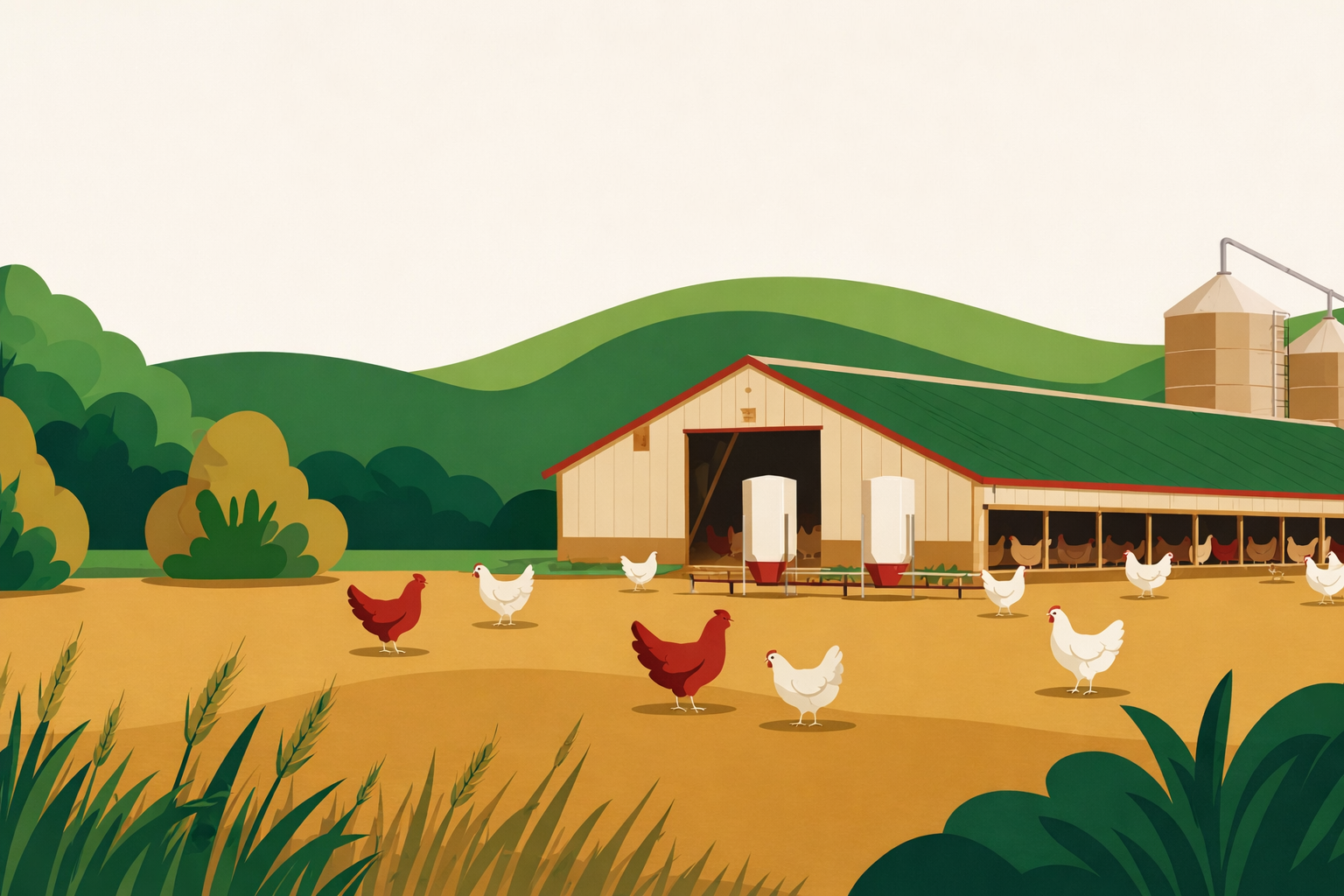
Good rearing decides the whole flock. The first days and weeks set the growth rate, flock uniformity and health — mistakes early in the cycle are hard to make up later. This guide brings the whole broiler rearing cycle into one place, from an empty house to processing. The broader picture is in the hub on broiler farming, and individual topics are developed in separate guides we link to along the way.
How does a broiler differ from a layer?
A broiler is a meat chicken bred for fast weight gain — in a few weeks it reaches a slaughter weight of 2–3 kg or more. A layer hen grows more slowly and is kept for many months for egg production. That is why broiler rearing is short, intensive and very sensitive to temperature, access to feed and water, and the house microclimate. Every lost day of gain is a real cost.
Where do the numbers in this guide come from?
Temperatures, humidity, lighting programmes and growth are given as indicative figures* based on broiler breed management guides — mainly Aviagen (Ross 308) and Cobb-Vantress (Cobb 500). Exact values depend on the genetic line, feed, season and house equipment. Treat them as a starting point and always check the chick supplier’s recommendations and the birds’ response — it is the birds, not the table, that show whether the microclimate is right.
Broiler rearing step by step — the whole cycle
- 1
1. House preparation and preheating
Before the chicks arrive, the house must be clean, disinfected, bedded with dry litter and warmed up in advance. Preheating usually starts 24–48 hours before placement to warm not only the air but also the litter and floor — the chick lies on the litter, so it must be warm (around ~28–30°C litter surface*). Set out feeders and drinkers so the chicks are close to them. Details are in the guides on preparing the house before placement and litter management in the house.
- 2
2. The first hours and the first day
After placement the chicks must find water and feed as fast as possible and reach a zone with the right temperature. The first hours and the whole first week are the most sensitive part of rearing — we cover it in great detail in a separate guide on the broiler chick first week. In brief here: the temperature under the chicks in the brooding zone is around ~32–34°C*, with easily accessible lukewarm water and full feeders. Bird behaviour tells you whether it is right: evenly spread = fine; huddled in piles = too cold; scattered to the walls = too warm.
- 3
3. Weeks 1–2 — temperature start and full access to water and feed
In the first two weeks you keep the temperature high and lower it gradually. Start at ~32–34°C under the chicks, by the end of the second week around ~28–30°C*. Humidity is higher at the start, about 60–70%*, because air that is too dry dehydrates the chicks. Constant, easy access to water and feed is key — check the height and pressure of the drinker lines and that all birds reach the feeders. You monitor 7-day weight as an early sign of rearing quality — see broiler 7-day body weight. Water use norms are in broiler water consumption.
- 4
4. Growth phase and lowering the temperature
From about week 2–3 the birds grow fastest and produce more and more heat themselves, so you keep lowering the temperature — by around ~2–3°C per week, going down gradually to ~20–22°C in the second half of the cycle*. At the same time the need for ventilation and the removal of moisture and ammonia rises. You keep humidity lower than at the start so the litter stays dry. Microclimate and air exchange are covered by the guides on temperature and humidity in the house and broiler house ventilation. This is also the time of feed phase changes — see broiler feeding phases (table).
- 5
5. Lighting programme and weight control
The lighting programme is the length of the light day and the light intensity over the following days. After a bright start (long light, so the chicks learn to eat and drink) longer dark periods are introduced — rest supports leg and heart health and flock uniformity. Details are in the guide on the broiler house lighting programme. Throughout the cycle you weigh samples of birds and compare them with the breed growth curve — deviations from the table are the earliest sign that something is off. The broiler weight and gain table makes the comparison easier.
- 6
6. The last days and preparation for processing
In the last phase (finisher) the birds reach slaughter weight. You watch the final weight and flock uniformity, the stocking density per square metre and litter quality, because these affect footpads and carcass class. Before processing you observe the withdrawal period for medicated feed and plan feed withdrawal before transport, as recommended. The whole course from placement to processing is set out in the guide on the broiler production cycle step by step, and you calculate stocking with broiler stocking density.
Broiler rearing parameters — temperature, water and feed, light, weight
Indicative values* for the whole cycle based on Aviagen Ross 308 and Cobb guides — always adjust to the birds’ response and the chick supplier’s recommendations.
Temperature
Start under the chicks in the brooding zone at ~32–34°C*, then lowering by ~2–3°C per week to ~20–22°C in the second half of the cycle. What matters is the temperature at bird level and warm litter, not just the reading under the ceiling. Bird behaviour is the best comfort sensor.
Water and feed
Constant, easy access to fresh water and feed throughout the cycle; feed in starter → grower → finisher phases matched to age and weight. Adjust drinker and feeder height as the birds grow. Water use rises with age and temperature — a drop in drinking is an early warning sign.
Light
A bright, long light day at the start so the chicks learn to eat and drink; later longer dark periods for rest, which supports legs, heart and flock uniformity. Run light intensity and duration according to the lighting programme for the breed and age.
Control weight
Weigh samples of birds at least once a week (often more), compare with the breed growth curve and check flock uniformity. The 7-day weight is an early indicator of start quality; deviations from the table flag a microclimate, water or feed problem before you see it in mortality.
The most common broiler rearing mistakes
These mistakes come up repeatedly on farms — worth knowing before you place the next flock.
A cold start — an unheated house and litter
Placing chicks in a house that is too cold or onto cold litter is a classic mistake. The chick lies on the litter, so a cold floor chills it even with warm air — the result is birds huddled in piles, worse drinking and eating, a slower start and higher mortality. Preheating 24–48 h in advance and measuring the litter temperature solve the problem. Details: broiler chicks — first week.
Inaccessible water — too high, wrong pressure, too far
A chick that does not drink in the first hours loses a day of gain and starts worse. Drinker lines set too high, at the wrong pressure or too far from the chicks are a common cause of a poor start. Check drinker height and pressure and that all birds actually reach the water. Norms are in the guide on broiler water consumption.
Too bright or too dark — no lighting programme
A lack of a thought-out lighting programme is either constant bright light (birds do not rest, worse legs and heart) or dimming too strongly too early (chicks cannot find feed and water). Light is run in stages according to the programme for the breed and age — see broiler house lighting programme.
No regular flock weighing
Without weighing you fly blind — you only see worse gain at processing, when nothing can be fixed. Regular sample weighing and comparison with the breed curve are the earliest sign that the microclimate, water or feed need correcting. Compare with the broiler weight and gain table.
Frequently asked questions about broiler rearing
How long does broiler rearing take?add
Most often 35–42 days from chick placement to processing, depending on the planned slaughter weight, genetic line and buyer requirements. Some flocks are taken in a thinning (part of the birds first, then the rest). It is a short, intensive cycle — which is why mistakes from the first days are hard to make up later.
What temperature at the start of broiler rearing?add
Indicatively* in the zone under the chicks (brooding, i.e. preheating under the chicks) around ~32–34°C, then lowering by ~2–3°C per week to ~20–22°C in the second half of the cycle. What matters most is the temperature at bird level and warm litter, not just the reading under the ceiling. The best sensor is the birds themselves: evenly spread = comfort, huddled in piles = too cold, scattered to the walls = too warm.
What air humidity during broiler rearing?add
Higher at the start, around ~60–70%*, because air that is too dry dehydrates the chicks and their mucous membranes. Later in the cycle you keep humidity lower so the litter stays dry and ventilation removes moisture and ammonia. The microclimate is covered in the guide on temperature and humidity in the house.
How is this page different from the first-week guide?add
This page is a broad guide to the whole broiler rearing cycle (~35–42 days) — from house preparation to processing. The first week itself, as the most sensitive period, is covered in great detail in a separate guide on the broiler chick first week, which we link to here instead of repeating the same content.
How do you run feed in broiler rearing?add
Feed is given in phases matched to the birds’ age and weight: starter (for the start), grower (the growth phase) and finisher (before processing). Each phase has a different composition to match the bird’s needs at that stage. Phase transitions and example tables are covered in the guide on broiler feeding phases (table), and general norms in broiler feeding norms.
How do you control weight and gain during rearing?add
You weigh samples of birds regularly (at least once a week) and compare with the growth curve of the given breed, and assess flock uniformity. The 7-day weight is an early indicator of start quality. For comparison use the broiler weight and gain table and the guide on broiler 7-day body weight. It is convenient to keep these records in the digital broiler flock record.
Run rearing in DlaFerm.pl
Want weight and gain control and a digital flock record in one place? Create a free farm account or write to us.
Phone
+48 796 258 151