Coccidiosis in ducks: symptoms, dry litter and treatment records
Ducks are relatively resistant to coccidiosis and fall ill less often than chickens or turkeys, but ducklings are at risk of intestinal and renal coccidiosis caused by Tyzzeria perniciosa. Learn how to recognise it and why, in waterfowl, dry litter despite water access is the key.
verifiedFrom the team that has organised work on poultry farms for years.
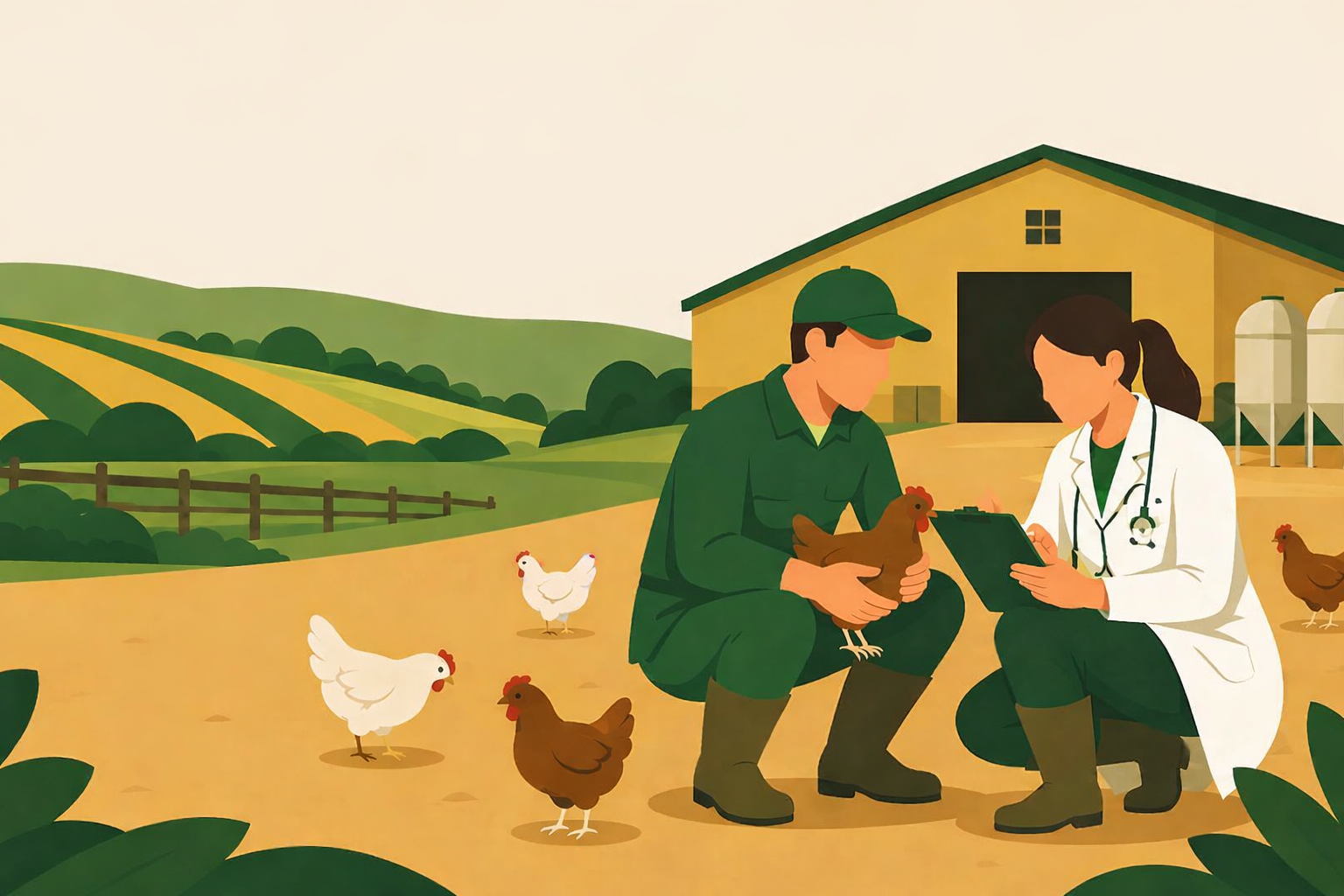
Do ducks get coccidiosis?
Coccidiosis is a parasitic disease caused by protozoa (coccidia) that destroy the intestinal epithelium. Ducks are relatively resistant to it and fall ill less often than chickens or turkeys, so in adult birds the problem is sporadic. It is different in ducklings — in the first weeks of life their immunity is still developing, and under poor conditions the disease can run a severe course. The parasite spreads via the digestive route: oocysts shed in the faeces of infected birds contaminate the litter and are swallowed by healthy ducklings. More on diseases of this species: Duck diseases.
Renal and intestinal coccidiosis in ducklings
In ducklings, renal coccidiosis caused by Tyzzeria perniciosa is especially important — this parasite attacks the intestine and causes severe damage with bleeding. Alongside it, intestinal coccidiosis caused by other coccidia species also occurs. Both types favour watery diarrhoea, weakness and poorer growth. Most at risk are ducklings kept in a wet, dirty environment, which in waterfowl forms exceptionally easily around drinkers and water. Diagnosis and treatment are always carried out by a veterinarian.
What are the symptoms of coccidiosis in ducklings?
Typical symptoms in ducklings include: dullness and reluctance to move, watery or bloody diarrhoea, poorer appetite, markedly weaker weight gain and higher mortality in the flock. Sick ducklings often huddle in small groups, look ruffled and are less active than healthy ones. In a mild course the only signal may be poorer condition and flock non-uniformity without visible diarrhoea. Any sudden change in behaviour or faecal appearance should prompt the farmer to contact a vet.
Why is dry litter the priority in ducks?
In waterfowl, keeping litter dry is harder than in chickens, because ducks splash water around drinkers and produce watery droppings. Wet litter is the ideal environment for the parasite: coccidia oocysts sporulate (become infective) quickly in warm, moist conditions. The more spilled water and the dirtier the litter, the higher the risk of infecting the whole flock. That is why in ducks coccidiosis prevention starts with dry, clean litter despite the birds’ constant access to water. More: Poultry house litter — management.
Coccidiosis and other duck diseases
Coccidia damage to the intestine weakens mucosal immunity and can open the door to secondary bacterial infections. Coccidiosis therefore often worsens the course of other diseases or predisposes to them. Whenever disease is suspected or rearing results deteriorate, consult a veterinarian and arrange diagnostic testing. In broilers the same disease has a slightly different picture — compare: Coccidiosis in broilers. Overview of other disease symptoms: Poultry diseases — symptom table.
How coccidiosis strikes a flock of ducklings
Each of these signals should prompt the farmer to consult a veterinarian.
Dullness and ruffled feathers
Sick ducklings are apathetic, ruffled, huddle in small groups and are reluctant to move. Observing flock behaviour allows early detection of the problem.
Watery or bloody diarrhoea
Loose, watery droppings, sometimes with blood, indicate intestinal damage by coccidia — including Tyzzeria perniciosa. This signal requires prompt veterinary intervention.
Wet, dirty litter
Moist litter around drinkers is the first environmental signal. Coccidia oocysts sporulate in wet, warm bedding and quickly infect more birds.
Poorer weight gain
A damaged intestinal epithelium cannot absorb feed efficiently — slower growth and flock non-uniformity are a common signal of ongoing coccidiosis.
Reduced appetite
Sick ducklings eat and drink less, which further deepens weakness and slows the rearing of the whole group.
Higher flock mortality
In severe cases, especially with renal coccidiosis in young ducklings or a co-existing infection, mortality can rise markedly in a short time.
How to prevent coccidiosis in ducks and how to act when disease is suspected
In waterfowl, effective prevention starts with dry, clean litter despite constant access to water.
Dry litter despite water
The most important measure in ducks is to keep the litter dry and friable, even though the birds have constant access to water and splash it around drinkers. Dry litter limits oocyst sporulation and breaks the infection route. Details: Poultry house litter.
Drain water from under drinkers
Good drainage of spilled water from under drinkers, topping up dry bedding and efficient ventilation prevent the wet, dirty spots that are the focus of parasite development.
Cleanliness and biosecurity
Regular cleaning, disinfection after each cycle and limiting the introduction of pathogens onto the farm reduce parasite pressure. More: Poultry farm biosecurity.
Right stocking density and welfare
Excessive density favours litter fouling and faster disease spread. Proper stocking density and bird welfare reduce the risk. See: Duck stocking density and Duck welfare.
Diagnostics and treatment by a vet
Diagnosis is based on symptoms, post-mortem of dead birds and faecal examination for oocysts. Drug choice, dose and duration of treatment are determined exclusively by a veterinarian. Find a specialist: Veterinarian.
Treatment records and withdrawal
Every administration of a veterinary medicine must be recorded: date, drug, dose, route of administration, withdrawal period before slaughter. DlaFerm.pl allows these records to be kept digitally. More: Treatment records and drug withdrawal.
Frequently asked questions about coccidiosis in ducks
Do ducks easily get coccidiosis?add
Ducks are relatively resistant to coccidiosis and fall ill less often than chickens or turkeys. The problem mainly affects ducklings in the first weeks of life, especially those kept in a wet, dirty environment. In adult ducks the disease is sporadic.
What is renal coccidiosis in ducklings?add
It is a form of coccidiosis caused by Tyzzeria perniciosa, which attacks the intestine and causes severe damage with bleeding. In young ducklings it can run a severe course and lead to higher mortality. Diagnosis and treatment are carried out by a veterinarian.
How do I recognise coccidiosis in ducklings?add
The most common signs are dullness, watery or bloody diarrhoea, poorer appetite, weaker weight gain and higher mortality. Ducklings are ruffled and less active. Any sudden change in behaviour or faecal appearance should prompt contact with a vet.
Why is dry litter so important in ducks?add
Ducks splash water and produce watery droppings, so the litter easily becomes wet. In warm, moist bedding the parasite’s oocysts sporulate quickly and infect more birds. Keeping litter dry despite water access is the foundation of coccidiosis prevention in ducks.
What should I do if I suspect coccidiosis in a duck flock?add
Contact a veterinarian. Do not administer drugs without a diagnosis and prescription — some products have a withdrawal period before slaughter, and incorrect use can expose the farmer to legal consequences. The vet will order tests and prescribe treatment.
How does DlaFerm.pl help with coccidiosis in ducks?add
DlaFerm.pl enables digital treatment and withdrawal records — legally required documentation for every administration of a veterinary product. The Flock Card lets you track weight gain and mortality, making early detection of the problem easier. Data are always available during a veterinary inspection.
Sources & resources
Keep treatment records with DlaFerm.pl
Want to see how the Flock Card and withdrawal records work for ducks? Write to us or create an account.
Phone
+48 796 258 151