Guinea fowl coccidiosis: symptoms, prevention and treatment records
Coccidiosis is a common parasitic disease of young guinea fowl (keets). Learn how to recognise it in this species, how to protect the flock with dry litter and a prevention programme, and how to keep compliant treatment records.
verifiedFrom the team that has organised work on poultry farms for years.
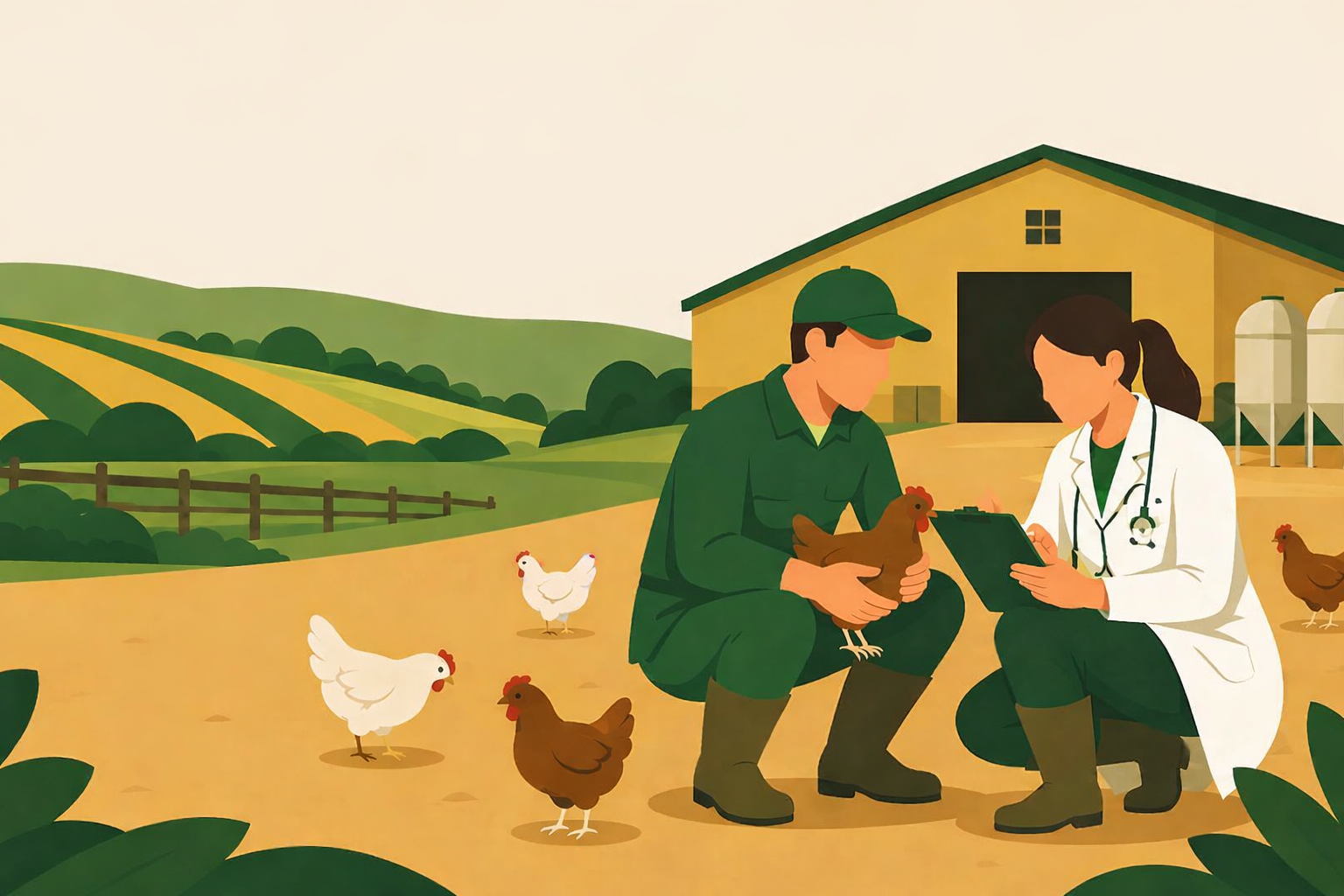
What is coccidiosis in guinea fowl?
Coccidiosis is a parasitic disease caused by protozoa of the genus Eimeria. In guinea fowl it is caused by host-specific species, including Eimeria grenieri and Eimeria numidae, which attack the intestinal epithelium. The parasites destroy the mucosa, impair nutrient absorption and, in severe cases, cause haemorrhage into the intestinal lumen. The disease spreads via the faecal-oral route: oocysts shed by infected birds contaminate litter and are ingested by healthy birds. More about the husbandry itself: Guinea fowl farming.
Why are keets especially vulnerable?
Young guinea fowl, known as keets, are most at risk. Their immune system and gut are not yet fully mature, so an Eimeria infection hits them harder than adult birds. Guinea fowl tend to be skittish and are kept in larger groups, which — together with high stocking density and wet litter — increases the spread of the parasite. Keets show higher mortality than older birds. Overview of other diseases of the species: Guinea fowl diseases.
What are the symptoms of coccidiosis in guinea fowl?
Key symptoms include: diarrhoea (sometimes bloody), ruffled feathers and lethargy, reduced feed and water intake, and clearly poorer body-weight gain. Sick keets huddle in small groups, move less and fall behind the rest of the flock in growth. In mild cases the disease can be subclinical — the only signal is poorer rearing performance without visible diarrhoea. Any change in behaviour or faecal consistency should prompt closer observation and a veterinary consultation.
How do litter and stocking density affect the risk?
Litter moisture is a key risk factor. Eimeria oocysts become infective (sporulate) within 1–3 days in warm, wet conditions. Leaking drinkers, poor ventilation and excessive stocking density speed up parasite multiplication and contact between healthy birds and infected droppings. Keeping litter dry and friable and the stocking density sensible limits this cycle. More: Poultry house litter — management and Guinea fowl stocking density.
Coccidiosis, welfare and other diseases
A damaged gut absorbs feed less well and is more prone to secondary bacterial infections, so coccidiosis often goes hand in hand with other health problems. Good housing conditions — dry litter, clean drinkers and a calm environment — support flock immunity. Whenever the disease is suspected, diagnostic testing is always worthwhile. See also: Guinea fowl welfare and Poultry diseases — symptom table.
How coccidiosis hits guinea fowl and keet rearing
Each of these signals should prompt the farmer to consult a veterinarian.
Diarrhoea, sometimes bloody
Loose, watery droppings — and, in severe cases, with blood — are a typical sign of coccidiosis. Blood in the droppings indicates intestinal damage and requires urgent veterinary intervention.
Ruffled feathers and lethargy
Sick guinea fowl stand fluffed up, are apathetic, move less and huddle in small groups. Observing flock behaviour allows early detection of the problem, before deaths occur.
Poorer body-weight gain
A damaged intestinal epithelium cannot absorb feed efficiently. Slower growth and flock non-uniformity (large weight differences between birds) may indicate ongoing coccidiosis, including the subclinical form.
Reduced feed and water intake
Sick birds eat and drink less, which further deepens their weakness and delays rearing. A drop in flock feed consumption is an early warning signal.
Wet, caked litter
Excessive litter moisture is the first environmental signal. Oocysts sporulate in warm, wet litter within 1–3 days, which drives further infections within the flock.
Higher keet mortality
Young guinea fowl tolerate the disease worse than adult birds. In severe cases, especially when a bacterial infection co-exists, keet mortality can rise sharply.
How to prevent coccidiosis in guinea fowl and how to act on suspicion
Effective prevention combines a programme agreed with the vet, a dry and clean environment, and reliable documentation.
Coccidiostats in keet feed
Coccidiostats added to feed for young guinea fowl inhibit Eimeria development in the gut. Their use is regulated by animal nutrition law — always according to a programme agreed with a veterinarian and with the withdrawal period before slaughter observed.
Prevention programme with the vet
The choice of products, doses and timing should be set by a veterinarian familiar with the farm conditions. The vet decides whether a coccidiostat in feed or another programme suits a given flock. Use the Veterinarian module.
Dry litter and clean drinkers
Keeping litter dry and friable limits oocyst sporulation, and clean drinkers reduce moisture and infection risk. Leak-free drinkers and good ventilation are key. Details: Poultry house litter.
Sensible density and biosecurity
Excessive stocking density speeds up parasite spread and lowers welfare. A sensible density and biosecurity rules (cleanliness, quarantine, entry control) reduce the risk. More: Guinea fowl stocking density and Poultry farm biosecurity.
Diagnostics and treatment by the vet
Diagnosis is based on clinical signs, post-mortem of dead birds and faecal examination for oocysts. Treatment — drug choice, dose and duration — is determined exclusively by a veterinarian. Do not administer drugs without a diagnosis and prescription.
Treatment records and withdrawal
Every administration of a veterinary medicine must be recorded: date, drug, dose, route of administration, withdrawal period. DlaFerm.pl lets you keep these records digitally and track rearing results in the Flock Card. More: Treatment records and drug withdrawal.
Frequently asked questions about coccidiosis in guinea fowl
What is coccidiosis in guinea fowl?add
It is a parasitic disease caused by host-specific Eimeria protozoa (including Eimeria grenieri and Eimeria numidae) that destroy the intestinal epithelium. It causes diarrhoea (sometimes bloody), ruffled feathers, poorer growth and higher keet mortality. It spreads through oocysts in the litter.
Are keets more vulnerable than adult guinea fowl?add
Yes. Young guinea fowl (keets) have an immature immune system and gut, so they tolerate infection worse than adult birds. Keets show higher mortality, especially with wet litter and high stocking density. That is why prevention is especially important in the first weeks of rearing.
What do the droppings look like in guinea fowl coccidiosis?add
The droppings are often loose and watery, and in severe cases may contain blood or mucus. Blood in the droppings is an alarm signal indicating intestinal damage. Any change in faecal consistency or colour should prompt a veterinary consultation.
How can I protect a guinea fowl flock from coccidiosis?add
The most important measures are: coccidiostats in keet feed or another programme agreed with the vet, dry and friable litter, clean drinkers and sensible stocking density. Good housing conditions and biosecurity limit contact between healthy birds and infected droppings.
What should I do if I suspect coccidiosis in my guinea fowl?add
Contact a veterinarian. Do not administer drugs without a diagnosis and prescription — some products have a withdrawal period before slaughter, and incorrect use can expose the farmer to legal consequences. The vet will order diagnostic tests and prescribe treatment.
How does DlaFerm.pl help with coccidiosis?add
DlaFerm.pl enables digital treatment and withdrawal records — legally required documentation for every administration of a veterinary product. The Flock Card lets you track weight gain and mortality, making early detection of coccidiosis easier. Data are always available for veterinary or inspection visits.
Sources & resources
- linkMSD Veterinary Manual — coccidiosis in poultry
- linkNational Veterinary Research Institute — PIWet (Puławy)
- linkEFSA — scientific opinion on coccidiostats
- linkChief Veterinary Inspectorate Poland — information for poultry farmers
- linkRegulation (EC) No 1831/2003 on additives for use in animal nutrition
Keep treatment records with DlaFerm.pl
Want to see how the Flock Card and withdrawal records work for guinea fowl? Write to us or create an account.
Phone
+48 796 258 151