Coccidiosis in geese: the renal form, symptoms and treatment records
In geese the renal form of coccidiosis, caused by the protozoan Eimeria truncata, is especially dangerous — it attacks the kidneys of young goslings and can cause very high mortality. Learn how to recognise it, how to prevent it, and how to keep treatment records.
verifiedFrom the team that has organised work on poultry farms for years.
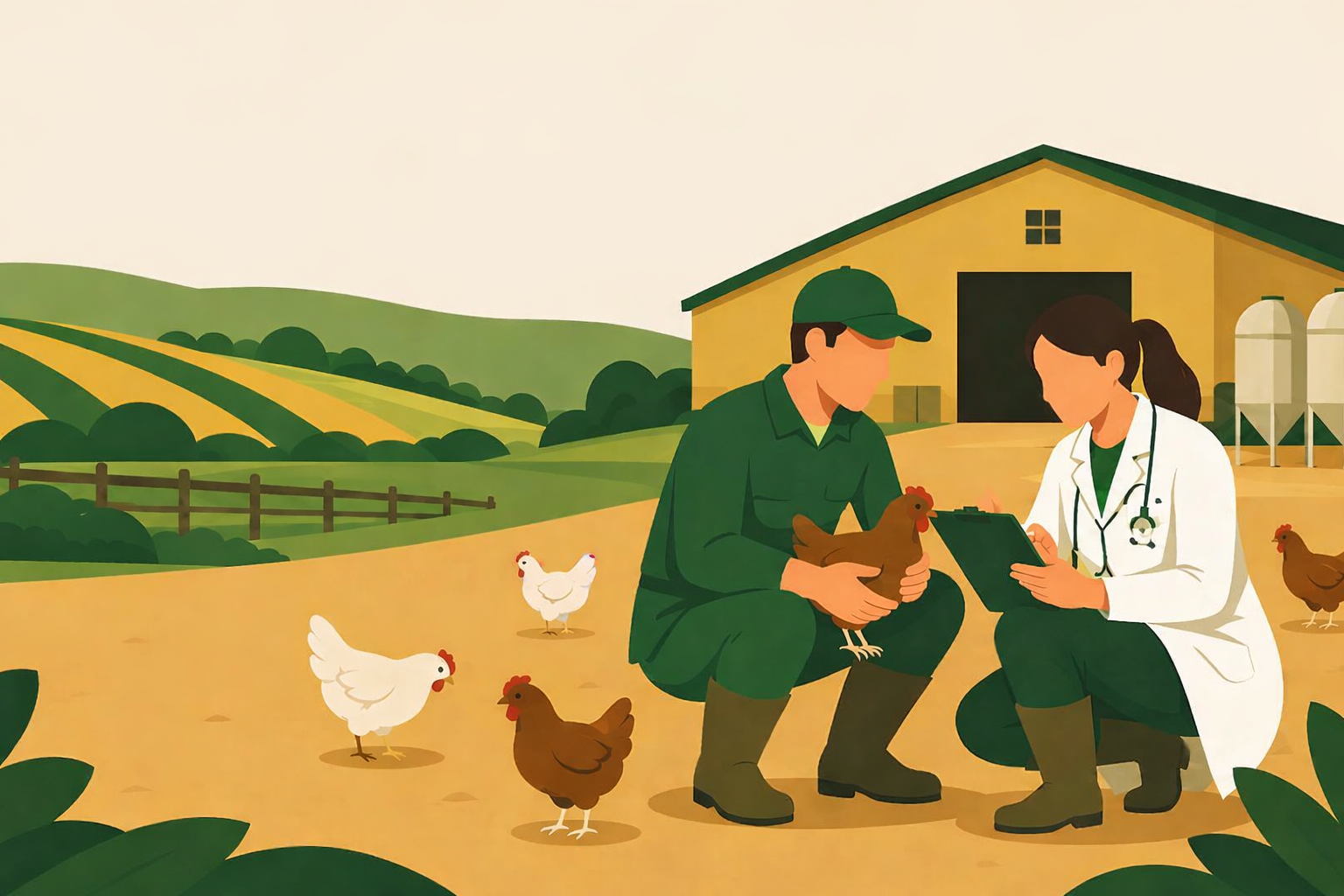
What is coccidiosis in geese?
Coccidiosis is a parasitic disease caused by protozoa of the genus Eimeria. In geese it takes two forms. The most dangerous is renal coccidiosis caused by Eimeria truncata — the parasite develops in the kidneys and can cause very high mortality in young goslings. The second form is intestinal coccidiosis, which in geese is caused among others by Eimeria anseris and related species that damage the gut. The disease spreads by the oral route: oocysts (the parasite’s resistant stage) shed in the droppings of sick birds contaminate litter, water and the run, and are then ingested by healthy goslings. More on raising this species: Goose farming.
Why is the renal form so dangerous?
Renal coccidiosis sets geese apart from other poultry species. Eimeria truncata multiplies in the kidney tubules, destroying the organ. Young goslings, usually in the first weeks of life, are the most exposed. The course can be sudden: birds weaken, lose appetite, and deaths can come abruptly and affect a large part of the flock in a short time. For this reason the renal form is often only diagnosed during post-mortem of dead birds — enlarged, pale kidneys with white foci are a characteristic picture. By contrast, in broiler chickens the intestinal form dominates: Coccidiosis in broilers.
What are the symptoms of coccidiosis in goslings?
Symptoms depend on the form of the disease, but many of them overlap. Most often you see dullness and weakness, with geese standing fluffed up and not approaching feed. Diarrhoea appears — sometimes watery or with mucus — together with a clear loss of appetite and stunted growth. In the renal form, sudden, high mortality in goslings is characteristic, sometimes without a long phase of visible symptoms. Any such signal — especially a rising number of dead birds — should prompt the farmer to consult a veterinarian urgently.
What favours coccidiosis in geese?
Coccidiosis is favoured by a wet environment and clustering of goslings. Geese drink a lot and like to stay near water, so runs and pasture close to drinkers or water bodies easily become wet and muddy. In such conditions Eimeria oocysts mature quickly and become infective. High stocking density increases each bird’s contact with the droppings of others, and dirty, wet drinkers spread the parasite across the whole flock. Litter management indoors is described here: Poultry house litter — management.
Coccidiosis and other goose diseases
Coccidiosis weakens goslings and often paves the way for other infections — a damaged gut or kidneys leave the bird less able to cope with further pathogens. Whenever coccidiosis is suspected or mortality rises for unclear reasons, it is always worth running diagnostic tests, because the symptoms can resemble other diseases. You will find an overview of this species’ disorders on the Goose diseases page, and a symptom comparison in the table: Poultry diseases — symptom table.
How coccidiosis hits a goose flock
Each of these signals should prompt the farmer to consult a veterinarian.
Sudden, high gosling mortality
In the renal form (Eimeria truncata) deaths can come abruptly and affect a large part of the young flock in a short time — this is the most serious warning sign.
Dullness and weakness
Sick goslings stand fluffed up, are apathetic and move reluctantly. Observing flock behaviour allows the problem to be caught early.
Diarrhoea
Watery diarrhoea, sometimes with mucus, accompanies the intestinal form in particular (including Eimeria anseris). Wet litter under the birds is an additional signal.
Loss of appetite
Geese stop approaching feed and drink less or irregularly. A drop in feed intake quickly translates into stunted growth.
Stunted growth and non-uniformity
Slower gain and large size differences between goslings may point to coccidiosis of a milder course that has been running for several days.
Kidney changes seen at post-mortem
Enlarged, pale kidneys with white foci are the characteristic picture of the renal form. The diagnosis is confirmed by post-mortem of dead birds at the vet.
How to prevent coccidiosis in geese and how to act when disease is suspected
Effective prevention in geese rests above all on a dry environment, clean water and low stocking density.
Dry litter and dry runs
The most important protection is a dry, clean environment. Wet litter and muddy runs speed up oocyst maturation. Keep ventilation working, remove wet spots and harden the area around drinkers. Details: Poultry house litter.
Clean drinkers and water
Geese drink a lot, and dirty, wet drinkers spread the parasite across the whole flock. Daily cleaning of drinkers and keeping their surroundings dry markedly reduces infection.
Low gosling stocking density
Lower density reduces each bird’s contact with the droppings of others and lowers litter moisture. The right stocking for this species is described here: Goose stocking density.
Pasture rotation and biosecurity
Rotating and resting runs limits the build-up of oocysts in the soil. Together with cleanliness, entry control and disinfection it forms a protective barrier — more: Poultry farm biosecurity.
Diagnostics and treatment by the vet
Diagnosis rests on symptoms, post-mortem of dead birds and faecal examination for oocysts. The choice of drug, dose and duration of treatment is set exclusively by a veterinarian: The farm veterinarian.
Treatment records and withdrawal
Every administration of a veterinary medicine must be recorded: date, drug, dose, route of administration and withdrawal period before slaughter. DlaFerm.pl lets you keep these records digitally: Treatment records and drug withdrawal.
Frequently asked questions about coccidiosis in geese
How does renal coccidiosis in geese differ from the intestinal form?add
Renal coccidiosis, caused by Eimeria truncata, develops in the kidneys of goslings and can cause sudden, very high mortality. The intestinal form (including Eimeria anseris) damages the gut and shows mainly as diarrhoea and weakness. The renal form is especially dangerous in geese and is often only diagnosed at post-mortem.
At what age are goslings most at risk?add
Young goslings, usually in the first weeks of life, are most at risk. That is when the renal form runs most severely. Birds build immunity with age, but high density and damp keep the risk alive. Any sudden rise in mortality among young goslings should prompt contact with a vet.
How is the renal form recognised?add
The renal form often runs without a long phase of visible symptoms — sudden deaths can be the first sign. The diagnosis is confirmed by post-mortem of dead birds: enlarged, pale kidneys with white foci are characteristic. The examination and interpretation of results are done by a veterinarian.
How do you prevent coccidiosis in geese?add
The basis is a dry environment: dry litter, clean and dry runs, and a hardened area around drinkers. Add clean drinkers and water, low gosling stocking density and pasture rotation. Good biosecurity and an early response to symptoms markedly reduce losses.
What should I do if I suspect coccidiosis in my goose flock?add
Contact a veterinarian. Do not administer drugs without a diagnosis and recommendation — some products have a withdrawal period before slaughter, and incorrect use can expose the farmer to legal consequences. The vet will order tests and prescribe treatment.
How does DlaFerm.pl help with coccidiosis in geese?add
DlaFerm.pl enables digital treatment and withdrawal records — legally required documentation for every administration of a veterinary product. The Flock Card lets you track mortality and gosling condition, making early detection of a problem easier. Data are always available for veterinary or inspection visits.
Sources & resources
Keep treatment records with DlaFerm.pl
Want to see how the Flock Card and withdrawal records work for a goose flock? Write to us or create an account.
Phone
+48 796 258 151