Poultry farming step by step
Starting a poultry farm and not sure where to begin? We walk you through the whole journey in order — from the plan and registration, through house preparation and buying chicks, to brooding, production and sale. Each stage has its own formalities, costs and checkpoints, and we present them in their natural order so nothing slips past you.
verifiedFrom the team that has organised work on poultry farms for years.
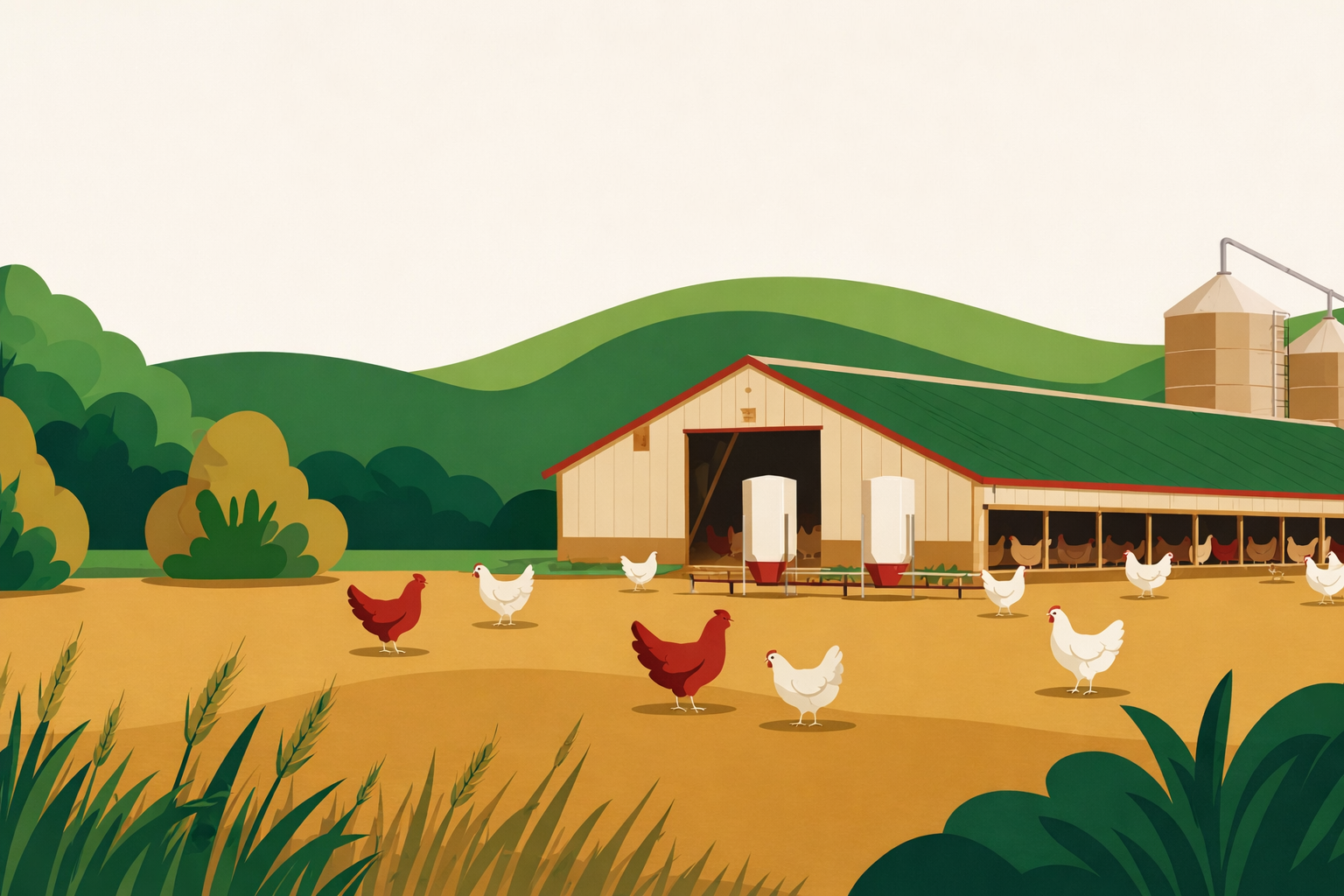
Poultry farming is a process that goes in order
Good poultry farming does not start with buying chicks, but with a plan and paperwork. The whole journey from idea to first sale has its natural order — first you decide what and at what scale you want to produce, then you register the activity, prepare the building, buy the chicks, and only then the daily work with the flock begins. If you are just starting out, it is worth first reading the guide on poultry farming for beginners. Here we present the same stages as an ordered, step-by-step list.
First the decision: which poultry and at what scale
Before you start, you need to know what you are raising and why. Farming for your own needs looks different from farming for sale or large-scale farming. The choice of species — laying hens, broilers, turkeys, ducks, geese or guinea fowl — determines the size of the house, the length of the cycle and your duties. All the following steps depend on this decision, so it is worth thinking it through calmly and working out what you can afford.
Formalities are part of the start, not an add-on
Poultry farming is a regulated activity. Before you place the first chicks, you must complete poultry farm registration and often obtain a veterinary identification number for the farm. Every flock is reported and kept in the IRZplus flock records. Skipping these steps means not only penalties but also no legal way to sell. That is why we treat formalities as a full-fledged stage, not a bureaucratic add-on at the end.
You record everything in one place with DlaFerm.pl
The more stages there are, the easier it is to lose something — a vaccination date, a placement date, a medicine withdrawal period before sale. DlaFerm.pl ties the whole cycle together in one poultry farm management software: you keep a digital Flock Card, treatment and withdrawal records, and documentation ready for inspection. You can also have DlaFerm.pl file your flock-change reports to the often unintuitive IRZplus — we send them to ARiMR for you, if you want, without re-typing the data in the portal. To keep planning in order, the poultry farmer’s calendar also helps by reminding you of the next tasks.
Six stages of poultry farming in order
From idea and paperwork to selling live birds or eggs — here are the stages of the cycle in their natural order. Each builds on the previous one.
1. Plan and registration
You start with a decision: which species, what scale, for your own needs or for sale. You budget and check whether you fit within the limits. Then you complete farm registration and — if needed — a veterinary number for the farm. A smaller scale may fall under farming without a permit — check the thresholds in the sources.
2. Preparing the building
The house must be ready before the chicks arrive. You check whether it meets the house requirements for floor space, ventilation and heating, and before every placement you carry out house preparation — cleaning, disinfection, fresh litter and warming up. This is also where you put farm biosecurity in place.
3. Buying chicks
You buy chicks from a verified, registered source — ideally from a hatchery with health documents. You choose the right line or breed for your goal and check the health status of the parent flock. You plan the order so the delivery date matches the readiness of the house. This is the moment when a new flock cycle formally begins.
4. Brooding the chicks
The first days decide the whole cycle. Chicks need a high temperature, easy access to feed and water, and the right lighting. You watch the temperature and humidity in the house and the dry litter. The details depend on the species — for example, for chickens this is described in broiler brooding, and for turkeys in turkey brooding.
5. Production and running the flock
After brooding comes the main phase — fattening for meat or egg production. You feed with age-matched feed, control gains or laying and flock health. You keep treatment and withdrawal records up to date and watch welfare. This is the longest stage of the cycle and the one that decides the financial result.
6. Sale and documentation
At the end you sell the live birds or eggs. The way of selling depends on the scale — from on-farm sale under local retail (RHD) to collection of live birds for the slaughterhouse and live-bird collection. You watch the medicine withdrawal period before sale, gather the documents and close the cycle in the records. Then comes the downtime period and preparation for the next batch.
Schedule, costs, inspections and mistakes
Six things that are easiest to overlook between stages — and that cost the most when they are forgotten.
Schedule and deadlines
Farming runs by the calendar: the dates of placement, vaccinations, weighings, withdrawal periods and collection must line up. A late step ruins the next ones — for example, a badly planned placement clashes with the readiness of the house. The poultry farmer’s calendar makes task planning easier and keeps the deadlines for you.
Costs and profitability
The biggest cost is feed, followed by chicks, heating and energy. We cover heating costs in house heating, and how much you can realistically earn is shown in the guide on how much you can earn from poultry farming. Work out the budget before you start, because you carry the costs before the first revenue appears.
Formalities and limits
Some duties depend on the scale. A small backyard flock has different requirements than a commercial farm, and above certain thresholds (including livestock units — large conversion units) extra approvals are needed. Do not guess the “without a permit” thresholds — check them in the current regulations and the sources below, because they do get changed.
Inspections and readiness
The Veterinary Inspection may visit the farm. What counts is up-to-date IRZplus flock records, treatment documentation and biosecurity in place. Inspection readiness is not a one-off effort but order kept throughout the cycle — which is why it is worth having the documents in one place rather than in several notebooks.
Records from day one
The most common mistake is putting records off “for later”. Every placement, medication, death and sale must be noted — ideally right away. The digital Flock Card and treatment and withdrawal records do this conveniently, with no risk that a loose sheet of paper goes missing before an inspection.
Typical beginner mistakes
The most frequent slip-ups are skipping registration, buying chicks from an unreliable source, weak biosecurity and ignoring the withdrawal period before sale. We have gathered them in the guide on beginner poultry farmer mistakes. Most can be avoided by sticking to the order of stages described above.
Frequently asked questions about poultry farming step by step
Where do you start with poultry farming?add
Not with buying chicks, but with a plan and paperwork. First you decide which species and at what scale you want to raise, and whether for your own needs or for sale. Then you budget, register the farm and — if needed — obtain a veterinary number for the farm. Only once the building is ready do you buy the chicks.
Does poultry farming have to be registered?add
Yes. Poultry farming is a regulated activity, so it must be reported to the relevant services and the flock kept in the IRZplus records, and a veterinary identification number for the farm is often needed too. The scope of duties depends on the scale and purpose of production. Check the exact thresholds and requirements in the current regulations and with the competent district veterinary officer.
How many stages does the poultry farming cycle have?add
In simple terms, six: plan and registration, preparing the building, buying chicks, brooding, production, and sale and documentation. Each stage builds on the previous one — skipping an earlier step usually ruins the later ones. After the sale comes the downtime period and preparation for the next batch.
Can you keep poultry without a permit?add
A small flock, especially a backyard one, may not require extra permits, but registration and record-keeping duties usually apply to anyone keeping poultry anyway. Above certain flock-size thresholds (counted, among other things, in large livestock conversion units) extra approvals are needed. Check the specific thresholds in the current regulations — they do get changed.
What is the biggest cost in poultry farming?add
Feed costs the most — it is usually the largest item in the budget. After it come chicks, heating and energy, especially in winter during brooding. That is why it is worth working out the budget before you start, because you carry all these costs before the first revenue from selling live birds or eggs appears.
When should you start keeping flock records?add
From day one, ideally already at the placement of the first chicks. Every placement, medication, death and sale must be noted as it happens, because putting records off “for later” is the most common beginner mistake. The digital Flock Card and treatment records in DlaFerm.pl let you do this conveniently, with no risk that documents go missing before an inspection.
Run your poultry farm step by step with DlaFerm.pl
Want the plan, records and flock documentation under control from day one? We will show you how DlaFerm.pl guides you through the successive stages of farming. Write to us.
Phone
+48 796 258 151