Poultry farmer’s work calendar — what to do and when
Work on a poultry farm follows a steady rhythm: house preparation, chick placement, brooding, fattening or production, and finally a downtime period with disinfection before the next flock. We show what to do at each stage of the cycle and which tasks recur every day, every week and every month — so nothing slips and every deadline is met.
verifiedFrom the team that has organised work on poultry farms for years.
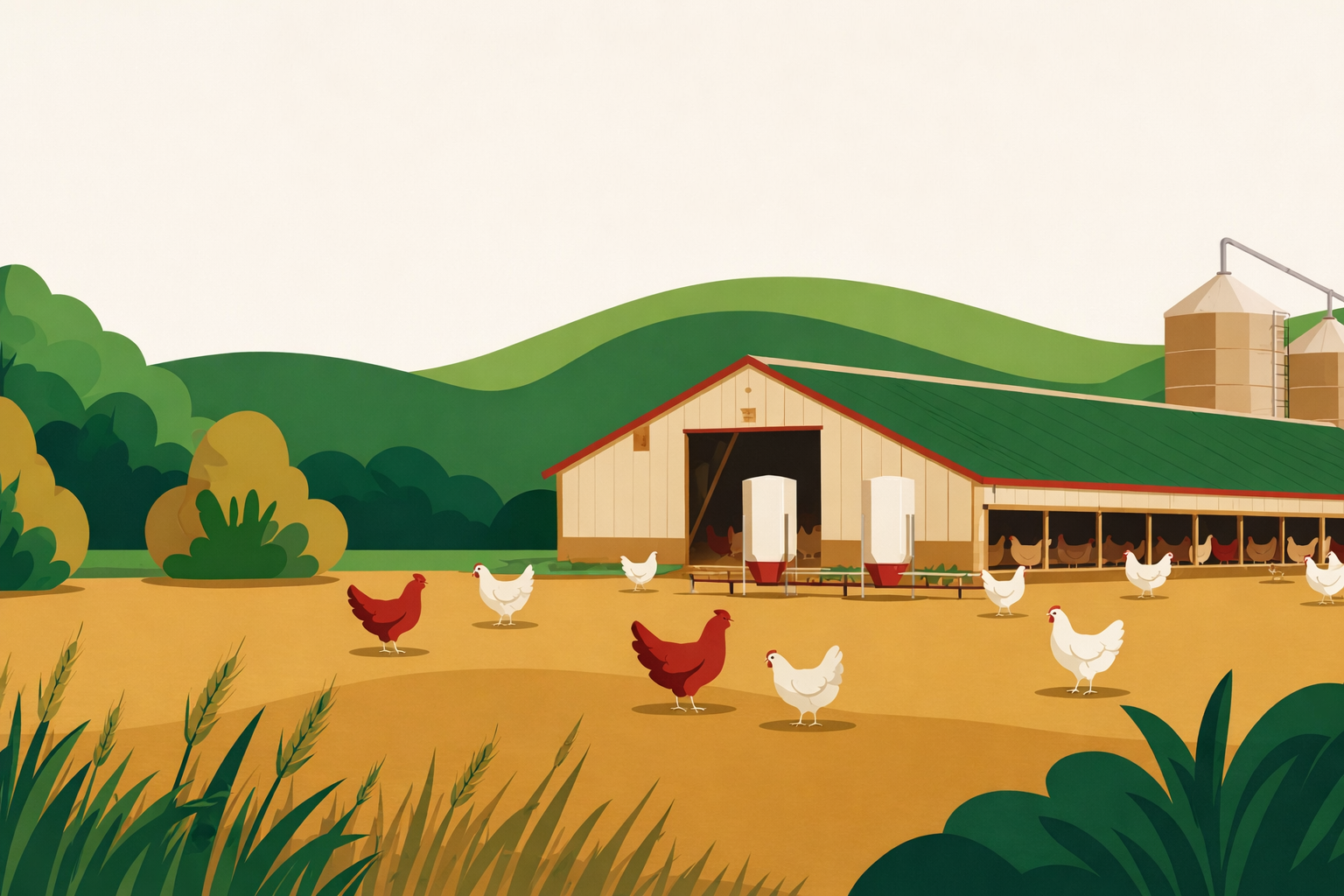
Farming is a rhythm, not chaos
A well-run poultry farm works like clockwork — every task has its moment. The cycle starts with an empty, cleaned house, runs through chick placement, brooding and production, and ends with collecting the flock and a downtime period. Those who keep to a fixed calendar avoid frantic last-minute decisions and work more calmly. We describe the whole cycle in the guide on poultry farming step by step.
Tasks depend on the phase of the cycle
The same task looks different in another phase. In brooding, temperature and access to feed and water matter most; in fattening, ventilation and dry litter; and at collection, proper preparation for transport. That is why a farmer’s calendar is not a single list but a set of tasks tied to specific days of the cycle. Checkpoints for a young flock are gathered in the guide on a poultry young flock.
Recurring tasks and hard deadlines
Alongside phase-dependent tasks are jobs that always return: a daily walk-through and mortality check, weekly weighings, monthly summaries of feed and water use. On top of that come formal deadlines — flock registrations, vaccinations, tests. You keep track of them conveniently through a digital Flock Card and treatment and withdrawal records, which hold all entries in one place.
The season matters too
Some work depends not on the flock’s age but on the time of year. In winter the cost of heating and the risk of avian influenza rise; in summer you must fight the heat and cool the house effectively. Spring and autumn are good times for inspecting installations and repairs between batches. We tie seasonal risks and duties to biosecurity — more in the guide on poultry farm biosecurity.
DlaFerm.pl reminds you of deadlines
The hardest part is not forgetting — a weighing, a vaccination, the end of a withdrawal period or a flock registration. DlaFerm.pl keeps the work calendar for you in the poultry farm management software: in the Flock Card you see what to do and when, and the system reminds you of upcoming deadlines and duties from flock records in IRZplus — and, if you want, it files the flock-change reports to IRZplus for you automatically. As a result no deadline is missed.
What to do and when — stages in the farmer’s calendar
From an empty house to the downtime period — six stages that lay out the whole cycle over time. Each has its tasks and checkpoints.
Before placement — preparation
A few days before placement, the house must be cleaned, disinfected, lined with fresh litter and warmed up. You check the heating, ventilation, feed and drinking lines and order the chicks and starter feed. Details in the guide on house preparation before placement, and we describe the cleaning step in house cleaning and disinfection.
Placement and the first days
On placement day you receive and spread the chicks, register the flock and set the starting conditions. Through the first week, temperature, easy access to feed and water and good lighting matter most. Key are temperature and humidity in the house and a well-set lighting programme.
Brooding — the first weeks
During brooding you gradually lower the temperature, expand the area and watch whether the chicks eat and drink evenly. This is the time of greatest sensitivity to mistakes, so daily observation is most important. Checkpoints for a young flock are gathered in the guide on a poultry young flock.
Production or fattening
In the main phase the flock grows intensively or lays eggs. Demand for air rises, so refined house ventilation and dry litter protect against ammonia and leg problems. We cover litter in litter management in the house.
Weighings, vaccinations, dosing
Throughout the cycle, planned tasks return: weekly control weighings, vaccinations and medications on set days. You record every medication together with its withdrawal period — details in poultry medicine withdrawal, and you keep the whole in treatment and withdrawal records.
Collection, downtime, disinfection
At the end you plan the flock collection and transport, then take a downtime period: removing droppings, thorough cleaning and disinfection, drying the house and a rest from birds. Only after that do you place the next flock. The empty-house rule between batches is a cornerstone — we describe it in all-in/all-out on a poultry farm.
Recurring tasks and deadlines you must keep
Alongside the cycle stages are jobs that always return, plus hard record-keeping deadlines and seasonal risks. Here are six areas you must not miss.
Daily tasks
Every day you walk the flock: you check the birds’ behaviour, collect and count dead birds, and monitor temperature, water, feed and ventilation. This is the first line of detecting problems — an early signal often saves the whole batch. This is helped by early detection of poultry diseases.
Weekly tasks
Each week you weigh a control sample of birds, assess flock uniformity and compare gains against the plan. You also check the litter, the state of installations and feed stocks. Regular weighings let you react in time when the flock departs from the plan — how to calculate them is shown in the weight and gain table.
Monthly and periodic tasks
Monthly or after each batch you sum up the results: feed and water use, mortality, costs and profitability. This is the moment for equipment checks, orders and planning the next placements. Results are easier to compare when you have them in one place — in the house record-keeping software.
Record-keeping deadlines and formalities
Every flock you register and record in IRZplus by the set deadlines — and, if you want, DlaFerm.pl files those reports for you automatically, with no manual re-keying of data in the ARiMR portal. You also keep a farm entry log and watch over treatment documentation. A late registration or a missing entry is a risk during an inspection, so treat formal deadlines on a par with tasks at the flock.
Seasonal work — winter and summer
In winter the cost of house heating and the risk of avian influenza rise, so you tighten biosecurity and set minimum ventilation so as not to chill the flock. In summer you fight the heat — effective cooling and access to cool water are the priority. Spring and autumn are a good time for inspections and repairs between batches.
Seasonal risks — avian influenza
In periods of heightened avian-influenza risk (usually autumn–winter) additional rules apply: limiting contact with wild birds, tightened entry control and vigilance for symptoms. You report any suspicion immediately — how to do it is described in reporting suspected avian influenza, and the symptoms in avian influenza symptoms in poultry.
Frequently asked questions about the farmer’s work calendar
What is a poultry farmer’s work calendar?add
It is an ordered plan of tasks spread over the cycle — from house preparation and chick placement, through brooding and production, to flock collection and a downtime period. Alongside the cycle stages it also covers recurring jobs (daily, weekly, monthly) and hard formal deadlines. Thanks to it, work on the farm has a steady rhythm and no task is missed.
What tasks are done daily on a poultry farm?add
Every day you walk the flock: you observe the birds’ behaviour, collect and count dead birds and monitor temperature, water, feed and ventilation. Daily observation is the first line of detecting problems — an early signal often saves the whole batch. It is worth recording the walk-through results straight away in the Flock Card.
How often is a poultry flock weighed?add
Control weighings are usually done once a week, and during brooding sometimes more often, to keep comparing gains against the plan. You weigh a representative sample of birds and assess flock uniformity. Regular weighings let you react in time when the weight departs from the plan.
What is a downtime period and how long does it last?add
A downtime period is the time between collecting one flock and placing the next, when the house is empty. It is used for removing droppings, thorough cleaning, disinfection and drying the house. Its length depends on the technology and recommendations, but the rule is fixed: the next flock is placed only into a clean, dried and rested house.
Which work matters in winter and which in summer?add
In winter the priority is house heating, keeping minimum ventilation without chilling the flock and tightened biosecurity due to avian-influenza risk. In summer the most important thing is cooling the house and constant access to cool water to avoid heat stress. Spring and autumn are good periods for inspecting installations and repairs between batches.
Does DlaFerm.pl remind you of deadlines and tasks?add
Yes. DlaFerm.pl keeps a work calendar in the Flock Card and reminds you of upcoming tasks and deadlines — weighings, vaccinations, the end of a withdrawal period or flock registrations. You see in one place what to do and when, and record-keeping duties do not slip. As a result you work more calmly and stay ready for an inspection.
Keep your farm’s work calendar under control with DlaFerm.pl
Want the cycle, tasks and deadlines in one place, with reminders in the Flock Card? We will show you how DlaFerm.pl organises daily work on a poultry farm. Write to us.
Phone
+48 796 258 151