Sheep farming: where to start, what it costs and whether it pays
You start a sheep flock by choosing what the sheep are for, the breed, the pasture and the housing, and only then buy ewes. Profit depends on lamb rearing, feed costs and subsidies. This overview walks you through every topic in our sheep section.
verifiedFrom the team that has organised work on poultry farms for years.
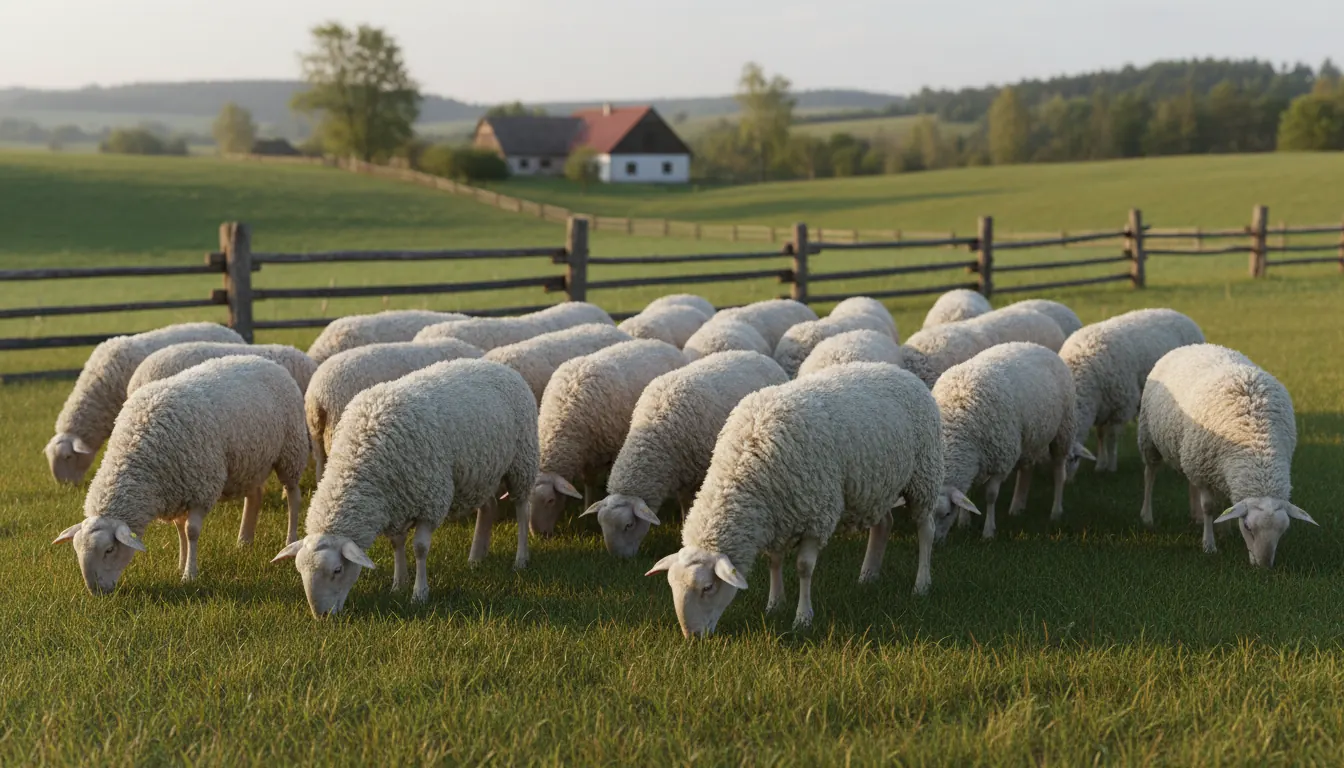
You start sheep farming with three decisions: why you keep sheep (meat, wool, milk, or conserving breeds), which breed you choose and where the flock will graze. Only then do you buy ewes. A small flock can be a dozen or so animals and a good pasture, but from day one you must register the animals with Poland's ARiMR (Agency for Restructuring and Modernisation of Agriculture). We cover the details in our guide to registering sheep with ARiMR.
How long do sheep live
People ask how long a sheep lives, but on a commercial farm the productive life matters more. Ewes stay in the flock as long as they lamb well, rear their lambs and keep healthy teeth and udders. The age at which you cull an ewe depends on breed, body condition and management, so we do not give a single figure. You assess your ewes every year at mating and after weaning.
How to use this overview
Below we list the topics in the order you deal with them on the farm: breeds, housing, feeding, breeding, health, rules and economics. Each topic links to a separate guide. The figures come from publications of IZ PIB (Poland's National Research Institute of Animal Production), WODR Poznań (the Poznań agricultural advisory center) and similar sources, and we state the data year in the text.
Breed and purpose
Meat, wool and dairy breeds
You will find an overview of all the purposes in our guide to sheep breeds. Meat breeds such as Suffolk or Texel give well-muscled lambs, often as the sire breed in crossbreeding. We describe the Polish Merino as a wool and meat sheep. The East Friesian is a dairy breed, and we write about milking and cheese in our article on sheep milk.
Native and conservation breeds
Polish native breeds, for example the wrzosówka, świniarka and olkuska, are well adapted to local conditions. According to IZ PIB (Wiadomości Zootechniczne, data 2008–2016), lamb rearing rates differ between breeds: in 2016 it was 94.2% for Wielkopolska sheep and 77.4% for olkuska. One farm with Uhruska sheep described in an IZ PIB monograph reports fertility of 96%, prolificacy of 180% and lamb rearing of 95%. These figures show that results depend on breed and flock management.
Housing, pens and pasture
Sheep house and floor space
The building should be dry and airy, with no drafts at animal height. We describe bedding and ventilation in our guide to the sheep house. The WODR Poznań farm guide (May 2024) gives minimum floor areas: at least 2.16 m² for a female over 12 months kept singly, at least 2.5 m² for an ewe with a lamb plus 0.7 m² for each further suckling lamb, and at least 1.5 m² for a female aged 6–12 months. Check the current legal requirements before you build.
Fencing and grazing
You choose fencing to suit the number of sheep and the terrain: electric fence, netting or a handling pen. We cover this in our article on sheep pens and fencing. Dividing the pasture into paddocks limits parasite infection and makes better use of the sward, as we explain in our guide to grazing sheep. The "Animal welfare" eco-scheme in Poland's Strategic Plan for the CAP for 2023–2027 requires, in its sheep option, grazing or access to a run for at least 120 days of the growing season, and living space at least 20% larger.
What to feed sheep
In summer the ration is based on pasture, in winter on hay and silage, and concentrate tops it up for ewes in late pregnancy and lactation. We explain the grazing season in our article on what sheep eat, and the indoor period in our guide to winter feeding of sheep. A feed shortage in late pregnancy lowers lamb birth weight and the ewe's milk, so do not skimp on the ration then. Sheep need constant access to fresh water.
Mating, lambing and lamb rearing
Mating and the ram
Flock results start with heat, ram selection and the ewes' condition before mating. You will find everything about mating dates and organization in our guide to sheep breeding. When choosing a ram, look at performance evaluation: in 2019 a total of 10,689 sheep were evaluated in Poland with the BLUP method, including animals from sire and dam flocks (IZ PIB).
Lambing and lambs
At lambing you watch the ewe and help when needed, as described in our article on lambing. A lamb must get colostrum as soon as possible, and the next steps, including artificial feeding and weaning, are in our guide to rearing lambs. Lamb losses cut income the most, which is why Britain's AHDB devotes a separate manual to it, "Reducing lamb losses". You sell lambs for slaughter, and we describe finishing and buying in our article on slaughter lambs.
Diseases, parasites and vaccination
The most common sheep health problems are covered in our guide to sheep diseases. Gut parasites come back every grazing season, so plan your worm control around the rules and timing for sheep. The AHDB manual "Worm control in sheep" advises against dosing by the calendar and recommends acting only after assessing the situation in the flock. A vet always chooses the medicine and dose, and after treatment you observe the withdrawal period before slaughter and milking. Bluetongue is a disease that must be reported to the authorities, so read up on it.
Registration, subsidies and obligations
Registration and identification
Every sheep keeper must make reports to ARiMR, identify the animals and keep a flock register. We describe the steps in our guide to registering sheep with ARiMR. The legal state in this overview is 23.11.2026, but before you report, check the current rules on the ARiMR website and with your county veterinarian (powiatowy lekarz weterynarii).
Subsidies
Support for sheep farmers changes with farm programs, so check current payments and deadlines for sheep and goat subsidies. In older IZ PIB data (economics of sheep keeping, early 2000s) the payment for sheep was 105.90 PLN per head, and the agri-environmental payment for local breeds was 320 PLN per head. Rates are different today, so treat these only as an illustration of how much subsidies matter. Check current application rounds with ARiMR.
Is sheep farming profitable
Profitability depends on the number of lambs reared per ewe, the sale price, feed costs and subsidies. In an IZ PIB analysis, income per breeding ewe was 1478.01 PLN with full support and 679.37 PLN with no subsidies. The share of CAP support in income ranged from 66.98% to 84.82%. This is historical data, but it shows how strongly the result depends on subsidies. We do not give lamb or wool prices because they change with the season; ask your buyers. Work through the numbers step by step for your own flock, and look into wool use and shearing as extra income.
Frequently asked questions
How do I start sheep farming?add
Start by choosing what the sheep are for and the breed, then prepare the pasture, fencing and housing. Register the flock with ARiMR and only then buy ewes. For a first flock, start with a dozen or so animals rather than a large number.
How long do sheep live?add
Lifespan depends on breed, health and management, so we do not give a single figure. In a commercial flock the productive life counts: you cull an ewe when her prolificacy, lamb rearing, teeth or udder decline.
How much space does a sheep need indoors?add
According to the WODR Poznań guide (May 2024), a female over 12 months needs at least 2.16 m² when kept singly. An ewe with a lamb needs at least 2.5 m² plus 0.7 m² for each further suckling lamb. Details are in our guide to the sheep house.
Is sheep farming hard for beginners?add
Sheep are hardy, but they need good care at lambing, parasite control and sturdy fencing. Beginners lose most with lambs and parasite infections. It is worth starting with a hardy breed, for example a native one.
Is sheep farming profitable?add
It can be, but the result depends on lamb rearing, feed costs and subsidies. In IZ PIB data, income per ewe was more than twice as high with full support as without subsidies. Make your own calculation at current prices.
Do I have to register my sheep?add
Yes. A sheep keeper has registration duties with ARiMR, including identifying the animals and keeping a flock register. Check the current requirements with ARiMR and your county veterinarian.
Sources & resources
- linkIZ PIB — Livestock keeping and breeding over 70 years. Cattle Breeding Department, Sheep and Goat Breeding Department
- linkWODR Poznań — Farm Guide, May 2024 (Welfare issues in sheep and goat keeping)
- linkIZ PIB (Wiadomości Zootechniczne) — Development of native sheep breed farming in Poland in 2008–2016
- linkIZ PIB (Wiadomości Zootechniczne) — Economics of sheep keeping in Poland in the early 21st century
- linkIZ PIB (monograph) — The potential of native sheep breeds in natural food production: tradition, regionality, quality
- linkARiMR — gov.pl/web/arimr
Prepared by: DlaFerm Team based on data from the sources listed · Publisher: INSTA-TECH sp. z o.o.
Keep your visitor log and treatments in one place
DlaFerm has general modules that help keep your farm in order: the <a href="/ksiega-wejsc-na-ferme">QR entry and exit log</a> and <a href="/ewidencja-leczenia-i-karencja-lekow">treatment and withdrawal period records</a>. Create a free farm account or get in touch.
Phone
+48 796 258 151