Feeding sheep in winter: hay, silage and concentrate
In winter, forage is the base of the sheep ration: hay, haylage and maize silage. You add cereal grain in amounts that depend on the stage, with the most in late pregnancy. We show how to work out hay per ewe and how good silage can replace concentrate.
verifiedFrom the team that has organised work on poultry farms for years.
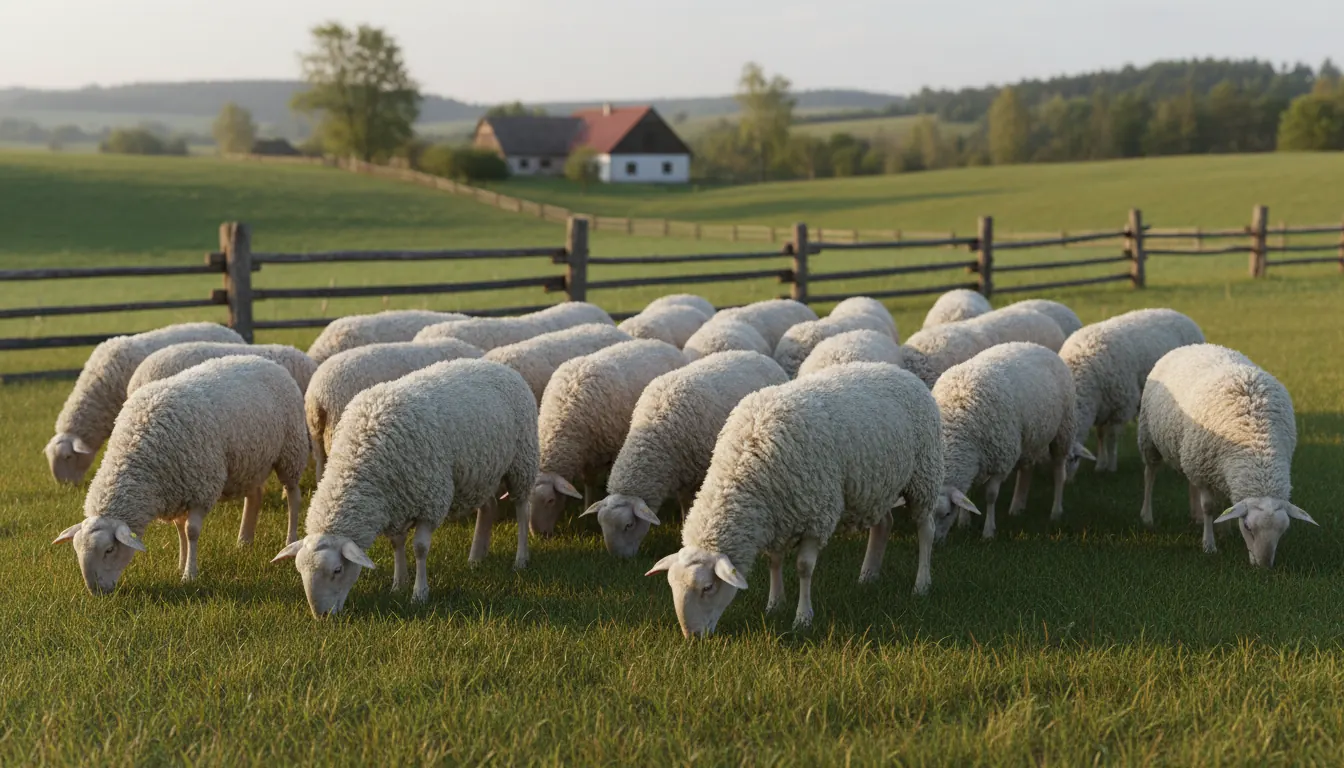
In winter, feed sheep mainly hay, haylage or maize silage, and add cereal grain in limited amounts. This is the winter ration on a farm described in a monograph by IZ PIB (Poland's National Research Institute of Animal Production) on native breeds: maize silage, haylage or hay with barley grain at about 0.5 kg/day/head. The grazing season there ran from mid-May to October, so for the rest of the year the flock eats feed stored in summer.
What the ration depends on
A ewe's needs change during winter. You feed a dry ewe after weaning differently from one in the last weeks of pregnancy, and differently again in lactation. Breed, body weight and the number of lambs carried also matter. We describe general feeding on pasture and in the shed in What sheep eat. Here we focus on the months with no green forage.
Hay and haylage as the base of the ration
What hay to give sheep
Good hay is dry, smells fresh and has no mold or dust. Sheep pick soft, leafy stems and leave coarse stalks in the manger. Hay cut from young, early-mown sward has more protein and energy than hay from overgrown grass. Mold can harm sheep, especially pregnant ewes, so reject damp batches. Store hay under a roof and on pallets so it does not draw moisture from the ground.
Haylage
Haylage made from wilted grass is a common winter feed on Polish sheep farms, alongside hay. Its value depends on the cutting date and on how well it was ensiled. Once you open a bale or clamp, feed it quickly, because air spoils it. Sheep kept in a sheep shed should have constant access to a manger free of spoiled leftovers from the day before. Never feed spoiled haylage, even in small amounts.
Maize silage and forage quality
Maize silage
On the farm described in the IZ PIB monograph, the main winter feeds for ewes were maize silage, haylage and hay. Maize silage supplies a lot of energy but little protein, so it needs topping up with protein feeds. Introduce it gradually, because a sudden change of ration stresses the rumen. Ask an adviser from your ODR (regional agricultural advisory center) to check the ration when you have several types of forage on the farm.
Why silage quality matters more than the amount of grain
Teagasc (Ireland's agriculture and food development authority) trials on sheep show how strong this effect is. They compared silage with a dry matter digestibility of 79 and 70, and ewes got 15 or 25 kg of concentrate per head in late pregnancy. After lambing, ewes on the better silage weighed 71.7 and 73.6 kg, and on the poorer silage 61.8 and 64.1 kg. Body condition score at lambing was 4.0 on the better silage and 2.8–3.0 on the poorer. Lambs from ewes on the better silage were 0.5 kg heavier at birth and 1.9 kg heavier at weaning. They reached slaughter 17 days sooner, which Teagasc says equals the response to 19 kg of concentrate per lamb. So better silage gave more than an extra 10 kg of concentrate in pregnancy.
Grain and cereal mixes
How much grain for ewes
The IZ PIB monograph gives ewes in winter barley grain at about 0.5 kg/day/head on top of hay or silage. This is an example from one farm, not a norm for every flock. You set the amount by forage quality, the condition of your sheep and the production stage. If the hay is poor, grain has to cover more of the need. With good silage you can cut it back, as the Teagasc results confirm.
Fattening lambs
On that farm, lambs fattened for slaughter after weaning got whole barley ad libitum and a cereal mix (CJ) at 0.5–0.6 kg/day/head, plus hay ad libitum. Hay stays in the lamb ration because a young rumen needs fiber. When you feed grain, watch the flock, because too much starch leads to digestive upsets. The lambs there were sold for export at 22 to 35 kg, depending on demand. You will find the profit calculation for fattening in our text on the profitability of sheep farming.
How much hay per sheep: how to work it out
We cannot give one figure for how much hay a sheep needs, because intake depends on body weight, breed, stage and hay quality. Work it out on your own flock. Weigh a few bales and take the average weight. Split the flock into groups: dry ewes, pregnant ewes, nursing ewes and lambs. For a few days give a fixed amount of hay and weigh the leftovers. The difference is the real intake. Multiply it by the number of sheep and the number of winter days, then add a reserve for losses and a longer winter.
Winter reserve
Work out how long the housing period lasts. On the monograph farm, grazing ended in October and began in mid-May, so the flock ate winter feed for about half a year. Your flock may go out for more or fewer days, depending on region and weather. Plan the stock for the longest winter, not the average. Running short in March is the most common reason for panic-buying expensive hay. We cover pasture assessment and grazing dates in the article on grazing sheep.
The ration in pregnancy and after lambing
Late pregnancy
In the last weeks of pregnancy the lambs grow fast and rumen capacity shrinks. The ewe eats less bulk, so the feed must be richer in energy. Good silage or hay and grain help here. Teagasc showed that a ewe's condition at lambing affects lamb weight. A ewe that is too thin will drop weaker lambs, and one that is too fat risks a difficult birth. We describe lambing in Lambing.
Lactation and rearing lambs
In the IZ PIB monograph, lambing in the described flock fell mainly in February and March, and lambs stayed with their mothers for about 100 days. A nursing ewe needs more feed than in pregnancy because she makes milk. Keep good hay available and add concentrate depending on how many lambs she is rearing. Lambs start nibbling hay and grain early, which helps rumen development. Meat and dairy breeds have different needs, as we explain in the article on sheep breeds.
Water, minerals and body condition
In winter sheep need constant access to clean water, also when the temperature drops below zero. A frozen drinker cuts feed intake just as a lack of feed does. Put out mineral licks made for sheep, not for cattle, because mixes for different species differ in composition. Every few weeks score body condition by feeling the back and loin, and group thinner animals separately so they can eat without competition. Check condition before mating too, because it affects breeding results, as we explain in Sheep breeding. Check for parasites in winter as well, because condition drops with infestation. Timing and withdrawal periods are covered in the article on worming sheep; the vet always chooses the medicine and dose.
Frequently asked questions
What should you feed sheep in winter?add
The base of the ration is hay, haylage or maize silage. You add cereal grain, such as barley, in an amount that depends on the stage and forage quality. On the farm described in the IZ PIB monograph this was about 0.5 kg/day/head for ewes.
How much hay does a sheep need per day?add
It depends on the ewe's weight, breed, production stage and hay quality. Weigh the bales, give a fixed portion for a few days and weigh the leftovers. The difference shows the real intake in your flock.
Can sheep live on straw alone?add
Straw is low in energy and protein, so it will not cover the needs of a pregnant or lactating ewe. You can give it as extra fiber, but the main forage should be good-quality hay or silage.
Do sheep need concentrate in winter?add
It depends on forage quality and the stage. Teagasc trials showed that better silage gave ewes more weight and better condition at lambing than extra concentrate did. Concentrate matters most in late pregnancy and in lactation.
How do you feed lambs in winter?add
Lambs with their mothers get milk and start nibbling hay and grain early. On the described farm, fattening lambs after weaning got barley ad libitum and a mix at 0.5–0.6 kg/day/head, with hay ad libitum.
Sources & resources
- linkIZ PIB (monograph) — The potential of native sheep breeds in natural food production: tradition, regionality, quality
- linkTeagasc — Teagasc Sheep Open Day 2022
- linkNational Research Institute of Animal Production — izoo.krakow.pl
Prepared by: DlaFerm Team based on data from the sources listed · Publisher: INSTA-TECH sp. z o.o.
Keep treatment and withdrawal records in one place
The Treatment and Withdrawal module in DlaFerm lets you log treatments and withdrawal dates, including when you feed sick animals. Create a free farm account or get in touch.
Phone
+48 796 258 151