Sheep breeds: meat, wool, dairy and Polish native breeds
We group sheep breeds by main purpose: meat, wool, dairy and general purpose. Polish native breeds form a separate group covered by a genetic resources protection program. We show how they differ and how to match a breed to your pasture, your building and your production goal.
verifiedFrom the team that has organised work on poultry farms for years.
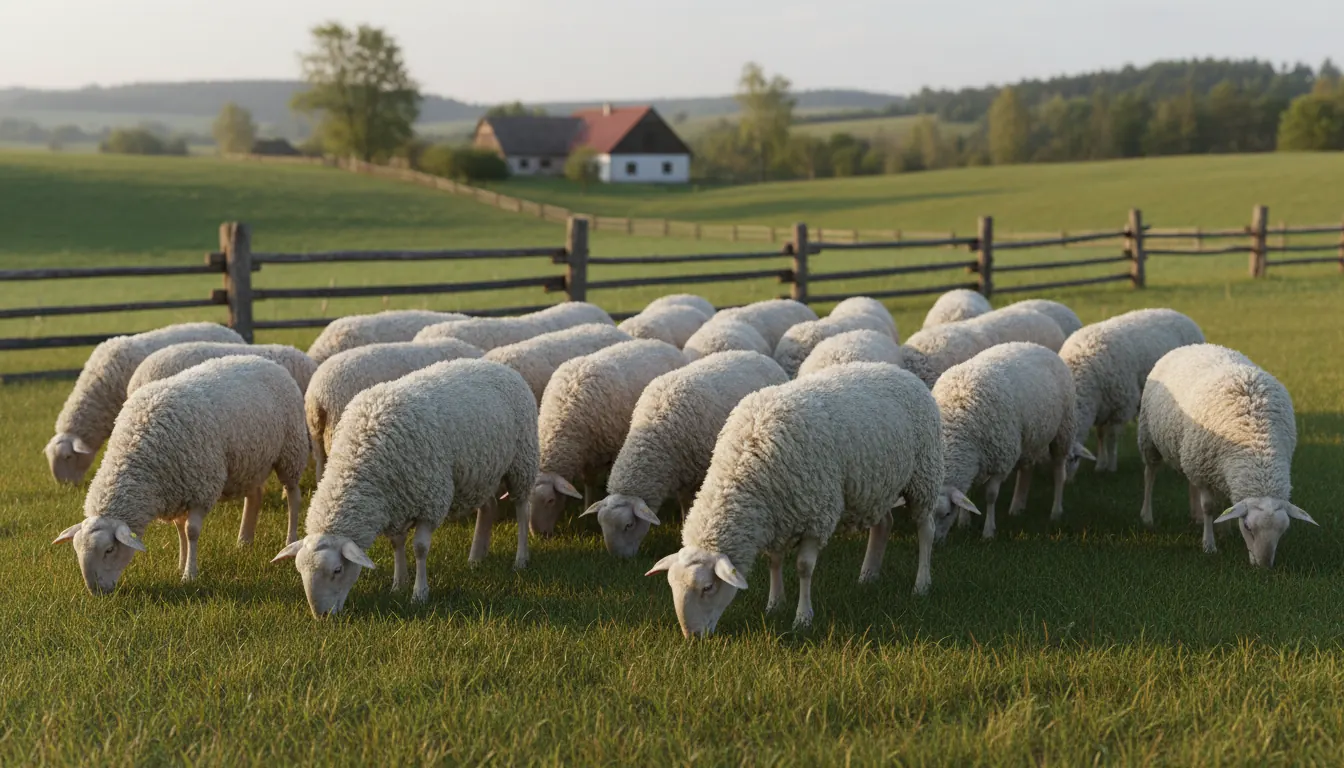
You group sheep breeds by what you keep them for: meat, wool, milk, or a bit of everything. Meat breeds, such as the Czarnogłówka (Blackhead), produce well-muscled lambs. Merinos are wool sheep, and the East Friesian is a dairy sheep. Poland also runs a genetic resources protection program for sheep that covers native breeds. If you are just starting out, read first about how to start keeping sheep.
Where to start when choosing a breed
First decide what you want to sell: slaughter lambs, wool, milk or breeding stock. Then check what you have: pasture, a sheep house and time to work with the flock. Primitive breeds cope well with extensive keeping. General-purpose and meat breeds need better feeding and a more comfortable building. Below we describe the breed groups and give figures from research by the Institute of Animal Science (IZ PIB), Poland's National Research Institute of Animal Production.
Meat sheep breeds
Czarnogłówka: a meat breed from Poland
The Czarnogłówka is a Polish meat breed. In IZ PIB research from 2017–2018 it was counted among sheep kept in a more intensive system, together with the general-purpose breeds: Uhruska, Pomorska, Wielkopolska and the old-type Polish Merino. This kind of keeping means better feeding of lambs and more careful rearing than with primitive breeds. For details, see our page on the Czarnogłówka sheep. When you choose a meat breed, remember that lambs must grow well from the first weeks, so feeding ewes in pregnancy and lactation matters.
Cameroon sheep and imported breeds
Keepers choose Cameroon sheep mainly for meat, and we describe them separately: keeping, meat and requirements of Cameroon sheep. Their coat is short hair, so there is no usual wool shearing. Among foreign breeds, IZ PIB describes the Alpine White meat sheep from Switzerland. It was used in south-eastern Poland to improve the meat and milk performance of the native mountain sheep. The second breed was the prolific Bergschaf from Austria. This crossing shows that a meat breed is also chosen for prolificacy and mountain conditions.
Wool and general-purpose breeds
Polish Merino
The Polish Merino is a wool and meat sheep at the same time, and we describe it in our article on the Polish Merino. IZ PIB studies include the old-type Polish Merino, kept in conservation flocks, and the colored Polish Merino. The colored type had a litter weight at day 56 of 25.2 kg in 2016, one of the higher results among the breeds assessed. With Merinos, wool needs attention: you must pick a shearing date and prepare the flock, as we explain in our article on sheep shearing.
General-purpose breeds
General-purpose breeds give you slaughter lambs and wool at the same time. The IZ PIB study from 2017–2018 placed Uhruska, Pomorska, Wielkopolska and the old-type Polish Merino in this group. They were kept more intensively than primitive breeds. This is a good choice when you do not want to bet only on meat and you have permanent pasture and a building for winter. The genetic resources protection program also includes the Corriedale and the Kamieniecka.
Dairy sheep breeds
East Friesian sheep
The dairy breed named most often is the East Friesian. We describe it in a separate article: East Friesian sheep, a dairy sheep breed. Keeping sheep for milk means a different way of working than keeping them for meat. You milk the ewes, so you need fixed hours, hygiene and good feeding in lactation. In this system the choice of feed matters most, and you can read about it in what sheep eat.
Milk versus rearing lambs
If a ewe nurses her lambs, the milk goes mainly to them. Litter weight at day 56 shows how well a ewe rears her offspring. This index covers both prolificacy and the growth rate of the lambs. When you plan dairy keeping, decide how many lambs you leave with their mothers and how many you wean. We devoted a separate article to the lambing period: lambing, pregnancy and help at birth.
Polish native sheep breeds
Which breeds count as native
An IZ PIB monograph on the potential of native breeds assessed eight breeds kept from Podhale (the foothills of the Tatra Mountains) to Pomerania: Uhruska, Pomorska, old-type Polish Merino, Wielkopolska, Czarnogłówka, Podhale Zackel (cakiel podhalański), Świniarka and Wrzosówka. The authors describe two types of keeping. Extensive keeping applies to primitive breeds: Wrzosówka, Świniarka and Podhale Zackel. A more intensive system is used for general-purpose and meat breeds. You can read more about two of them in our articles on the Wrzosówka sheep and the Polish Mountain Sheep from Podhale.
Why keep conservation breeds
Conservation breeds are kept in flocks covered by the genetic resources protection program. According to IZ PIB, the program covers 13 assessed breeds. Such keeping is usually extensive and works in areas where intensive keeping would be difficult. Native breeds are also a subject of research on natural food: tradition, regional identity and product quality. If you want to run such a flock, see the registration requirements in our article on registering sheep with ARiMR (Poland's Agency for Restructuring and Modernisation of Agriculture).
Prolificacy and litter weight: comparing breeds
Litter weight at day 56
Wiadomości Zootechniczne (a Polish animal science journal) gives litter weight at day 56 for breeds in the protection program. Data from 2016: Olkuska 27.3 kg, colored Polish Merino 25.2 kg, Żelaźnieńska 23.1 kg, Uhruska 22.4 kg, Wielkopolska 21.7 kg, Pomorska 21.4 kg, Kamieniecka 20.3 kg, Corriedale 20.1 kg. Primitive breeds score much lower: Podhale Zackel 12.1 kg, the colored variety of the Polish Mountain Sheep 11.8 kg, Świniarka 10.9 kg and Wrzosówka 10.9 kg.
How to read these figures
Litter weight depends on the number of lambs and how fast they grow, so primitive breeds come out lower. That does not make them worse: they need less feed and cope better with extensive keeping. The authors also note a slight drop in body weight at day 56 in the colored Polish Mountain Sheep and in the Wielkopolska, Corriedale and Żelaźnieńska breeds during the study period. Compare your own results with data for your breed, not with the average of all sheep.
How to choose a breed for your farm
Match the breed to your pasture and building
Primitive and native breeds cope well with extensive keeping, but they need solid fencing and sensible grazing. You will find tips in our articles on grazing sheep and sheep pens and fencing. For winter, prepare a sheep house with enough space, bedding and ventilation, and feed the flock well following the rules in feeding sheep in winter.
Profitability and support
In an analysis of sheep farm economics from the early 21st century, IZ PIB found that CAP (the EU Common Agricultural Policy) support made up from 67% to over 84% of income, depending on the payment variant. Sheep keeping often cannot rely on product sales alone. Check current payment rates with ARiMR, and current lamb prices with buyers. Plan your breeds and breeding together with the rules in our article on sheep breeding.
Frequently asked questions
What sheep breeds are there in Poland?add
Poland keeps meat, wool, dairy and general-purpose breeds, as well as native breeds. IZ PIB counts among the native ones Uhruska, Pomorska, Wielkopolska, Czarnogłówka, Podhale Zackel, Świniarka and Wrzosówka, among others. The genetic resources protection program covers 13 breeds.
What is the best sheep breed for meat?add
Czarnogłówka and Cameroon sheep are among the breeds kept for meat. The choice depends on whether you want intensive lamb rearing or simpler keeping. Compare litter weight and rearing results in flocks of your breed.
Which sheep breed is best for milk?add
The East Friesian is named most often. Dairy keeping means milking the ewes, good feeding in lactation and a steady work routine. You will find the breed description in a separate article.
What are the best sheep for a beginner?add
Choose a breed that fits your pasture and building. Primitive breeds such as Wrzosówka or Świniarka suit extensive keeping and have lower litter weights. General-purpose breeds give larger litters but need better feeding.
Is it profitable to keep native sheep breeds?add
IZ PIB found that CAP support made up a large part of income from sheep keeping, from 67% to over 84% in the variants analyzed. Check current payment terms with ARiMR before you buy a flock.
Sources & resources
- linkIZ PIB (Wiadomości Zootechniczne): Development of native sheep breeding in Poland in 2008–2016
- linkIZ PIB (monograph): The potential of native sheep breeds in natural food production: tradition, regionality, quality
- linkIZ PIB: Livestock keeping and breeding over 70 years. Cattle Breeding Department, Sheep and Goat Breeding Department
- linkIZ PIB (Wiadomości Zootechniczne): Economics of sheep keeping in Poland in the early 21st century
- linkARiMR: gov.pl/web/arimr
Prepared by: DlaFerm Team based on data from the sources listed · Publisher: INSTA-TECH sp. z o.o.
Keep biosecurity tight in your sheep flock
We have no separate module for sheep, but the general <a href="/generator-planu-bioasekuracji">biosecurity plan generator</a> helps you write down the rules for entering the farm, and the <a href="/ksiega-wejsc-na-ferme">QR visitor log</a> keeps track of visitors. Create a free farm account in DlaFerm or get in touch.
Phone
+48 796 258 151