Grazing sheep: pasture, paddocks and conservation grazing
A well-managed pasture lets sheep use about 80% of the herbage, while a neglected one gives only about 30% (data from IZ PIB, Poland's National Research Institute of Animal Production). We explain how to split pasture into paddocks, how to run upland (hala) grazing and conservation grazing, and how to limit worm infections.
verifiedFrom the team that has organised work on poultry farms for years.
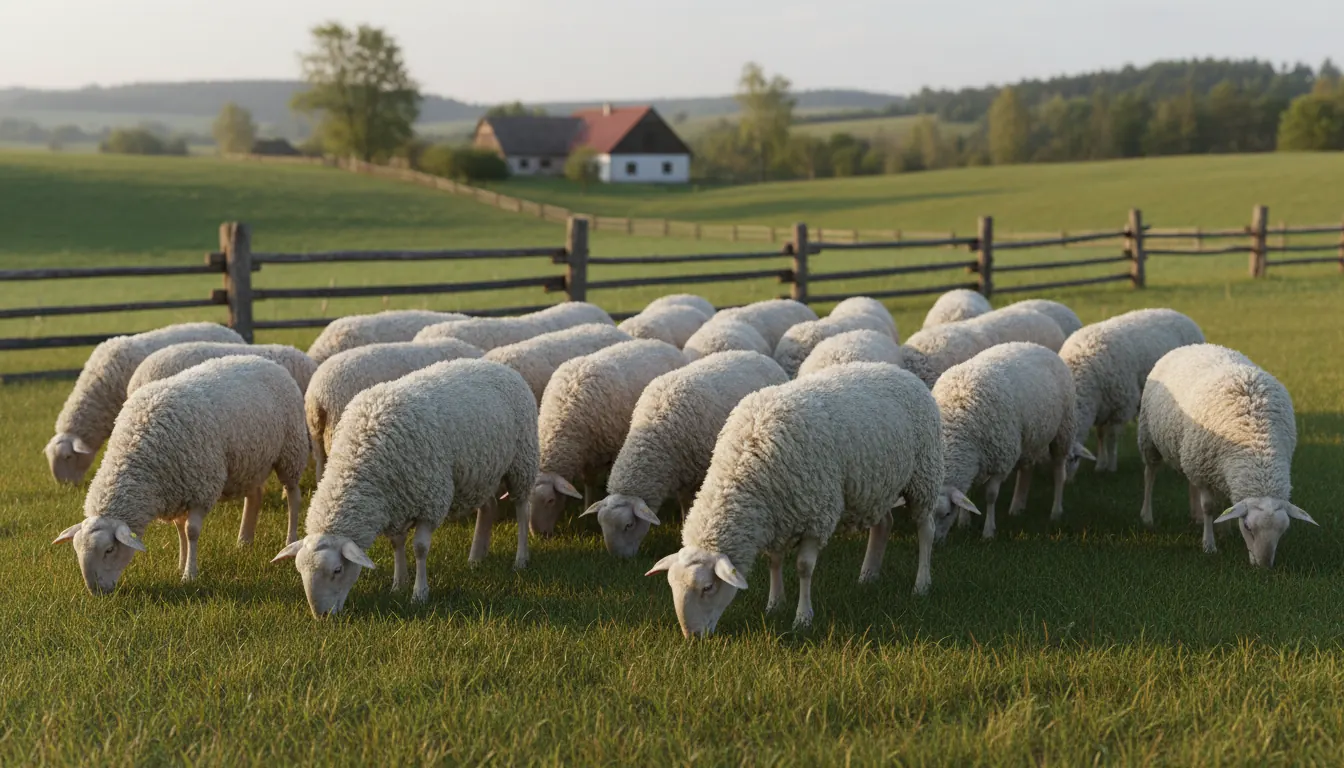
Grazing sheep pays when the sward is well used and the animals do not pick up parasites. IZ PIB reports that on well-managed pasture animals take about 80% of the herbage relative to the whole yield, and on neglected, badly managed pasture only 30%. The difference comes from paddock division, the date sheep go out and care for sward regrowth. For general flock management, see Sheep farming.
Three kinds of grazing
We cover three ways of grazing: paddock grazing on your own pasture, upland grazing on the hala (mountain pasture), and conservation grazing, which is done to protect valuable plant communities. Each has a different goal, but the rule is the same: the sward needs time to regrow, and the flock must not keep walking over the same ground.
Sheep pasture and paddock division
Why paddocks
Paddock grazing means splitting the pasture into parts that the flock moves through in turn. Sheep eat the sward in one paddock while the others regrow. The animals do not pick only the best plants, and the sward is not grazed too low. An example from Polish practice: on a farm described in an IZ PIB monograph, the basis of feeding in the season is grazing sheep together with goats on 15 ha of pasture divided into paddocks. The sheep also get home-grown cereal meal.
How to set up fencing
You fence paddocks with electric fencing or netting that is easy to move. We describe fence types, with their pros and cons, in Sheep pens and fencing. In strip grazing, described for goats in IZ PIB research, the fences are moved often so that animals stay in one paddock no more than 3 days. The authors note, however, that this system is rarely used in practice. For sheep, treat this rhythm as a goal, not a requirement.
Stocking rate and supplementary feed
Stocking rate depends on the quality and yield of the sward and on fertilizing, so there is no single figure for every pasture. IZ PIB, citing a 1989 INRA table, links the permissible paddock stocking rate to herbage quality and nitrogen fertilizer level over a 6-month grazing period. In later months the sward gets worse, so you must enlarge the paddock or feed the animals cut green fodder or concentrate. We cover feeding in What sheep eat.
Upland grazing of sheep (hala)
What grazing on the hala means
Hala grazing is grazing on mountain pastures above the farm, usually in summer. The flock spends many weeks there, so it needs water, a place to rest and regular checks. The hala is also often home to valuable plant communities, where grazing rules may come from agreements or protection programs. Check the terms with ARiMR (Poland's Agency for Restructuring and Modernisation of Agriculture) and with the landowner.
Breeds for mountain grazing
Native breeds suit harsh conditions better, as they are used to poor sward and changeable weather. IZ PIB describes them in monographs on genetic resources conservation, including the Polska owca górska (Polish mountain sheep), the Czarnogłówka (blackhead sheep) and the Świniarka. See the overview in Sheep breeds. Flocks of breeds covered by the genetic resources conservation program may receive payments under the agri-environmental program. Check current terms with ARiMR.
Before going up to the hala
Before the season, make sure every animal has ear tags and movement notifications are up to date. We explain the rules in Registering sheep with ARiMR. Check hooves, assess body condition and plan who will look in on the flock and how often.
Conservation grazing of sheep
What conservation grazing is
Conservation grazing (wypas kulturowy) is grazing done to protect valuable plant communities. Without grazing or mowing, grasslands and meadows become overgrown with shrubs and trees, and rare plant species disappear. Research involving IZ PIB, published in Wiadomości Zootechniczne, describes conservation grazing of sheep as a way to protect valuable communities, using Hala Majerz as the example.
How to run it
Conservation grazing must follow the protection plan or the terms of the agreement, including the date of entry, the number of animals and the time the flock stays. Stocking is usually low and grazing is done in several rounds. Do not feed the flock on protected land without agreeing it with the manager, because you fertilize the grassland and change its composition. Confirm the terms for the given site with the authority or area manager.
Worms on pasture
Rules for limiting infection
According to training material from the British bodies HCC, AHDB and QMS, a few rules help. Group lambs by age when they go out to pasture, because treatment decisions are then more accurate. Consider weaning lambs as early as 10–12 weeks if you have a low-risk pasture, for example aftermath after hay cutting. Mixed grazing with cattle dilutes the parasite burden, because the larvae of sheep nematodes are mostly harmless to cattle.
Ewes as a help
The same sources recommend that after weaning, dry ewes in good condition graze heavily contaminated pastures. They swallow larvae and destroy many of them, which reduces the number of larvae that overwinter. This does not apply to Nematodirus. Watch the egg count in the ewes' feces to be sure they are not shedding many.
Treatment
Do not choose the dewormer or its dose yourself. Agree the worm control plan with a vet, always observe withdrawal periods and record treatments. The Treatment and withdrawal periods module is for this.
The grazing season and winter
Start and end of the season
At the start of the season the sward is young and rich in nutrients, but you need to bring animals onto it gradually, adding hay. Going out too early damages the turf, and too late wastes the best sward. In autumn, leave the pasture with enough sward left so that it starts quickly in spring.
Grazing, lambing and winter
The grazing plan ties in with breeding: ewes in late pregnancy and ewes with lambs have different needs from a dry flock. We cover the rules in Lambing and Feeding sheep in winter. Look after the building where the flock spends winter: The sheep house.
Frequently asked questions
How do you divide a sheep pasture into paddocks?add
Divide the pasture into several parts fenced with electric fence or netting and move the flock through them in turn. When the sheep have eaten the sward in one paddock, move to the next while the previous one regrows. Match the number of paddocks to flock size and regrowth rate.
How long should sheep stay in one paddock?add
IZ PIB research on strip grazing of goats recommended a stay of no more than 3 days per paddock. For sheep, take a similar goal, but adjust it to sward regrowth and stocking rate.
What is upland (hala) grazing for sheep?add
It is grazing a flock on mountain pastures, usually in summer. It needs access to water, care for the flock and compliance with the terms of protection programs. Check the rules for a specific site with the manager and ARiMR.
What is conservation grazing with sheep?add
It is grazing done to protect valuable plant communities that would otherwise become overgrown. It follows a protection plan or agreement, with low stocking and no supplementary feeding.
How do you reduce worms in sheep on pasture?add
Group lambs by age, wean them onto low-risk pasture, graze together with cattle and put dry ewes on contaminated paddocks. Agree the plan and any medicines with a vet.
Do you need to feed sheep extra on pasture?add
On good pasture in favorable weather, extra feeding may be unnecessary. In the later months of the season the sward gets worse, so enlarge the paddock or add feed.
Sources & resources
- linkIZ PIB — WZ — Feeding beef cattle in organic farming (K. Bilik et al.)
- linkIZ PIB — Livestock farming and breeding over 70 years. Cattle Breeding Department, Sheep and Goat Breeding Department
- linkIZ PIB (monograph) — The potential of native sheep breeds in natural food production: tradition, regionality, quality
- linkHCC / AHDB / QMS — Worm control in sheep – for better returns
- linkIZ PIB (Wiadomości Zootechniczne) — The effect of grassland in organic goat farming on product quality
Prepared by: DlaFerm Team based on data from the sources listed · Publisher: INSTA-TECH sp. z o.o.
Keep treatments and withdrawal periods in one place
The Treatment and withdrawal periods module in DlaFerm lets you record treatments, dates and withdrawal periods for your flock. Create a free farm account or get in touch with us.
Phone
+48 796 258 151