Sheep barn: space, bedding and ventilation
A sheep barn should protect sheep from damp, drafts and heat, not from every bit of cold. Sheep cope better with low temperatures than high ones, so ventilation and dry bedding matter most. Here is what to check before you bring sheep in.
verifiedFrom the team that has organised work on poultry farms for years.
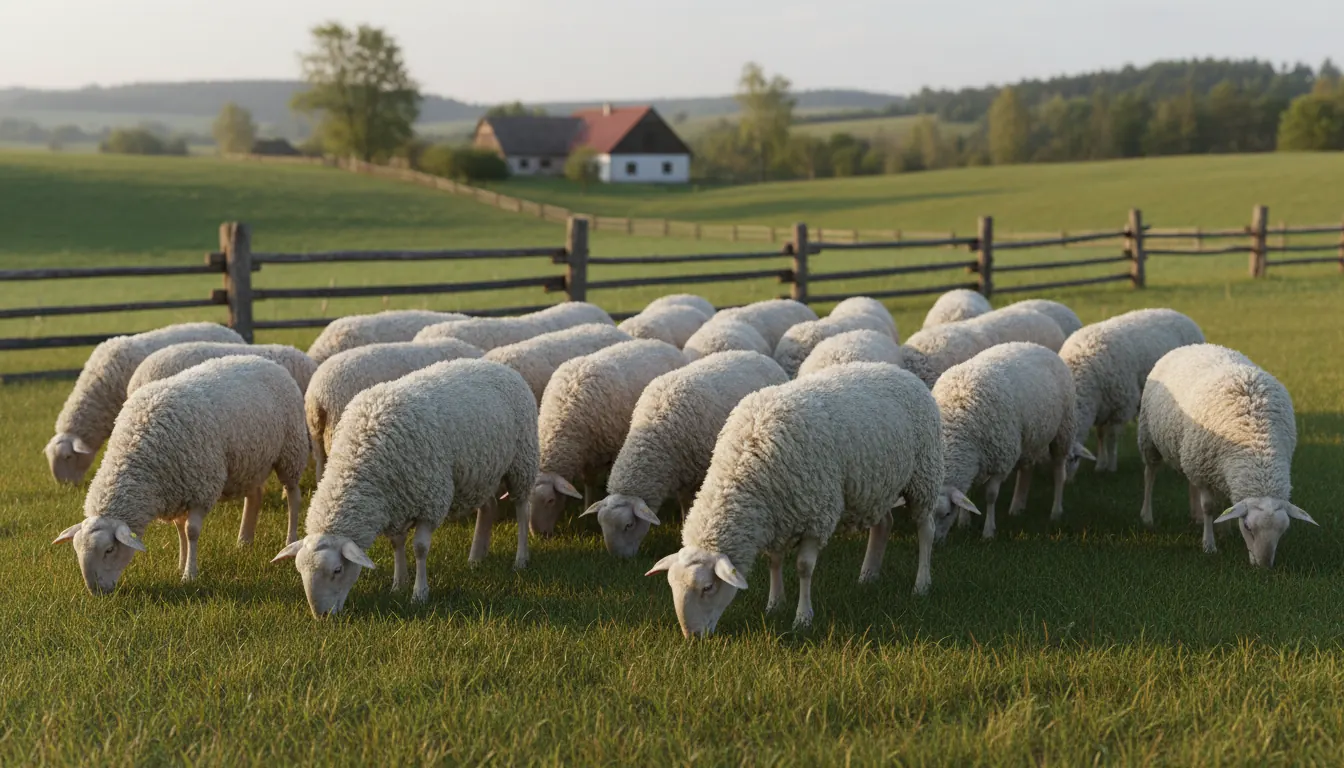
A sheep barn is the farm building where sheep spend the winter, lambing and part of the period when they eat roughage. It does not need insulation like a pig house. It needs to be dry and light, with good air flow and a place at the feed table for every sheep. In Poland the same building is called an owczarnia, or a cattle-style shed for sheep ("obora dla owiec"). In practice it is the same thing: a roofed building with a feed area, pens and access to a yard.
The most common problem: too little room
According to the WODR Poznań guide (May 2024), the main difficulty for keepers who want to meet the higher welfare requirements for sheep and goats is giving animals more floor space in buildings. WODR is a regional agricultural advisory center. This usually means extending existing buildings. If you are planning a flock, count the space first and buy sheep second. For the overall plan, see Sheep farming: where to start.
Barn floor space and zones
How much room a sheep needs
There is no single floor area for every barn. Required values depend on whether you use welfare schemes, on breed, body weight and whether the ewe has lambs. Check them in current rules and support conditions at ARiMR (Poland's Agency for Restructuring and Modernisation of Agriculture) and with an ODR advisor (a regional agricultural advisory center). When you calculate, count ewes with lambs, rams, weaned lambs and sick sheep separately. Each group needs its own pen, and you need spare lambing space and an isolation pen.
Feed table and walkways
Pen area is not the only thing that counts. Feeding frontage matters too. All sheep should be able to eat at the same time, because weaker animals pushed away from feed lose weight and develop more slowly. A practical example: at the IZ PIB experimental farm in Glinna, old sheep buildings were modernized to more than 1320 m² of usable area. They added more than 390 m² of yard and a roofed feed table of 396 m² and more than 110 meters long. So the feeding layout and the yard were planned together with the building. We describe feeding rules in Feeding sheep in winter.
Zones in one building
Set aside at least: flock pens, group pens for lambing, an isolation pen, a store for feed and bedding, and a handling area for hoof trimming, marking and shearing. Plan doors and gates so the flock can pass and a tractor can bring in bedding. For fences and outdoor pens, see Sheep pens and fencing.
Deep bedding in a sheep barn
Why deep bedding
The WODR Poznań guide names keeping small ruminants on deep bedding as a good, recommended solution. Bedding gives thermal comfort and helps keep humidity right. Heath sheep (wrzosówka) are kept on deep bedding at the Institute of Animal Science PIB farm in Aleksandrowice, among others. The Glinna farm also uses a loose-housing system with deep bedding, and the animals have a yard all year round.
How to manage bedding
Add straw regularly, before the top layer gets wet. A wet, slippery surface raises the risk of foot inflammation, damp wool and respiratory disease. Watch the spots near drinkers and the feed table, where bedding gets damp fastest. Before lambing, lay a fresh, dry layer in the lambing pens. Store straw under a roof so you never add moldy straw.
Wool and fleece cleanliness
Wet bedding and poor ventilation make wool damp and yellow, as WODR Poznań notes. Dirty fleece sells worse and makes shearing harder. We explain how to prepare sheep in Shearing sheep and how to sell wool in Sheep wool.
Ventilation and temperature in a sheep barn
Gases, damp and respiratory disease
According to WODR Poznań, excess gas or too much humidity is usually caused by faulty or insufficient ventilation. The result can be respiratory disease and damp, yellowed wool. Walk in early in the morning, when the sheep have lain all night. If you smell sharp ammonia, the windows and beams are wet and the wool on their backs is damp, ventilation is too weak.
Too warm hurts more than too cold
The same guide says sheep and goats tolerate low temperatures better than high ones. Too high a temperature in the barn can reduce feed intake, which hurts weight gain and milk production. So do not seal the building for winter. Leave inlets and outlets open, and open gates and windows on warm days.
How to improve air flow
Work out where air comes in and where it goes out. Gaps in the side walls and tilting windows provide the inlet. An opening in the ridge or a roof extractor provides the outlet. Avoid drafts at animal height, especially in pens with young lambs. Overcrowding makes any ventilation layout worse. If the building has a damp problem despite bedding and open vents, ask an ODR advisor or a vet to assess the conditions.
The barn at lambing and in winter
Lambing pens and lambs
At lambing you need dry, sheltered pens where the ewe can lamb in peace and bond with her lambs. Plan spare pens so you do not crowd ewes together. We cover care of the pregnant ewe and the birth in Lambing. For breeding dates, see Sheep breeding.
Hay, silage and water
In winter the flock spends more time indoors, so constant access to clean water and roughage counts. Place drinkers so they do not wet the bedding, and feeders so sheep do not foul the feed. We show ration plans in What sheep eat and Feeding sheep in winter. In summer part of the flock usually goes out to pasture, as we describe in Grazing sheep.
Building costs and documents
Building cost and profitability
Putting up a building is costly, and so is extending it for more floor space and fencing pastures. According to WODR Poznań, this is one of the barriers for keepers who want to meet the higher welfare requirements. In an IZ PIB (Institute of Animal Science) costing table for a sheep farm on 10 ha of utilized agricultural land, direct costs per ewe were about PLN 540–547, and the value of live animals per ewe about PLN 224–227. Without subsidies, every stocking variant gave a loss of about PLN 315–320 per ewe. The data come from a 2011 publication, so treat them as a picture of proportions, not a current price list.
Requirements and registration
The barn, as a place where animals are kept, must be reported and marked under the flock registration rules. We describe what to report and by when in Registering sheep with ARiMR. Welfare requirements come from the Animal Protection Act. Check specific building parameters in current rules and with the county vet (powiatowy lekarz weterynarii), as of 23.11.2026. A list of legal acts is on the page Acts and regulations.
Frequently asked questions
Does a sheep barn need insulation?add
No. Sheep tolerate low temperatures better than high ones, so dry bedding and working ventilation matter more than insulation. When it is too hot, sheep eat less, which lowers weight gain and milk yield.
How much barn space does one sheep need?add
It depends on breed, body weight, the ewe's condition and whether you use a welfare scheme. Check current requirements in ARiMR support conditions and with an ODR advisor. Count lambing pens and the isolation pen separately.
Can sheep be kept on deep bedding?add
Yes. The WODR Poznań guide from May 2024 recommends it. Deep bedding gives thermal comfort and helps keep humidity right. It must be topped up regularly with dry straw.
How can you tell a sheep barn has poor ventilation?add
Signs are an ammonia smell, damp on walls and beams, and wet, yellowing wool. Bad air favors respiratory disease. If in doubt, ask a vet to assess the barn.
What is the difference between a sheep barn and a shed for sheep?add
In practice nothing: these are two names for a building for sheep. Old cattle barns are often converted, but you must rebuild the feed table, pens and ventilation.
Do you have to register a sheep barn with ARiMR?add
The place where sheep are kept must be registered under animal identification rules. We describe the scope of reports and deadlines in our article on registering sheep. Confirm details at your county ARiMR office.
Sources & resources
- linkWODR Poznań — Farm Guide, May 2024 (Welfare issues in sheep and goat farming)
- linkIZ PIB — WZ — Beef cattle farming on the organic farm Glinna — ZD IZ PIB Kołbacz
- linkIZ PIB (Wiadomości Zootechniczne) — Economics of sheep farming in Poland at the start of the 21st century
- linkARiMR — gov.pl/web/arimr
- linkInternet System of Legal Acts — isap.sejm.gov.pl
Prepared by: DlaFerm Team based on data from the sources listed · Publisher: INSTA-TECH sp. z o.o.
Control barn entry and biosecurity in DlaFerm
Visitors entering the barn can bring in disease. The <a href="/ksiega-wejsc-na-ferme">QR entry and exit book</a> and the <a href="/generator-planu-bioasekuracji">biosecurity plan generator</a> help you organize entries and hygiene rules on the farm. Create a free farm account in DlaFerm or get in touch.
Phone
+48 796 258 151