What Do Sheep Eat? Feeding Sheep on Pasture and Indoors
Sheep eat mainly grass in summer and hay and silage in winter. Concentrates are an add-on for late pregnancy, lactation and fattening lambs. We cover what to feed in each period and what to watch for when grazing.
verifiedFrom the team that has organised work on poultry farms for years.
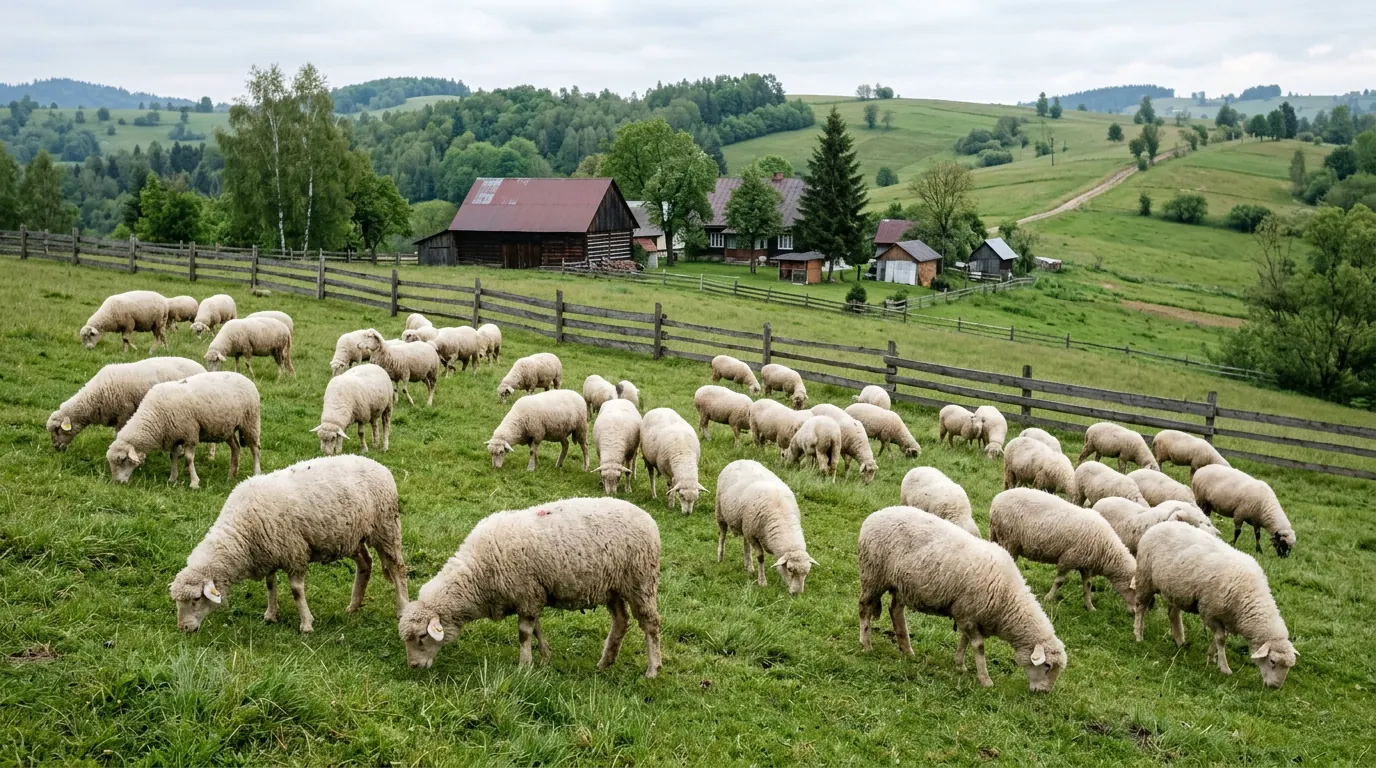
Sheep are ruminants, so their diet rests on forage: grass from pasture from spring to autumn, and hay and silage in the shed. The diet must contain plenty of fiber, because the rumen depends on it. Concentrates, meaning grains and meals, top up the ration only when demand rises: in late pregnancy, during lactation and when fattening lambs. Constant access to clean water and a salt lick complete the diet. We describe the whole setup of a flock in our guide to sheep farming.
The ration changes through the year
A ewe fed the same way all year either loses condition or gets overfed. A dry ewe after weaning needs the least. She needs the most in the last weeks of pregnancy and at the start of lactation. Then grass or average hay alone often is not enough. So first work out which phase your flock is in, and only then choose the feed.
Where to start when building a ration
Start by scoring the ewes' body condition (BCS, scale 1–5) and by checking the quality of your forage. Ideally, send hay and silage to a laboratory. The result shows how much protein and energy your own feed holds and how much you need to buy in. Discuss the concentrate ration with an adviser from an agricultural advisory center or with a vet, because it depends on breed, number of lambs and forage quality.
What sheep eat on pasture
Grass and herbs as the base
On pasture, sheep eat grasses, legumes (clover) and herbs. They pick young, short sward, so with poor grazing planning they graze it too low and damage the turf. We explain paddock division and rotational grazing in our guide to grazing sheep. Paddocks need solid fencing, which we cover in the article on sheep pens and fencing.
Making good use of the sward
The authors of a study by IZ PIB (Poland's National Research Institute of Animal Production) on feeding beef cattle, published in Wiadomości Zootechniczne, report that on properly managed pasture animals take about 80% of the green forage relative to the whole yield. On neglected, poorly managed pasture it is only 30%. The same rule applies to sheep. The same authors note that in the later months of grazing, the quality and amount of sward decline. Then you need to enlarge the paddocks or supplement the animals.
Concentrates on pasture
Good grass in season rarely needs added grain. The exceptions are ewes in late pregnancy and ewes with lambs at foot. If you supplement on pasture, do not pour concentrates into troughs, because it disturbs grazing. You will find details for lambing on pasture further down.
What sheep eat in the shed
Hay and silage
In winter the base is hay from good grasses and legumes, cut at the right stage, free of mold and dust. Grass silage or haylage can supplement it. Mold in feed is dangerous to sheep's health, so reject any heated or moldy batches. Always check silage by sight and smell before feeding. You will find the full list of winter feeds in our guide to feeding sheep in winter.
Concentrates and supplements
Sheep get grain as meal or crushed kernels, as well as compound feeds for sheep. Raise the amount gradually over at least several days, because a sudden change of feed risks rumen acidosis. Feed must always be accessible, and there must be room at the feed barrier for all animals at once so weaker ewes are not left behind. We describe conditions in the building in our guide to the sheep shed.
Feeding ewes before and after lambing
Calcium deficiency and overfeeding
According to the AHDB manual (Sheep Manual 14), hypocalcaemia, or calcium deficiency, usually occurs in the last four weeks of pregnancy, when the lambs draw more calcium than the ration supplies. A sick ewe staggers, lies down, falls into a coma and dies. Treatment is a calcium injection under the skin, and the vet chooses the medicine and dose. If several animals are sick, check the ration. The same manual notes that overfeeding in late pregnancy raises the risk of vaginal prolapse, which is the main cause of ewe deaths at lambing.
Lambing on pasture
For flocks lambing on pasture, AHDB recommends keeping ewes at BCS 3 and matching lambing dates to the spring start of grass growth. When lambing begins, the sward should be about 6 cm high. Do not feed concentrates in troughs, because it disturbs grazing and the ewes' behavior at birth. Feeding from buckets or blocks can improve colostrum quality and lamb survival. We describe the course of lambing in our guide to lambing, and flock preparation in the article on sheep breeding.
Water, salt and minerals for sheep
Water
Sheep must have constant access to clean water, in winter and while grazing too. On dry feed, meaning hay and concentrates, they drink more than on green forage. Clean the drinkers regularly and check they have not frozen. A ewe that drinks little eats less and feeds her lambs worse.
Salt lick and minerals
The basic supplement is a salt lick and a mineral mix made for sheep. Be careful with copper: sheep are much more sensitive to it than cattle, so do not give them cattle feeds or minerals without checking the composition. Agree the mix and dose with a vet or a nutrition adviser, because they depend on the region and the quality of your forage.
What lambs eat and how to wean
Colostrum and milk
A lamb's first food is colostrum, which it should get as soon as possible after birth. Later it grows on its mother's milk and in time starts nibbling hay and grass. A well-fed ewe has more milk, so the ration during lactation matters a lot for gains. Lambs can use a separate creep pen with access to feed for young stock that the ewes cannot reach.
Weaning and the risk of worms
According to the HCC / AHDB / QMS material on worm control in sheep, weaning is an important tool. It lets you move lambs to a low-risk pasture, for example after hay cutting, away from pastures that have built up many larvae. The authors suggest considering weaning as early as 10–12 weeks of age if such pasture is available. Mixed grazing with cattle also helps, as does using dry ewes after weaning to eat larvae on heavily contaminated paddocks. Agree the worming program with a vet. We describe breeds and their needs in the article on sheep breeds.
What feed costs and how to cut it
Feed as the main cost
According to calculations in the IZ PIB study "Ekonomia chowu owiec w Polsce na początku XXI wieku" (the economics of sheep farming in Poland in the early 21st century), feed made up about two thirds of direct costs on a farm with 10 ha of grassland, regardless of stocking rate. The data is years old and prices have changed, but the proportion shows where to look for savings. Check current prices of hay, grain and compound feeds with suppliers and in regional price listings.
How to cut spending
The biggest saving is your own good forage and efficient grazing, because grass is cheaper than concentrates. Give concentrates only to the animals that need them, not to the whole flock. Keep notes on feeds and ewe condition. This will help with flock registration, which we cover in the guide to registering sheep with ARiMR (Poland's Agency for Restructuring and Modernisation of Agriculture).
Frequently asked questions
What do sheep eat on pasture?add
Sheep eat grasses, clover and other legumes, and herbs. They prefer young, short sward. With well-run paddock grazing, pasture covers most of the flock's needs during the season.
Do sheep eat hay?add
Yes, hay is the base of winter feeding. It should be dry, free of mold and dust. Silage or haylage supplements it, and concentrates when needed.
What is the best feed for sheep?add
The base is good forage: grass, hay and silage. Concentrates are an add-on in late pregnancy, lactation and when fattening lambs. Set the ration based on a feed analysis, with an adviser or a vet.
Can sheep eat cattle feed?add
Only after checking the composition. Cattle feeds and mineral mixes can contain copper, to which sheep are very sensitive. Use mixes made for sheep or ask a vet.
What should I feed ewes in late pregnancy?add
AHDB recommends keeping BCS 3 and avoiding overfeeding, which raises the risk of vaginal prolapse. In the last four weeks of pregnancy calcium demand rises, so adjust the ration with a vet. When lambing on pasture, do not feed concentrates in troughs.
When should I wean lambs to limit worms?add
HCC / AHDB / QMS suggests considering weaning as early as 10–12 weeks of age if you have low-risk pasture, for example after hay cutting. Lambs are then moved off pastures heavily contaminated with larvae. Agree the worming program with a vet.
Sources & resources
- linkAHDB — Reducing lamb losses for Better Returns (Sheep Manual 14)
- linkHCC / AHDB / QMS — Worm control in sheep – for better returns
- linkIZ PIB — WZ — Feeding beef cattle in organic farming (K. Bilik et al.)
- linkIZ PIB (Wiadomości Zootechniczne) — The economics of sheep farming in Poland in the early 21st century
Prepared by: DlaFerm Team based on data from the sources listed · Publisher: INSTA-TECH sp. z o.o.
Record treatments and withdrawal periods in one place
The "Treatment and withdrawal period" module in DlaFerm.pl helps you keep records of medicines given and withdrawal periods in order. Get in touch or create a free farm account, and we will show you how it works in practice.
Phone
+48 796 258 151