Sheep registration with ARiMR: ear tags, register, reports
Every sheep keeper in Poland must have a flock location in the IRZ system, identify the animals, keep a registration book and report events to ARiMR, Poland's Agency for Restructuring and Modernisation of Agriculture. We describe what to do and in what order. Legal state as of 23.11.2026.
verifiedFrom the team that has organised work on poultry farms for years.
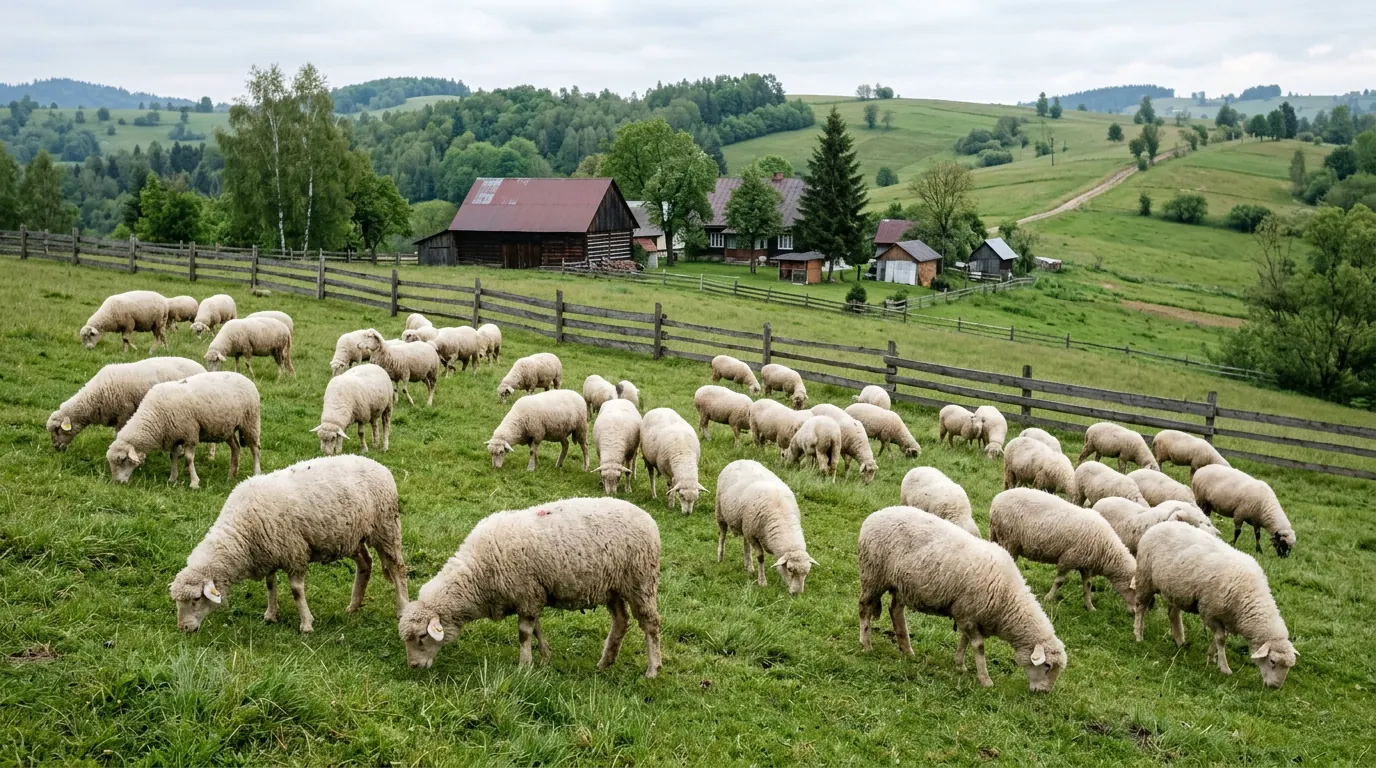
Registering sheep with ARiMR comes down to four things. You have a registered flock location. Every sheep carries an identification device. You keep a sheep registration book at the flock location. You report events concerning the animals to the Agency's register. The whole setup is called the animal identification and registration system, IRZ for short. Start with the flock location, because without its number you cannot buy or report any animal. We describe the order of steps for setting up a farm in the guide Starting a farm: registrations and numbers in the right order.
What this guide is based on
We use ARiMR's information brochure on the new IRZ act (updated 06.03.2025), Commission Delegated Regulation (EU) 2019/2035, and the template registration book for sheep and goats published by the Veterinary Inspection (Inspekcja Weterynaryjna). Confirm reporting deadlines and detailed sheep requirements at your ARiMR county office, because implementing rules change. If you are just starting with a flock, see our general guide: sheep farming: where to start.
What the animal registration system covers
Parts of the system for sheep
According to the ARiMR brochure, the IRZ system has several parts. The first is the register of identified livestock and their flock locations. The second is identification devices, meaning what you mark the animal with. The third is registration books, which the keeper maintains on paper at the flock location, separately for each species. The fourth, which applies to sheep and goats, is transport documentation. Passports are issued only for cattle moved to another EU member state, so you do not need one for sheep.
What the ARiMR database holds
The database is an IT network integrated with the IACSplus system and runs through ARiMR's Regional Branches and County Offices. It holds information on animal keepers, on animals and where they are kept (the register of flock locations and types of activity), and on movements, meaning the reported events. For you this means a simple rule: what you write in the book at the farm must match what is reported in the Agency's register.
Ear tags and other ways to identify sheep
Which devices you can use
The ARiMR brochure lists these options for sheep: a standard ear tag, an electronic ear tag, a ceramic capsule (bolus), an implanted transponder, a standard or electronic pastern band, or a tattoo. Delegated Regulation (EU) 2019/2035 also lists a leg band for land animals, but the ARiMR list for sheep does not include it. The ear tag is the most common in flocks, because you can see it without catching the animal. Keepers who want to read numbers with a reader choose a bolus or transponder.
When to tag
The deadline for marking lambs comes from the regulations and depends on the type of flock and how it is kept. For cattle, the KPODR Minikowo manual gives marking within 7 days of birth, but do not apply that figure to sheep. Check the current deadline for lambs with your ARiMR county office or the county veterinary officer before lambing season starts. We cover the lambing calendar in the article on lambing.
Tag numbers and replacements
The number on the device becomes the sheep's number in the book and in reports. A lost tag is a problem, because under the rules an unmarked animal cannot be sold or transported. Ask your ARiMR county office how to order tags and replace lost ones, because the procedure depends on the type of device. Before you order tags, count your adult sheep and the lambs you expect in the season.
The sheep registration book: how to keep it
Where and in what form
According to the ARiMR brochure, the keeper maintains the registration book at the flock location on paper, separately for each animal species. If you keep sheep and goats, you need two separate books. The Veterinary Inspection publishes the template for sheep and goats. On its title page you enter the address and geographic coordinates of the flock location and mark the species the book covers. Instructions for filling in the insert sheets are on pages 2 and 3 of the template cover.
What you enter
The cattle book template shows the logic that is also used for sheep: the animal's ID number matching the number on the device, date of birth, sex, breed, date of marking, the dam's and sire's numbers (if the sire is known), and the date and type of event that brought the animal in or took it out. For an animal born in your flock, the arrival date is its birth date. Breed codes are on the ARiMR website or at the county office. We describe the sheep breeds you may meet in the article on sheep breeds.
Keep the book up to date
Make entries as things happen, ideally the same day a sheep is born, bought, sold or dies. You show the book at inspections, so it must match the flock and the ARiMR register. Once a month, count the animals on the farm and compare the result with the book.
Reporting sheep to ARiMR: which events and when
Registering the animal
For cattle, the KPODR Minikowo manual lists animal registration (birth, import from non-EU countries, purchase from EU countries) and movement (purchase, sale, export, sale to EU countries) as events the keeper reports to the ARiMR register within statutory deadlines. In practice the same split of events applies to sheep: you report a lamb born in the flock, a purchase, a sale and an export to the Agency. Check the reporting deadlines for sheep with the county office or in the current ARiMR IRZ brochure.
Movements and transport documents
A purchase, a sale, a trip to a show or to the abattoir all count as a movement. The ARiMR brochure lists transport documentation for sheep and goats as part of the IRZ system. Before every transport, check that every animal has an identification device and that the numbers match the book. When officially reported disease outbreaks occur, authorities may restrict movements, so it helps to know the symptoms, as in our article on bluetongue disease.
Where to file a report
Reports are accepted by ARiMR County Offices. Information on contact options and available services is on the sheep farming page and on the ARiMR website. If you are unsure which form to choose, call the county office before the event, not after it.
How to keep flock paperwork in order
One order of steps
First the flock location number, then identification devices, then the book and reports. Only then do you buy the first animals. When buying, check that the seller reported the movement and that the sheep has an ear tag. When the animal arrives, enter it in the book straight away.
Health records next to the book
The registration book covers identification and animal movement. Record treatments, vaccinations and worming separately, because different rules apply to them, including withdrawal periods. A vet chooses the medicine and dose, and you keep track of the withdrawal period before selling milk or meat. We describe parasite control in the article on worming sheep and give an overview of diseases in sheep diseases.
Frequently asked questions
Do I have to register sheep in Poland?add
Yes. A sheep keeper must register the flock location in the IRZ system, identify the animals, keep a registration book and report events to the ARiMR register. Confirm the details for your flock at the Agency's county office.
How can sheep be ear tagged or identified?add
According to the ARiMR brochure, you can use a standard ear tag, an electronic ear tag, a bolus, an implanted transponder, a standard or electronic pastern band, or a tattoo. The choice depends on how the flock is kept and how the number needs to be read.
Do I need to keep a sheep registration book?add
Yes. The book is on paper, you keep it at the flock location, and you keep a separate one for each species. The Veterinary Inspection publishes the template for sheep and goats, and the filling-in instructions are on the template cover.
When must lambs be tagged?add
The deadline comes from the regulations and may depend on how the flock is kept. We do not give it without checking the current act, so ask your ARiMR county office or the county veterinary officer before lambing season.
Do sheep have passports like cattle?add
No. According to the ARiMR brochure, passports are issued only for cattle moved to another EU member state. For sheep, transport documentation matters.
What should I do if a sheep loses its ear tag?add
Contact your ARiMR county office and ask about the procedure for replacing the tag or assigning a duplicate. Until the animal is marked again, do not sell or transport it, because an animal without an identification device does not meet the requirements.
Sources & resources
- linkARiMR: Information brochure on the new IRZ act (updated 06.03.2025)
- linkPIW Pruszków (Veterinary Inspection): Sheep/goat registration book (template)
- linkEU Publications Office: Commission Delegated Regulation (EU) 2019/2035 on registration of establishments and traceability of animals (PL)
- linkKPODR Minikowo: Rearing beef calves (manual, authors from SGGW)
- linkARiMR: gov.pl/web/arimr
Prepared by: DlaFerm Team based on data from the sources listed · Publisher: INSTA-TECH sp. z o.o.
Keep farm visitors in order with the QR entry and exit book
The QR entry and exit book in DlaFerm.pl helps you keep a visitor log, and the treatment and withdrawal module records treatments. They do not replace the sheep registration book or reports to ARiMR. Create a free farm account or get in touch.
Phone
+48 796 258 151