Feed hygiene on the farm: Regulation (EC) 183/2005, registration and farmer records
Regulation (EC) No 183/2005 sets feed hygiene requirements and covers feeding animals kept for food production. Farmers follow Annex III and keep feed records under Annexes I and II. We describe what the text of the act says and what Poland's feed act regulates on top of it.
verifiedFrom the team that has organised work on poultry farms for years.
Updated:
Legal status as of 23 November 2026. Regulation (EC) No 183/2005 of the European Parliament and of the Council of 12 January 2005 laying down requirements for feed hygiene applies to feed business operators and, under Art. 5(5), to farmers feeding animals kept for food production. The act is in force: it entered into force on 08.02.2005 and has applied since 01.01.2006. We describe the consolidated text of 28.01.2022.
What it means for a farmer
A farmer who feeds animals keeps records on feed (origin and use) and registers as a feed business operator. The detailed scope of the records is in Annexes I and III. Below we give what the text shows, with article and annex numbers. We collect the other EU acts that affect a farm in EU rules for farmers. In Poland the county veterinary inspectorate is the PIW (Powiatowy Inspektorat Weterynarii), part of the Veterinary Inspection (Inspekcja Weterynaryjna).
Who it covers
Art. 2(1): scope
The regulation applies to three areas. First, the activities of feed business operators at all stages, from primary feed production up to and including placing feed on the market (point a). Second, the feeding of animals kept for food production (point b). Third, imports of feed from third countries and exports to third countries (point c). For a farm the second point matters most: you feed poultry, pigs, cattle, sheep, goats or rabbits that produce food.
Art. 2(2): what the act does not cover
The regulation does not apply to feeding animals kept for food production for private domestic consumption (point b) or to feeding animals not kept for food production (point c). Point b also lists the activity referred to in Art. 1(2)(c) of Regulation (EC) No 852/2004. Poland's feed act treats a farmer who feeds animals as a feed market operator. How the two rules fit together on your farm is for the PIW to explain.
Art. 3(f): primary production of feed
The act defines primary production of feed as the production of agricultural products, including growing, harvesting, milking and rearing animals before slaughter. It means products that are not given any treatment after harvest beyond simple physical handling. A farm that grows grain to feed its own animals therefore falls within primary production. Feed establishments under Art. 3(d) are units of a feed business.
What it requires
Art. 4(1): general duty
Feed business operators make sure that all stages of production, processing and distribution under their control follow Community law, national rules consistent with it, and good practice. In particular they must meet the hygiene requirements set out in the regulation. Your responsibility covers the stages you control yourself: buying, storing and giving feed.
Art. 5(5) and Annex III: good feeding practice
Farmers follow the provisions of Annex III when feeding animals kept for food production (Art. 5(5)). The annex is titled "Good animal feeding practice". You will find the detailed requirements in the annex text. Operators may apply the good practice guides from Chapter III voluntarily (Art. 5(4), Art. 20(3)).
Annex I part A: records in primary production
The list of records covers: every use of plant protection products and biocides (point a), use of genetically modified seed (point b), every occurrence of pests or diseases that may affect the safety of primary products (point c), results of analyses of samples relevant to feed safety (point d), and the source and quantity of feed in each batch received, as well as the destination and quantity of feed in each batch dispatched (point e). Under point 3, veterinarians, agronomists or farm technical staff may help with the paperwork.
Annex II point 1 and Art. 5(2): purchase and sales registers
All feed business operators keep registers with data on purchase, production and sales. These must allow effective tracing of products from receipt to delivery. Art. 5(2) says Annex II also applies when you mix feed solely for your own holding with veterinary medicinal products or intermediate products under Regulation (EU) 2019/4, or with feed additives or additive premixes, except silage additives. We cover medicines in the article on Regulation 2019/6 and additives in the article on Regulation 1831/2003.
Annex II: complaints and product recall
Feed business operators set up a system for registering and handling complaints (point 1). Where necessary, they set up a system for rapid withdrawal of products from the distribution chain (point 2). Written procedures define what happens to withdrawn products, and the products are reassessed for quality before they are placed on the market again. This mainly concerns those who sell feed, but the text refers to all operators to whom Annex II applies.
When it applies
The regulation of 12.01.2005 entered into force on 08.02.2005. It has applied since 01.01.2006. As of 23.11.2026 the act is in force.
We describe the consolidated text of 28.01.2022 (CELEX 02005R0183-20220128). Changes made after that date may not be included, so check the current text on EUR-Lex before you decide anything on the farm. Poland's feed act, used to register feed operators, entered into force on 26.08.2006.
Changes and deadlines
The dates of changes are the dates of the amending acts.
| Date | What happens | Basis |
|---|---|---|
| 12.01.2005 | Date of the act | CELEX 32005R0183 |
| 08.02.2005 | Entry into force | EUR-Lex |
| 01.01.2006 | Start of application | EUR-Lex |
| 11.03.2009 | Amended by Regulation (EC) No 219/2009 | CELEX 32009R0219 |
| 15.03.2012 | Annex II amended by Regulation (EU) No 225/2012 | CELEX 32012R0225 |
| 22.10.2015 | Annex II amended by Regulation (EU) 2015/1905 | CELEX 32015R1905 |
| 11.12.2018 | Amended by Regulation (EU) 2019/4 on medicated feed | CELEX 32019R0004 |
| 20.06.2019 | Amended by Regulation (EU) 2019/1243 | CELEX 32019R1243 |
| 28.01.2022 | Consolidated text | CELEX 02005R0183-20220128 |
| By 30.11. every year | The Commission publishes the combined list of establishments referred to in Art. 19(2) | Art. 19(6) |
As of 23.11.2026 there is no Commission proposal amending this act. We describe other EU duties for farms in EU rules.
How it works in Poland
The regulation applies directly, so no national act has to implement it. Registration of feed operators is run by the PLW (powiatowy lekarz weterynarii, the county veterinary officer) under the Act of 22 July 2006 on feed (consolidated text Dz.U. 2025 poz. 320; Dz.U. is Poland's Journal of Laws). Art. 19(7) of the regulation requires member states to make the lists of establishments under paragraph 1 available to the public.
The feed act provides that a farmer who feeds animals, including with feed from their own grain, is a feed market operator and must be registered with the PIW. You buy feed only from registered or approved suppliers and keep the delivery documents. Medicated feed is used only on prescription. Financial penalties are set by a regulation, Dz.U. 2014 poz. 625. Ask the PIW whether registering your establishment under the animal health act is enough to register as a feed operator. The Treatment and withdrawal period module helps you track medicine deliveries and withdrawal periods.
On the farm you also keep records of: date, supplier, batch and quantity of feed (traceability), deliveries of bedding, and removal of manure with a transfer agreement. The basis is Regulation 178/2002 Art. 18, Regulation 183/2005 Annex I and the fertilizer act Art. 3. Fertilizer agreements are kept for 3 years after they expire. Annex I gives the full scope of feed records for a farmer. We describe inspections of these documents in the article on Regulation 2017/625.
This text summarizes the act and is not legal advice. In a specific case, the text published in the Official Journal of the EU and Polish law decide, and the county veterinary officer or another competent authority gives explanations.
What to do on the farm
Step 1: check registration and suppliers
Ask the PIW whether your farm should be registered as a feed operator. This follows from the feed act (Dz.U. 2025 poz. 320) and Art. 2 of the regulation. Buy feed only from registered or approved suppliers and keep the delivery documents. Write down whether you feed animals for food production and for whose needs, because the exclusions in Art. 2(2) depend on it.
Step 2: keep delivery and dispatch records
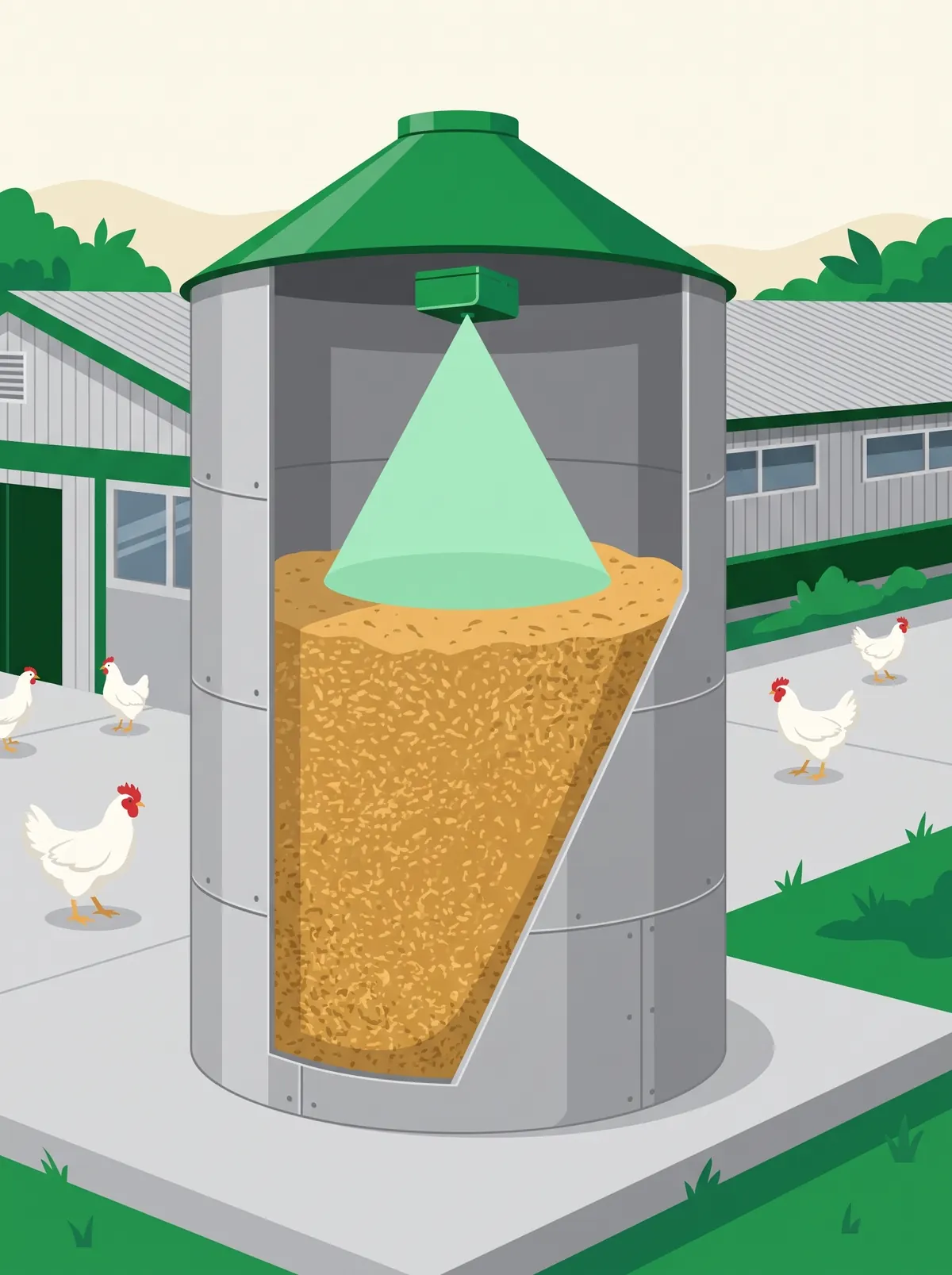
Note the delivery date, supplier, batch number and quantity of feed. Also record where and in what quantity feed leaves the store, because Annex I point e and Annex II point 1 require it. If you grow feed, add the plant protection products used, pests and analysis results (Annex I points a–d). We describe feed levels in tanks on the feed silos page. You can keep flock records in the poultry house records module.
Step 3: document your own mixes and complaints
If you mix feed for your own use with a veterinary medicine, an intermediate product under Regulation 2019/4, or an additive or premix, apply Annex II (Art. 5(2)). A vet chooses the medicine and dose, and you use medicated feed on prescription. If you sell feed, plan a complaints register and a written recall procedure. Feed according to Annex III and keep the documents ready for inspection.
Frequently asked questions
When did Regulation 183/2005 start to apply?add
The regulation of 12.01.2005 entered into force on 08.02.2005 and has applied since 01.01.2006. As of 23.11.2026 it is in force. We describe the consolidated text of 28.01.2022.
Does a farmer have to register as a feed business operator?add
Poland's feed act (Dz.U. 2025 poz. 320) requires a farmer who feeds animals, including with feed from their own grain, to register with the PIW. The PIW explains the registration procedure.
Does the feed hygiene regulation apply to a small farm or feeding for own use?add
Art. 2(2)(b) excludes feeding animals kept for food production for private domestic consumption. Art. 2(1)(b) covers feeding animals kept for food production. The PIW explains whether your farm falls under the exclusion.
What feed records do I have to keep?add
Annex I lists, among others, the source and quantity of feed in each batch received and the destination and quantity of feed in each batch dispatched (point e). Annex II point 1 requires registers of purchase, production and sales that allow products to be traced. Record the date, supplier, batch and quantity.
Can I mix my own feed with a medicine or additive?add
Art. 5(2) says that when you mix feed for your own use with veterinary medicinal products, intermediate products under Regulation 2019/4, additives or premixes, Annex II applies. Medicated feed is used only on prescription.
What are the penalties for breaking feed rules?add
Financial penalties are set by a regulation, Dz.U. 2014 poz. 625.
Can someone else keep the records for me?add
Under Annex I point 3, veterinarians, agronomists or farm technical staff may help operators keep records of farm activities.
Sources & resources
- linkEU Publications Office (EUR-Lex) — Regulation (EC) No 183/2005 of the European Parliament and of the Council of 12 January 2005 laying down requirements for feed hygiene
- linkAct of 22 July 2006 on feed (consolidated text) (Dz.U. 2025 poz. 320)
- linkChief Veterinary Inspectorate (Główny Inspektorat Weterynarii) — gov.pl/web/wetgiw
- linkInternet System of Legal Acts (ISAP) — isap.sejm.gov.pl
Prepared by: DlaFerm Team based on data from the sources listed · Publisher: INSTA-TECH sp. z o.o.
Farm records in one place: DlaFerm poultry house records
The poultry house records module keeps your flock documentation in one place, including what you show at an inspection. DlaFerm does not guarantee compliance, but it makes record keeping easier. Create a free farm account in DlaFerm or get in touch.
Phone
+48 796 258 151