Salmonella in eggs: GIS warnings, flock control programs and farm duties in Poland
Salmonella in eggs can cause food poisoning, especially when the eggs are not heat-treated. Poland's chief sanitary inspectorate (GIS) publishes the warnings, and laying flocks fall under a national program that targets selected serotypes. We explain what this means for your farm.
verifiedFrom the team that has organised work on poultry farms for years.
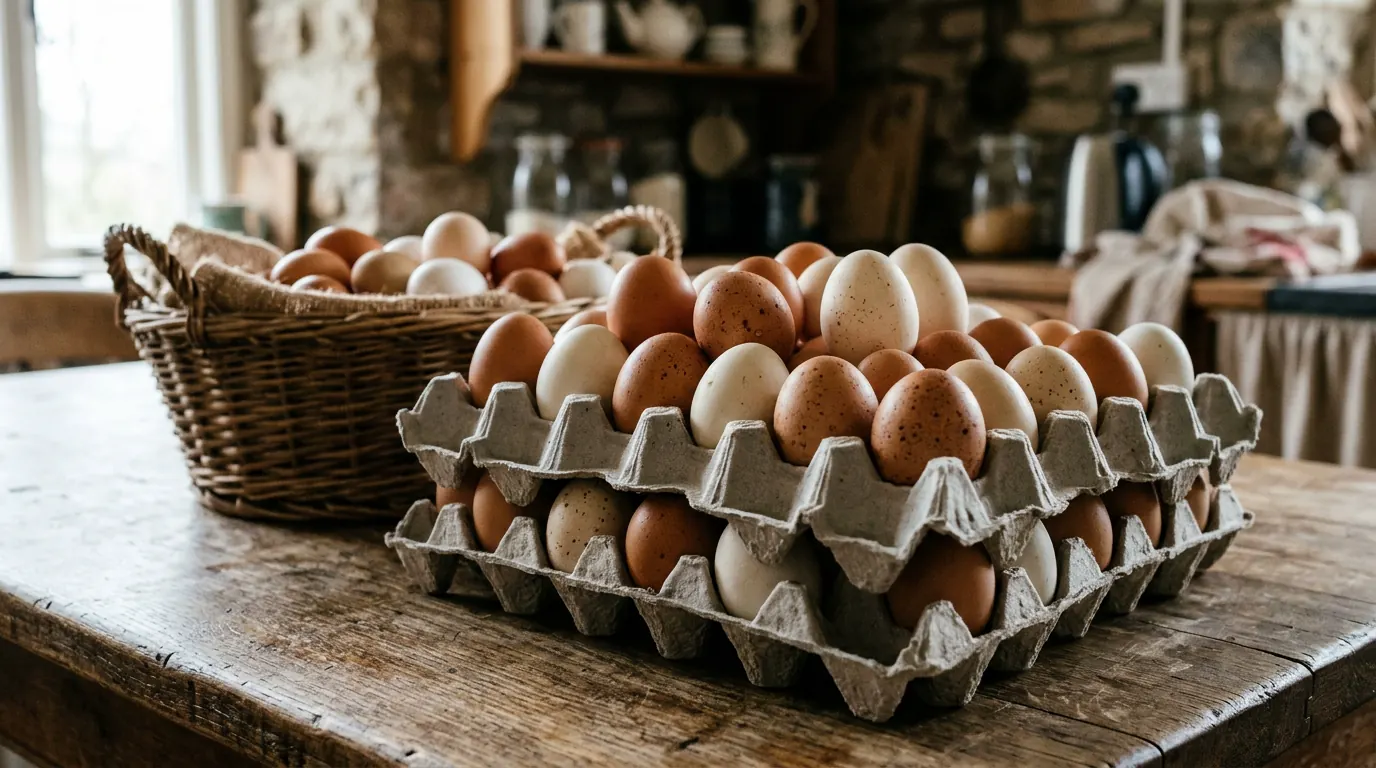
Legal status as of 23 November 2026. Salmonella in eggs means bacteria that can be present on the shell or inside the egg and cause food poisoning, especially when people eat eggs without proper heat treatment. When an inspection finds the bacteria on a batch of eggs, the Chief Sanitary Inspectorate (Główny Inspektorat Sanitarny, GIS) issues a public warning, and consumers should not eat eggs from that batch. At the source, in the henhouse, the problem is limited by Poland's national program for controlling Salmonella in laying flocks.
Salmonella in eggs: what people ask
Searches such as "salmonella eggs" and "salmonella in eggs" cover the same topic. Consumers ask whether they can eat an egg named in a warning. Keepers ask what their duties are and what risk the flock faces. We answer both, based on the GIS warning and the legal acts, which we also describe on the page Controlling Salmonella in poultry flocks: Regulation (EC) 2160/2003 and national programs.
Who this is for
This text is for managers of laying farms, owners of small flocks and egg packing stations who want to know how to read GIS notices and which documents must be in order. Flock data is easier to keep with software for a laying hen farm.
What a GIS public warning about Salmonella in eggs means
What the notice looks like
In its warning of 20.02.2025, GIS reported that official action by the State Sanitary Inspectorate found Salmonella spp. on the surface of eggshells from a specific batch. The notice names the producer, meaning the egg packing plant, and describes the steps taken by businesses and control authorities. GIS stresses that eating a product contaminated with Salmonella bacteria, especially without proper heat treatment, carries a risk of food poisoning.
What consumers do
GIS advice is simple: do not eat the product from the batch named in the notice. If symptoms of food poisoning appear after eating it, contact a doctor. GIS publishes information on infection symptoms on its infectious diseases page, under "Typhoid and intestinal salmonellosis". A keeper who sells eggs directly should be able to tell buyers the batch and the collection date.
What happens at the plant after detection
The notice shows the order of actions. The County Veterinary Officer (Powiatowy Lekarz Weterynarii) inspected the egg packing plant, including the production rooms of the grading and packing hall and the storage rooms. The business carries out cleanliness swabs of inlet belts, rollers, tables and corners, and tests eggs from the packing hall. The Veterinary Inspection (Inspekcja Weterynaryjna) also informed the authorities supervising the buyers of the questioned batch. For a farm this means one thing: your egg buyers will be traced, so delivery records must be complete.
Poland's national program for controlling Salmonella in laying flocks
Where the program came from
The national program set out in Dz.U. 2025 poz. 442 (Poland's Journal of Laws) starts with baseline surveys. Between 1 October 2004 and 30 September 2005, samples were taken in Poland from 440 flocks of laying hens kept on 355 farms. Salmonella bacteria were found in 1565 of the samples tested, which was 51 % of all samples. Dust samples were contaminated more often than feces and boot-cover samples, which pointed to contamination of the henhouse environment. The high share of infected farms justified introducing the program.
Which serotypes the program covers
The program covers two serotypes: Salmonella Enteritidis and Salmonella Typhimurium, including monophasic Salmonella Typhimurium with the antigenic formula 1,4,[5],12:i:-. The program calls them "Salmonella serotypes covered by the program". National programs in laying flocks began in 2008. Results for later years are listed in the program itself in the Journal of Laws. Annual targets come from Regulation No 517/2011, which sets the minimum percentage reduction in the number of infected flocks of adult laying hens. The general EU framework is described on the page about Regulation 2160/2003.
Health certificate when hens go to slaughter
Consignments of laying hens sent to slaughter that underwent pre-slaughter testing on the farm, including those from a flock infected with a serotype covered by the program, must have a health certificate. In point 4 of the certificate, the official veterinarian enters the number of the Salmonella test report, the sampling date, and the serotype found, or a note of a negative result or of an inhibitory effect on bacterial growth. The program also notes that Regulation 2073/2005 treats Salmonella as a food safety criterion for poultry meat.
Poultry salmonellosis and compensation from the state budget
What Dz.U. 2026 poz. 298 says
The regulation of Poland's Minister of Agriculture and Rural Development of 5 March 2026 (Dz.U. 2026 poz. 298) lists the diseases, other than those in Annex 1 to the Animal Health Act of 21 November 2025, for which compensation from the state budget is available when they are controlled. It takes effect on 18 March 2026. The list includes poultry salmonellosis, along with American foulbrood of bees.
Which flocks the list covers
The list names two cases. The first is the serotypes Salmonella Enteritidis and Salmonella Typhimurium, including monophasic 1,4,[5],12:i:-, in breeding turkey flocks. The second is the same serotypes plus Salmonella Hadar, Salmonella Infantis and Salmonella Virchow in breeding flocks of Gallus gallus hens. The text of the list alone does not show that compensation covers every laying or broiler flock. Check the payment conditions with your county veterinary inspectorate. For wider context, see Infectious animal diseases in the Animal Health Act.
What you do on the farm to keep eggs safe
Clean the house and watch the dust
Baseline survey data shows that contamination is environmental: dust was contaminated more often than feces and boot covers. That is why washing and disinfection after the flock leaves, pest control and separate footwear at the entrance matter. You can prepare a detailed plan in the biosecurity plan generator. The testing frequency and sampling method are set by the program and the county veterinary officer.
Control entries and exits
People, equipment and transport bring Salmonella into the house. Record every entry of an outside person and vehicle. The QR farm entry and exit log helps with this. For crews that load or catch poultry, attach the equipment disinfection records to the batch file.
Watch flock data
In adult hens Salmonella often shows no symptoms, so production data alone is not enough. Still, compare drops in water intake or laying rate, and changes in mortality, with the norm for your farm, as we describe in An early signal from daily flock data. Read test results together with the flock history, as in Salmonella and bacterial resistance.
Treatment and withdrawal period
Only a vet treats the flock. The vet chooses the medicine and dose; you record the date of administration and observe the withdrawal period, the time during which eggs and meat may not be sold. The treatment and withdrawal module helps with the records.
Packing and selling eggs and the risk of Salmonella
From nest to packing hall
The GIS notice concerned bacteria on the surface of eggshells, not inside the egg. That is why clean nests, quick collection and equipment hygiene count. We describe nest layout and collection in Laying farm equipment: nests, perches, egg collection. A packing plant that swabs belts, rollers and tables has proof that it controls this stage.
Delivery records
After bacteria are found, the inspection traces the buyers of the batch, so the farm must know who bought its eggs and when. Record the collection date, flock number and buyer. The henhouse records module keeps this data. You can gather all modules and records in poultry farm management software.
Frequently asked questions
Can you eat eggs named in a GIS salmonella warning?add
No. GIS advises not to eat the product from the batch named in the notice. If symptoms of food poisoning appear after eating it, contact a doctor.
Is salmonella in eggs just bacteria on the shell?add
In the GIS warning of 20.02.2025, Salmonella spp. was found on the surface of eggshells. The risk of poisoning grows when eggs are eaten without proper heat treatment.
Which Salmonella serotypes does the laying hen program cover?add
The national program in Dz.U. 2025 poz. 442 covers Salmonella Enteritidis and Salmonella Typhimurium, including monophasic Typhimurium with the formula 1,4,[5],12:i:-.
Is compensation available for poultry salmonellosis?add
The regulation in Dz.U. 2026 poz. 298 lists salmonellosis in breeding turkey flocks and in breeding flocks of Gallus gallus hens. Check the payment conditions for your case with your county veterinary inspectorate.
Where does salmonella in a henhouse come from?add
Baseline surveys in Poland showed contamination of the henhouse environment, especially dust. That is why cleaning, disinfection, control of entries and pest control matter.
Who issues the health certificate for laying hens going to slaughter?add
The official veterinarian. The certificate states the Salmonella test report number, the sampling date, and the result or serotype found.
Sources & resources
- linkNational program for controlling Salmonella serotypes in flocks of laying hens (Gallus gallus) (Dz.U. 2025 poz. 442)
- linkChief Sanitary Inspectorate (GIS): public food warning on Salmonella spp. found on the surface of eggshells
- linkJournal of Laws: regulation of the Minister of Agriculture and Rural Development of 5 March 2026 on diseases, other than those listed, for which compensation from the state budget is available (Dz.U. 2026 poz. 298)
- linkChief Veterinary Inspectorate: gov.pl/web/wetgiw
Prepared by: DlaFerm Team based on data from the sources listed · Publisher: INSTA-TECH sp. z o.o.
Keep flock and egg delivery records in the DlaFerm henhouse module
The henhouse records module keeps flock data, collection dates, egg buyers and treatment records in one place, so you have your documents at hand during an inspection or a GIS notice. Create a free farm account in DlaFerm or get in touch.
Phone
+48 796 258 151