Subsidies and Your Duties as a Keeper: Cross-Compliance and the Animal Welfare Eco-Scheme
Direct payments in Poland are paid on condition that you follow the cross-compliance standards. A breach found during an inspection can reduce your payment. The Animal Welfare eco-scheme also requires proof of practices above the minimum. We explain which areas inspectors check most often and what paperwork you need.
verifiedFrom the team that has organised work on poultry farms for years.
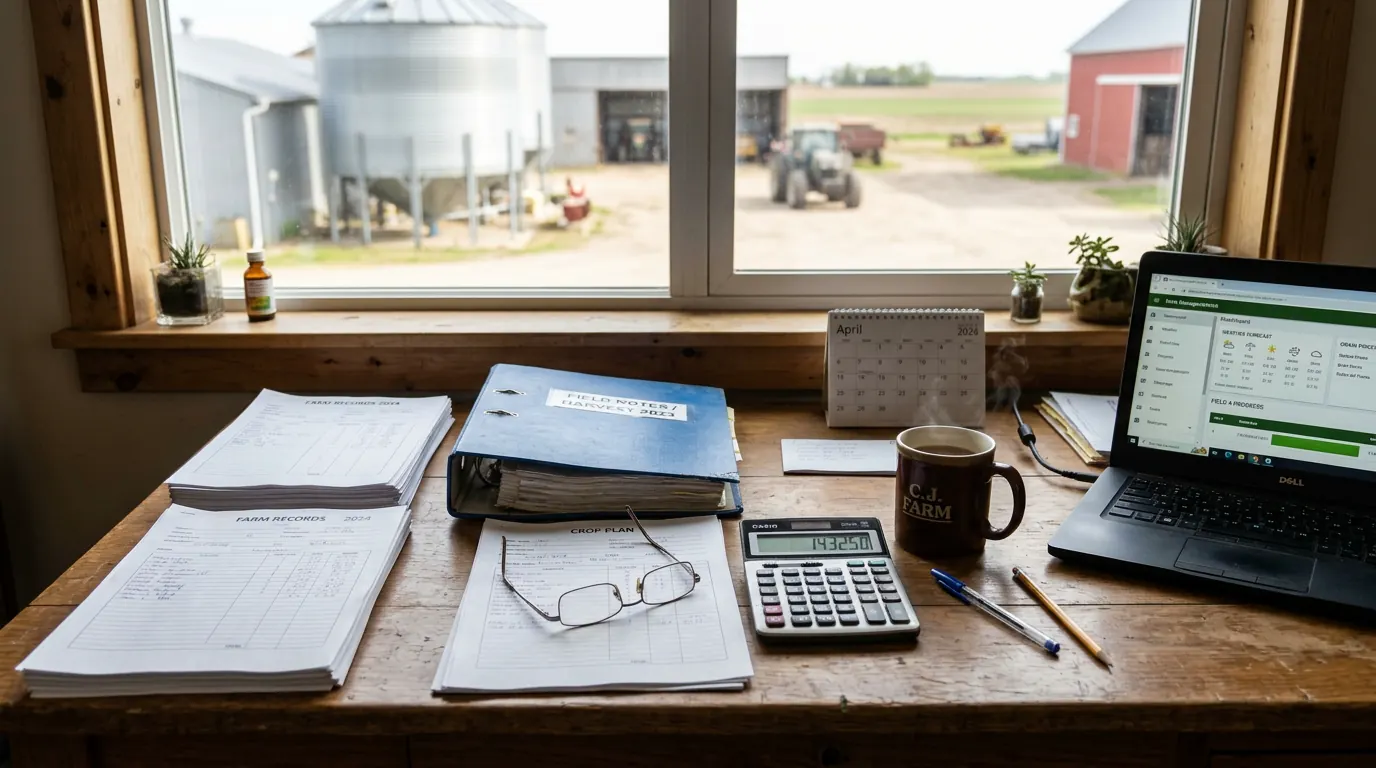
Subsidies are not a payment for simply owning birds. Cross-compliance means that with every payment you commit to meeting set standards, and a non-compliance found during an inspection reduces what you receive. For a poultry keeper the key areas are animal identification and registration (IRZ), welfare, the Nitrates Program and treatment records. The basis is the regulation of Poland's Ministry of Agriculture and Rural Development (MRiRW) of 10.03.2023 on the standards and detailed conditions for applying them (Dz.U. 2025 poz. 1674, Poland's Journal of Laws, in force from 15.03.2023). You will find more in our separate guide to cross-compliance.
Cross-compliance and the eco-scheme are two different mechanisms
Cross-compliance is a condition for receiving direct payments: you meet the minimum first. The Animal Welfare eco-scheme pays for practices above the minimum and needs a separate application. According to the regulation (Dz.U. 2025 poz. 97), for broilers these can include a lower stocking density, at least 6 h of darkness and enrichment materials. The keeper files a welfare plan and documents the practices. We describe the poultry rules in our guide to poultry welfare payments.
Which breaches reduce your subsidies
IRZ and reports to the database
The first inspection area is identification and registration. Inspectors check that the flock is registered, that the data match what is actually in the house, and that changes in numbers are reported on time. Missing or inconsistent entries are the easiest way to get a payment reduced. Make sure numbers and counts match your records before an inspection arrives. Our overview of poultry farm registration (IRZplus, ARiMR's online animal register) helps, and you can keep data up to date through the integration with IRZplus and sensors.
Welfare and minimum keeping conditions
Welfare standards are minimum conditions: stocking density, space, indoor climate and the way animals are handled. The team at IZ PIB (the National Research Institute of Animal Production) points out that minimum requirements only ensure a minimum level of welfare and do not guarantee that animals feel well. In practice the inspector assesses the condition of the birds, litter moisture and how the ventilation works. We describe the indicators worth tracking day to day in our guide to welfare indicators.
Nitrates and treatment records
The Nitrates Program requires correct handling of manure and slurry, as set out in the regulation. The second point is the treatment record: every medicine given should have a date, the product name and the withdrawal period. Dosing and the choice of medicine are for the vet, while the keeper is responsible for correct records. You keep these in the treatment and withdrawal period module.
Animal Welfare eco-scheme: what to document
Practices above the minimum for broilers
The welfare payment is granted for actions that go beyond the minimum. For broilers the regulation lists a lower stocking density, at least 6 h of darkness in the cycle and enrichment materials, for example pecking litter or perches. You must show each practice in your documents: stocking records at the start of the flock, the lighting schedule and a description of the materials used. We cover building requirements in our guide to house requirements for broilers.
Welfare plan and documentation
You submit the welfare plan together with the application. The easiest way is to keep it in the flock record, which collects data on stocking, the course of the cycle and actions taken. According to the regulation (Dz.U. 2025 poz. 97), the practice requirements may have changed after Dz.U. 2026 poz. 338, whose text we have not fully read. So before you apply, check the current text on ISAP (Poland's online legal acts database). We describe record keeping in the digital broiler flock record.
Payment rates and what they depend on
Rates for 2025
The MRiRW regulation of 22.04.2026 announces the payment rates under the animal welfare schemes for 2025 (Dz.U. 2026 poz. 560, in force from 24.04.2026). The rate depends on the type of practice, the species and the number of animals covered, not on farm size alone. We do not give amounts here, because the payment level comes from the implementing act for each campaign.
Rates for 2026
According to the list of regulations we rely on, the rates for 2026 have not been announced yet. Before you compare the profitability of practices, check in the Journal of Laws and on the ARiMR website (Poland's Agency for Restructuring and Modernisation of Agriculture) whether the regulation has been published. Before deciding on changes in the house, work out the investment cost and the expected payment for your species and stocking. You will find the ARiMR page in the animal welfare tab on gov.pl.
QAFP as a quality scheme for poultry
What QAFP is
QAFP (Quality Assurance for Food Products) is a national quality scheme developed by the Union of Meat Industry Producers and Employers. It covers pork, poultry meat and cured meats. The requirements for poultry keepers are set out in a private document, so check the current version with the scheme's organizer. For pigs the rules are described more fully in a PODR leaflet (PODR is a regional agricultural advisory center), but for poultry not all points are confirmed.
What the scheme requires from the keeper
According to the available descriptions, the keeper maintains a log of losses, diseases and treatment, a rodent control register, and has a Salmonella test done within a set time before slaughter. We have not checked the numbering of the points or the current version of the requirements, so treat this as an indicative scope. You can keep the log in a poultry farm management program, and treatment records in the withdrawal period module.
QAFP and the eco-scheme
According to unconfirmed descriptions, from the 2026 campaign taking part in QAFP or organic farming may be one way to meet the "quality scheme" practice in the eco-scheme for broilers. This has not been confirmed in the text of the regulations, so do not treat it as a certain condition. Before deciding, check the current rules with ARiMR and the requirements of your buyer.
How breaches are assessed
Assessment criteria
When assessing breaches in the animal identification and registration system, vets take into account the type and degree of the breach, the threat to food safety or public health, the keeper's record to date and whether the breach is repeated. The party's share in causing the breach and any action taken voluntarily to prevent it also count. These criteria are described in the ARiMR brochure on the new IRZ act.
Keep documents up to date
Backlog entries made after an inspection are the hardest to defend. Keep records current, with dates and a signature, and make corrections as new entries. A house record puts flock status, stocking and events in one place, which makes it easier to answer the inspector's questions. See our house record and the requirements for laying hens if you keep more than one group.
Frequently asked questions
Which breaches reduce subsidies?add
Non-compliances found during an inspection against the cross-compliance standards, including IRZ, welfare, the Nitrates Program and treatment records. The assessment depends on the type and degree of the breach and whether it is repeated.
Is the Animal Welfare eco-scheme compulsory?add
No. It is a payment for practices above the minimum, and you apply for it separately. It requires a welfare plan and documentation of each practice.
Is QAFP a condition for subsidies?add
From the texts we have, QAFP is not a general condition for subsidies. The provisions on a quality scheme in the broiler eco-scheme are unconfirmed, so check the current requirements with ARiMR.
What are the subsidy rates for 2026?add
We do not give amounts, because rates depend on the campaign and the practice. The 2025 rates were announced in Dz.U. 2026 poz. 560, and for 2026 there is no regulation yet according to our list. You will find current data on ISAP and the ARiMR website.
Does one breach mean losing the whole subsidy?add
There is no simple conversion. The type of breach, the threat it poses, the farm's history and the corrective action by the keeper all count. So it pays to react at once and document your fixes.
Where can I check the current rules?add
Check ISAP, Poland's online legal acts system. Information on payments and deadlines is published by ARiMR and the Ministry of Agriculture and Rural Development. Regulations change during the year, so check the legal-state dates.
Sources & resources
- linkARiMR — Information brochure on the new IRZ act (updated 06.03.2025)
- linkKPODR Minikowo — Pig behavior and welfare (P. Dorszewski et al.)
- linkIZ PIB — Pig welfare in a sustainable animal production system (eds. A. Rekiel, G. Żak)
- linkPODR Szepietowo — National food quality schemes: pigs (leaflet, B. Radziun-Kłosek)
- linkInternetowy System Aktów Prawnych (ISAP) — isap.sejm.gov.pl
Prepared by: DlaFerm Team based on data from the sources listed · Publisher: INSTA-TECH sp. z o.o.
Want your documents under control?
The treatment and withdrawal period module keeps medicine records in one place, and the house record organizes flock data for subsidy purposes. Create a free farm account in DlaFerm.pl and see how it works on your farm.
Phone
+48 796 258 151