Rules and records for farmers in Poland: poultry, pigs, cattle
The rules for pig, poultry and cattle farmers come from several acts and involve different agencies. This page sorts out who handles which duty, which records to keep on the farm and where to check the current legal text as of 22.11.2026. We cover each topic in more detail in separate guides.
verifiedFrom the team that has organised work on poultry farms for years.
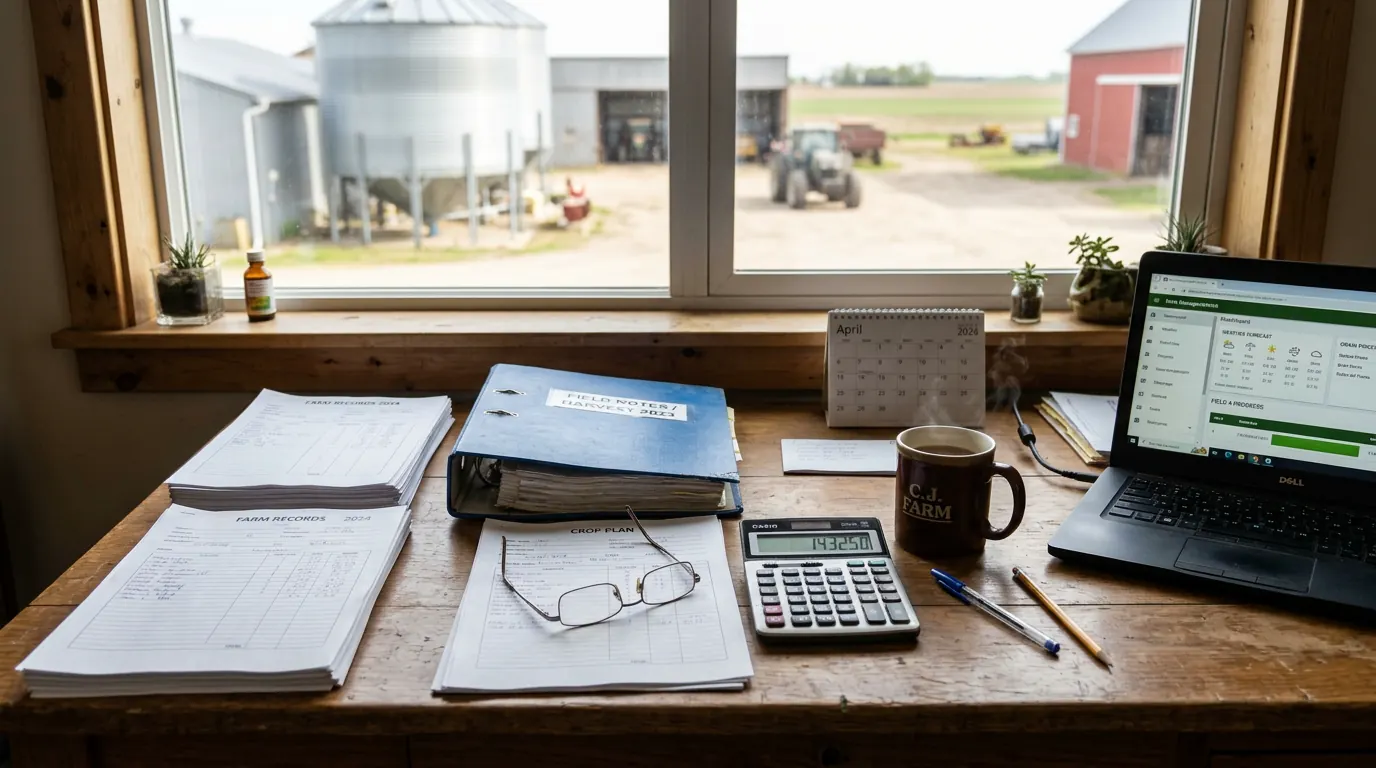
The rules for pig, poultry and cattle farmers are not in one document. Duties come from the act on the animal identification and registration system, from regulations on housing conditions, from EU standards for pigs and from rules on controlling infectious diseases, above all African swine fever (ASF). We gather them here: which agency is responsible for each duty, which document to prepare and where to check the current text. The legal status described is 22.11.2026.
Where to start: registration, records, reports
The first step is to register the herd location and the animals in the IRZ database run by Poland's ARiMR (Agency for Restructuring and Modernisation of Agriculture). According to the ARiMR brochure of 06.03.2025, you can file the activity notification in IRZplus, ARiMR's online animal register, or on paper at the ARiMR county office. Login and registration are covered in our guide IRZplus: login and herd registration. The second step is the paperwork you keep on the farm, because inspectors check it on site. On a poultry farm that includes the flock register in IRZplus. A business supervised by the Veterinary Inspection (Inspekcja Weterynaryjna) also needs a veterinary identification number. Each of these is explained in the sections below.
Who is responsible for which duty
Pigs: EU and national standards
For pigs, the reference point is the protection standards set in European Union law. Council Directive 2008/120/EC sets minimum standards for the protection of pigs and is the basis for housing requirements. The national regulation on minimum housing conditions (consolidated text, Dz.U. 2019 poz. 1966, Poland's Journal of Laws) covers species other than those for which the EU set standards. If you run a mixed farm, check the requirements separately for each species.
ARiMR and the Veterinary Inspection
ARiMR runs the animal identification and registration database, so that is where you file reports about your herd and activity. The Chief Veterinary Inspectorate (Główny Inspektorat Weterynarii, GIW) and county veterinary officers supervise biosecurity, animal health and treatment records. Before you call about a specific decision, check on gov.pl which agency handles the matter. A report to the IRZ database does not replace anything that falls to the veterinarian.
The process: from event to entry
The rules describe the farm as a chain of events: birth, movement, death, purchase and sale. As a rule, the keeper of the animal is responsible for reporting to the computer database. The consolidated act (Dz.U. 2026 poz. 591) states that for disposal of carcasses, the report is made by the operator of the rendering plant or incinerator. Assign one person on the farm to entries and keep a steady rhythm instead of entering everything after the fact.
Deadlines to keep in mind
Regular routines on a pig farm
A pig farm runs on a breeding cycle, piglet rearing and finishing, and each stage sets deadlines for entries. According to the GIW base document (version 5.0), the pig inventory must be updated weekly, split into piglets, weaners, finishers, sows, gilts, boars and young boars. Putting these entries in a calendar lowers the risk that the inventory is more than a week old at an inspection. The batch and cycle planning module can help.
IRZ reporting deadlines
Reports to the IRZ database have deadlines set in the act, not by custom. Before each entry, check the current text in ISAP (Poland's online legal acts database), because acts are amended. If you also keep poultry, the separate poultry farmer's work calendar helps you line up both species. The rule is simple: make the entry right after the event, not when an inspection comes.
Documents inspectors check on site
Mandatory records
According to the GIW base document, mandatory records include: the pig inventory with weekly updates, a log of vehicles entering the holding, logs of people entering rooms with pigs, documents for the rodent and insect control program, logs of cleaning and disinfection of vehicles, equipment and buildings, a mortality register by production category, a treatment book and an animal registration book on paper or in electronic form. Go through the list before an inspection instead of gathering documents at the last minute.
Farm plan and biosecurity plan
The GIW document also lists additional documents: a farm plan showing boundaries, entrances, buildings, routes of people and animals, the water source and the split into clean and dirty zones. A separate item is the biosecurity plan, which includes the number of cloven-hoofed animal farms within 1 km, 3 km and 10 km. You prepare it from your own data and maps. The biosecurity plan generator can help, and you can keep entries on people and vehicles in the log of entries, vehicle arrivals and procedures.
Treatment and dead animals
The treatment book needs an entry for every medicine given. A vet always chooses the medicine and dose. The farmer is responsible for the record and for observing the withdrawal period given by the vet and on the product label. Keep the mortality register by production category. We describe how to dispose of carcasses in the guide to disposal of dead animals. You can keep treatment and withdrawal entries in the treatment and withdrawal module.
IRZ reports and recent changes
Activity notification
The activity notification, formerly called the herd seat (siedziba stada), is filed by the animal keeper. The form is available in IRZplus and on the ARiMR website. You can file it electronically, or print it and file it at the ARiMR county office. The ARiMR brochure of 06.03.2025 describes it as one of the types of activity registered in the database. If you run more than one location, ask the county office how to register the additional sites.
What changed in the last month
There is talk of a consolidated text of the animal protection act dated 3.11.2026 and of an end to paper IRZ reports from 31.12.2026. We have not confirmed this in the text of the act, so we do not describe its content here. Before you change how you report, check the official publication in ISAP and ARiMR announcements. Until the changes are confirmed, keep your existing notification documents.
Searching the register
In practice, farmers look for simple answers in the register: is the herd or location registered, and was the report accepted? ARiMR runs the IRZ database search, and logging in to IRZplus requires an account in the system. It is best to compare your own entries with the database when you do the weekly pig inventory update.
How to check that a rule is current
Citation and legal-status date
We give every rule with its citation, for example Dz.U. 2026 poz. 591 for the consolidated act on the animal identification and registration system. This page describes the legal status as of 22.11.2026. Acts can change, so check the version in ISAP before you decide. The Ministry of Agriculture (MRiRW) regulation of 12.03.2026 on measures to control African swine fever is published as Dz.U. 2026 poz. 344. It covers ASF control, not general housing conditions.
African swine fever as a reason for change
EFSA publishes epidemiological analyses of ASF in the European Union. The analysis for 2025 describes the situation in the previous year and shows why biosecurity rules are so detailed. Commission Implementing Regulation (EU) 2023/594 sets out special measures to control ASF. For a farmer this means one thing: your biosecurity plan and entry logs must be up to date, because they show that the rules are being followed.
Frequently asked questions
Can I file an activity notification online in Poland?add
Yes. The activity notification, the former herd seat, is available in IRZplus and on the ARiMR website. You can also print it and file it on paper at the ARiMR county office, according to the brochure of 06.03.2025.
Who reports animal events to the IRZ database?add
As a rule, the keeper of the animal. For disposal of carcasses, the report is made by the operator of the rendering plant or incinerator, unless special rules say otherwise. The basis is the consolidated act, Dz.U. 2026 poz. 591.
What records must a pig farm keep?add
The GIW base document lists the pig inventory with weekly updates, logs of people and vehicle entries, cleaning and disinfection logs, a mortality register and a treatment book. The list covers biosecurity, so also check the requirements of your county veterinary officer.
Will paper IRZ reports end on 31.12.2026?add
There is talk of an end to paper IRZ reports from 31.12.2026. We have not confirmed it in the text of the act, so check the current text in ISAP and ARiMR announcements before any change. Until then, keep your existing notifications.
What goes into a livestock treatment book?add
You record the medicine given, the date, the number and category of animals and the withdrawal period given by the vet. The vet chooses the medicine and dose. The farmer is responsible for the record and for observing the withdrawal period.
How do I know a Polish rule is current?add
Check the legal-status date and the citation, for example Dz.U. 2026 poz. 591, in the online legal acts system ISAP (isap.sejm.gov.pl). This page describes the status as of 22.11.2026. If in doubt, ask your county veterinary officer or the ARiMR county office.
Sources & resources
- linkARiMR: information brochure on the new IRZ act (updated 06.03.2025)
- linkSejm / Journal of Laws: Act of 4.11.2022 on the animal identification and registration system, consolidated text (Dz.U. 2026 poz. 591)
- linkGIW: base document on farm biosecurity rules (derogation from testing), version 5.0
- linkMRiRW / Journal of Laws: Regulation on minimum housing conditions for farm animal species, consolidated text (Dz.U. 2019 poz. 1966)
- linkMRiRW / Journal of Laws: Regulation of 12.03.2026 on measures to control African swine fever (Dz.U. 2026 poz. 344)
- linkOnline System of Legal Acts (ISAP): isap.sejm.gov.pl
Prepared by: DlaFerm Team based on data from the sources listed · Publisher: INSTA-TECH sp. z o.o.
Run a pig farm and want your records at hand?
The DlaFerm app for pig farmers keeps your farm records in one place. Create a free farm account or get in touch, and we will show you how it works in practice.
Phone
+48 796 258 151