Rules and paperwork for poultry keepers in Poland
Your duties as a poultry keeper depend on flock size, type of production and whether you sell products directly. We explain what to report to ARiMR (Poland's Agency for Restructuring and Modernisation of Agriculture), which records to keep and when you need a biosecurity plan. We give the rules with sources. Final decisions about your flock rest with the county veterinary officer (powiatowy lekarz weterynarii).
verifiedFrom the team that has organised work on poultry farms for years.
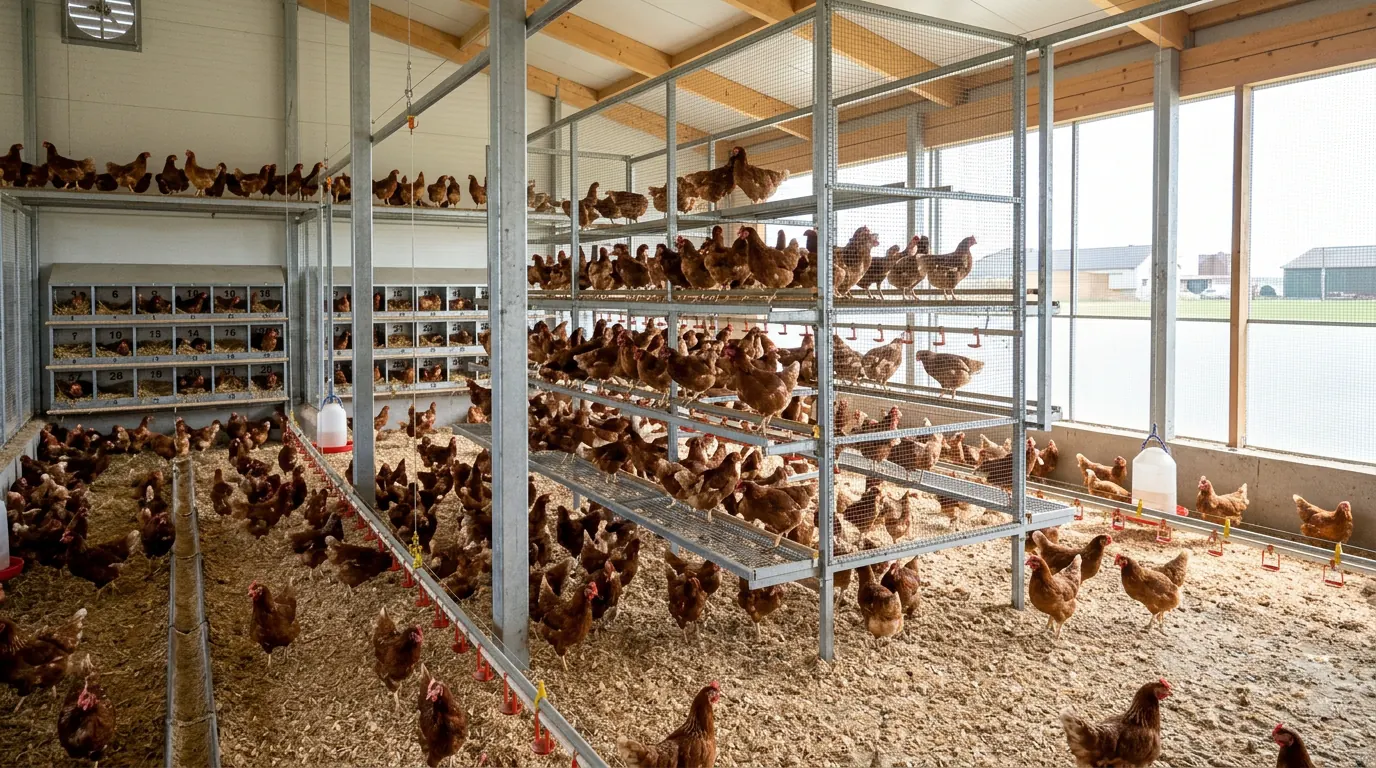
A poultry keeper has to answer three questions. Does your flock need registration and event reporting? How much record keeping and biosecurity does your scale require? What limits apply during disease outbreaks and when selling? There is no single table for everyone. Duties grow with the number of birds: a small backyard flock is treated differently from a mid-size farm, and a farm covered by the IED (Industrial Emissions Directive) rules differs again. Below we go from the smallest scale to the largest.
Every keeper must report to ARiMR
According to the ARiMR leaflet (updated 06.03.2025), all animal keepers, whatever the number, species and purpose of their animals, report flock events to ARiMR. These are: bringing a bird into the flock, movements (sale, death, killing, export, loss, purchase, import) and slaughter. You report to the computer database within 7 days of the event, unless a specific rule says otherwise. A small number of birds does not exempt you from records, so keep them from the first bird, for example in the poultry house records module.
Small flocks and keeping birds for your own use
How many chickens without registration
Keepers most often ask how many hens they can keep without registration. We cover this in a separate article: how many chickens you can keep without registration. The principle is this: the number of birds does not remove the duty to report events, and registration thresholds come from the law. Before buying more birds, check the current text of the act on the animal identification and registration system and ask your county veterinary officer how it applies to your flock. Keep records from day one, because rebuilding flock history later is hard.
Keeping birds to sell
If you plan to keep birds for sale, check your duties before you buy the first chicks, not after the first sale. Every arrival and departure of birds is an event you must record and report. Decide from the start who on the farm keeps the records and in what form, because that determines whether your data is consistent at an inspection.
The 350, 500 and 100 bird thresholds: how to read them
Three thresholds from the summary
In the summary of duties you will see thresholds of 350, 500 and 100 birds. Treat them as checkpoints, not a ready table for all species. Each threshold relates to a specific rule and type of keeping. Before you change scale, check the exact scope in the consolidated text of the act of 4.11.2022 on the animal identification and registration system (Dz.U. 2026 poz. 591, Poland's Journal of Laws) in ISAP, Poland's legal database. If in doubt, ask the inspection before you plan to extend your poultry house.
Traceability records
Commission Delegated Regulation (EU) 2019/2035 covers the information that operators of establishments and transporters must keep to confirm animal health and traceability. For you this means records of arrivals, dispatches and bird numbers must be consistent and at hand. Keep them in one place, not in notebooks in several buildings. The QR entry and exit book helps by organizing the log of farm entries.
Biosecurity plan: the 350 bird threshold and contents
What the plan should contain
The base document of the GIW (Główny Inspektorat Weterynarii, Poland's Chief Veterinary Inspectorate) on farm biosecurity rules (version 5.0) lists what a plan covers: farm boundaries, entrances and exits, buildings, routes for people, animals, feed and waste, the water source, and the split into clean and dirty zones. It was written mainly with pigs in mind, so for poultry treat it as a model for structure. You will find a ready outline in the poultry biosecurity plan; adapt its scope to your farm.
Entry and cleaning logs
In the same GIW document, logs of people entering, vehicles arriving, and cleaning and disinfection are listed as mandatory records. The rule there concerns pigs, so for poultry ask the inspection what scope of log it accepts. Record every entry to the poultry house and every vehicle arrival, and keep the log at the entrance to the site. This also makes it easy to show who had contact with the birds and when.
ND, Salmonella and avian influenza (HPAI)
Newcastle disease (ND)
ND is a viral poultry disease that must be reported and controlled under veterinary rules. Vaccination is decided by a vet who knows the situation in your flock and area. We describe vaccine types and prices in poultry vaccines: types and price, but the schedule is always set by your vet. Do not choose vaccines or doses yourself.
Salmonella programs
Salmonella control programs in poultry run under veterinary supervision rules. The inspection sets how samples are taken, how often, and what happens after a result. Under the national program for laying hens (Dz.U. 2025 poz. 442), if a sample taken on your own initiative is positive for the covered serotypes (other than vaccine strains), you must notify the county veterinary officer immediately. You must also keep the birds where they are and bring in no other poultry. Keep outsiders away from the house. Do not remove or sell meat, poultry products, carcasses, feed, litter or manure from those birds. Give the inspection access to the birds and to flock records, including purchases of chicks, litter and feed and sales of birds and eggs. Your own duty is hygiene, clean water, dry litter and treatment records. Keep treatment records in the treatment and withdrawal period log, one place with dates of administration and withdrawal periods.
HPAI zones
During avian influenza (HPAI) the inspection sets infected zones and protection zones. Inside a zone, rules change for moving poultry, feed and manure, and for reporting. The Veterinary Inspection (Inspekcja Weterynaryjna) issues the decisions, so follow announcements from GIW and your county veterinary officer. We describe the rules in a separate guide: HPAI zones: your duties.
Direct sales and transporting poultry
Selling from the farm
Direct sales of poultry from the farm follow different rules than wholesale, and the scope depends on what you sell: live birds, eggs or meat from slaughter. Before your first sale, check the requirements with the county inspectorate. We cover details in selling poultry from the farm (RHD). Under RHD (rolniczy handel detaliczny, farm retail sales), wherever you sell, show the words "rolniczy handel detaliczny", your name or business name and seat, the address of production and your veterinary ID number, if you have one. Record every departure of birds from the flock, because it is a reportable event.
Transporting poultry
Moving birds falls under the rules on animal movements. Before you set off, check the vehicle and documents. After delivery, record the movement in your register and report it within 7 days. We describe transport rules in a separate guide to poultry transport rules.
Frequently asked questions
How many chickens can I keep without registration in Poland?add
The answer depends on the animal registration rules and the nature of your keeping. We do not give a number here, because the 350, 500 and 100 bird thresholds must be checked in the current text of the act. Ask your county veterinary officer first, before you buy more birds.
Do I have to report a bird's death to ARiMR?add
According to the ARiMR leaflet of 06.03.2025, reporting animal events applies to all keepers, and death is one of those events. The deadline is 7 days from the event, unless a specific rule says otherwise. Write the date in your register on the day it happens.
When do I need a poultry biosecurity plan?add
The guidance points to a threshold above 350 birds. The plan's scope is described in the GIW base document, which mainly concerns pigs, so confirm the poultry requirements with the inspection. A plan template helps you organize farm boundaries, zones and logs.
Do Salmonella rules apply to every poultry farm?add
Salmonella control programs run under veterinary rules, and the inspection sets how samples are taken. You are responsible for hygiene, clean water and treatment records. Check the details and any duties in your case with the county inspectorate.
Can I sell eggs and birds from my farm?add
Direct sales are possible, but the rules depend on what you sell: eggs, live birds or meat. Check the requirements with the inspectorate before you start. Record every departure of birds in your flock register.
Sources & resources
- linkGIW — Base document: farm biosecurity rules (derogation from testing), version 5.0
- linkARiMR — Information leaflet: the new IRZ act (updated 06.03.2025)
- linkSejm / Journal of Laws — Act of 4.11.2022 on the animal identification and registration system, consolidated text (Dz.U. 2026 poz. 591)
- linkEU Publications Office — Commission Delegated Regulation (EU) 2019/2035: registration of establishments and animal traceability
- linkChief Veterinary Inspectorate — gov.pl/web/wetgiw
- linkInternet System of Legal Acts — isap.sejm.gov.pl
Prepared by: DlaFerm Team based on data from the sources listed · Publisher: INSTA-TECH sp. z o.o.
Running a poultry house and want your records in one place?
The poultry house records and QR entry and exit book modules keep flock records and farm entries in order. Create a free farm account in DlaFerm.pl or get in touch, and we will show how it looks with your flock.
Phone
+48 796 258 151