Poultry vaccine, 100 doses: price, types and where to buy
Looking for the price of a poultry vaccine in a 100-dose pack? Instead of one figure that would soon be out of date, we explain what drives the price, why vaccines are sold in bulk packs and where to buy them so you know the product and the dosing are right.
verifiedFrom the team that has organised work on poultry farms for years.
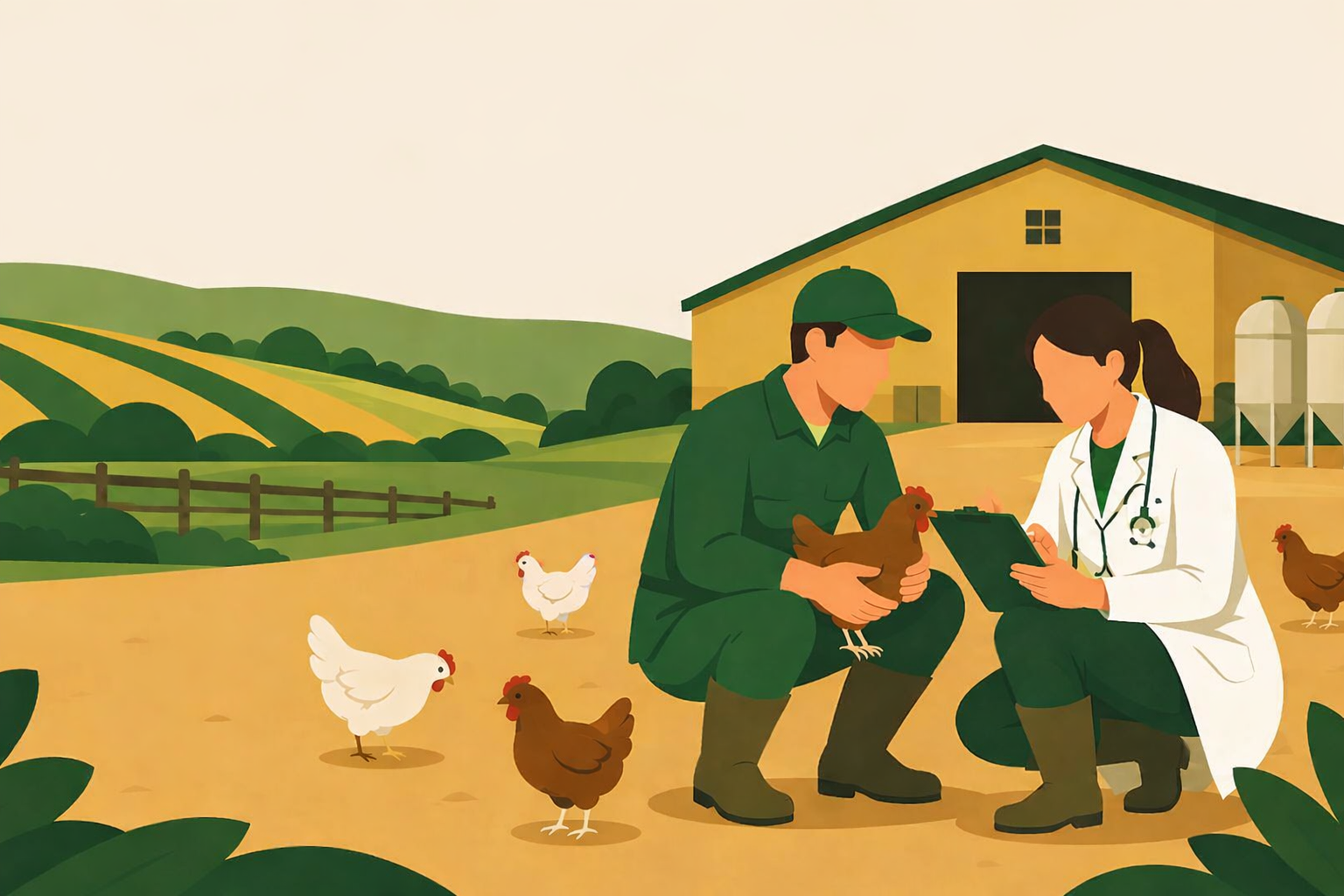
This article does not give you one price for a 100-dose pack of poultry vaccine, and that is deliberate. Prices of veterinary products depend on the specific product, the manufacturer, the supplier and the quantity you buy. They also change over time, so any figure here would be out of date before you could call the wholesaler. Instead we explain which types of poultry vaccine exist, why they are so often sold in packs of 100 doses and where to actually buy them. That helps you decide far better than a single number that quickly goes stale.
Why vaccines are sold in packs of 100 doses
The 100-dose pack is not a marketing accident. It follows from how poultry vaccines work and how flocks are kept. First, you usually vaccinate the whole flock at once. A single dose for one bird would make no sense in logistics or cost, because the price of the vial, transport and handling would be spread over far fewer birds. Second, many vaccines, especially live ones, keep only a short time after opening or dilution, so you must use them soon after preparation. It makes sense to prepare one larger portion for a whole flock, or for several small flocks at once, rather than open many single-dose packs that cost more per dose.
The right vaccine depends on your flock
There is no universal poultry vaccine. The choice depends on which diseases are a real risk for your flock, the region where you farm, the size of your operation and the bird species you vaccinate. A large broiler farm has a different risk profile from a backyard laying flock, and a pigeon keeper or turkey grower has another again. So the first step is not to look for a price. First agree with your vet what is worth vaccinating against. For a practical schedule, see our guide to vaccinating chickens in a backyard flock.
Which poultry vaccines are available
Newcastle disease (ND)
This is one of the most important vaccines in poultry keeping. It protects against the NDV virus, which without prevention can cause mortality of up to 100% in an unvaccinated flock. For symptoms, details of the disease and vaccination rules, see Newcastle disease in poultry: causes, symptoms, treatment and vaccination against Newcastle disease.
Marek's disease
The vaccine against the MDV virus is normally given to chicks on day 1 of life, either in ovo or under the skin. This is common practice in commercial hatcheries. Keepers who hatch their own eggs usually have no easy access to it, so take that into account when you plan prevention. More in Marek's disease in chickens: symptoms.
Salmonellosis
Separate vaccines are used against selected Salmonella serotypes in poultry. One product of this kind on the market is Salmovir. We give no price or dosing schedule here. Confirm both with your supplier or vet, because they depend on the current offer and pack size. See also Salmonella in laying hens.
Other species: turkeys and pigeons
The vaccination plan for turkeys can differ from that for chickens, with different susceptibility to some diseases and a different schedule. Agree it separately with the vet who looks after your turkeys. Pigeon vaccines are a category of their own, including products given by mouth (for example against Salmonella in pigeons). That is a different route from the injection typical for chickens or turkeys. Both topics go beyond this general guide and are best discussed with a vet who knows the species.
Vaccine vs. antibiotic: not the same thing
These are two different kinds of product. A vaccine works preventively: it teaches the bird's immune system to react to a specific virus or bacterium before infection happens. An antibiotic treats an infection that is already under way. Antibiotics do not work on viral diseases such as Newcastle disease or Marek's disease. There the only effective protection is vaccination, not an antibiotic given after the fact. As with choosing a vaccine, decide on antibiotics together with your vet. See also poultry keeping without antibiotics.
Where to buy poultry vaccine and what it costs
Why prices differ
The price of a 100-dose pack depends on several things at once: the type of vaccine (live or inactivated), the manufacturer, current availability, the size of the order and whether you buy directly or through a middleman. On top of the product price there is usually the cost of giving it properly. So get a current price straight from the vet who looks after your flock or from a veterinary wholesaler, not from a general article online.
Main places to buy
Poultry vaccines are most often bought through a vet or a veterinary wholesaler. These are the standard, proven channels. They ensure correct storage (some vaccines need an unbroken cold chain) and give advice on dosing and the vaccination schedule. For some simpler products, a specialist livestock or farm shop may also supply them, but not every shop has the full range. It depends on the product and the region.
Do you need a vet to buy one?
It depends on the product. For many poultry vaccines, a vet's involvement (when buying, prescribing or giving them) is standard practice, especially for products beyond the most basic. We cannot say here which products need a prescription or veterinary supervision under the current rules and which can be bought without a vet. This changes with the product and the regulations, so always check with your vet or the wholesaler before you buy.
Frequently asked questions
How much does a chicken vaccine cost?add
It depends on the product, the manufacturer, the supplier and the pack size, so there is no single price. Get a current figure for your chosen vaccine directly from your vet or a veterinary wholesaler, because prices change over time and differ between suppliers.
How much does a Newcastle disease vaccine cost?add
The price depends on the type of product (live or inactivated), the flock size and the supplier. We give no figure because it goes out of date quickly. Your farm's vet can give you an exact quote. More on the disease itself: Newcastle disease in poultry: symptoms and treatment.
Where can I buy chicken vaccine?add
Most often from a vet or a veterinary wholesaler. These standard channels ensure proper storage and advice on dosing. Some basic products are also sold in specialist livestock or farm shops, but this depends on the product and the region, so check before you buy.
How much does vaccination at the vet cost?add
There are two separate costs. The first is the price of the vaccine itself, which depends on the product, the supplier and the pack size. The second is the veterinary service, meaning the visit and giving the vaccine. That is a separate fee for the vet's work, independent of the price of a dose. Both vary with the practice, the region and the flock size, so agree the total with your vet before booking.
Sources & resources
- linkChief Veterinary Inspectorate (Główny Inspektorat Weterynarii): vaccination and control of poultry diseases
- linkWOAH (World Organisation for Animal Health): Newcastle Disease
- linkMerck Veterinary Manual: Vaccination of Poultry
Prepared by: DlaFerm Team based on data from the sources listed · Publisher: INSTA-TECH sp. z o.o.
Want your flock's vaccination and treatment history always at hand?
DlaFerm keeps <a href="/ewidencja-leczenia-i-karencja-lekow">records of treatments and withdrawal periods</a> and reminds you of the dates for the next doses. Create a free farm account or get in touch and we will show you how it works.
Phone
+48 796 258 151