Newcastle Disease in Poultry: Causes, Signs and What to Do
In Poland, Newcastle disease (ND) is widely called "rzekomy pomór drobiu", or false fowl plague. It is one of the most dangerous infectious poultry diseases in the country. We explain where the name comes from, what causes it, how to spot the signs and what to do if you suspect it in your flock.
verifiedFrom the team that has organised work on poultry farms for years.
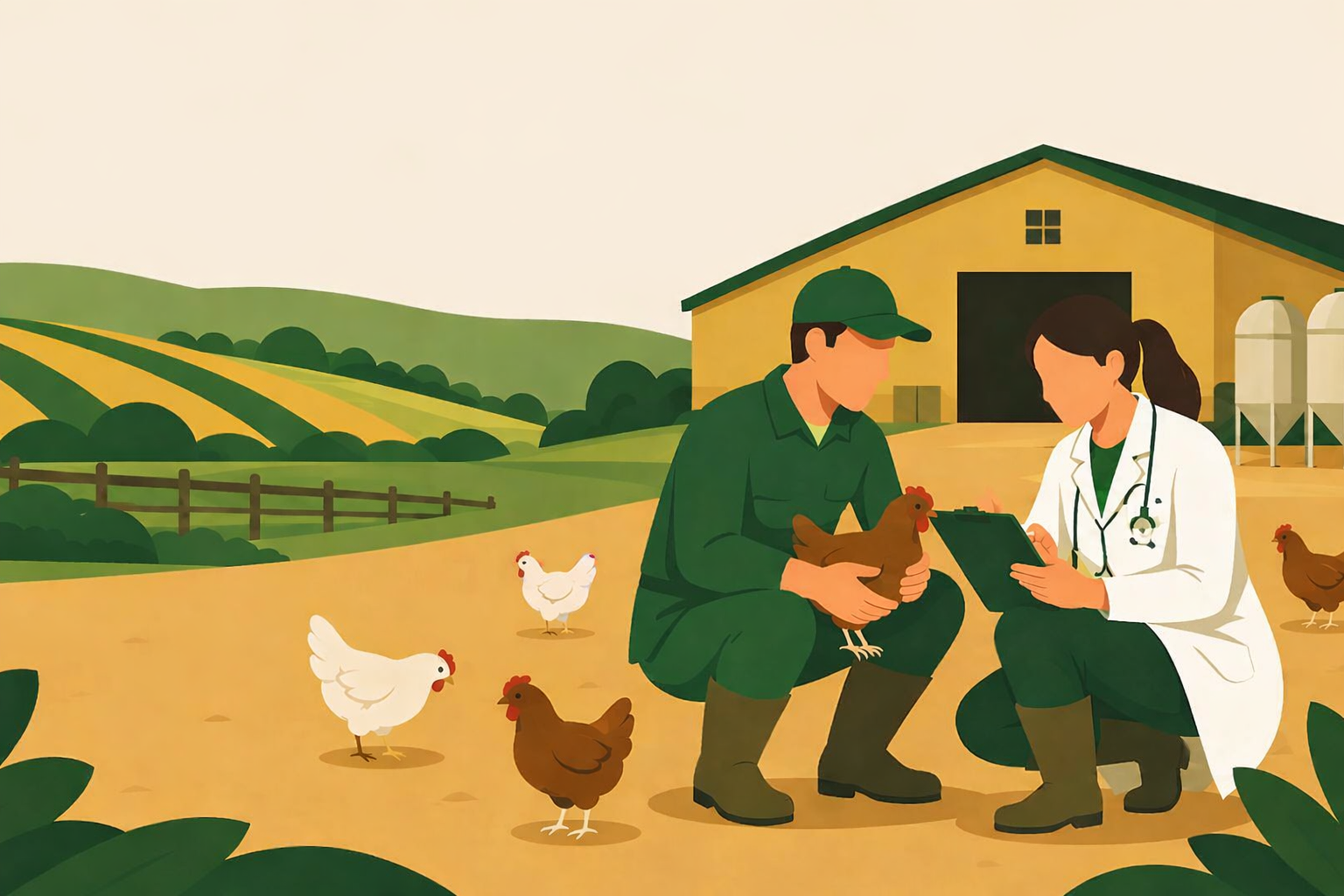
"Rzekomy pomór drobiu" (false fowl plague) is the older name, still common in Poland, for the disease that vets and the law call Newcastle disease (ND). The name dates from when people confused it with classic fowl plague, today's avian influenza. The signs can look very similar, but entirely different viruses cause them.
Why is it called "false fowl plague"?
The word "rzekomy" (apparent, not the real thing) was meant to separate this disease from the "true" fowl plague, now known as highly pathogenic avian influenza (HPAI). In practice, a keeper often cannot tell the two apart by eye: mass deaths and nervous and breathing signs look alike. Only a laboratory test ordered by the Veterinary Inspection (Inspekcja Weterynaryjna) settles it.
What causes Newcastle disease?
The cause is NDV (Newcastle Disease Virus), from the Paramyxoviridae family. That gives the disease a third name: avian paramyxovirosis. The virus spreads through the air, by direct contact with sick birds, and indirectly through contaminated equipment, footwear, vehicles and feed. Wild waterbirds can carry the virus and bring it onto a farm without showing signs first. For the full picture of how it spreads and how to protect your farm, see Newcastle disease: signs and prevention.
Signs of Newcastle disease in chickens and other poultry
First signs in the flock
The earliest sign is often a sudden drop in egg laying (by as much as half within a day), along with apathy, coughing and rattling breath. In chicks and turkeys, breathing signs dominate. In the following days you may see greenish diarrhea, trembling, a twisted neck and paralysis of the legs or wings. These nervous signs are typical of the more dangerous (velogenic) strains.
Mortality and course
In unvaccinated flocks, mortality can reach 100%, especially among young birds. Milder strains usually cause only a drop in laying and light breathing signs, but that is still a reason to report, not to wait it out. For a detailed table of signs by species, see signs of Newcastle disease in poultry.
Treatment, reporting and vaccination
Can Newcastle disease be treated?
No drug acts on the NDV virus itself. A vet may give supportive care (rehydration, a protective antibiotic against secondary bacterial infections), but this does not remove your duty to report the disease. The only effective protection is prevention: vaccination and biosecurity.
How much does the vaccine cost?
The price depends on the vaccine type (live or inactivated), flock size and supplier. As a rough guide, it comes to a few grosz up to several dozen grosz per bird per dose when bought in bulk, plus the cost of the vet's service. Ask the vet who serves your farm for an exact quote and availability, because prices change with the season.
Duty to report
You must report any suspected case immediately to the county veterinary officer (powiatowy lekarz weterynarii). Once an outbreak is confirmed, authorities set up protection and surveillance zones, with a ban on moving poultry and eggs. Early detection helps a lot, so read about early detection of poultry diseases and compare with avian influenza signs in poultry.
Frequently asked questions
What is false fowl plague?add
It is the common Polish name for Newcastle disease (ND), a highly contagious viral disease of poultry caused by the NDV virus. The word "false" historically set it apart from the "true" fowl plague, today's avian influenza (HPAI), because the signs of both can look alike.
Is Newcastle disease dangerous to humans?add
It is not a serious threat to people. Rarely, it can cause short-lived conjunctivitis after direct contact with sick birds, but it is not a zoonosis of epidemic importance. Still, follow biosecurity procedures whenever you handle a sick flock.
What are the signs of Newcastle disease in chickens?add
Most often: a sudden drop in egg laying, coughing and rattling breath, greenish diarrhea and nervous signs such as a twisted neck, trembling and paralysis of the legs or wings. With velogenic strains, mortality in an unvaccinated flock can reach 100%.
How much does the Newcastle disease vaccine cost?add
The dose itself is cheap (a few grosz when bought in bulk), but the final price depends on the product type, flock size and the vet's service. Get an exact quote for your farm from the vet who serves it.
Sources & resources
- linkChief Veterinary Inspectorate (GIW) — Newcastle disease
- linkWOAH (World Organisation for Animal Health) — Newcastle Disease
- linkCommission Implementing Regulation (EU) 2021/605 — disease control measures
Prepared by: DlaFerm Team based on data from the sources listed · Publisher: INSTA-TECH sp. z o.o.
Want reports and vaccinations under control?
DlaFerm keeps your flock's treatment and vaccination records and reminds you of due dates. Create a free farm account or get in touch, and we will show you how it works.
Phone
+48 796 258 151