What you handle at the county veterinary office in Poland
At the county veterinary office, a poultry keeper registers the farm and gets a WNI number, reports the place where birds are kept and each new flock, and reports suspected disease. You also ask there for movement permits in restriction zones, and for entry in the RHD (farm retail) or direct sales register. We cover the cases, deadlines and fines as the law stands on 22.11.2026.
verifiedFrom the team that has organised work on poultry farms for years.
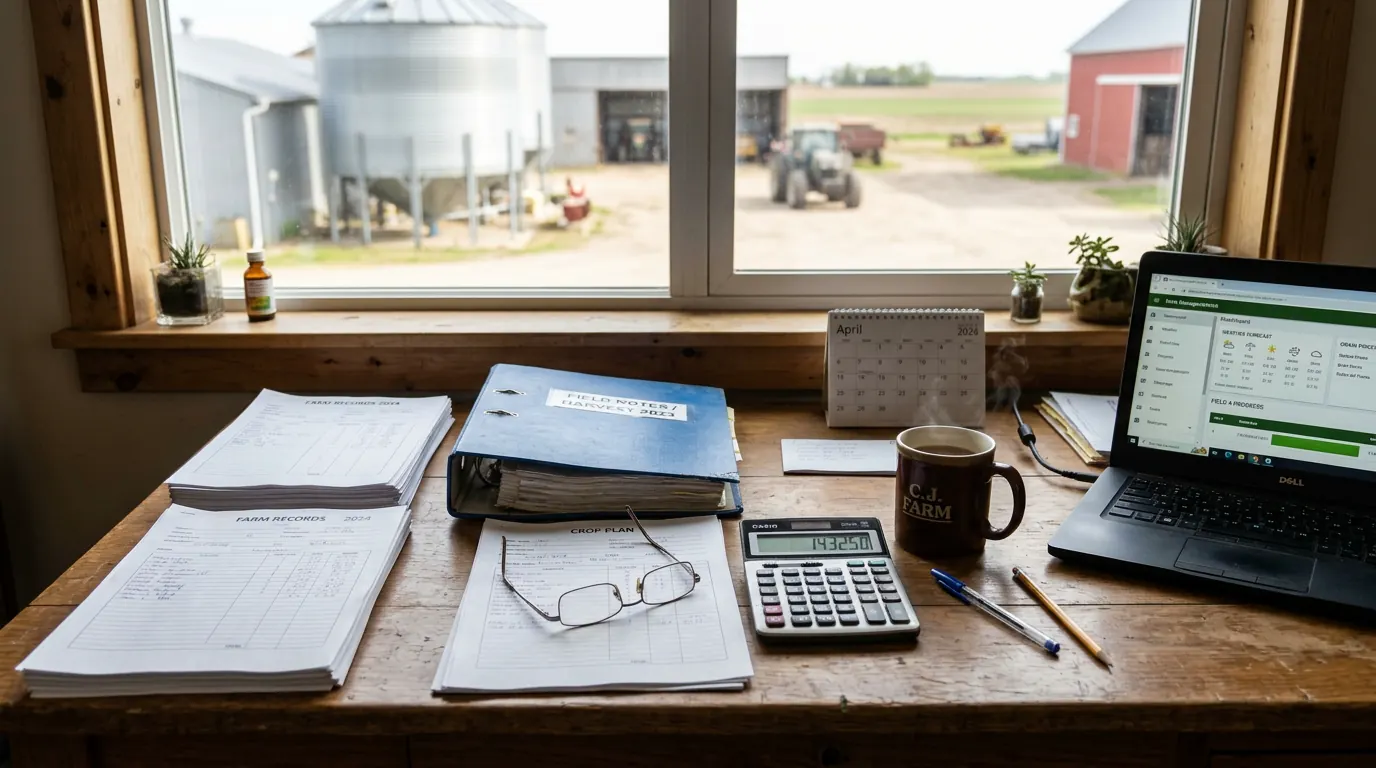
At the county veterinary office (PIW, powiatowy inspektorat weterynarii), a poultry keeper handles the farm's official matters. These are registration and the veterinary identification number WNI, reports of the place where birds are kept and of each new flock, notices of disease and deaths, movement permits in restriction zones, and entry in the RHD register (rolniczy handel detaliczny, farm retail) or the direct sales register. The county veterinary officer (PLW, powiatowy lekarz weterynarii) runs these cases. Below we describe each one, the deadlines in the rules, and where to check the current law.
Why sort this out before you start
The Veterinary Inspection (Inspekcja Weterynaryjna) supervises every place where animals are kept. A missing report or a late notice is grounds for a fine, and during an outbreak it can restrict trade in the whole flock. The Animal Health Act of 21.11.2025 (Dz.U. 2025 poz. 1795, Poland's Journal of Laws) came into force on 18.03.2026. Its fines run from 0.1 to 8 times the average monthly salary. Before you go to the office, call the PLW, because forms differ between counties. For more on registration itself, see our guide to poultry farm registration.
Farm registration and the WNI number
Apply before you start keeping birds
You register the farm with the PLW before you start keeping birds. You give the species, the number of birds and the location. In return you get a veterinary identification number (WNI, weterynaryjny numer identyfikacyjny). Businesses under Veterinary Inspection supervision must have a WNI. The number goes on transport documents and test results, so record it with the flock. According to the ARiMR leaflet of 06.03.2025 (ARiMR is Poland's Agency for Restructuring and Modernisation of Agriculture), you also give the WNI when you report the place where animals are kept to ARiMR, and you report the activity no later than the day the first animal arrives. The rules for the number are also covered in our guide to the farm veterinary number.
Changes at the farm
You report every change to the PLW: an extension, a new species or the end of keeping. The Animal Health Act (art. 68) gives you up to 7 days. Failing to report changes risks a fine of 0.1 to 2 times the average salary (art. 98). There is no single national application form: forms differ between counties, and the materials we have do not name one official form. Ask the PLW which form to use before you send anything.
Place of keeping and flock placement
The place where poultry is kept
Anyone who keeps poultry outside a dwelling reports the place to the PLW. This covers even a few birds in a yard. The duty comes from Dz.U. 2026 poz. 335 § 3 ust. 1 pkt 2 lit. b. You report before you keep birds. The act sets no separate deadline, so use a simple rule: report first, birds second. If you plan a larger flock, get the house details in order before you visit the office.
Flock placement notice
You report the placement of broilers or laying hens to the PLW within 7 days of placement (Dz.U. 2025 poz. 270 pkt 1.9; Dz.U. 2025 poz. 442 pkt 1.9). You can send a letter or a message through ePUAP, Poland's government e-services platform. The report gives the placement date, the house, the number of birds and the hatchery. The sooner you record these details in a system, the easier they are to copy. Placement planning helps you schedule cycles and stocking.
Suspected disease and deaths
Suspected infectious disease
You report every suspected infectious disease to the PLW without delay (Animal Health Act, art. 10). You do not wait for a test result or for certainty. Until the disease is ruled out, you apply protective measures: isolation and a ban on moving animals off the farm. Failing to notify about disease carries a fine of 0.3 to 6 times the average salary. Our article on poultry diseases describes the signs that should worry you, but diagnosis and treatment belong to the vet.
Deaths and IRZplus reports
Since 18.03.2026, every death of a bovine, sheep or goat is reported to the PLW, in addition to the report in IRZplus (ARiMR's online animal register). This duty covers those species, not poultry. On a mixed farm it still pays to keep both records side by side, because their scope differs. Reporting in the animal identification system is described in IRZplus: login and flock registration. The fine for not reporting the death of cattle is 0.3 to 6 times the average salary (art. 98 ust. 1 pkt 8).
Permits in restriction zones
A permit for each transport
In an infected zone and in a protection zone, almost every movement of birds, eggs and manure needs a PLW permit for that specific transport (Regulation 2016/429 art. 66; Regulation 2020/687 art. 28–56). You apply before each transport. Moving goods without a permit brings a fine of 0.2 to 5 times the average salary (art. 98 ust. 1 pkt 20). Before you book a transport, check whether your village lies in a zone. The internal layout of the farm is covered in our article on the clean and dirty zone.
Details for the application
Prepare the transport details: the quantity of birds, eggs or manure, the place of dispatch, the recipient and the date. The PLW issues the permit for one specific transport, so a change of recipient or date may mean a new application. Keep a copy of the permit in the vehicle and in the flock records. If you do not know whether your county is under restrictions, ask the PLW before you apply.
Inspections, biosecurity and fines
What the inspector checks
Veterinary Inspection bodies supervise animal identification and registration. They carry out on-site inspections at poultry farms and check animal records (Act on the animal identification and registration system, Dz.U. 2026 poz. 591, art. 48). The PLW also checks biosecurity, welfare, treatment records and feed. Keep documents so you can show them on the spot. Keep treatment records in the treatment and withdrawal period module; withdrawal period entries are the ones most often needed when treatment is checked.
Fines and how they are imposed
The PLW imposes fines. The amount depends on the offense and falls between 0.1 and 8 times the average salary (art. 98). No biosecurity is 0.1–5, failing to notify about disease is 0.3–6, and moving animals in a zone without a permit is 0.2–5. A repeat within 2 years raises the amount by 25% (art. 100 ust. 2). The fine is payable within 14 days of the decision becoming final (art. 100 ust. 3). If you are unsure about an amount, ask the PLW or read the act in ISAP (Poland's online legal database).
RHD register entry and direct sales
Apply before you sell
Direct sales of meat, eggs and processed products from the farm require entry in a register run by the PLW. The basis is the Food Safety Act (Dz.U. 2015 poz. 1703; Dz.U. 2022 poz. 1971). You apply before you start selling. In the materials we have, we could not read the deadline before the start, so ask the PLW for the current one. The rules for selling poultry from the farm are in selling poultry from the farm.
Preparing for the talk with the PLW
Before you go to the office, write down what you sell: eggs, carcasses or processed products. Name the place of sale and the estimated quantity. Have the farm details and WNI ready, because the PLW will ask for the number. If you sell processed products, explain where you make them. Ask the PLW directly which products need separate entries. Keep the farm's documents in one place so you have them at hand during a visit.
Frequently asked questions
Where do I report a few hens in my backyard in Poland?add
Anyone who keeps poultry outside a dwelling reports the place to the PLW, backyard flocks included. You report before you keep birds (Dz.U. 2026 poz. 335 § 3 ust. 1 pkt 2 lit. b). Ask your county veterinary office (PIW) for the form and how to submit it.
How many days do I have to report a flock placement?add
You pass the placement notice for broilers or laying hens to the PLW within 7 days of placement. You can send it by letter or through ePUAP. Include the date, the house, the number of birds and the hatchery.
Who issues the veterinary identification number?add
The PLW issues the WNI when you register the farm. You give the number when you report the place where animals are kept to ARiMR, and on transport documents and test results. Businesses under Veterinary Inspection supervision must have a WNI.
What is the fine for not notifying about a disease?add
Failing to notify the PLW of a suspected infectious disease risks a fine of 0.3 to 6 times the average salary. The PLW imposes fines, payable within 14 days of the decision becoming final. A repeat within 2 years raises the amount by 25%.
Do I have to report poultry deaths?add
Since 18.03.2026, the report of every death applies to cattle, sheep and goats, not poultry. You must still report a suspected infectious disease in poultry without delay. On a mixed farm, ask the PLW whether anything else applies to your species.
Can I sell eggs without being entered in the register?add
Direct sales of eggs, meat and processed products from the farm require entry by the PLW before you start selling. Do not assume that simply reporting the activity is enough. Confirm the current requirements with the PIW.
Sources & resources
- linkChief Veterinary Inspectorate (Główny Inspektorat Weterynarii) — gov.pl/web/wetgiw
- linkInternet System of Legal Acts (ISAP) — isap.sejm.gov.pl
- linkARiMR — Information leaflet on the new Animal Identification Act (updated 06.03.2025)
- linkSejm / Journal of Laws — Act of 4.11.2022 on the animal identification and registration system, consolidated text (Dz.U. 2026 poz. 591)
Prepared by: DlaFerm Team based on data from the sources listed · Publisher: INSTA-TECH sp. z o.o.
Want your farm's deadlines and documents in one place?
The <a href="/ewidencja-leczenia-i-karencja-lekow">treatment and withdrawal period module</a> and the entry log help you keep data at hand in case of an inspection. Create a free farm account on DlaFerm.pl or get in touch, and we will show you how to set it up for your flock.
Phone
+48 796 258 151