QAFP and GLOBALG.A.P.: the records that go beyond the law
QAFP and GLOBALG.A.P. are private standards that add records on top of what the law requires. The most work comes from entries on visits and vehicles, the mortality and treatment log, rodent control and Salmonella testing. Below we set out what comes from the law and what the standard adds.
verifiedFrom the team that has organised work on poultry farms for years.
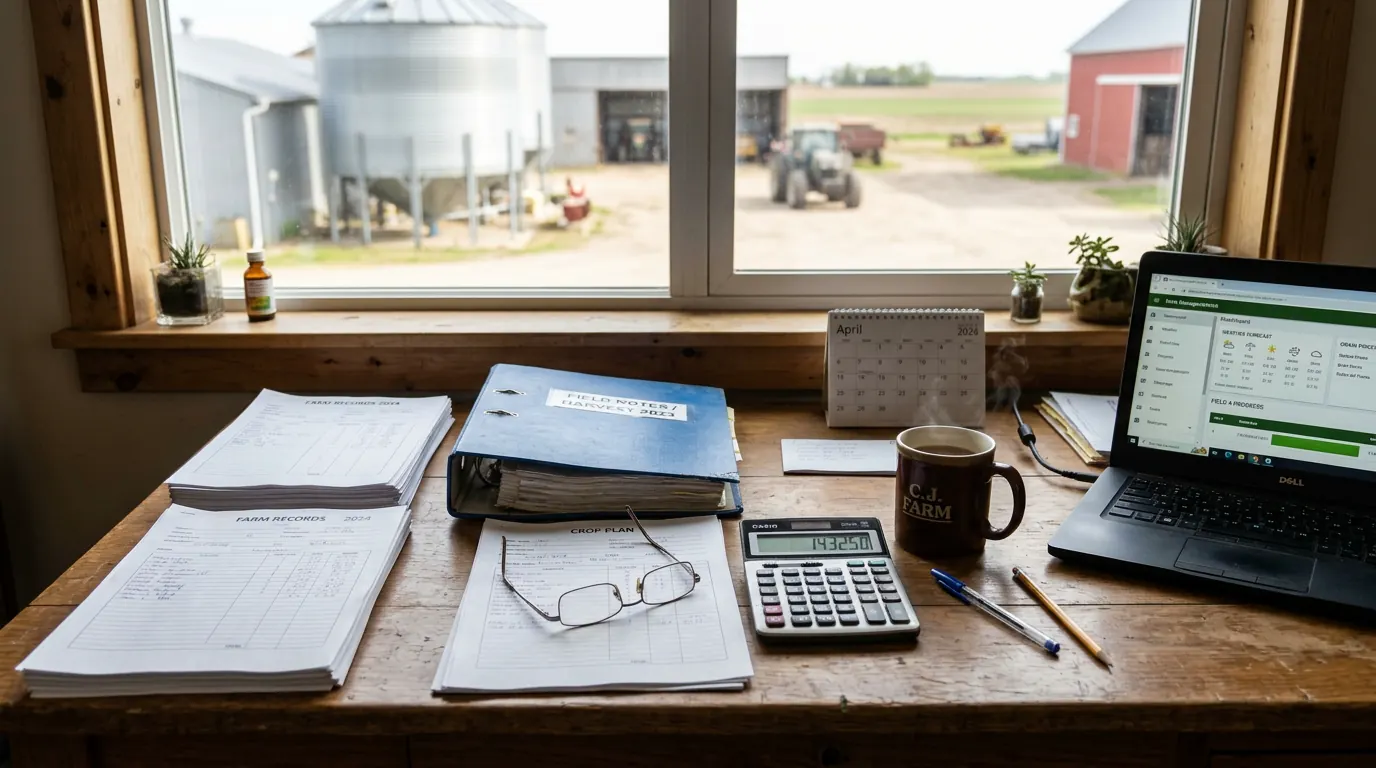
QAFP and GLOBALG.A.P. ask for more paperwork than veterinary and animal welfare law does. Both systems are voluntary and run by private bodies, but buyers and integrators often expect a certificate. A standard does not replace the law. It adds more records that you must keep up to date and show at an audit. The law sets the minimum, and the standard describes how to document that minimum and what else to add.
Why it matters in practice
An entry that is missing from your documents counts at an audit as an action not done. So we describe the requirements in the order they usually come up in daily work: entries, vehicles, mortality, treatment, rodents, tests and breakdowns. For each point we say whether the source is the law or the standard itself. Standard versions and checkpoint numbers were not confirmed here, so check them in the current document.
What the law requires and what the standard adds
The law as the minimum
Keeping farm animals rests on, among others, Directive 98/58/EC on the protection of animals kept for farming purposes and a national regulation of the Minister of Agriculture (MRiRW) of 15 February 2010 (Dz.U. 2010 nr 56 poz. 344, Poland's Journal of Laws). The law requires a working alarm and backup power for mechanical ventilation, but it does not require a separate record of generator tests. Check the legal position as of 22.11.2026 in ISAP (Poland's online database of legal acts), because acts get amended. We describe building requirements in our guide to broiler house requirements.
The standard as extra records
QAFP and GLOBALG.A.P. require documents that the law does not impose directly: a mortality and treatment log, a visitor and vehicle register, a rodent control record and Salmonella test results before slaughter. Each one shows that the farm works consistently, not only how it looks on audit day. Before you start entering data, ask your buyer which scope of the standard applies to you. You can keep these records in poultry farm management software.
Register of visits, vehicles and deliveries
What to record at every entry
The GLOBALG.A.P. poultry module requires a register of visits, vehicles and deliveries, plus documented biosecurity. In practice you record every entry: date, time, person or company, where they came from and why, and whether washing and disinfection were done. The base document of the GIW (Poland's Chief Veterinary Inspectorate) on farm biosecurity lists a register of people and vehicles entering as documentation required by law. It was written with pigs in mind, but the rule of logging entries is the same. You keep these entries in the QR entry and exit log, and we describe vehicle rules on the page about vehicle entry and deliveries.
Biosecurity plan and zones
The standard expects documented biosecurity, meaning a plan that splits the farm into a clean and a dirty zone and shows entry points and the routes for people and feed. Prepare the plan once, then update it after every change to the farm layout. The biosecurity plan generator can help. Detailed washing and disinfection procedures are set with your vet, because they depend on the disease, the type of building and the approved products. You will find examples of traffic organization in our material on people and vehicle movement on the farm.
Mortality, disease and treatment log
Mortality and disease
QAFP requires a log of mortality, disease and treatment. Enter the date, number of birds, batch or category, and symptoms. When you suspect disease, add the test result and the vet's decision. The log lets you spot rising mortality before it becomes a problem, and it shows the auditor that you react. Set the mortality norm with your vet and by comparing with your own results from earlier batches, not by using a general threshold.
Treatment and withdrawal period
The vet always chooses the medicine and the dose. The farmer records every administration: product name, dose, route, date and the person who did it. You also record the end date of the withdrawal period, the time after which products from the bird can be sold. The leaflet and the vet give the length of the withdrawal period. Without this record it is hard to show that a batch is clean. The treatment and withdrawal period module tracks the dates.
Rodent control in the standard's records
What the standard requires
The standard requires a rodent control record: a map of points, inspection dates, products used and results. You keep it whether your own crew or an outside firm does the work. Either way you need proof of the visit. Collect the inspection entries in one place, so the auditor does not have to search through several notebooks. Whether the law itself requires such a record for every species was not confirmed, so check the current document.
Where to start
First decide which points need constant checking: feed room entrances, passages between zones and areas around waste. For each point add how often it is checked and who is responsible. If you hire a firm, ask for a report describing the condition of the points. We cover building requirements for a specific species in the guide to broiler house requirements, and with many points it pays to keep them all in one place.
Salmonella and the test date before slaughter
Testing under the standard
The description of QAFP requirements mentions a Salmonella test done 3 weeks before slaughter. We could not confirm the current version of the standard's document, so do not treat this date as a certain requirement. Before you plan a delivery to the slaughterhouse, ask your buyer which rules apply and check them in the standard's document. Agree the number of samples and how to take them with your vet and the laboratory.
Why it matters for the flock
Salmonella threatens flock health and food safety. Record test results together with the placement date and batch number, because only then can you link them to a specific cycle. We cover differences between species in separate guides, for example on Salmonella in laying hens. Always discuss how to read a result and what to do next with your vet.
Emergency plan and breakdown entries
Emergency plan
We found no regulation that directly requires a farm emergency plan. However, the practice of the PIW (county veterinary inspectorate) and the QAFP and GLOBALG.A.P. requirements expect procedures for suspected disease, a power cut or a feed interruption. The plan includes contacts for the vet, the PIW and the rendering plant, plus the steps to take in the first hour. Keep it in your farm documents, not only in your head.
Breakdown log and eco-scheme
It is good practice to record faults in ventilation, drinking, feeding and heating, with the time they were fixed. The law requires faults to be fixed without delay and the animals protected until repair, not a separate log. According to preliminary information, from the 2026 campaign QAFP or organic farming may be a condition of the "quality system" practice in the eco-scheme for broilers. This point needs checking with ARiMR (Poland's Agency for Restructuring and Modernisation of Agriculture) before you submit an application.
Frequently asked questions
Are QAFP and GLOBALG.A.P. mandatory for poultry farmers?add
No. Both are private standards, so having one usually comes from a contract with a buyer or integrator, or from your own decision. Veterinary rules apply regardless of any certificate, and the documents the law requires must be kept in every case.
What is the difference between QAFP and GLOBALG.A.P.?add
QAFP is a Polish quality system for poultry, pork and beef, and GLOBALG.A.P. is an international standard with a poultry module. They differ in scope and in checkpoints. Check the current document versions on the websites of both schemes, because they were not confirmed here.
Do I need to keep a rodent control record?add
The standards require a rodent control record with a map of points, inspection dates and results. Whether the law requires such a record for every species was not confirmed, so check the current document. It is also worth keeping the reports from an outside firm's visits.
How long before slaughter should the Salmonella test be done?add
The description of QAFP mentions 3 weeks before slaughter, but we could not confirm the current version of the document. Ask your buyer and your vet before planning a delivery. Agree how to take the samples with the laboratory.
Does the law require a farm emergency plan?add
We found no regulation that directly requires an emergency plan. The practice of the PIW and the QAFP and GLOBALG.A.P. standards expect procedures for disease, a power failure and a feed interruption. It is worth writing down the contacts for the vet, the PIW and the rendering plant in the plan.
Can DlaFerm help me keep these records?add
Yes. The poultry farm management software and the house records module collect entries about the flock, and the QR entry and exit log keeps the visitor register. A separate module tracks treatment and withdrawal periods. You enter everything in one place instead of several notebooks.
Sources & resources
- linkGIW — Base document: farm biosecurity rules (exemption from testing), version 5.0
- linkChief Veterinary Inspectorate (GIW) — gov.pl/web/wetgiw
- linkInternet System of Legal Acts — isap.sejm.gov.pl
- linkMinistry of Agriculture and Rural Development — gov.pl/web/rolnictwo
- linkARiMR — gov.pl/web/arimr
Prepared by: DlaFerm Team based on data from the sources listed · Publisher: INSTA-TECH sp. z o.o.
Keeping records for QAFP or GLOBALG.A.P.?
The house records module and the QR entry and exit log collect your entries in one place. Create a free farm account at DlaFerm.pl or get in touch, and we will show you how to set it up for your flock.
Phone
+48 796 258 151