Livestock keeper deadline calendar 2026–2027
Keeper deadlines fall into two groups: fixed dates (the pig census on 30.06 and 31.12, the fertilizing window) and deadlines counted from an event, such as 7 and 37 days for marking animals. From 31.12.2026 the paper register in IRZ ends, and so does the KSeF exemption. This overview reflects the legal state of 22.11.2026.
verifiedFrom the team that has organised work on poultry farms for years.
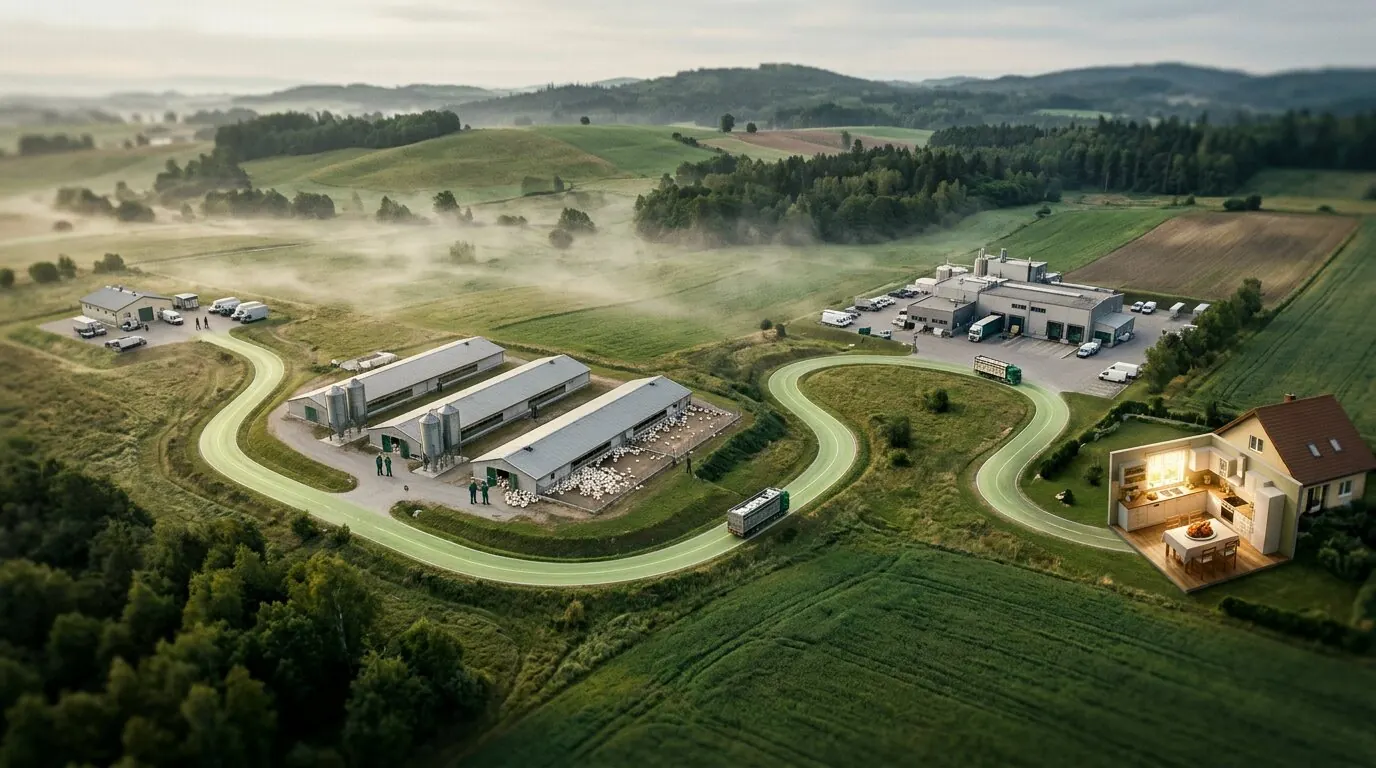
Keeper deadlines in Poland fall into two groups. The first is fixed calendar dates, such as the pig census on 30 June and 31 December, or the fertilizing window from 1 March to 31 October or 30 November. The second is deadlines counted from an event: from an animal's birth, from a movement, from the detection of a disease. This overview reflects the legal state of 22.11.2026. We give the source for each deadline, and where the sources do not confirm a number, we say so plainly.
What changes at the end of 2026
Two changes have a cut-off date of 31.12.2026. The first is the end of the paper registration book in IRZ (the animal identification and registration system run by Poland's ARiMR, the Agency for Restructuring and Modernisation of Agriculture): after that date you must keep your records in the system. The second is the end of the exemption in KSeF (Poland's national e-invoicing system), so check now that you issue all invoices in the system. A third change, IED 2.0, concerns the revised Industrial Emissions Directive; check its effect on your farm in the current text of the rules. For KSeF details, see our guide KSeF for poultry farms 2026.
Fixed dates in the calendar
Animal census: 30 June and 31 December
You carry out the pig census at least once every six months, and no later than 30 June and 31 December of the given year. You enter the number of marked pigs, including the individual numbers of sows, and the number of pigs not marked up to day 37 of life, in the herd registration book. You pass the result to the head of the ARiMR County Office within 7 days of drawing up the census. According to the ARiMR brochure, the most convenient way is to file the census in IRZplus (ARiMR's online animal register); filing this way frees you from keeping a paper book. If you keep pigs alongside poultry, plan both dates ahead and prepare the data in the app for pig keepers.
Fertilizing window: 1 March to 31 October or 30 November
In deadline lists, the fertilizing period starts on 1 March and ends on 31 October or 30 November. Which of these dates applies to your farm depends on the nitrate program rules for your area, not on a general calendar date. Before you plan to spread manure or litter, check the plan in force for your land. A separate guide helps: the nitrate program.
KSeF: exemption ends 31.12.2026
The KSeF exemption ends on 31.12.2026. Before that date, check that you issue invoices for poultry sales and services in the system, and that your accounting software sends them to KSeF. If you enter payment dates and corrections in your calendar, add the invoice sending deadline too. We describe the issuing rules in the guide for poultry farms linked in the introduction.
Deadlines you count from an event
Identification: 7 days and 37 days
Poland's Act on the animal identification and registration system, consolidated text Dz.U. 2026 poz. 591 (Poland's Journal of Laws), ties a 7-day deadline in Art. 25 to duties under Regulation 2021/520, and a 37-day deadline to marking pigs. For cattle, the farming sources give the rule of ear-tagging within 7 days of birth. For a pig moved to another holding where it stays longer than 30 days, the Act requires additional marking with that holding's number, at the latest before it leaves. You file reports through the system, and the applications are described in our guide on the veterinary identification number application.
Holding number: 14 days
Some deadline lists give 14 days for reporting the herd's holding number. We found no confirmation of this number in the sources cited, so do not treat it as a legal requirement until you check it in the current rule or at your ARiMR county office. If you are setting up a new farm, start with registering a poultry farm in IRZplus, and enter the deadline in your calendar only after you confirm it.
Diseases and reports: 24 hours, 7 days, 3 weeks
The calendar includes three deadlines tied to diseases and inspection: a report to the County Veterinary Inspectorate (PIW) within 7 days, a 24-hour deadline for ILZ, and 3 weeks for Salmonella. We did not find these numbers in the sources cited, so confirm them with the PIW or on the website of the Chief Veterinary Inspectorate (Główny Inspektorat Weterynarii) before entering them in your calendar. For details on a specific species, see the guide Salmonella on a poultry farm.
Changes entering the 2026–2027 calendar
Paper register in IRZ until 31.12.2026
The ARiMR brochure describes two ways to file the census: electronic in IRZplus, which ARiMR recommends, and paper, allowed in exceptional situations. According to deadline lists, the paper register in IRZ ends on 31.12.2026. Move your records into the system now instead of waiting for the last week of the year. Census data is easier to collect from ongoing records, for example in the farm management software module, because then every event has its own date.
IED 2.0: what to check
The revised Industrial Emissions Directive, often called IED 2.0, may affect large poultry farms in terms of permits and emissions. We give no thresholds or dates here, because they are not in the sources cited. Ask the county environmental protection inspectorate, or check the text of the act in the Internet System of Legal Acts (ISAP). Enter a date in your calendar to review your farm's conditions, so you know when to react if something changes.
How to enter deadlines in your farm calendar
Enter the event date, not the entry date
The 7-day deadline runs from the day of the event: birth, movement, death or purchase. If you enter the day you remembered the matter, you will count the deadline from the wrong date. In the registration book the event date is a separate field, so the calendar and the book should show the same date. Record it straight away, on the same document where you record the number of animals.
Separate fixed deadlines from events
The pig census and the fertilizing window are dates known in advance, so you can enter them for the whole year. Event-based deadlines appear only when something happens. So it works well to keep one view combining both kinds, for example the poultry keeper's work calendar. Show fixed deadlines at the top and add events below them as they happen.
Keep separate sets for each species
A farm with turkeys and hens has different deadlines from a farm with broilers only. Turkeys have separate farming and record-keeping rules. Each species has its own batch and placement dates, so record each one separately in the calendar, even when the shared duties are the same.
Where to check current deadlines
Official sources
You can check current deadlines in three places: the Internet System of Legal Acts (ISAP), where you find the text of the Act on the animal identification and registration system; the ARiMR website, since ARiMR runs IRZ; and the Chief Veterinary Inspectorate for animal health matters. For each deadline, write in the calendar the legal-state date you counted it for.
Changes during the year
Deadlines can change during the year. Set a calendar review at the start of each quarter, and after each publication of changes in the Journal of Laws (Dziennik Ustaw), update your entries. This overview reflects the legal state of 22.11.2026; newer changes may not yet be included.
Frequently asked questions
When must you do the pig census in 2026?add
You carry out the census at least once every six months, and no later than 30 June and 31 December. You pass the result to the ARiMR County Office within 7 days of drawing up the census. The most convenient way is to file it in IRZplus.
Does the pig census apply to a poultry keeper?add
No, the census concerns pigs. If you keep only poultry, this deadline does not apply to you. On a mixed farm, enter it in your calendar separately, next to the poultry deadlines.
Until when can you keep a paper register in IRZ?add
According to deadline lists, the paper register in IRZ ends on 31.12.2026. From that date, keep your records in the system. Confirm the transition for your farm at your ARiMR county office.
How many days do you have to mark a pig?add
For pigs not marked up to day 37 of life, the Act sets a 37-day deadline, under Art. 25. For cattle, the rule is ear-tagging within 7 days of birth. Check the full rules in the text of the Act.
When does the 7-day deadline start counting?add
It counts from the day of the event, such as birth, movement or death. It does not count from the day you entered the matter in your calendar. Record the event date in your records straight away.
Is 14 days for the holding number a firm deadline?add
Some deadline lists give 14 days, but we did not find this number in the sources cited. Do not treat it as a requirement without checking. Ask your ARiMR county office or the County Veterinary Inspectorate (Powiatowy Inspektorat Weterynarii).
Sources & resources
- linkARiMR — Information brochure on the new IRZ act (updated 06.03.2025)
- linkSejm RP / Journal of Laws — Act of 4.11.2022 on the animal identification and registration system — consolidated text (Dz.U. 2026 poz. 591)
- linkARiMR — Pig registration book (template)
- linkChief Veterinary Inspectorate — gov.pl/web/wetgiw
- linkInternet System of Legal Acts — isap.sejm.gov.pl
Prepared by: DlaFerm Team based on data from the sources listed · Publisher: INSTA-TECH sp. z o.o.
Want your farm deadlines in one place?
Our <a href="/program-do-zarzadzania-ferma-drobiu">farm management software</a> helps you keep flock records and events in one place. Create a free farm account and see how it works in practice, or get in touch.
Phone
+48 796 258 151