Other Authorities for Poultry Farmers in Poland: ODR, Soil Lab, IJHARS, Sanepid, KOWR, KRUS and PIP
On a poultry farm in Poland you deal with several bodies: ODR and the chemical-agricultural station for fertilizing, IJHARS for egg sales, the Veterinary Inspection or sanepid for health and products. KRUS, PIP and KOWR cover insurance, workplace safety and funds. We describe what each one does and when to contact it.
verifiedFrom the team that has organised work on poultry farms for years.
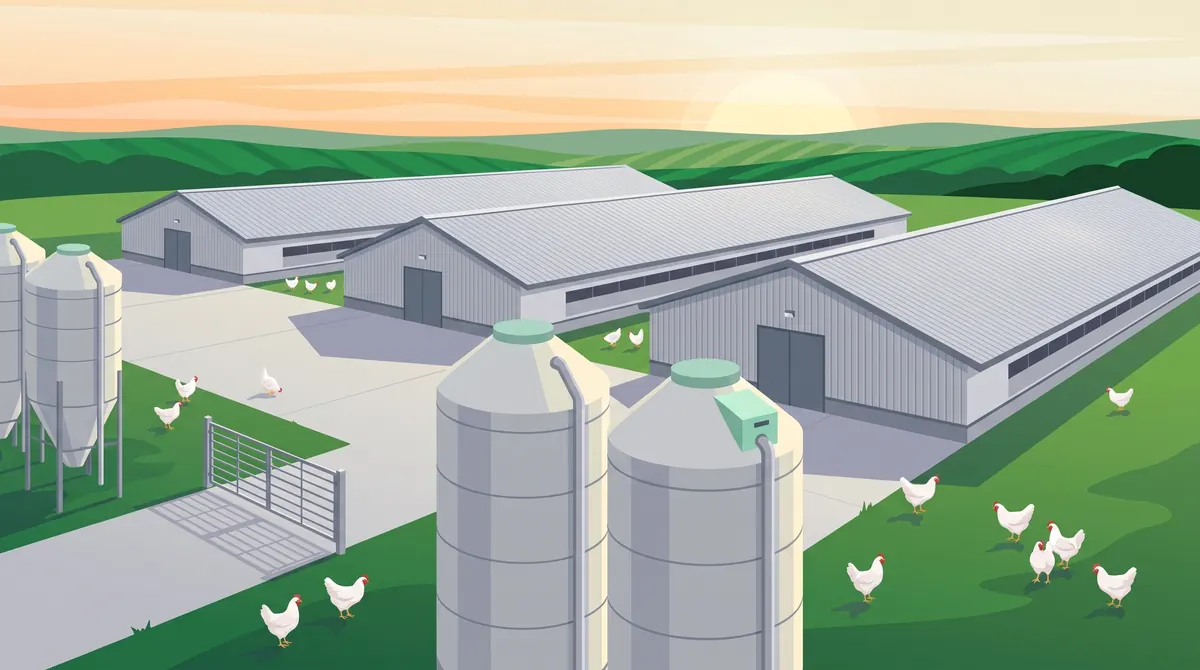
A poultry keeper in Poland does not settle everything at one office. The Agricultural Advisory Center (Ośrodek Doradztwa Rolniczego, ODR) helps prepare a fertilizing plan and subsidy applications. The Regional Chemical-Agricultural Station (Okręgowa Stacja Chemiczno-Rolnicza, OSChR) tests soil and fertilizers. The Agricultural and Food Quality Inspection (IJHARS) checks eggs sold on the market. The Veterinary Inspection (Inspekcja Weterynaryjna, PIW) is responsible for animal health and animal products from the farm, and the sanitary inspection (sanepid) for outbreaks of zoonotic disease in people. The National Support Center for Agriculture (KOWR) administers promotion funds, KRUS insures farmers, and the National Labour Inspectorate (PIP) checks workplace safety when you employ staff. Below we show who is responsible for what and when to contact them.
ODR and the soil station for fertilizing
Agricultural Advisory Center (ODR)
ODR helps prepare a fertilizing plan, the calculations for the Nitrates Program, subsidy and eco-scheme applications, and a biosecurity plan. It also runs training for farmers. Some services are paid, so ask about price and scope before you order. Prepare the data from your farm records: number of bird places, type of litter, and the amount of manure or slurry. You can start your own calculations with the fertilizing plan in the Nitrates Program.
Regional Chemical-Agricultural Station (OSChR)
OSChR tests soil and natural fertilizers and gives opinions on fertilizing plans, also for a fee. A soil test shows how many nutrients you need to add. A manure or slurry analysis tells you how much nitrogen and phosphorus go onto the field with the fertilizer. The results help when you plan nitrogen fertilizing and when you sign manure transfer contracts, because the recipient usually asks about composition. Take samples following the laboratory's instructions, because a wrongly taken sample gives a wrong result.
IJHARS and eggs on the market
IJHARS checks the commercial quality and marking of agri-food products, including eggs placed on the market. Under the act on the commercial quality of agri-food products, eggs must be graded and marked with a producer code. The same act requires origin marking of beef. A poultry keeper meets IJHARS most often when selling eggs to shops. The inspection also supervises bodies that certify organic farming, so contact is more likely if you run organic production.
Egg producer code: what to check
In the sources we rely on, we found no confirmation of who assigns the egg producer code or how it works when you register a farm. The scope of changes in force from 2026 also needs verification, so we do not present it as certain. Before you start selling eggs to a shop, ask IJHARS or check the current text of the act in ISAP (Poland's online legal acts database). Rules for direct sales from the farm are covered in a separate text on agricultural retail sales (RHD).
Sanepid or the vet inspection: who comes to the farm
When sanepid comes
The State Sanitary Inspection (sanepid, PPIS) supervises plant-origin food and drinking water quality. For animal products made on the farm, the Veterinary Inspection is usually the right body, not sanepid. Sanepid steps in when a zoonotic disease outbreak appears in people, for example salmonellosis after contact with poultry or eggs. If a household member or employee shows such symptoms, report it to a doctor and say that you work with birds.
When the Veterinary Inspection comes
The Veterinary Inspection, in practice the county veterinary officer, is responsible for animal health and animal products from the farm. The guidelines of the Chief Veterinary Inspectorate (GIW) for farms keeping pigs (annex II to regulation RWK 2021/605) show how to put biosecurity rules into practice: staff training, fixed entrances and exits to buildings, and separation of epidemiological units. Although they concern pigs, their logic also helps with poultry. The biosecurity plan generator makes the plan easier.
Medicines and withdrawal periods
Treatment is always set by a veterinarian, who chooses the medicine and dose. The keeper is responsible for the records: what was given, to whom and when, and for observing the withdrawal period. Missing documents make it harder to clear things up during an inspection and can stop sales. Keep records in the treatment and withdrawal register.
KOWR and promotion funds
KOWR administers, among other things, trade in agricultural land, some market mechanisms and promotion funds. For a poultry keeper it is usually a secondary matter. The exception is selling live birds: the buyer or slaughterhouse deducts a contribution to the promotion fund, and you see it on the settlement. The basis is the act of 22 May 2009 on promotion funds for agri-food products (Dz.U. 2025 poz. 683, Poland's Journal of Laws, in force 01.07.2009).
Scale of KOWR activity
According to the IZ PIB guide, between September 2017 and December 2023 KOWR paid out a total of PLN 4.32 billion under various mechanisms. Of that, PLN 0.40 billion went to servicing the sector promotion funds for agri-food products. These figures show the scale of the institution's work and give the keeper no separate entitlement. We do not give the contribution rate, because we did not confirm it in the text of the act. Check it in your settlement with the buyer and in ISAP.
KRUS and PIP: insurance and safe work
KRUS (Poland's Agricultural Social Insurance Fund) insures farmers and runs accident prevention for work with animals. If you run a farm as a farmer, KRUS is your insurer. Prevention covers safe handling of animals and equipment, so it is worth using even if you have no employees.
Workplace safety under PIP
PIP checks workplace safety when the farm employs people on employment contracts. The Agriculture Minister's regulation of 4.08.2017 on health and safety at work when handling farm animals (Dz.U. 2017 poz. 1692, in force 06.03.2018) applies to employers. Among other things it requires clean and lit buildings, a washbasin with warm water and disinfectant, covered slurry channels, and outward-opening doors in new buildings. Staff must be trained in handling animals and machinery. For violations PIP uses inspections and fines under the Labour Code. Keep records of the people on the farm in the staff app.
How to check the current rules
We describe the legal state as of 22.11.2026. Rules change, so before you decide, check the current text in ISAP (isap.sejm.gov.pl). Information on inspections is on the GIW and ARiMR (Agency for Restructuring and Modernisation of Agriculture) websites. The consolidated text of the act on the commercial quality of agri-food products is published in Dz.U. 2023 poz. 1980 (in force 01.01.2003). The scope of the 2026 changes needs verification, so we do not present it as certain.
From the problem to the right office
In official matters, do not assume one office will handle everything. First work out what the matter concerns: animal health, a product, soil, insurance or employees. We describe the basics of record keeping in the poultry keeper's guide. It is convenient to keep records in poultry farm management software, from which it is easier to prepare data for an inspection.
Frequently asked questions
Who tests soil on a poultry farm in Poland?add
Soil and natural fertilizer tests are done by the Regional Chemical-Agricultural Station (OSChR), for a fee. The result helps with the fertilizing plan and manure transfer contracts. Take samples following the laboratory's instructions.
Who helps prepare a fertilizing plan?add
The Agricultural Advisory Center (ODR) prepares fertilizing plans, calculations for the Nitrates Program and subsidy applications. Some services are paid, so ask about scope and price before you order.
When does sanepid come to a farm, and when the vet inspection?add
For animal products from the farm, the Veterinary Inspection is usually the right body. Sanepid deals with plant-origin food, drinking water quality and zoonotic outbreaks in people, such as salmonellosis.
Does IJHARS inspect eggs from my farm?add
Yes, if you sell eggs on the market. IJHARS checks the commercial quality and marking of eggs and supervises bodies certifying organic production. Check the producer code rules directly with the inspection, because we did not confirm them in our sources.
Does KOWR deduct anything when I sell live birds?add
When you sell live birds, the buyer or slaughterhouse deducts a contribution to the promotion fund, and you see it on the settlement. The basis is the act on promotion funds (Dz.U. 2025 poz. 683). Check the rate in your settlement with the buyer.
When does KRUS handle a matter, and when PIP?add
KRUS insures farmers and runs accident prevention for work with animals. PIP checks workplace safety when you employ people on employment contracts, under the 2017 regulation (Dz.U. 2017 poz. 1692).
Sources & resources
- linkIZ PIB: Guide to organic pig farming (ed. E.R. Grela)
- linkPIW Wągrowiec (GIW guidelines): Guidelines on practical implementation of biosecurity requirements on farms keeping pigs (annex II RWK 2021/605)
- linkChief Veterinary Inspectorate: gov.pl/web/wetgiw
- linkARiMR: gov.pl/web/arimr
- linkOnline System of Legal Acts: isap.sejm.gov.pl
Prepared by: DlaFerm Team based on data from the sources listed · Publisher: INSTA-TECH sp. z o.o.
Do you run a poultry farm and want your data at hand for an inspection?
The DlaFerm.pl <a href="/program-do-zarzadzania-ferma-drobiu">farm management software</a> gathers your farm data in one place, which makes it easier to prepare for an official visit. Create a free farm account and see how it works for you.
Phone
+48 796 258 151