Cattle ear tags and passports: reporting in IRZplus
You must tag every calf within 7 days of birth and report cattle events to the register run by ARiMR, Poland's Agency for Restructuring and Modernisation of Agriculture. A cattle passport is issued only when cattle move to an EU member state other than Poland. Here is what to report, when and where.
verifiedFrom the team that has organised work on poultry farms for years.
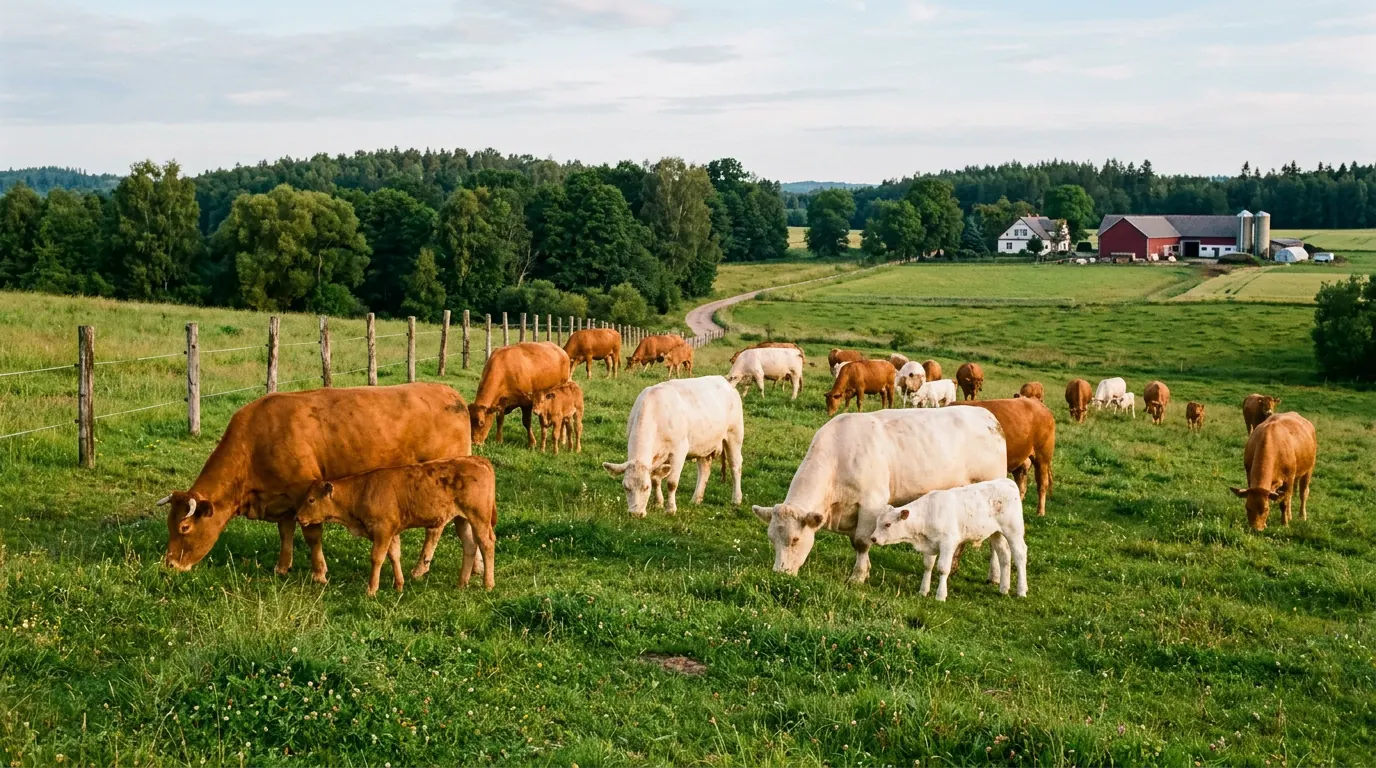
Ear tags and passports are the two basic parts of cattle identification in Poland. The tag links an animal to a number in the register. The cattle passport travels with the animal when it moves to another EU member state. You report births, purchases, sales and exports to the ARiMR register, and you keep a register book at the herd's location. You file reports through IRZplus, ARiMR's online animal register: login and herd registration. Below we go through each element step by step.
When to tag a calf
The main aim of the IRZ system (Poland's animal identification and registration system) is food safety in line with European Union requirements, and so full access to the market for animal products in other EU states. According to the KPODR Minikowo guide, the keeper must tag animals within 7 days of birth. The deadline runs from the day of birth, so in a suckler herd check calves several times a week, especially in calving season. Fit the tag so the number can be read from a distance and the tag does not slip off the ear as the animal grows. The number on the tag must match the number in the register book and in the passport.
What the IRZ system for cattle consists of
Register, tags, passports and books
According to the ARiMR brochure on the new IRZ act, updated 06.03.2025, the system has four elements: a register of tagged farm animals and herd locations, identification marks, cattle passports, and register books that the keeper maintains at the herd location, separately for each species. The central database is built as a network system and is integrated with IACSplus. It holds data on keepers, on animals and where they are kept, and on movements. For you this means the data on the tag, in the book and in the report must match, because the register compares the same numbers.
Legal state and sources
This description reflects the legal state as of 22.11.2026. The practical basis is the ARiMR brochure, and you can check details at gov.pl/web/arimr. Rules can change, so look at the ARiMR website before each report. For unusual cases, such as buying animals from another country, the ARiMR county office (biuro powiatowe) is the surest source of answers.
Types of ear tags and other marks for cattle
What you may use on cattle
For cattle you may use ordinary ear tags, electronic ear tags, ceramic capsules (boluses) and an implanted transponder. Ordinary tags are also used for sheep, goats and pigs, and electronic tags for cattle, sheep, goats and pigs. Boluses apply to cattle, sheep and goats, and the transponder to many species, including cattle. The choice depends on whether you use readers in the herd and how often animals are moved between groups. Before you order tags, ask your vet or an adviser which mark suits your suckler herd and calf rearing.
Number pool and duplicates
Tag numbers are assigned from a pool that you apply for at ARiMR. The same kind of application is used to order duplicate tag numbers when a tag is lost or damaged. If a tag is lost, do not put one on another animal yourself. Report it first, because each number must be assigned to a specific animal in the register. Only then enter the new mark in the book and in the animal's documents.
When you need a cattle passport
Passport only for export to the EU
Cattle passports are issued only when cattle move to an EU member state other than Poland. For a sale within Poland no passport is issued, and you report the event in the ARiMR register. The passport carries the tag data, so the number must match the mark on the animal's ear. If you sell a calf abroad, first check with ARiMR and the county veterinarian which documents are required in that case.
Duplicate passport
If a passport is lost, you apply for a duplicate. The keeper's basic duties include reporting events to the register, keeping the book, and applying for a pool of tag numbers, duplicate tag numbers and duplicate passports. Copy the data from the book and photograph the tag before documents go out with a transport. This makes it easier to rebuild the animal's history if a document disappears on the farm or on the road.
The cattle register book at the herd location
What goes into the book
The register book is kept on paper, at the herd location, separately for each species. The cattle book template provides for entries such as: serial number, identification number matching the tag and passport, date of birth, sex, breed (or coat color if the breed is unknown), date of tagging, and the numbers of the dam and, if known, the sire. Next you enter the date the animal arrived in the herd and the arrival event code: "U", "Do" or "P". For animals with code "U" you do not enter the previous herd's number. Make entries right away, not a week later from memory.
Book versus report to the register
The book is a document kept on the farm, and the report to the register is a separate duty. You report births, imports from non-EU countries, purchases from EU countries, purchases, sales and exports to the ARiMR register within the legal deadlines. Data in the book and in the report must match. In a suckler herd, at each calving enter the date of birth, the dam's number and the date of tagging, then report the birth through IRZplus, ARiMR's online animal register: login and herd registration.
How to keep identification in order in a beef herd
Order of tasks for a calf
First, check the day of birth and tag the calf within 7 days. Second, enter the data in the book: number, date of birth, sex, breed or coat color, and the dam's number. Third, report the birth to the register on time. Fourth, when you sell, report the movement, and for export to the EU apply for a passport. Before a calf goes to market or to the slaughterhouse, compare all entries with the tag. Keep the numbers in one place, for example next to your list of suckler cows.
Treatment records and identification
The animal's number in the book links to the treatment record. When an animal gets a medicine, write down the date, the medicine name and the withdrawal period, following the advice of the vet, who chooses the medicine and dose. The withdrawal period also applies when you sell an animal for slaughter. Without consistent identification it is hard to show which animal was treated. We describe how to keep such records in the treatment and withdrawal period module.
IRZplus data in your farm software
Integration with IRZplus and sensors
The integrations with IRZplus and sensors module helps you keep identification data in one place, next to your daily herd work. It does not replace reports in the ARiMR register, but it cuts copying numbers from slips of paper and typing errors. With many calves, a list of animals with their birth dates makes it easier to keep to the 7-day tagging deadline.
Where to check the rules
You can check current requirements on the websites of ARiMR (gov.pl/web/arimr) and the Chief Veterinary Inspectorate (Główny Inspektorat Weterynarii, gov.pl/web/wetgiw). Council Directive 2008/119/EC sets minimum standards for the protection of calves and is available from the EU Publications Office. If you are unsure about a deadline or type of mark, contact the ARiMR county office or your vet.
Frequently asked questions
How soon must a calf be ear tagged?add
The keeper must tag the animal within 7 days of birth, according to the KPODR Minikowo guide. Count from the day of birth, not from the day you notice the calf in the herd. To be safe, check calves every few days during calving season.
Does every bovine need a passport?add
No. A cattle passport is issued only when cattle move to an EU member state other than Poland. For a sale within Poland you report the event in the ARiMR register.
What should I do if I lose an ear tag?add
Report it and apply for a duplicate tag number. Do not use a tag from another animal and do not copy the number from memory. Enter the new mark in the book only after the duplicate has been assigned.
Does the cattle register book have to be on paper?add
According to the ARiMR brochure, register books are kept on paper, at the herd location, separately for each animal species. The data in the book must match the tag and the register.
Where do I report cattle events in Poland?add
Cattle events are reported to the register run by ARiMR. The easiest way is through IRZplus, and we explain login and herd registration in a separate guide.
Sources & resources
- linkARiMR — Information brochure on the new IRZ act (updated 06.03.2025)
- linkARiMR — Cattle register book (KRB template)
- linkKPODR Minikowo — Rearing beef calves (guide, SGGW authors)
- linkEU Publications Office — Council Directive 2008/119/EC laying down minimum standards for the protection of calves
- linkChief Veterinary Inspectorate — gov.pl/web/wetgiw
- linkARiMR — gov.pl/web/arimr
Prepared by: DlaFerm Team based on data from the sources listed · Publisher: INSTA-TECH sp. z o.o.
Running a beef herd and want ear tags and reports in one place?
The integrations with IRZplus and sensors module helps you keep animal data in order on your farm. Create a free farm account at DlaFerm.pl or get in touch, and we will show you how it works in practice.
Phone
+48 796 258 151