Moving and Selling Livestock: Documents in Poland and the EU
Every animal transport needs a transport document. A shipment to another EU country also needs a health certificate issued in TRACES, the EU's online animal-trade system. Cattle and pigs add a passport or a movement notification. Commercial transport requires a carrier authorization. Here is what to carry and which deadlines to watch.
verifiedFrom the team that has organised work on poultry farms for years.
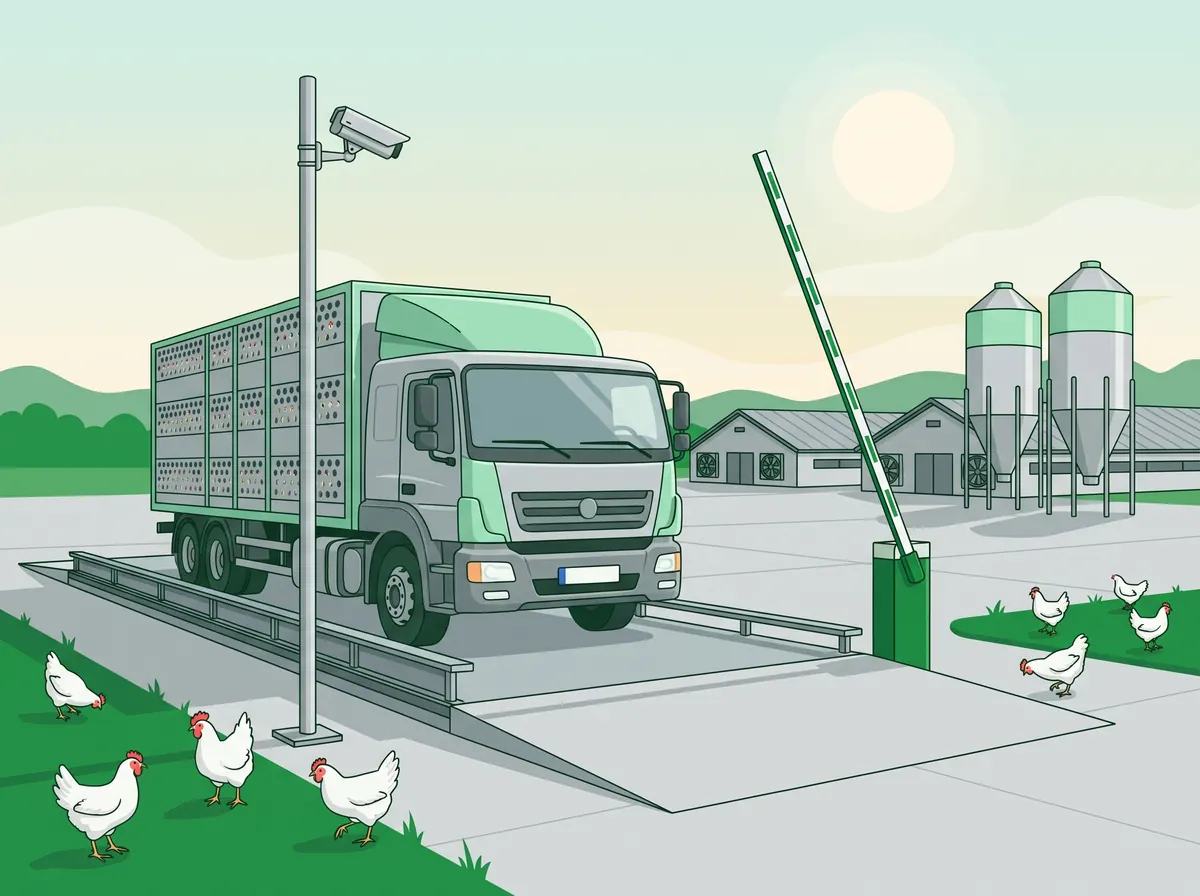
When you move animals in Poland, you must carry a transport document in the vehicle. It states where the animals come from and who owns them, the place and time of departure, the destination and the expected journey time. A shipment to another EU country also needs an animal health certificate, issued in TRACES by an official veterinarian. The cattle passport and the pig movement notification apply only to those species. A poultry keeper does not fill them in, but should know the rules for any other species kept on the farm. Legal state as of 22.11.2026.
Who is responsible for the documents
Responsibility is split between two sides. The animal owner prepares the data on origin and destination. The carrier must hold an authorization issued by the competent authorities. Under Council Regulation (EC) No 1/2005, a copy of the authorization must be available during transport. If the carrier's details change, the authorities must be told within 15 working days of the change. Agree with the carrier at the start who writes the transport document and who is responsible for its match with the flock's records.
Transport document and carrier authorization
What the transport document must contain
Under Article 4 of Regulation (EC) No 1/2005, the vehicle must carry documents showing the origin of the animals and their owner, the place of departure, the date and time of departure, the intended destination and the expected journey time. You prepare the document for every transport. Copy the data from your flock records, not from memory. Keeping the data in one place, for example in farm management software, makes it easier to prepare the document for each shipment.
Carrier authorization
Only a carrier holding an authorization from the competent authorities may transport animals, and a copy of it must be available during transport. If you hire a firm, check that the carrier's authorization is current and that its details match the transport document. Distance thresholds that trigger extra qualifications for the driver or carrier are not given here. Check them in the current text of the regulation or with the county veterinarian (powiatowy lekarz weterynarii) before you plan a transport.
Health certificate in TRACES
Who issues the certificate and on what basis
The animal health certificate for a shipment to another EU country is issued by an official veterinarian in TRACES. It rests on an examination of the animals and on the farm's documents, including flock health data and records. The document is based on EU Regulations 2020/688 and 2020/2235. The certificate's validity depends on the template set in the rules, so check the period when you book the visit. Book the vet in advance, because the examination and the certificate take time.
Shipping conditions
Delegated Regulation (EU) 2020/688 sets the animal health conditions for moving animals within the Union. Before shipping, animals must meet the requirements on time spent at the holding and on tests, where these apply to the species. Your vet and the rules for your species decide which tests and what period apply to you. Also ask the buyer abroad which documents their side of the border requires.
Cattle passport for export to the EU
When you need a passport
A cattle passport is issued to the keeper free of charge, and only when the animal is moved to another EU member state. The keeper tells the head of the ARiMR office (Poland's Agency for Restructuring and Modernisation of Agriculture) about the planned movement 5 days before the departure date. The office issues the passport within 3 days of that notice. You collect it in person, or in another form you agree to in a statement, for example registered mail with proof of delivery. The basis is the IRZ Act (the law on animal identification and registration), Articles 28–29, Dz.U. 2023 poz. 4 (Poland's Journal of Laws).
Passport from another country and identification
A passport from another EU country is handed in at the office after the animal arrives, within 7 days of reporting the movement. Breaking these rules carries a fine (Article 56(1)(10)). Animals must have ear tags, and according to the KPODR guide (Kujawsko-Pomorski Agricultural Advisory Center in Minikowo), the keeper tags them within 7 days of birth. Movements are reported in the ARiMR register, which we describe in our guide to IRZplus login and flock registration.
Notifying the intended movement of pigs
Notification in IRZplus
A keeper can notify in IRZplus, ARiMR's online animal register, the intention to move pigs to another herd or to a slaughterhouse. You file the notification 4 days before the move. The county veterinarian (PLW) decides whether the movement is possible, especially in areas under ASF (African swine fever) restrictions. If consent comes with an examination, the pigs must leave within 48 h of consent. Without an examination, the deadline is 2 days. Moving pigs despite a refusal risks a fine (Article 56(1)(22)). The basis is the IRZ Act, Article 29a.
Pig movement data within the country
Delegated Regulation (EU) 2019/2035 requires documents for moving pigs within one country to state the total number of animals, the registration number of the holding of origin and of destination, the dates of arrival and departure, the carrier's registration number and the vehicle's registration number. A missing number can delay the transport. It pays to keep data on animals entering and leaving the farm up to date in a QR entry and exit log.
Selling animals: checklist before loading
Checklist
Before loading, check that the animals are fit for transport, the transport document is filled in, and the carrier holds an authorization with a copy in the vehicle. Then verify that the notification and the cattle passport, or the TRACES certificate for an EU shipment, are ready. Animals meant for slaughter for your own use follow different routes, described separately. Agree with the buyer who is responsible for the documents at pickup, and put it in the contract.
Selling poultry from the farm
Selling poultry from the farm has its own rules, described in a separate guide on selling poultry from the farm (RHD, agricultural retail trade). When you ship poultry to a buyer, enter the same data in the transport document as for other species, including the departure date and the destination. Ask the county veterinarian which notifications apply to your species in your county, because the rules for cattle, pigs and poultry differ.
Frequently asked questions
Do I need a transport document to move poultry?add
Under Council Regulation (EC) No 1/2005, the vehicle must carry documents showing the origin, the place and date of departure, the destination and the expected journey time. You prepare the document for every transport. Agree the details for poultry with the county veterinarian.
When is a TRACES health certificate issued?add
You need it when shipping animals to another EU country. An official veterinarian issues it based on an examination and the farm's documents. Book the visit in advance, because the examination and the certificate take time.
Does a cattle passport apply to every transport?add
No. A cattle passport is issued free of charge only for a move to another EU member state. You give notice at the ARiMR office 5 days before the move, and the passport is issued within 3 days of that notice.
How many days before moving pigs must I file the notification?add
In IRZplus you notify the intended movement 4 days before the move. The county veterinarian decides whether it is possible. After consent with an examination, the pigs must leave within 48 h, and without an examination within 2 days.
Does a livestock carrier need an authorization?add
Yes. The carrier must hold an authorization from the competent authorities, and a copy must be available during transport. Report changes to the carrier's details to the authorities within 15 working days of the change.
At what distance do extra qualifications apply?add
We do not give distance thresholds here, because they are not confirmed in the current text of the regulation. Check Regulation (EC) No 1/2005 or ask the county veterinarian before you plan a transport.
Sources & resources
- linkARiMR — Information brochure on the new IRZ Act (updated 06.03.2025)
- linkEU Publications Office — Council Regulation (EC) No 1/2005 on the protection of animals during transport (PL)
- linkKPODR Minikowo — Rearing beef calves (guide, SGGW authors)
- linkEU Publications Office — Commission Delegated Regulation (EU) 2019/2035 on registration of establishments and traceability of animals (PL)
- linkChief Veterinary Inspectorate (Główny Inspektorat Weterynarii) — gov.pl/web/wetgiw
Prepared by: DlaFerm Team based on data from the sources listed · Publisher: INSTA-TECH sp. z o.o.
Want your documents at hand for every transport?
DlaFerm's farm management software keeps your flock data in one place. Create a free farm account or get in touch, and we will show you how it works in practice.
Phone
+48 796 258 151