Goat farming: where to start, what it costs and whether it pays
You start with three decisions: why you keep goats (milk, meat or fiber), which breed you choose and where the goats will live. Only then do you work out costs and check whether the numbers add up. This overview walks through every topic in our goat section and links to the detailed guides.
verifiedFrom the team that has organised work on poultry farms for years.
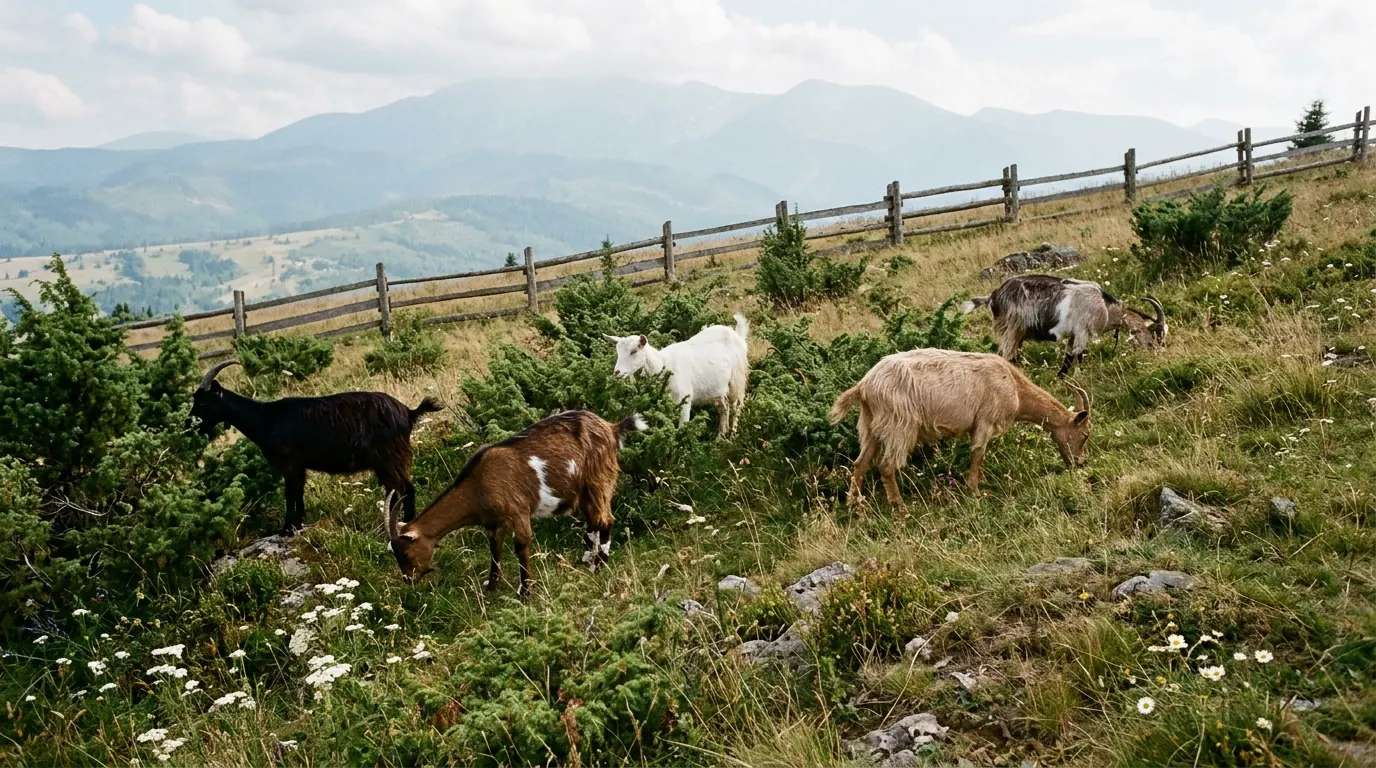
You start goat farming by deciding what the goats are for. Dairy goats give milk for your own use or for sale, meat goats give goat meat (chevon), and fiber goats give mohair and cashmere. The purpose decides the breed, the building and the feeding, and whether you produce for your own table or for the market. For a breed overview, see Goat breeds: dairy, meat and fiber.
What our goat section covers
This page lists the topics in the order you meet them on the farm: choosing a breed and buying, housing and fencing, feeding, breeding and kidding, rearing, health, paperwork and the economics. Each topic links to its own guide. Legal state in the text: 23.11.2026.
Where to start with goat farming
Goat farming for beginners: the order of steps
Start with a plan on paper: how many goats you want, for what, and on how much land. Goats are herd animals, so do not buy a single one; two is the minimum. Then choose a breed, prepare the barn and fencing, and buy the animals last. Before you buy, take care of the formalities described in Registering goats with ARiMR: ear tags, registration book, deadlines. ARiMR is Poland's Agency for Restructuring and Modernisation of Agriculture. A template for the sheep and goat registration book is published by county veterinary inspectorates, for example PIW Pruszków (part of the Veterinary Inspection, Inspekcja Weterynaryjna).
Choosing a breed
For milk, most keepers in Poland choose Swiss and Alpine breeds and native breeds. We describe them separately: the Saanen goat as the highest-yielding dairy breed, the Alpine goat, the Toggenburg and the Polish White and Polish Colored Improved goats. The Anglo-Nubian goat gives milk with a high fat content. For meat, keepers use the Boer goat, and for fiber the Angora and the cashmere goat.
The Carpathian goat: a native breed
The Carpathian goat (koza karpacka) is covered in Poland by a genetic resources conservation program. According to IZ PIB (Poland's National Research Institute of Animal Production), in 2019 the breed was kept in 17 herds, 205 does and 26 bucks in total; in 2005 it was one herd and 6 goats. If a native breed interests you, read The Carpathian goat: a Polish native breed.
What goat farming costs
Price of a goat and other start-up costs
The price of a goat depends on breed, age, origin, the dam's yield and whether the animal has documented pedigree. We give no figures, because they differ between breeders and change over time. Check them with several breeders and with breeders' associations. What to look at when buying is covered in How much a dairy goat costs and what to check before buying. On top of the animal price, add the barn, fencing, feed, milking equipment and veterinary care.
Miniature goats
Cameroon (Pygmy) goats and Nigerian Dwarf goats end up on small holdings and hobby yards. They have different space needs and a different use than large dairy breeds. We describe the differences in Miniature goats: Cameroon and Nigerian Dwarf.
Goat barn, fencing and feeding
The goat barn
A goat barn must be dry and well ventilated, with no drafts over the animals. Space per head, ventilation and equipment (feeders, drinkers, resting areas) are covered in The goat barn: space, ventilation, equipment. Welfare in sheep and goat keeping is also covered in the May 2024 Poradnik Gospodarski (farmer's guide) from WODR Poznań, a regional agricultural advisory center.
Fencing
Goats walk through weak fences and jump over low ones. Choose the type of fence (netting, electric fence) and its height to suit the breed and the paddock. Details are in Goat fencing: electric fence, netting and fence height.
Feeding
The base of the ration is good hay and other roughage, and concentrate tops it up depending on yield. Rations change through the year and through lactation. You will find the full-year picture in What goats eat: feeding goats all year round, and rations for goats in lactation and dry period in Feeding dairy goats. The basics of goat feeding are described by IZ PIB in its journal Wiadomości Zootechniczne.
Mating, pregnancy, kidding and rearing
Heat and mating
Goats have a breeding season, so you plan mating dates ahead. Heat, the buck and timing are covered in Heat and mating in goats: breeding season, buck, dates.
Pregnancy and kidding
Length of pregnancy, signs and preparing the doe for birth are covered in Pregnancy in goats. The course of birth and the kid's first hours are in Goat kidding.
Rearing kids
The first hours decide a kid's immunity: colostrum counts most, then milk feeding and weaning.
Herd health, milking and products
Health and worming
Parasites are one of the main problems in goat herds. Learn the symptoms of disease and when to call a vet, and plan worming with your vet. The vet always chooses the medicine and dose. After treatment, observe the withdrawal period before milk or meat goes on sale.
Milking and milk quality
Milk quality depends on milking hygiene, udder health and feeding. IZ PIB also describes somatic cells in goat milk. Hand and machine milking, yield and milk composition are topics to study before you start selling.
Selling milk, cheese and goat meat
You can sell milk and cheese from your farm under RHD (Rolniczy Handel Detaliczny, Poland's farm retail sales scheme) or direct sales, provided you meet the hygiene requirements. The rules change, so check them with your county veterinarian. Goat meat and fattening of male kids are further topics for your plan.
Does goat farming pay
What goes into the calculation
Income comes from milk, cheese, kids and possibly fiber. Costs are feed, labor, vet, buildings and equipment. Prices of milk, cheese and animals change, so check them with buyers and keep them current. The yield of dairy goats depends on breed and feeding, among other things, so it pays to run the numbers for your own herd.
Subsidies
For sheep and goat keeping you can apply for payments if you meet the conditions. ARiMR updates the requirements and deadlines. IZ PIB also points to support for setting up producer groups and breeders' organizations.
Frequently asked questions
How do I start goat farming?add
Choose the purpose and the breed first, then prepare the barn and fencing. Buy the animals last and sort out registration. Keep goats at least in pairs, because they are herd animals.
Is goat farming profitable?add
It depends on herd yield, feed costs and whether you sell products directly. Run the calculation for your own farm, at current prices.
How much does a goat cost?add
The price depends on breed, age, the dam's yield and pedigree. Ask a breeder or a breeders' association for the actual figure.
Which goat breed should I choose to start with?add
For milk, consider dairy breeds such as Saanen or Alpine; for meat, Boer; for fiber, Angora or cashmere. The native Polish breed is the Carpathian goat. The choice depends on your goal.
Do goats have to be registered?add
In Poland, yes. Goats are registered with ARiMR, and the keeper maintains a registration book. Check details and current deadlines in the registration guide and on the ARiMR website.
Can I sell goat milk and cheese from my farm?add
Yes, under RHD or direct sales, if you meet hygiene requirements. The Veterinary Inspection updates the conditions, so check them with your county veterinarian.
Sources & resources
- linkIZ PIB (Wiadomości Zootechniczne): Current problems in dairy goat breeding in Poland
- linkIZ PIB (Wiadomości Zootechniczne): Current state of breeding and of the genetic resources conservation program for Carpathian goats
- linkIZ PIB (Wiadomości Zootechniczne): Basics of goat feeding
- linkPIW Pruszków (Veterinary Inspection): Sheep/goat registration book (template)
- linkWODR Poznań: Poradnik Gospodarski, May 2024 (Welfare in sheep and goat keeping)
Prepared by: DlaFerm Team based on data from the sources listed · Publisher: INSTA-TECH sp. z o.o.
Keep track of withdrawal periods and farm visitors
The DlaFerm <a href="/ewidencja-leczenia-i-karencja-lekow">treatment and withdrawal period</a> module and the QR visitor book help you keep farm records in order. Create a free DlaFerm farm account or get in touch, and we will show you how it works.
Phone
+48 796 258 151