Raising goat kids: colostrum, milk feeding and weaning
A kid needs colostrum as soon as possible after birth. After that you choose how to give milk: from the doe or from a bucket with a teat. The kid moves from milk to solid feed gradually, and weaning depends on how much hay and concentrate it eats. We describe each stage and the mistakes that cost the most kids.
verifiedFrom the team that has organised work on poultry farms for years.
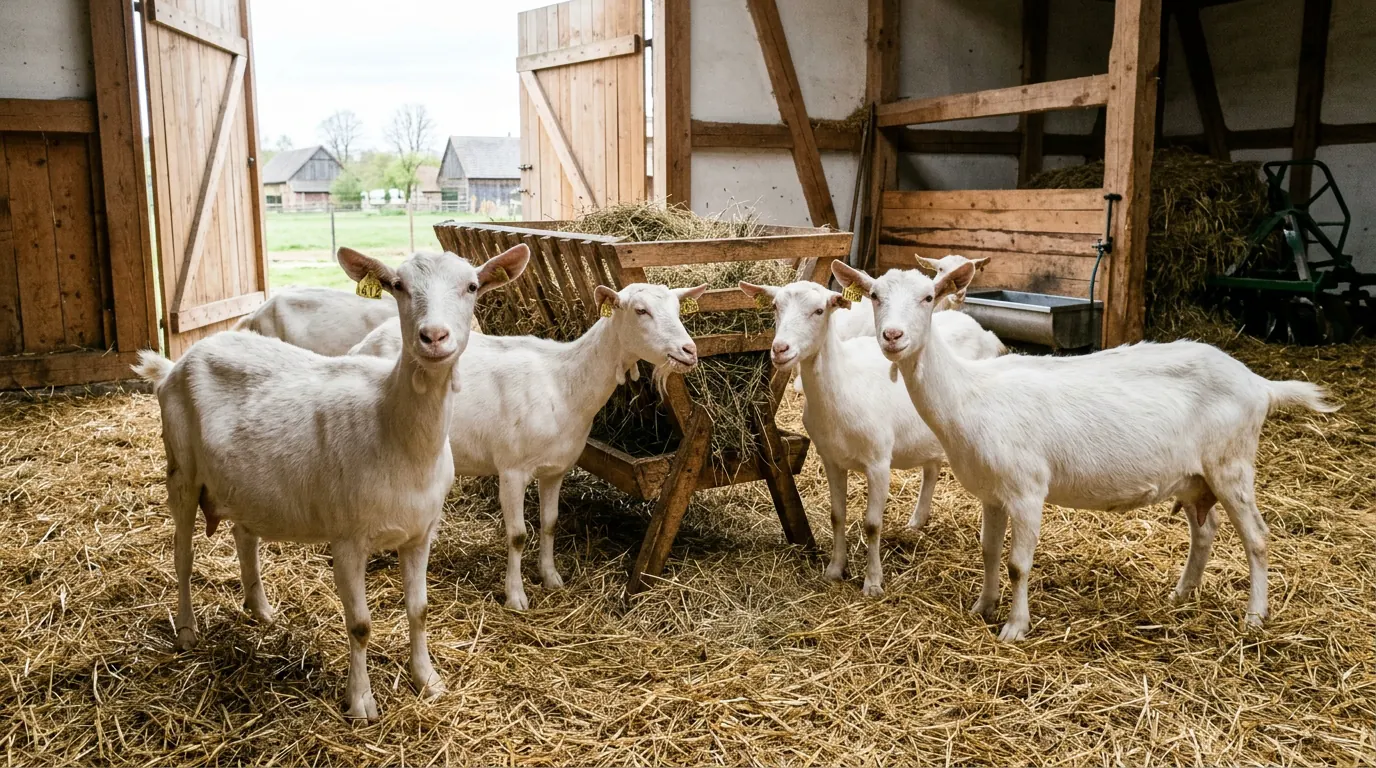
Raising kids starts with colostrum in the first hours of life. It continues through the milk-feeding period and ends with weaning, when the kid eats enough solid feed on its own. Give colostrum as soon as possible after birth, feed milk at regular times, and put out hay, water and concentrate from the first weeks. We cover general herd management in our guide Goat farming: where to start.
Where the numbers come from
There are fewer Polish studies on goat kids than on calves. So we use data on goats from the Institute of Animal Science PIB (IZ PIB) and the instructions for beef calves from KPODR Minikowo, a regional agricultural advisory center in Poland. Where we rely on calf rearing, we say so. The rules are similar, but for kid health always ask your vet.
Colostrum: the kid's first meal
When and how to give colostrum
A kid is born without antibodies and gets them from colostrum. Give the first portion as soon as possible after birth, ideally in the first hours of life. Check whether the kid suckles on its own. If not, give colostrum from a teat or bottle. Do not force it into the mouth, because the kid can easily inhale it. In calf units, according to KPODR Minikowo, colostrum is given 3 times a day from a bucket with a teat, 1.5–2.5 l per head during the first 5 days. For kids, agree the amount with your vet, because it depends on birth weight and the number of kids in the litter.
Transition milk
After colostrum, the doe's milk changes composition gradually. KPODR describes for calves that feeding transition milk, at least 4 feedings, is linked to better health. For kids, it makes sense to give them their own dam's milk for the first days instead of switching straight to another liquid feed. If the doe has too little milk or has mastitis, do not give her milk to the kids without talking to your vet.
Milk for kids: from the doe or from a bucket
Raising kids with their dams
Kids that suckle drink often and in small amounts, which helps digestion, and you save time. The drawback is less milk to collect. According to research described in "Wiadomości Zootechniczne" (Delgado-Pertinez et al., 2009), in the first 35 days of lactation goats with suckling kids gave 140.2 kg of milk. Goats whose kids were fed milk replacer gave 95.4 kg. Over the whole lactation it was 508 kg against 400 kg per goat. The authors found no significant differences in the hygienic quality of the milk.
Feeding from a bucket or bottle
Taking the kids away from the does lets you milk from the start and control how much each kid drinks. It does require fixed feeding times, clean teats and vessels, and portions matched to the number of kids. Give whole milk, for example from your own herd, warm and always at the same temperature. After the transition milk period, KPODR describes two routes for calves: whole milk for the next 7–14 days and then milk replacer, or whole milk throughout rearing. The choice depends on the price and availability of milk, herd health and labor. Check the milk price with your buyer, because it changes often. We write more about goat milk itself in Goat milk.
Feeding kids: hygiene and routine
Wash teats and buckets after every feeding. Dirty vessels are the most common route to diarrhea in young animals. Feed at fixed times and do not suddenly change the type or amount of milk. If a kid has diarrhea, do not stop its milk on your own. Call your vet, because dehydration in a kid develops fast.
Hay, concentrate and water from the first weeks
What to put out for kids
From the first weeks, give kids good hay in a rack they can reach easily, and constant access to clean water. Also offer kid concentrate in a small, fresh portion. For calves, the KPODR instruction recommends constant access to concentrate, meadow hay and drinking water already in the group pen. A similar setup is used for kids. Feed that has gone stale, is wet from spilled milk or is soiled with droppings is no longer healthy, so replace it every day.
Reducing the milk
As the kid eats more hay and feed, gradually cut the milk portions or the number of feedings. According to KPODR, in bucket rearing of calves the amount of milk is lowered in stages over the following weeks, and from 7–8 weeks of age feeding can drop to once a day. For kids, use the same principle: smaller portions first, then fewer feedings. Agree details with an ODR advisor (an agricultural advisory center), because dairy and meat breeds are raised differently. The basics of goat nutrition are covered in "Podstawowe zagadnienia żywienia kóz" in "Wiadomości Zootechniczne".
Weaning kids: when and how
How you know it is time
A kid is ready for weaning when it clearly eats more hay and concentrate every day, drinks water and is in good condition. There is no single required date. It depends on the breed, the rearing system and whether the kids suckle their dams. Watch the kids for several days after you reduce the milk. If they lose appetite or weight, go back to higher portions for a short time.
How to limit stress
Wean gradually and do not combine it with other procedures on the same day, such as moving to another building, vaccination or hoof trimming. Keep the kids in the same group and a familiar pen, and keep feed and water unchanged. If you transport kids, remember that Council Regulation (EC) No 1/2005 limits journey time for animals, including goats, to eight hours. Unweaned animals still fed milk need a rest break for liquids. Check the details for kids with your Veterinary Inspection (Inspekcja Weterynaryjna) office.
Pen, biosecurity and treatment
Pen and bedding
Keep kids in a dry pen without drafts, with fresh bedding. Damp, dirt and drafts promote pneumonia and diarrhea. Choose floor space and ventilation to match the number of animals, as described in Goat house: space, ventilation, equipment. Fence the kids' run so they cannot squeeze through the mesh, as we explain in Fencing for goats.
Treatment and withdrawal periods
Your vet chooses the medicine and dose for a kid. You record what was given and when, because the withdrawal period for milk and meat counts from that date. You also use the records when you sell kids and milk from the does. You can keep treatment records in the Treatment and withdrawal module and log outside visitors in the QR visitor log.
Breeds and milk for sale
The amount of milk you leave for the kids changes with the breed. With high-fat breeds such as the Anglo-Nubian goat, kids take very rich milk. Work out how much milk is left for sale or processing before you choose a rearing system.
Frequently asked questions
When should you give a goat kid colostrum?add
As soon as possible after birth, ideally in the first hours of life. A kid that does not suckle on its own has to be fed from a teat or bottle. Agree the amount with your vet, because it depends on birth weight and the number of kids in the litter.
What is the best milk for goat kids?add
After colostrum and transition milk, the simplest choice is whole milk, for example from your own goat. The alternative is milk replacer. The price and availability of milk, herd health and the time you have for feeding decide the choice.
Should kids stay with their mothers?add
It depends on your goal. According to research described in "Wiadomości Zootechniczne", goats with suckling kids gave 140.2 kg of milk in the first 35 days, and 95.4 kg without suckling. Leaving kids with the does saves labor but reduces the milk you can collect.
When do goat kids start eating hay and feed?add
You put out hay, water and a small portion of concentrate from the first weeks of life. Kids start nibbling and the rumen gradually develops. Replace the feed every day so it does not go stale.
When should you wean goat kids?add
When the kid clearly eats solid feed and drinks water and is in good condition. There is no single date for all breeds and systems. Reduce the milk gradually to limit stress and weight loss.
What should you do if a goat kid has diarrhea?add
Contact your vet. Do not give medicines on your own and do not stop the milk without advice. Also check that teats, buckets and bedding are clean.
Sources & resources
- linkKPODR Minikowo — Rearing beef calves (instruction, SGGW authors)
- linkIZ PIB (Wiadomości Zootechniczne) — Factors determining yield, chemical composition, nutritional value and technological suitability of goat milk
- linkIZ PIB (Wiadomości Zootechniczne) — Basic issues in goat nutrition
- linkEU Publications Office — Council Regulation (EC) No 1/2005 on the protection of animals during transport (PL)
Prepared by: DlaFerm Team based on data from the sources listed · Publisher: INSTA-TECH sp. z o.o.
Record kid treatments and farm visits in DlaFerm
The Treatment and withdrawal module helps you track medicine dates and withdrawal periods, and the QR visitor log records everyone who visits your farm. Create a free farm account in DlaFerm or get in touch.
Phone
+48 796 258 151