Goat fencing: electric wire, mesh and fence height
A goat tests every fence: it climbs, squeezes through gaps and pushes its head into the mesh. The surest barrier is sturdy mesh with electric wire at head height and low near the ground. We explain how to choose the height, set up the electric wire and what to watch for with bucks.
verifiedFrom the team that has organised work on poultry farms for years.
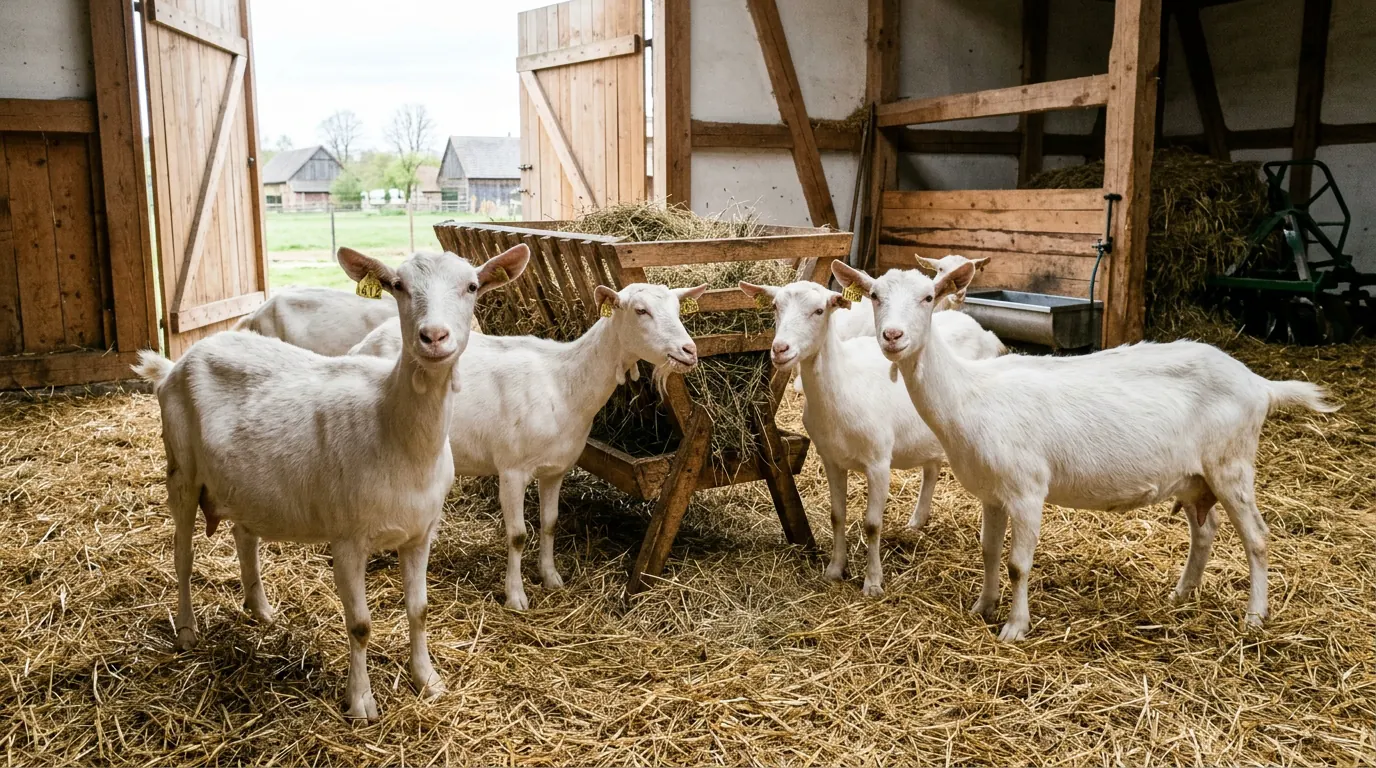
A goat fence has to be taller and stronger than a sheep fence. Mesh with small openings works best, topped up with one or more electric wires. Keepers usually pick a fence height of about 1.2–1.5 m, and for bucks and agile breeds they choose a value from the upper end of that range. This is keeping practice, not a measurement set by a regulation.
What the rules say
The regulation on minimum conditions for keeping farm animal species (Dz.U. 2019 poz. 1966, Poland's Journal of Laws) sets requirements for various species. Before you build a fence, check the current text of the act on ISAP, Poland's legal database (legal state as of 23.11.2026), and ask the county veterinary officer about local requirements. You must also have the goats you keep on your farm registered. We cover this in our article on goat registration with ARiMR (Poland's Agency for Restructuring and Modernisation of Agriculture).
Mesh fencing for goats: what to buy and how to install it
Type of mesh and opening size
Choose galvanized mesh made of strong wire, fixed to solid posts. The openings must not be too large: a goat easily pushes its head through, and horns can get stuck. A trapped animal panics and thrashes, which ends in injury or strangulation. For horned goats, use mesh with a tighter grid or panels that a head cannot pass through. Match the exact opening size to the breed and age of the herd, and protect kids with finer mesh along the bottom of the fence.
Fence height
A goat jumps and climbs anything with a step: rocks, a pallet, a hut roof or a leaning post. So measure the height from the spot where the animal can stand, not from the ground. For a permanent fence, keepers usually go for about 1.2–1.5 m. For taller bucks and agile breeds, add an electric wire above the mesh. Do not place huts, beams or woodpiles right against the fence.
Bottom of the fence
Goats dig under fences less often than dogs, but they squeeze through any gap near the ground. Pull the mesh tight to the ground, drive the bottom wire into the soil, or add a horizontal board or an electric wire just above the grass. After rain, check places where the soil has settled.
Electric fence for goats: how to set up the wires
Electric fence alone or with mesh
An electric fence alone can be enough on a large pasture when the herd is used to the current. The first days after turning animals out are the hardest, because a goat has to learn what a shock is. So many farms start by combining electric wire with a permanent mesh fence: the mesh holds the animals and the current teaches them to keep away. Electrified netting sold in rolls suits moving a paddock, but it does not replace a solid fence for bucks.
Earthing and grass under the wire
The most common mistake is poor earthing. The current then does not return to the energizer and the goat hardly feels it. Install the earth according to the manufacturer's instructions and check the voltage with a tester every week. Grass and weeds touching the wires drain the current, so mow a strip under the fence. Run the wires at head height and low near the ground, following the energizer manufacturer's recommendations.
Fencing for bucks and does in the breeding season
A buck needs a stronger fence
In the breeding season a buck is stronger and more excited, and pushes harder at the fence to reach the does. Keep him in a separate, taller pen, so that he cannot touch the does through the mesh. This also lets you plan mating dates. We cover the details in our article on heat and mating in goats.
Young animals and predators
Kids slip through openings that adult animals avoid. Set up a separate, tighter pen for the young. The fence should also make it harder for predators and stray dogs to get in. At night, shut the herd in a building. We describe its fittings in our article on the goat house.
Run and pasture: what else depends on the fence
Dividing into paddocks
Dividing the pasture into paddocks lets you graze goats in rotation and limits parasite infection from contaminated grass. With a portable fence you can change paddocks easily and spare the sward. We cover the worming plan and timing in our article on worming goats. According to IZ PIB (Poland's National Research Institute of Animal Production), pasture is a very good feed for goats, but goats select plants and so leave part of the sward. See also what goats eat through the year.
Trees, poisonous plants and water
Goats gnaw the bark of trees and shrubs, so protect valuable plantings with a separate guard. Before you turn the herd out, remove poisonous plants from the run and check that the fence has no loose wires or protruding nails. Provide constant access to water and a shaded spot, so the animals do not look for them outside the fence.
Fence checks and access to the farm
Inspection checklist
Walk the whole perimeter once a week. Check the voltage on the electric fence, the condition of the posts, the tension of the mesh, spots near the ground and all gates. Do an extra check after a gale or heavy rain. Record dates and faults, because repeat spots point to a weak part of the fence. An animal that keeps escaping often shows you the place that needs reinforcing.
Gate and biosecurity
The fence is also the boundary of your farm. Gates should have a latch that a goat cannot open with its mouth. Set one entrance for people and vehicles and keep a record of visits. Our QR-code entry and exit log helps with this, and you can build a disease protection plan in the biosecurity plan generator. We describe disease symptoms and when to call a vet in our article on goat diseases. For the whole picture of keeping goats, see goat farming.
Frequently asked questions
How high should a goat fence be?add
In practice, keepers put up mesh about 1.2–1.5 m high. For bucks and agile breeds, choose the upper end or add an electric wire above the mesh. Measure the height from the spot where a goat can stand.
Is an electric fence alone enough for goats?add
Sometimes, if the herd already knows the current and the energizer and earthing work well. At the start and with bucks, it is safer to combine electric wire with a permanent mesh fence. Check the voltage every week.
What is the best mesh fence for goats?add
Strong galvanized mesh with openings that a goat cannot push its head or horns through. Large openings risk trapping the animal. Make the lower part finer where you keep kids.
Do the rules set a fence height for goats?add
In the materials we used, the regulation Dz.U. 2019 poz. 1966 gives no such measurement for goats. Check the current text on ISAP (legal state as of 23.11.2026) and ask the county veterinary officer.
How do I separate a buck from the does?add
Keep him in a separate, taller and stronger pen, so that he cannot touch the does through the mesh. This lets you control mating dates and prevents escapes in the breeding season.
How often should I check a goat fence?add
Walk the whole perimeter once a week, and again after strong wind and heavy rain. Record faults and repair dates.
Sources & resources
- linkMRiRW / Dziennik Ustaw — Regulation of the Minister of Agriculture on minimum conditions for keeping farm animal species, consolidated text (Dz.U. 2019 poz. 1966)
- linkWODR Poznań — Farm Guide, May 2024 (Welfare issues in keeping sheep and goats)
- linkIZ PIB (Wiadomości Zootechniczne) — Effect of grassland in organic goat keeping on the quality of products
- linkChief Veterinary Inspectorate (Główny Inspektorat Weterynarii) — gov.pl/web/wetgiw
Prepared by: DlaFerm Team based on data from the sources listed · Publisher: INSTA-TECH sp. z o.o.
Control who enters your farm with the QR entry log
A good fence is the first step in protecting your herd, and the second is a record of who enters the site. The QR entry and exit log in DlaFerm.pl lets you keep that record on your phone. Create a free farm account or get in touch.
Phone
+48 796 258 151