Worming goats: parasites, timing and withdrawal
According to Penn State Extension, internal and external parasites are the main health problem in goats. Worming every animal blindly leads to parasites that resist the drugs, so you start with a fresh fecal sample and a talk with your vet. We cover the signs, the order of steps and the withdrawal rules.
verifiedFrom the team that has organised work on poultry farms for years.
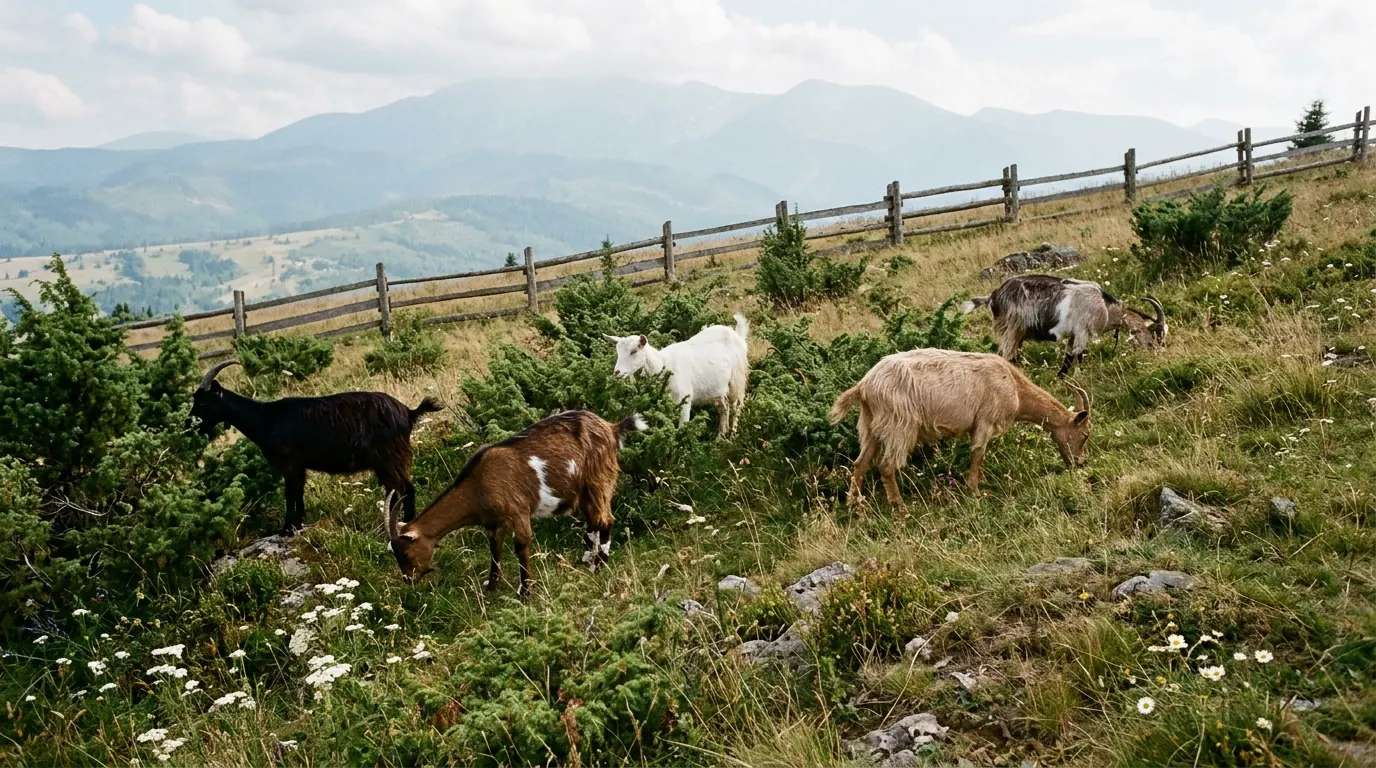
You cannot decide how to worm goats on your own at the shelf of products. Your vet chooses the drug, the dose and the interval between treatments, ideally after testing a fresh fecal sample. The Penn State Extension manual notes that resistance of parasites to dewormers is a growing problem. It comes from using the same products again and again without other ways of limiting infestation. So worming is one part of a program, alongside grazing, hygiene and feeding.
Parasites are the main health problem
According to Penn State Extension, goats are hardy animals and most herd problems concern feeding and reproduction. Still, among diseases, internal and external parasites come first. They affect weight gain, milk yield and body condition. For a wider look at herd diseases, see our article on goat diseases.
Goat parasites and their signs
What to look for in the herd
Penn State Extension lists three typical signs of worms: weight loss, a rough, dull coat and diarrhea. Anemia, which shows as pale mucous membranes (gums, inside of the eyelids), can also point to internal parasites. Goats usually do not show illness right away, so look over the whole herd from time to time, not only the animals that stand out. Note which animals lose weight despite good feed, because they are your first suspects.
Internal and external parasites
Internal parasites include gut roundworms, tapeworms and coccidia. External ones include lice, mange mites and other mites. Each group needs a different product, and a roundworm drug will not work on coccidia. So your vet makes the diagnosis, and you bring a sample and a description of the signs. Mange and lice usually show as bald patches, itching and scabs.
Who is most at risk
Parasites hit hardest in kids, young goats after weaning, does in late pregnancy and after kidding, and animals weakened by poor feeding. Immunity drops then, and goats shed more parasite eggs onto the pasture. You can read more about this period in our articles on goat pregnancy and kidding.
Fecal testing before worming
How to collect a sample
Penn State Extension notes that a vet or a trained keeper confirms internal parasites by testing a fresh fecal sample. Collect droppings right after the goat passes them, ideally from several animals, including those that look worst. Label the sample (ear tag number) and get it tested as soon as possible, kept cool. Old, dried pellets give an unreliable result.
Why test instead of worming "just in case"
Worming all goats at fixed intervals without checking the worm burden is exactly the practice that Penn State Extension links to growing parasite resistance. When only the most resistant worms survive a drug, later generations are harder to control. A fecal test shows which animals really need treatment, and lets you check afterward whether the drug worked.
What to use to worm goats
Choosing the drug and dose
We do not give brand names or doses. Antiparasitic drugs belong to several chemical groups, and the dose depends on body weight, the type of parasite and the animal's condition. Many products are licensed for sheep or cattle, not goats, so they are used under the rules for off-label prescribing, under a vet's supervision. Weigh your goats or estimate weight carefully, because an underdose promotes resistance.
Parasite resistance to dewormers
The rule from the Penn State Extension manual is simple: worming alone is not enough. Limit treatments to the necessary ones, do not switch products without a reason, and test feces after treatment. If your vet advises it, leave some healthy animals untreated, because parasites that never met the drug dilute the resistant generations on the pasture. Work out the details of such a strategy with the vet who looks after your herd.
When to worm goats through the year
Check points in the breeding year
It is worth planning fecal tests at several moments: before turnout to pasture, during the grazing season, before breeding, in late pregnancy, after kidding and after weaning the kids. In these periods the parasite burden affects results the most. The date of treatment comes from the test result, not from a date on the wall. See also how the goat breeding season works, so you can match tests to the herd's cycle.
Dairy goats and the dry period
In dairy goats, every treatment has to fit with the milk withdrawal period. Where possible, plan it for the dry period, or ask your vet about products with a short withdrawal. You will find feeding advice for these stages in our article on feeding dairy goats.
Withdrawal after worming: milk and meat
The withdrawal rule
The withdrawal period is the time from the last dose of a drug until the animal's milk or meat may be sold or eaten. It differs for each product, and is separate for milk and meat. If you use a product off-label for goats, your vet sets the waiting period in line with the rules. Until then, milk from treated goats must not go into the bulk tank or be sold.
Treatment records
Write down the date, ear tag number, product name, batch number, who gave it and the last day of withdrawal. These entries protect you during inspections and when you sell kids or milk. In DlaFerm.pl you can keep such records in the Treatment and withdrawal module, which you use as a general tool for a goat herd. We describe animal registration with Poland's ARiMR (Agency for Restructuring and Modernisation of Agriculture) in the article on goat registration.
How to limit parasites without drugs
Pasture and grazing
In a paper on goat feeding, the Institute of Animal Science (IZ PIB) in Poland lists factors that limit forage intake: availability below 300 kg DM/ha, grazing time under 10 hours and intake below 2.5 kg DM/head/day. In these conditions you need supplementary feeding in the goat house. Sward that is too short forces goats to nibble close to the ground, where most parasite larvae sit. Rotate grazing plots and avoid overloading the pasture.
Hygiene and feeding
Clean, dry bedding, waterers and feeders raised off the floor, and regular manure removal reduce contact with parasite eggs. A well-fed goat, getting her full protein and mineral needs, copes better with infestation. We describe the principles in What goats eat and Goat house.
New animals in the herd
Keep purchased animals apart and test their feces before you mix them with the rest. Worming new animals after a vet's assessment limits the import of resistant parasites. You apply a similar rule across the whole biosecurity plan; the biosecurity plan generator can help. We cover the basics of getting started in Goat keeping.
Frequently asked questions
What do you use to worm goats?add
Your vet chooses the product and dose after testing a fresh fecal sample. They depend on the type of parasite, body weight and whether the goat gives milk. There is no single product for all parasites.
How do you tell if a goat has worms?add
According to Penn State Extension, typical signs are weight loss, a rough coat and diarrhea. Pale mucous membranes may mean anemia caused by internal parasites. A fecal test gives certainty.
How often should you worm goats?add
There is no fixed schedule for every herd. Frequency is set from fecal tests and your housing system, and treating too often promotes parasite resistance to dewormers.
Can you drink milk after worming a goat?add
Only after the withdrawal period on the product leaflet or set by your vet has passed. Until then, the milk must not be sold or go into the bulk tank. Write the end date of withdrawal in your records.
Should you worm pregnant goats?add
Your vet decides, because not every product is safe in pregnancy. Late pregnancy and the time after kidding bring a heavier parasite burden, so plan a fecal test ahead of time.
Why does worming stop working?add
Penn State Extension names the cause: using dewormers repeatedly without other parasite control methods leads to resistance. Limit treatments to the necessary ones and check they worked with a follow-up fecal test.
Sources & resources
- linkPenn State Extension — Agricultural Alternatives: Dairy Goat Production
- linkIZ PIB (Wiadomości Zootechniczne) — Basic issues in goat feeding
- linkWODR Poznań — Poradnik Gospodarski, May 2024 (Welfare issues in sheep and goat keeping)
- linkGłówny Inspektorat Weterynarii (Chief Veterinary Inspectorate) — gov.pl/web/wetgiw
Prepared by: DlaFerm Team based on data from the sources listed · Publisher: INSTA-TECH sp. z o.o.
Keep treatments and withdrawal periods in one place
The Treatment and withdrawal module in DlaFerm.pl lets you keep general records of drugs given and withdrawal end dates. Create a free farm account or get in touch, and we will show you how it works.
Phone
+48 796 258 151