Goat Pregnancy: How Long It Lasts, Signs and Kidding Prep
A goat is pregnant for about 150 days on average, or five months. We explain how to tell a goat is in kid, what to do month by month, and how to get the pen, the feed and yourself ready for kidding.
verifiedFrom the team that has organised work on poultry farms for years.
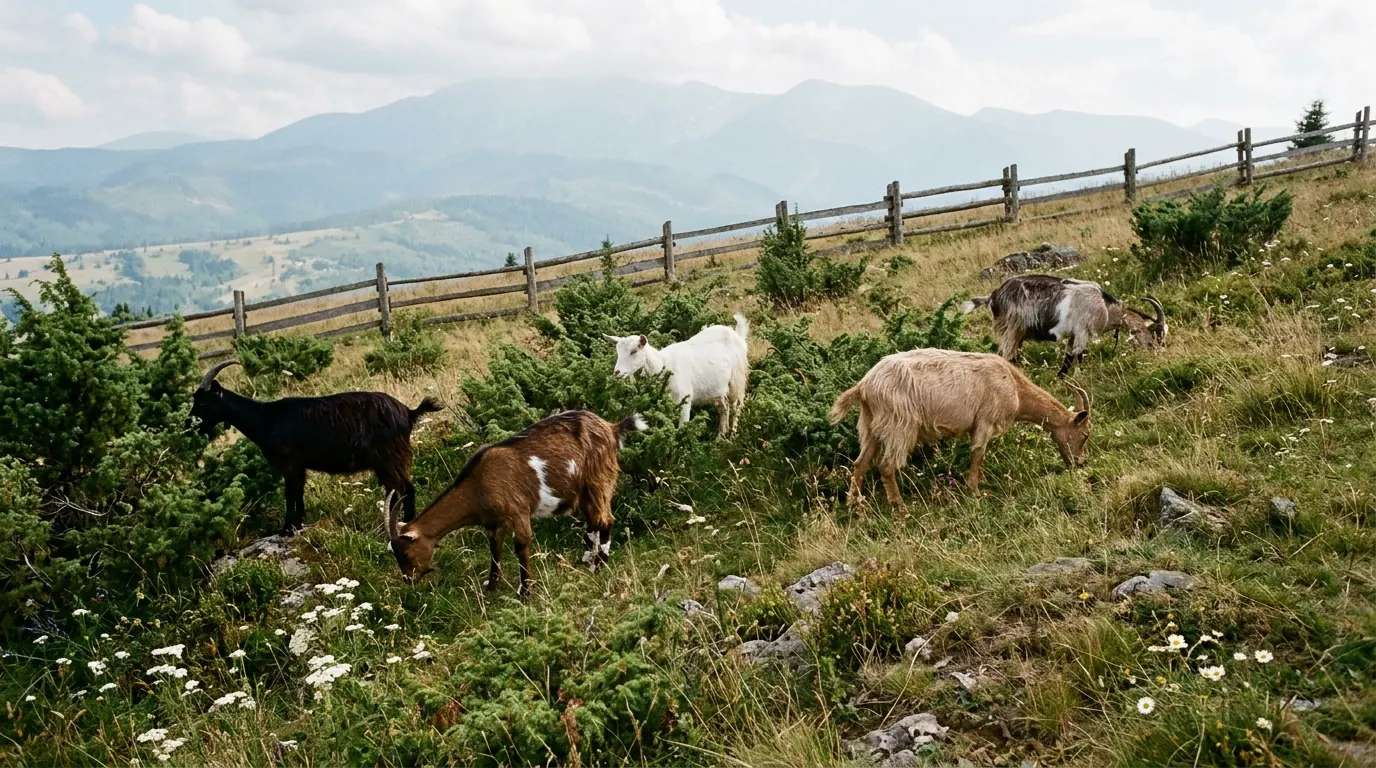
A goat is pregnant for about 150 days on average, usually 145 to 155 days. You count from the day of successful mating, so write down the date the buck covered the doe. Add about five months to that date and you have the expected kidding date. Goats rarely kid on the exact day, so plan for a window of about a week before and after.
Why you should record the mating date
Without a note of the mating date you cannot work out when to dry off the doe, when to change her feed and when to move her to the kidding pen. Also record the numbers of the buck and the doe and the signs of heat. If you keep more than a few animals, written records make it easier to keep track of dates. We describe the basics of getting started in our guide to goat keeping.
Signs of pregnancy in goats
First signs
The first sign is no heat about 21 days after mating. That is the average length of a goat's heat cycle, and dairy breeds are usually seasonal, coming into heat in autumn. No return to heat is not proof, though, because a doe can have a silent heat or a false pregnancy. An ultrasound scan by a vet gives a sure answer. Book it a few weeks after mating, when the embryos are visible. The scan is worth doing if you plan to buy extra feed or sell milk.
Signs in the second half of pregnancy
From the third or fourth month the belly rounds out clearly, especially on the right side. The doe moves more calmly, lies down more and jumps on other animals less. The udder grows in the last few weeks before kidding. In first-time kidders, the udder may develop earlier. Late in pregnancy you may feel the kids move when you touch the belly. These signs only mean something if you know the mating date, because each of them can be mistaken for a full rumen.
Goat pregnancy month by month
The first three months
In the first weeks the embryos are very sensitive to stress, hunger and changes of herd. Do not move the goats around without need, do not change the feed abruptly and do not catch them in a rush. Ask a vet to confirm the pregnancy. In this period the doe may still give milk, and her needs rise only slightly. If she is too thin or too fat, fix her condition now, because in the last month it will be too late. We cover the choice of breed in the descriptions of the Saanen goat and the Alpine goat.
The last two months
This is when the kids grow fastest and the doe needs more energy and protein. About two months before kidding, a milking doe should be dried off so the udder can recover. You dry off gradually, by milking less often and cutting concentrate feed, and if the udder is inflamed you ask the vet what to do. Plan treatments such as vaccinations and worming, which the vet decides. In the last weeks do not transport the doe and do not mix her with new animals.
What to feed a pregnant goat
Needs rise toward the end of pregnancy
According to the INRA table from 2007, quoted in a study by IZ PIB (Poland's National Research Institute of Animal Production), a dry goat weighing 50 kg needs 0.69 JPM (milk feed units) and 44 g of BTJ protein (protein digested in the small intestine) a day. A dairy goat giving 2 kg of milk already needs 1.59 JPM and 135 g of BTJ. A goat in the last month of pregnancy, with growing kids, falls in between, and her needs climb from week to week. Good hay is the base, and you add concentrate gradually. We describe how to build the ration in our article on what goats eat.
What to avoid
Do not starve the doe in the last phase of pregnancy. Too little energy risks a metabolic disease, and a goat carrying twins is especially exposed. Do not let her get fat either, because a narrow birth canal makes kidding harder. Do not change the feed overnight. Watch for mold in hay and silage, because it can cause abortion. Give constant access to clean water and a mineral lick made for goats. Agree trace mineral doses with your vet or with an ODR adviser (Poland's agricultural advisory center).
Risks during pregnancy
Abortion and toxoplasmosis
According to Penn State Extension, toxoplasmosis, spread by young cats, can cause abortion in goats. You prevent it by keeping cat feces away from the feed that pregnant goats eat. Protect the hay and feed store from cats and clean the barn floor regularly. If several does abort within a short time, call a vet and isolate the sick animals. Keep the aborted fetus and the placenta for testing. Do not touch them with bare hands. We write more about diseases in our article on goat diseases.
Treating pregnant goats
Do not give a pregnant goat medicines on your own. The vet chooses the medicine and the dose, because some products are not allowed in pregnancy. Remember the withdrawal period: if the doe will be milked after kidding, milk from a treated goat has to be discarded for the period given on the label. Record every treatment with the date, the product name and the end of the withdrawal period. Follow biosecurity rules too: isolate new animals bought before mating, and when you buy, check what to look for using our guide on how much a goat costs.
Getting ready for kidding
Pen and equipment
About two weeks before the due date, move the doe to a separate, dry and clean pen with thick straw bedding. Clean and disinfect the pen, fix drafts in the walls and make sure there is light. Get ready clean towels, gloves, iodine for the navel, scissors, colostrum frozen from the previous season and a bottle with a teat. Keep your vet's phone number at hand. We describe the birth in our article on goat kidding.
Signs that kidding is near
From a few hours to a few days before kidding the doe becomes restless, paws at the bedding and looks for a quiet corner. The udder is tight, the ligaments by the tail go slack and mucus runs from the vagina. She loses her appetite and often lies down. If the kid is not born within a reasonable time after straining starts, call a vet. Do not pull the kid by force. After the birth, check that the doe has passed the placenta and that the kid got colostrum in the first hours of life.
Frequently asked questions
How long is a goat pregnant?add
A goat is pregnant for about 150 days on average, usually 145 to 155 days. You count from the day of mating, so be sure to write the date down. The due date can shift by a few days either way.
How can you tell if a goat is pregnant?add
The first sign is no heat about 21 days after mating, but only an ultrasound scan by a vet gives certainty. In the second half of pregnancy the belly and the udder grow. Near the end you can feel the kids move.
When should you dry off a goat before kidding?add
About two months before the expected birth. You dry off gradually: milk less often and cut concentrate feed. If you have udder problems, talk to your vet.
Can you treat and worm a pregnant goat?add
Yes, but the vet chooses the medicine, the dose and the timing, because not every product is safe in pregnancy. Record the date given and the withdrawal period, because it affects when you can use the milk after kidding.
How many kids does a goat have?add
Most often one to three kids, depending on the breed, age and condition of the doe. Young does usually have fewer kids than older ones. With twins or triplets, feed well in the last weeks of pregnancy.
Sources & resources
- linkPenn State Extension — Agricultural Alternatives: Dairy Goat Production
- linkIZ PIB (Wiadomości Zootechniczne) — Basics of goat feeding
- linkWODR Poznań — Poradnik Gospodarski, May 2024 (Welfare issues in sheep and goat keeping)
- linkChief Veterinary Inspectorate (Główny Inspektorat Weterynarii) — gov.pl/web/wetgiw
Prepared by: DlaFerm Team based on data from the sources listed · Publisher: INSTA-TECH sp. z o.o.
Keep treatments and withdrawal periods in one place
The Treatment and withdrawal module in DlaFerm lets you keep a general record of treatments and withdrawal dates. See the <a href="/ewidencja-leczenia-i-karencja-lekow">Treatment and withdrawal</a> page. Create a free farm account or get in touch with us.
Phone
+48 796 258 151