ASF Zones in Poland 2026: Restricted Zones I, II and III and Your Duties as a Pig Keeper
Poland is split into restricted zones I, II and III, plus a free area. The split comes from Annex I to Commission Implementing Regulation (EU) 2023/594 and changes by decisions of the European Commission. Here is where to check the current extent and what you must do on your farm.
verifiedFrom the team that has organised work on poultry farms for years.
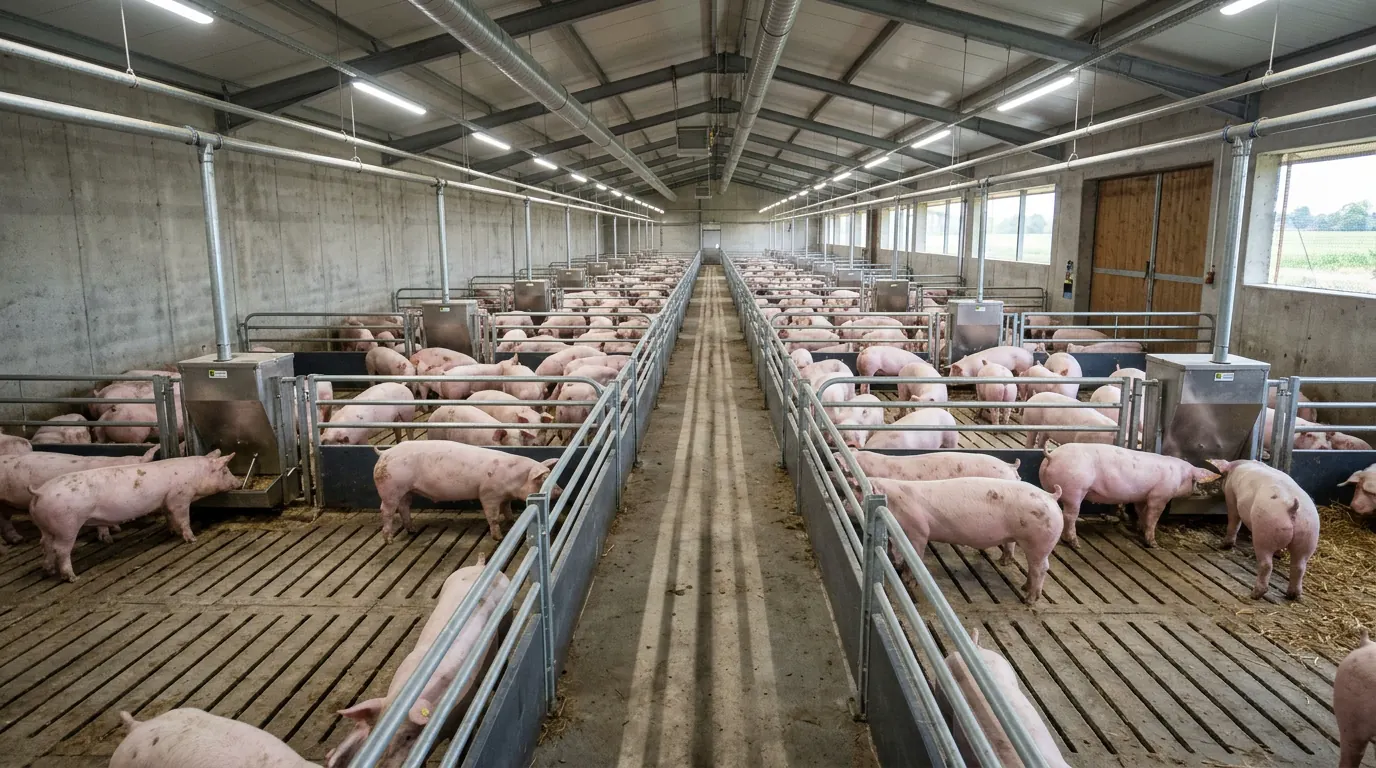
Legal status as of 23 November 2026. ASF zones are restricted zones (in Polish: obszary objęte ograniczeniami, OOO) I, II and III, set under Annex I to Commission Implementing Regulation (EU) 2023/594. The rest of the country is a free area. The higher the zone number, the stricter the rules for farms with pigs.
Blue zone and red zone: what keepers ask
People often talk about the ASF "blue zone" and "red zone", because maps used those colors. The legal texts use the names "restricted zone I, II and III". The early-detection ASF program in Dz.U. 2025 poz. 199 (Poland's Journal of Laws) describes Poland's territory this way, following parts I, II and III of Annex I to Regulation 2023/594.
Where to check your municipality
The extent of the zones changes by European Commission decisions, so we do not list counties or municipalities. You will find the current list in Annex I to Regulation 2023/594 and on the map of the Chief Veterinary Inspectorate (Główny Inspektorat Weterynarii). To learn how to find the order of your county veterinary officer or voivode, read Zone around an outbreak: how to find the order.
ASF zones: how Poland is divided
Zones I, II and III
The program in Dz.U. 2025 poz. 199 names three zones in Poland. Restricted zone I covers the counties or parts of counties listed in part I of Annex I to Regulation 2023/594. Zone II covers those in part II, and zone III those in part III. The free area is the part of the country not listed in Annex I. Zone III is set because of outbreaks in pigs, so the strictest limits apply there.
ASF map: where to check the current extent
Looking for an "ASF map"? Check three places: the current version of Annex I to Regulation 2023/594 on EUR-Lex, the notices of the Chief Veterinary Officer (Główny Lekarz Weterynarii) on wetgiw.gov.pl, and information from your county veterinary officer. Before you sell, buy or transport pigs, check whether your county or municipality has changed zone.
Example of a change in extent on 18 December 2025
The zones are not fixed. A notice of the Chief Veterinary Officer of 18 December 2025 announces a smaller extent of the restricted zones. On 15–16 December 2025 the Standing Committee on Plants, Animals, Food and Feed voted on a draft Commission implementing regulation amending Annex I to Regulation 2023/594. The change moved, among other things, part of zone III linked to pig outbreaks in 2025 to zone II.
Duties of pig keepers in ASF zones
Disinfection at entrances and gates
Under the MRiRW regulation of 12 March 2026 (Dz.U. 2026 poz. 344), in zones I, II and III you must use equipment for effective disinfection, disinfection baths or disinfection mats. This applies to entrances and exits, and to vehicle entrances and exits, of the holding where you keep pigs. The biosecurity plan generator helps you plan the routes of people and vehicles.
Extra orders in zone II
In zone II the orders from zone I apply, plus disinfection before entrances and gates of places designated by the county veterinary officer, where pigs are gathered before transport to the slaughterhouse. People who handle pigs in those places must use hygiene measures that limit the spread of ASF. These rules do not apply if you keep pigs only for meat for your own use.
Enhanced biosecurity when moving animals
Annex III to Regulation 2023/594 requires enhanced biosecurity measures on holdings in zones I, II and III when pigs are moved with the permission of the competent authority. This also covers biological material and by-products from pigs from zone II, and fresh meat and meat products from pigs from zones II and III. Farms with pigs in the free area are inspected, including biosecurity, at least once a year.
Selling and transporting pigs from restricted zones
Permit and risk assessment
Before the authority issues a permit to move pigs from zones I, II and III, Art. 14 of Regulation 2023/594 requires a risk assessment. It must show that the risk of spreading ASF is negligible. Agree your plan for selling pigs from a farm in a zone with the county veterinary officer well in advance.
Delivery to a slaughterhouse from zone II
Under § 7 of the regulation of 12 March 2026, pigs from zone II may go to a slaughterhouse after they have been gathered at a place designated by the county veterinary officer in zone II. You need a permit from the county veterinary officer responsible for where the pigs come from. The gathering place must have disinfection mats or baths, and no animals other than pigs may be there. In your application you state the maximum number of pigs and the location of the slaughterhouse.
Exceptions under Art. 29
Art. 29 of Regulation 2023/594 allows pigs from zone III to be moved outside the zone for slaughter in exceptional circumstances. The reason may be welfare problems on the farm or limited slaughter capacity of a slaughterhouse in zone III. The competent authority gives the permit, and the slaughterhouse must be designated and as close as possible to the sending farm. This is an exception, not the rule.
Slaughter for own use in ASF zones
Ban on slaughter on holdings in zones
Under § 3 of the regulation of 12 March 2026, slaughtering pigs for own use is banned on holdings located in zones I, II and III. The program in Dz.U. 2025 poz. 199 contains an earlier rule that allowed such slaughter under the conditions of the regulation of 24 April 2024. Follow the current rules and, if in doubt, ask your county veterinary officer. We describe the general rules in Can you keep pigs for your own use.
What to do when a pig dies or you suspect ASF
Report and herd examination
The program in Dz.U. 2025 poz. 199 says that after every report to the Veterinary Inspection (Inspekcja Weterynaryjna) of a dead pig or suspected ASF, the herd gets a clinical examination with measurement of internal body temperature, and dead pigs are examined post-mortem. Samples are taken for laboratory tests when needed. We describe the signs in ASF: symptoms in pigs.
Records ready on day one
The Inspection will ask about the state of the herd and the movement of animals and people. Records for every pen and every entry to the farm shorten this step. Read more about useful data in ASF in the pig house: a record of every pen. We describe ASF-related payments in Pig payments 2026.
Frequently asked questions
What do ASF zones I, II and III mean?add
They are restricted zones set in parts I, II and III of Annex I to Regulation 2023/594. The higher the number, the stricter the limits. The rest of the country is a free area.
Where can I check the ASF zone map?add
Check Annex I to Regulation 2023/594 on EUR-Lex and the notices of the Chief Veterinary Officer on wetgiw.gov.pl. Ask your county veterinary officer too.
What are the ASF blue zone and red zone?add
These are everyday names for restricted zones. The legal texts use "restricted zone I, II and III".
Do I need disinfection mats in an ASF zone?add
Yes. In zones I, II and III you must use disinfection equipment, baths or mats at entrances and gates of a holding with pigs, and at exits (Dz.U. 2026 poz. 344).
Can I slaughter a pig for my own use in an ASF zone?add
Under § 3 of the regulation of 12 March 2026 (Dz.U. 2026 poz. 344), slaughter of pigs for own use is banned on holdings in zones I, II and III.
Do ASF zones change?add
Yes. One example is the Chief Veterinary Officer's notice of 18 December 2025 on a smaller extent of zones, including moving part of zone III to zone II.
Sources & resources
- linkEU Publications Office (EUR-Lex/Cellar): Commission Implementing Regulation (EU) 2023/594 of 16 March 2023 laying down special disease control measures for African swine fever and repealing Implementing Regulation (EU) 2021/605
- linkChief Veterinary Inspectorate: Notice of the Chief Veterinary Officer on a change in the ASF regionalisation, based on the Chief Veterinary Officer's request to the European Commission
- linkMRiRW / Journal of Laws: MRiRW regulation of 12 March 2026 on measures to control African swine fever (Dz.U. 2026 poz. 344)
- linkJournal of Laws: Regulation of the Minister of Agriculture and Rural Development of 28 January 2025 introducing in 2025-2027 in Poland the program for early detection of infections with the African swine fever virus, improving knowledge of the disease and controlling it (Dz.U. 2025 poz. 199)
- linkChief Veterinary Inspectorate: gov.pl/web/wetgiw
Prepared by: DlaFerm Team based on data from the sources listed · Publisher: INSTA-TECH sp. z o.o.
Keep pigs in an ASF zone? Run your biosecurity in DlaFerm
The <a href="/generator-planu-bioasekuracji">biosecurity plan generator</a> helps you organize entrances, disinfection and the movement of people and vehicles on your farm. Create a free farm account in DlaFerm or get in touch.
Phone
+48 796 258 151