ASF in pigs: symptoms, what it means, and whether it is dangerous to humans
ASF, or African swine fever, is a viral disease of domestic pigs and wild boar. The virus is not dangerous to people, but a keeper can carry it onto a farm on boots, clothing and equipment. Below we describe the symptoms, the duty to report and the biosecurity rules.
verifiedFrom the team that has organised work on poultry farms for years.
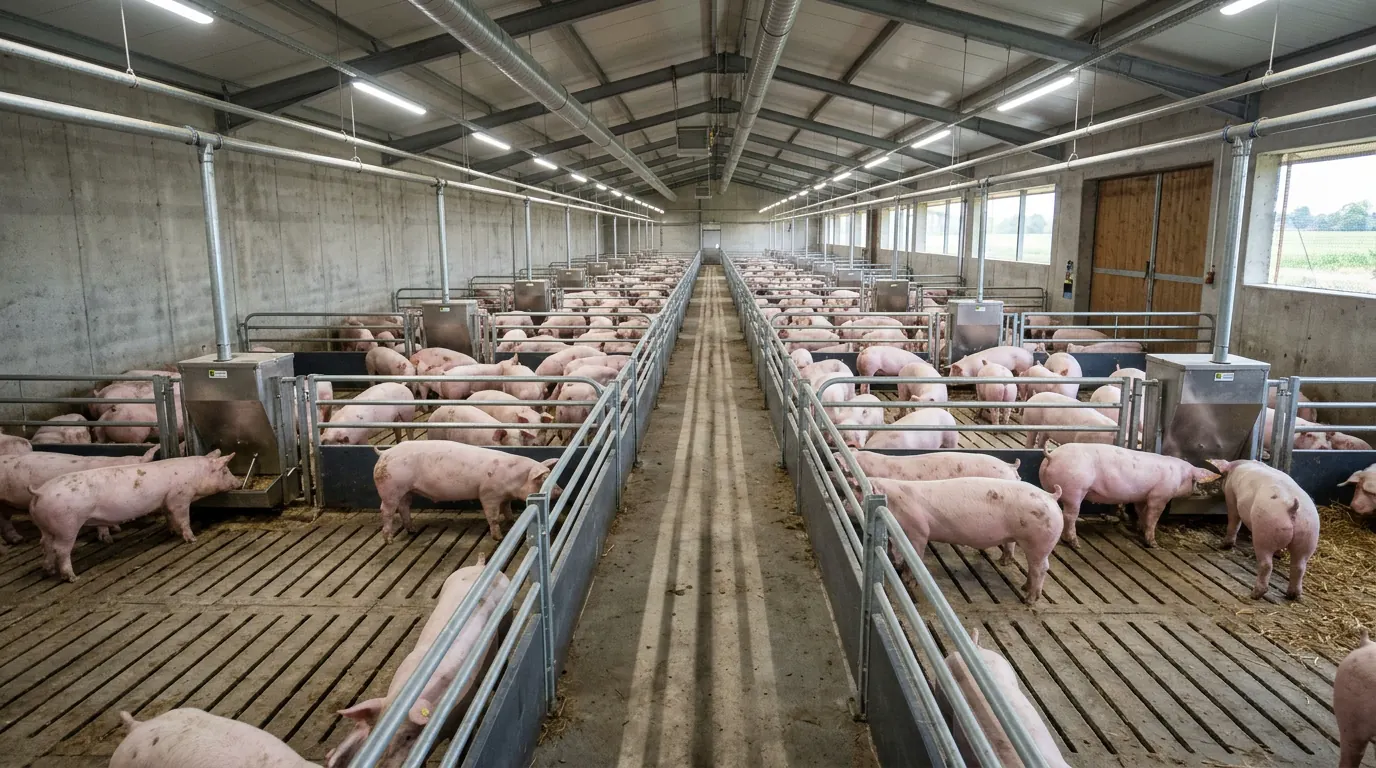
ASF, or African swine fever, is a contagious viral disease of domestic pigs and wild boar. There is no vaccine or drug approved in the EU. The hardest part is that the first signs are easy to mistake for other diseases. So treat any sudden death or unusual condition in several animals as suspected ASF and report it to a vet right away.
What it means in practice
People usually search for "what is ASF" when something worrying happens in the herd or when they hear about outbreaks nearby. For a keeper this means two things. The virus can kill a whole herd in a short time. And at every stage of production, it matters who comes onto the farm and what they bring. The virus does not pass to people, but a person can carry it to pigs on boots, clothes, in a vehicle or on equipment.
ASF symptoms in pigs: what to look for
Deaths and sudden mortality
Many deaths are the most important warning sign. Report dead wild boar near your farm as well. If mortality is sudden and high, do not wait for test results. Do not try to make the diagnosis yourself, and do not dispose of dead animals without contacting a vet.
Skin and breathing signs
Check every pig in the pen for bluish skin on the ears, belly and sides, and for small but numerous pinpoint bleeds in the skin. Other signs are labored breathing, foamy discharge from the nose and discharge from the eyes. Write down how many animals are affected and in which pen, because the vet will ask this first.
Diarrhea, vomiting and nervous signs
Diarrhea, often with blood, and vomiting appear in many sick animals. Some pigs have weak hindquarters, while others are agitated, with muscle twitching and clonic-tonic spasms. In sows, watch for abortions. Each of these signs can have another cause, so leave the diagnosis to the vet after examination.
What to do if you suspect ASF on your farm
Report immediately
An animal keeper who notices signs that suggest a contagious disease must report it immediately. You can report to the county veterinary officer (powiatowy lekarz weterynarii) directly, through the vet who looks after your farm, or through the local mayor (wójt or burmistrz). Failing to report carries a criminal penalty under Poland's act on animal health protection and the control of contagious animal diseases.
What to do and what to avoid
Until the vet arrives, limit entry to the farm to people who must be there and close the gates. Do not move pigs, remove manure, or take equipment or feed off the farm. If you can do it safely, separate the sick animals. Do not sell or move animals until you get a decision from the official vet.
Rules worth checking
Measures against ASF are set by the Polish Ministry of Agriculture (MRiRW) regulation of 12.03.2026 on measures to control African swine fever (Dz.U. 2026 poz. 344, Poland's Journal of Laws). The legal state is as of 22.11.2026. Rules change, so before any decision check the current text in ISAP, Poland's legal database, and talk to your vet. EU requirements are set out in Commission Implementing Regulation (EU) 2023/594.
Is ASF dangerous to humans?
The virus does not infect people
ASF is not a zoonosis. The virus does not pass from pigs to people and does not cause disease in humans. People who handle sick pigs do not need to fear infection. The problem lies elsewhere: people, vehicles and equipment are the most common way the virus spreads between farms. Similar questions come up with avian influenza, but the situation there is different.
How the virus travels with people
The virus can survive on footwear, clothing, tools and in vehicles, and how long depends on temperature and the type of surface. It can also reach a farm in food scraps fed to pigs. After coming back from another farm, an animal market or the forest, change clothes and footwear before entering the pig house. This rule needs no expensive equipment, only consistency.
ASF in the European Union in 2025
How far the disease reaches
According to EFSA's epidemiological analysis for 2025, the number of EU member states affected by ASF rose from 13 to 14, after outbreaks in wild boar were reported in Spain. This was the first such case since the virus was eradicated there in 1995. In 2025 no country that had not previously had outbreaks in domestic pigs reported one. Estonia reported outbreaks again, although it had none in 2024. The analysis is based on data from the ADIS system and on laboratory results sent in by member states.
What this means for a Polish farm
The disease persists in the wild boar population, and wild boar move across large areas. So the risk to a farm depends not only on what happens in the pig house, but also on the land around it, nearby forests and neighbors. Check whether wild boar can reach feed and waste, and prepare your action plan before disease appears. The biosecurity plan generator can help.
Everyday biosecurity
Control who enters the farm
Every person and vehicle entering the farm should be recorded. Keep an entry and exit log with the date, time, name, purpose of the visit and the place of the previous visit to a farm with pigs. This makes contact tracing easier when you need to check quickly who was on the farm. You can keep it as an entry and exit log with a QR code.
Zones and footwear
Divide the farm into a clean zone and a dirty zone. At the pig house entrance set up a changing room, a footwear and clothing change, and a disinfection point for boots and vehicle wheels. Every worker should know this sequence. Go over the rules when you hire someone and share them with your team in the app for farm workers.
Records for the pig keeper
Keep records of the herd, of animal movements and of vet visits, because if disease is suspected these are the first documents the official vet will ask for. Record treatment of other diseases with the withdrawal period in the treatment and withdrawal records. Match your records to the app for pig keepers. Medicines and doses are always chosen by a vet.
Frequently asked questions
Is ASF dangerous to humans?add
No. ASF does not infect people, and the virus does not cause disease in humans. The problem is on the pig side, because a person can carry the virus on footwear, clothing, equipment and vehicles. After contact with other farms, change clothes and footwear before entering the pig house.
What are the symptoms of ASF in pigs?add
The most common are sudden, heavy mortality, bluish skin on the ears, belly and sides, small pinpoint bleeds and labored breathing. There may also be bloody diarrhea, vomiting, weak hindquarters and nervous signs, and abortions in sows. Signs are not always the same, so report any suspicion to a vet.
What does ASF mean for a farmer?add
It is a viral disease of domestic pigs and wild boar with no vaccine or drug approved in the EU. For a farm it means the risk of losing the herd and limits on moving animals. Fast reporting and securing the farm matter most.
Who has to report suspected ASF?add
An animal keeper who notices signs that suggest a contagious disease must report it immediately. The report goes to the county veterinary officer directly, or through the vet who looks after the farm, or through the mayor. Failing to report carries a criminal penalty.
Can ASF be cured?add
There is no drug or vaccine approved in the EU that can cure pigs of ASF. So if you suspect it, the key steps are to report quickly and follow the official vet's instructions. Do not choose products or doses yourself.
Can wild boar bring ASF to a farm?add
Yes. EFSA describes ASF outbreaks in wild boar in 2025 as well, and the disease persists in the wild boar population. Fencing the farm, keeping feed and waste out of reach of wild boar and checking the area around buildings reduce the risk of contact.
Sources & resources
- linkEFSA: Epidemiological analysis of African swine fever in the European Union during 2025
- linkKPODR Minikowo: ABC of piglet rearing (in Polish)
- linkMRiRW / Dziennik Ustaw: Regulation of the Minister of Agriculture of 12.03.2026 on measures to control African swine fever (Dz.U. 2026 poz. 344)
- linkEuropean Commission / EU Publications Office: Commission Implementing Regulation (EU) 2023/594 laying down special ASF control measures (original version)
- linkChief Veterinary Inspectorate (Główny Inspektorat Weterynarii): gov.pl/web/wetgiw
Prepared by: DlaFerm Team based on data from the sources listed · Publisher: INSTA-TECH sp. z o.o.
Do you keep pigs and want your records at hand?
The pig keeper app in DlaFerm.pl helps you keep herd records and the farm entry log. Create a free farm account and see how it works in practice.
Phone
+48 796 258 151