Bird flu and people: how dangerous is it and how to protect yourself
Bird flu (HPAI) can infect people in rare cases. That is true, but it is only part of the picture. We explain what the real risk is, who is actually exposed and how to protect yourself, without scaremongering and without playing the topic down.
verifiedFrom the team that has organised work on poultry farms for years.
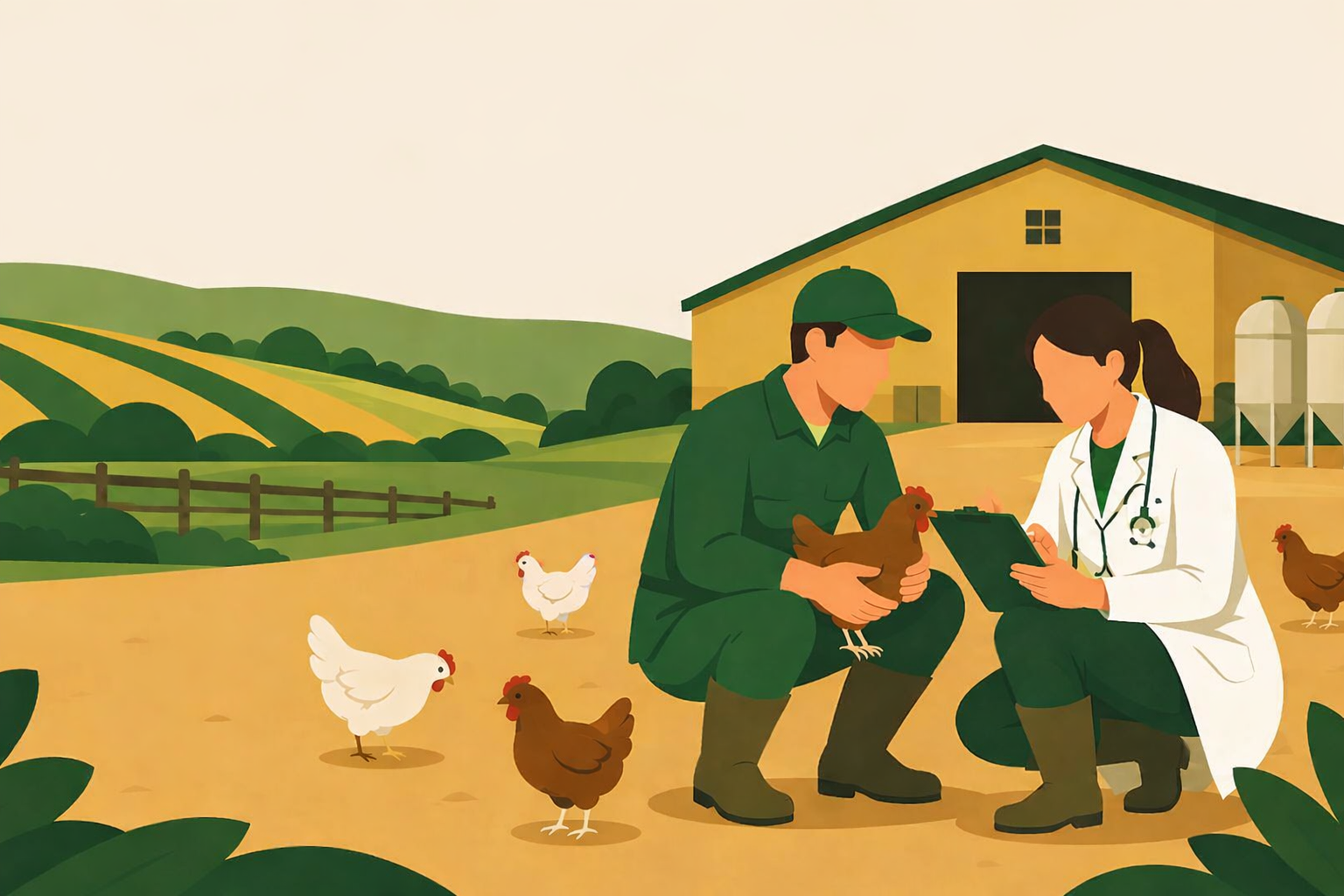
Bird flu, or highly pathogenic avian influenza (HPAI), can infect people in rare cases. This is documented and monitored by the WHO and ECDC (the European Centre for Disease Prevention and Control), and it should not be ignored. At the same time, the real risk applies almost only to people in direct, close contact with infected birds. It does not apply to simply living near a farm, walking near an outbreak, or eating poultry and eggs bought in a shop.
How the virus passes to people
People are infected mainly through direct contact with a sick or dead bird, its secretions, its droppings or a heavily contaminated environment, usually without protection for hands and airways. The higher-risk group is people who work with poultry: farmers, farm and slaughterhouse workers, and people who remove dead birds. According to current WHO and ECDC knowledge, HPAI viruses do not currently spread easily from person to person. The human cases documented so far are almost always bird-to-human transmission, not chains of infection between people.
What about eating poultry and eggs?
Properly cooked poultry meat and eggs are considered safe, because high temperature destroys the virus. The risk does not come from eating cooked meat or shop eggs. It comes from direct contact with a live or dead bird, especially a sick one. For current information on HPAI outbreaks in Poland, including specific towns, see our regional pages on bird flu in cities and our general guide, avian influenza (HPAI). We point you there instead of quoting figures here that go out of date quickly.
What is the risk to humans?
Who is actually exposed
The greatest documented risk is for people with direct, close and prolonged contact with infected birds. These are poultry farm workers, people taking part in culling infected flocks, vets, and backyard keepers who handle sick or dead birds without protection. For the general population without such contact, the WHO rates the risk as very low.
This is not the same as Newcastle disease
Avian influenza (HPAI) should be told apart from Newcastle disease (in Polish, rzekomy pomór drobiu). In birds the two can sometimes look alike, but completely different viruses cause them. Newcastle disease is not considered a significant threat to human health. We describe it in more detail in our article on Newcastle disease. Bird flu is different. It is one of the few common poultry diseases in Poland for which there are real, though narrowly targeted, recommendations to protect human health.
Where to find current outbreak data
Current information on HPAI outbreaks in Poland, including specific counties and towns, is kept and published by the Chief Veterinary Inspectorate (Główny Inspektorat Weterynarii, GIW). Instead of quoting figures that will be out of date in a month, we point you to our regional pages based on GIW data: the map of bird flu outbreaks in cities and the pages for each voivodeship.
How to protect yourself
Do not touch sick or dead birds with bare hands
Never pick up or examine, with bare hands, a wild or domestic bird that looks sick or has died for no clear reason. If you must move it or secure the area, use disposable gloves and, if possible, a mask as well.
Wash your hands after every contact with poultry and their surroundings
Washing your hands thoroughly with soap and water after contact with birds, their droppings, litter or farm equipment is one of the simplest and most effective safeguards. It applies to large farms and backyard flocks alike.
Basic protection when working with a sick flock
If you cannot avoid handling a sick or suspect flock, wear gloves and a mask, and ideally separate footwear and protective clothing as well. Afterward, disinfect them or wash them separately. This is the standard for farm workers in outbreak areas.
Report it, do not diagnose it yourself
Always report a suspected case of bird flu in a flock to the District Veterinary Officer (Powiatowy Lekarz Weterynarii). Do not try to diagnose it yourself or treat the birds. This is a legal duty and the best protection for the flock and for the people who handle it. See also how to report suspected HPAI and the symptoms of bird flu in poultry.
Frequently asked questions
Can a person die from bird flu?add
Human infection with the bird flu virus is rare. When it does happen, the course can be serious, and some of the cases documented worldwide were severe. This applies mainly to people in direct, intensive contact with infected birds, not to the general public. The WHO and ECDC publish the current expert assessment of risk to humans. It is the most reliable and regularly updated source on this topic.
How is bird flu treated in humans?add
It cannot and must not be treated at home. If you suspect infection, for example flu-like symptoms after contact with sick or dead poultry, see a doctor straight away or go to a hospital, and tell them about your contact with birds. Treatment, including any antiviral drugs, is given only by a doctor under medical supervision. This article is for information only and does not replace medical advice. For health guidance, contact your doctor, the nearest hospital or Poland's Chief Sanitary Inspectorate (Główny Inspektorat Sanitarny, GIS).
What are the dangers of bird flu for humans?add
For most people with no direct contact with sick poultry, the risk is very low. The real danger is for those in direct contact with infected or dead birds. They may develop flu-like symptoms or conjunctivitis (pink eye), and in rare cases a more severe respiratory illness. That is why the protection advice of gloves, a mask and hand washing is aimed mainly at farmers, farm workers and people who remove dead birds, not at the general population.
Can a person catch bird flu from a chicken?add
Yes, in principle it is possible, though rare in practice. Infection comes through direct, close contact with an infected bird, its secretions or its droppings, for example touching a sick or dead hen without gloves and not washing your hands afterward. You do not catch it through simple closeness, such as driving past a farm, or by eating properly cooked meat or eggs.
Sources & resources
- linkChief Sanitary Inspectorate (GIS): health safety
- linkChief Veterinary Inspectorate: bird flu announcements
- linkWHO — Avian Influenza (bird flu)
- linkECDC — Avian influenza overview
Prepared by: DlaFerm Team based on data from the sources listed · Publisher: INSTA-TECH sp. z o.o.
Do you keep poultry and want your biosecurity records at hand?
With DlaFerm you can keep a log of farm entries and health events in the flock record, ready for an inspection or a suspected outbreak. Create a free farm account or get in touch and we will show you how it works.
Phone
+48 796 258 151