Avian Flu in Poland 2026: Outbreaks, HPAI-Free Status from 28 July 2026 and Autumn Rules
On 28 July 2026 Poland regained its status as a country free from highly pathogenic avian influenza (HPAI) in poultry. Autumn bird migration again raises the risk that the virus reaches farms. We explain what the status means, how restriction zones work and which biosecurity rules you must follow.
verifiedFrom the team that has organised work on poultry farms for years.
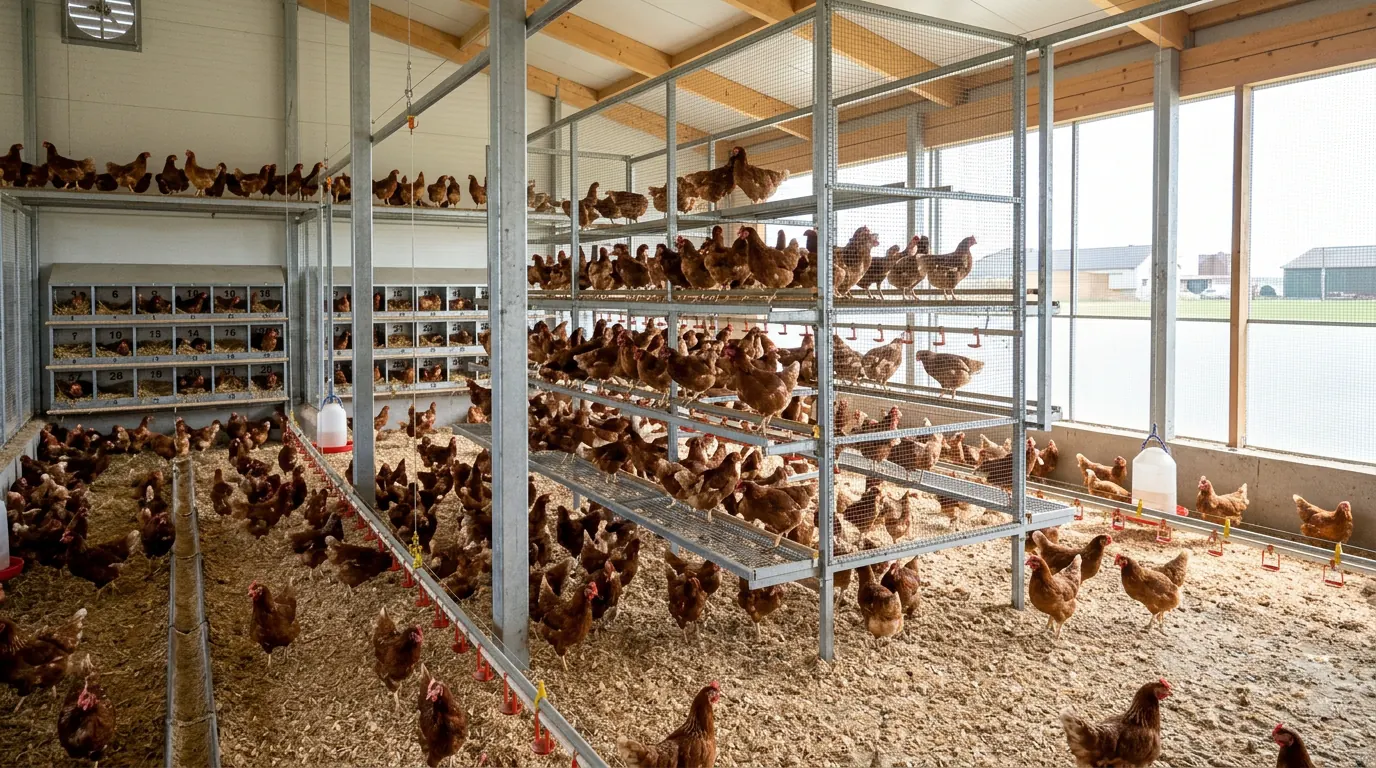
Legal status as of 23 November 2026. Poland has HPAI-free status in poultry, regained on 28 July 2026. The status does not mean the threat is over. In its notice of 12 October 2026, the Chief Veterinary Officer (Główny Lekarz Weterynarii) warns that autumn migration of wild birds sharply raises the risk of infection on commercial and non-commercial farms.
Avian flu in 2026: what we know
HPAI outbreaks in poultry were confirmed in Poland from 19.09.2025 to 27.05.2026. After the outbreaks were cleared and 28 days passed, the Chief Veterinary Officer filed a declaration with WOAH (the World Organisation for Animal Health), which published it on 06.08.2026. Below we describe the season, the restriction zones and the autumn rules. For current outbreak data, see the wild bird risk map and the avian flu season summary.
HPAI-free country status from 28 July 2026
How Poland regained its status
Under Article 10.4.6 of the WOAH Terrestrial Animal Health Code, a country regains free status 28 days after the end of disease-clearing measures (the stamping-out policy). The Main Veterinary Inspectorate (Główny Inspektorat Weterynarii, GIW) reported that all outbreak clearing procedures at commercial poultry premises in Poland were completed. The declaration was filed with 28.07.2026 as the date of regained status. GIW published its notice on 03.08.2026.
Why the status matters to you
The Chief Veterinary Officer told the competent authorities of other countries that WOAH had published the declaration, to speed up export procedures for poultry, meat, eggs and poultry products. For a farmer this means easier access to markets. Any new outbreak can change that quickly, because a confirmed infection means culling the flock and a temporary loss of markets. Poland also runs an avian influenza surveillance program.
Avian flu outbreaks in Poland in the 2025–2026 season
The poultry hub and high-density counties
According to a GIW notice on full mobilization of the services, a record 403 HPAI outbreaks in poultry were confirmed in 2021. To avoid a repeat, every further outbreak in a county with high production density is treated as the highest threat. Voivodeship veterinary officers coordinate the response together with the Voivodeship Crisis Management Teams. The last outbreak in the northern part of Masovian Voivodeship was confirmed on 21.04.2026 in Mława county (powiat mławski).
Preventive culling
A county veterinary officer can order preventive culling on farms other than the outbreak site. GIW describes this as a way to break the chain of infection in areas with high production density. In Masovian Voivodeship, 4 028 273 birds were culled preventively on 67 farms. In Warmian-Masurian Voivodeship, because of outbreaks in Iława county (powiat iławski), 344 500 birds were culled on 18 farms. Check the situation in your region here: Warmian-Masurian, Greater Poland and Lublin.
Avian flu map
We keep an outbreak map on our site at /mapa. Always read outbreak numbers together with the date of the notice they come from, because the situation changes daily. For your own town, also check the list of towns with avian flu.
Avian flu zones and restrictions around an outbreak
Procedure after an outbreak is confirmed
According to the Ministry of Agriculture, an HPAI outbreak triggers strict disease-clearing procedures. They include an order to kill the poultry and to dispose of carcasses and animal products at rendering plants. Restriction areas with a radius of at least 10 km are set up around the outbreak, with a ban on moving animals and animal products. Further outbreaks lead to further closed zones.
The EU legal basis
We describe the rules on zones and regionalization in our article on Regulation 2023/594 and Decision 2023/2447. The exact zone boundaries at any given time are published by the county veterinary officer and in notices of the Veterinary Inspection (Inspekcja Weterynaryjna). If your farm is in a zone, do not move poultry, eggs or products without the inspection's consent.
The autumn season: why the risk rises
Wild bird migration
The Chief Veterinary Officer points out that the main carriers of the virus are wild birds, especially waterbirds: ducks, geese and swans. According to the Ministry of Agriculture and Rural Development (MRiRW), the risk of the virus reaching farms grows during autumn migration. All poultry species and many wild bird species are susceptible. Avian flu causes mass illness and very high mortality, including in backyard flocks.
The situation in Europe in summer 2026
According to a review by EFSA, ECDC and EURL for 5.06–28.08.2026, 843 HPAI outbreaks on poultry farms were reported in Europe. In the same period, 5 A(H5N1) outbreaks in captive birds were recorded in four countries: Germany (2), Lithuania (1), the Netherlands (1) and Poland (1). The data covers summer only, so expect more reports in autumn. To assess the risk at your farm, read Avian flu from wild birds.
Biosecurity rules for the autumn and winter season
Wild birds, water and feed
The Chief Veterinary Officer lists duties set by law. Do not give poultry water from reservoirs that wild birds can reach. Keep poultry so that contact with wild birds is limited, and keep it away from such reservoirs. Store feed and bedding so that wild birds, rodents, pets and wild animals cannot reach them. We cover bird deterrence as part of protection in our article on entry control and deterrence.
People and equipment hygiene
Wash and disinfect your hands and use protective clothing and footwear when entering livestock buildings. Clean and disinfect tools and equipment used to handle animals. Do not bring wild bird carcasses or game bird carcasses onto the farm. Record entries of people and vehicles in the QR entry and exit log. You can prepare a plan tailored to your farm in the biosecurity plan generator.
Symptoms and reporting
Report deaths and a drop in feed or water intake to the county veterinary officer without delay. You will find the symptoms in the article Avian flu: symptoms in poultry. Do not treat birds on your own: a vet and the Veterinary Inspection decide how to proceed.
Vaccination and further decisions
Where to find information
We describe the rules, pilot proposals and the current state of decisions on vaccination in the article Poultry vaccination against avian flu in Poland. Until the rules change, biosecurity remains the basis of flock protection. Official notices are published by the Main Veterinary Inspectorate at gov.pl/web/wetgiw.
Frequently asked questions
Is Poland free from avian flu?add
On 28.07.2026 Poland regained its status as a country free from HPAI in poultry. WOAH published the declaration on 06.08.2026. The Chief Veterinary Officer stresses, however, that the risk of the virus being introduced rises in autumn.
When were the avian flu outbreaks in Poland in the 2025–2026 season?add
HPAI outbreaks in poultry were confirmed from 19.09.2025 to 27.05.2026. The last outbreak in the northern part of Masovian Voivodeship was found on 21.04.2026 in Mława county.
How big is the zone around a bird flu outbreak?add
According to the Ministry of Agriculture, the restriction area has a radius of at least 10 km around the outbreak. Bans on moving animals and animal products apply there. The county veterinary officer gives the boundaries of a specific zone.
Where can I see a bird flu map for Poland?add
You will find the outbreak map on the DlaFerm site at /mapa. Always check the date of the entry and the notices of the Veterinary Inspection.
What biosecurity rules apply in autumn?add
Do not give poultry water from reservoirs open to wild birds, limit contact between poultry and wild birds, and protect feed and bedding. Use protective clothing and footwear, and wash and disinfect hands and equipment. Do not bring wild bird carcasses or game bird carcasses onto the farm.
What happens to a flock when bird flu is confirmed?add
A confirmed infection means the flock is destroyed: an order to kill the poultry and dispose of the carcasses. The county veterinary officer can also order preventive culling on other farms in areas with high production density.
Sources & resources
- linkMain Veterinary Inspectorate (GIW): Declaration to WOAH on regaining HPAI-free country status in poultry
- linkMain Veterinary Inspectorate (GIW): Chief Veterinary Officer's notice on the avian flu threat linked to autumn wild bird migration
- linkMain Veterinary Inspectorate (GIW): Full mobilization of the services to stop avian flu infections in poultry
- linkEFSA, ECDC, EURL: Avian influenza overview June–August 2026 (EFSA Journal 2026;24(9):10369)
- linkMinistry of Agriculture and Rural Development: Avian flu: services respond to rising outbreak numbers in the poultry hub. Minister Stefan Krajewski: we cannot allow a repeat of the situation from a few years ago
Prepared by: DlaFerm Team based on data from the sources listed · Publisher: INSTA-TECH sp. z o.o.
Plan your farm's biosecurity with the DlaFerm plan generator
The <a href="/generator-planu-bioasekuracji">biosecurity plan generator</a> helps you write down your autumn and winter rules, and the QR entry log records every entry to your farm. Create a free farm account in DlaFerm or get in touch.
Phone
+48 796 258 151