Poultry Treatment Records, Prescriptions and Withdrawal Periods
Every medicine you give to birds must be written in a treatment record, and you keep the entries for at least 5 years. An antibiotic is supplied only on a prescription valid for 5 days, and a withdrawal period applies before slaughter and before you sell eggs. Below we explain what to record, how the prescription works and how to treat medicated feed.
verifiedFrom the team that has organised work on poultry farms for years.
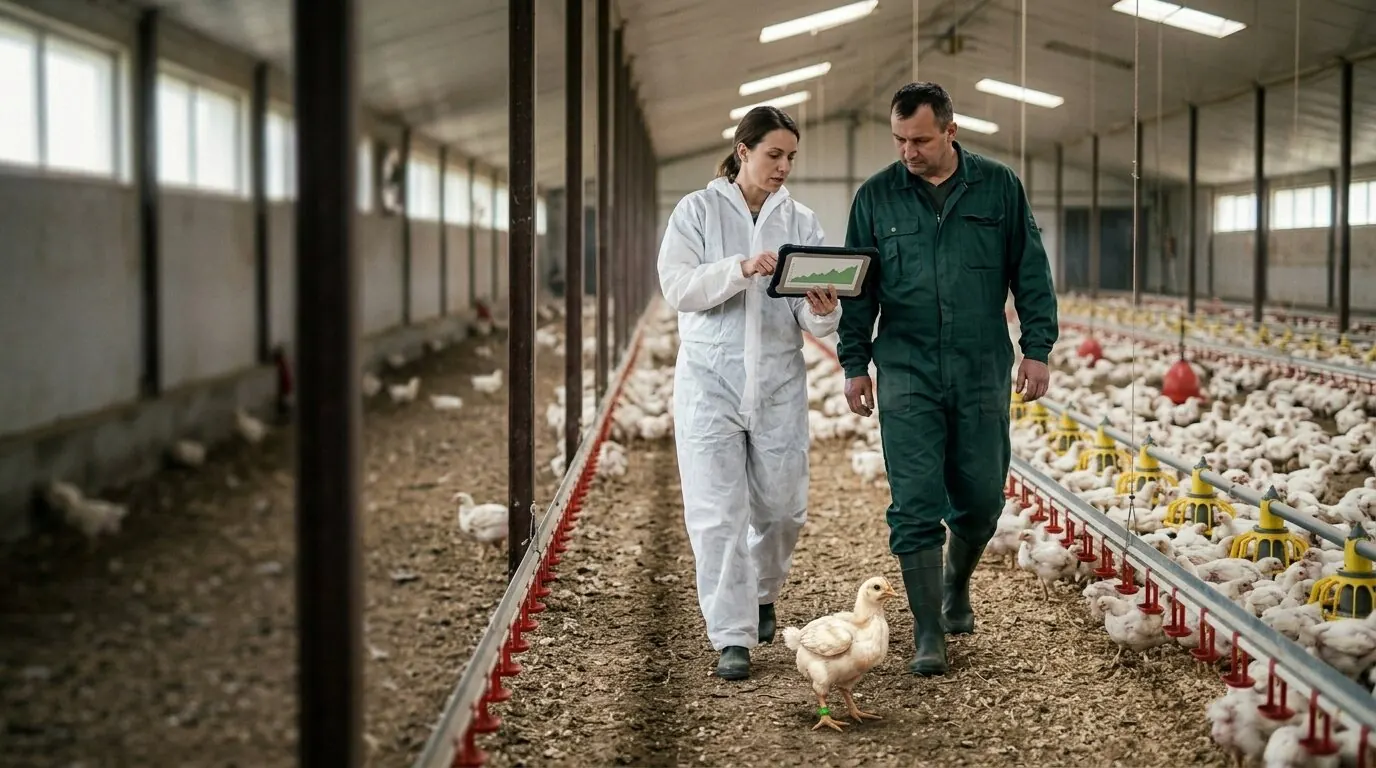
If you give a medicine to poultry kept for food production, you must keep a treatment record. The duty comes from Regulation (EU) 2019/6 and covers every treatment, including a few days of medicine in water or feed. The record shows what you gave, to which birds, when, and with what withdrawal period. Without it you cannot show at an inspection that treated birds did not go to sale too early. Below we explain what to write, how the prescription works, how to count the withdrawal period and how long to keep documents. The legal position described is as of 22.11.2026.
The treatment record: what to write
Minimum content of an entry
Write down every administration of a medicine with its date. An entry includes the medicine name and batch number, the quantity, the supplier, the number and identification of the treated birds (for example the house or flock), the veterinarian's details, the prescription number and the withdrawal period. You can keep the records by hand or in the treatment and withdrawal module, which reminds you when the withdrawal ends for each group of birds.
Write it the same day
Record the medicine on the day you give it, not a week later from memory. When birds are ill, for example with conjunctivitis in hens, note the symptoms, the number of sick birds and the vet's decision. Recording the start and end of treatment makes it easy to work out the withdrawal date and to show when the group was treated.
Antibiotic prescription: valid for 5 days
Validity
A prescription for an antimicrobial medicine is valid for 5 days (Art. 105 of Regulation (EU) 2019/6). If the medicine is not given in that time, you need a new prescription. Keep the prescription with the treatment record, because you rely on it at an inspection. Write the issue date and the prescription number in the record.
Where to buy the medicine
You buy veterinary medicines from a veterinarian or from a pharmacy on prescription. The rules are set by the Pharmaceutical Law (Dz.U. 2026 poz. 612, Poland's Journal of Laws). Do not use medicines from an illegal source or without a vet's advice. The vet always chooses the medicine and the dose, and we give no doses. For respiratory diseases such as mycoplasmosis in poultry, the vet decides the scope of treatment.
Medicated feed and antibiotics in feed
Medicated feed is feed with a medicine added. You use it only on a veterinary prescription and you keep the withdrawal period (Regulation (EU) 2019/4). An antibiotic in feed may not be used to prevent disease, only to treat a diagnosed one. In that case you also record the feed: which batch was mixed, how much was used and for which group of birds.
Prevention without antibiotics
If you want to cut down on treatment, start with feeding and housing. Look at natural feed additives instead of antibiotics and match the recipe to the age of the flock. Less treatment means fewer entries in the record and fewer withdrawal dates to track.
Withdrawal period: when it counts
What a withdrawal period is
The withdrawal period is the time after which meat or eggs may be placed on the market. It is counted from the last dose, and its length depends on the product and the species. That is why we give no figures here. You find the value in the package leaflet and confirm it with your vet. We describe the rules for poultry on the page about the withdrawal period of medicines in poultry.
Slaughter and egg sales
You observe the withdrawal period before slaughtering a bird and before selling eggs. Birds in withdrawal do not go to slaughter, and you pull eggs laid during the withdrawal period from the market. In the record, mark the end date of the withdrawal for each group, so you make no mistake when planning slaughter and egg collection.
Keeping documents for 5 years
Retention period
You keep the treatment record for 5 years (Art. 108 of Regulation (EU) 2019/6). Make sure the entries from this period are complete and legible. Keep prescriptions together with the record. Documents may be on paper, digital or both. What matters is that you can show them quickly.
National record template
Based on our findings, the national treatment record template has been repealed and the duties come from the EU regulation. We have not yet fully confirmed this in the legal acts, so before you adopt a form, check the current position in ISAP, Poland's online legal acts database (Internetowy System Aktów Prawnych). Do not rely on the old template at an inspection.
Waste after treatment
Medicine packaging, unused medicines and dead birds do not go into ordinary waste. We describe the rules for dead animals separately: disposal of dead animals. Report deaths to your vet, especially when more birds die than usual.
Biosecurity reduces the need for treatment
Biosecurity plan
A written biosecurity plan limits the disease brought into the house: control of entry, washing, disinfection and separate clothing for staff. We describe a template in the poultry biosecurity plan guide. You can also prepare a ready plan in the biosecurity plan generator.
Vaccination
Vaccination is one of the basic ways to limit disease. The vet sets the schedule for your flock and its situation. One example is vaccination against Newcastle disease (ND), which is worth discussing with your vet when you plan the flock.
Frequently asked questions
How long do you keep a poultry treatment record?add
You keep the treatment record for 5 years, under Art. 108 of Regulation (EU) 2019/6. Keep prescriptions with the entries, because they are part of the documentation. At an inspection you must show the entries from the whole period.
How long is an antibiotic prescription for poultry valid?add
A prescription for an antimicrobial medicine is valid for 5 days, under Art. 105 of Regulation (EU) 2019/6. If the medicine is not given in that time, you need a new prescription. Write the issue date and prescription number in the treatment record.
Does medicated feed need a prescription?add
Yes. Medicated feed is used only on a veterinary prescription, with the withdrawal period observed (Regulation (EU) 2019/4). Antibiotics in feed may not be used to prevent disease. Record the feed batch and how much was used.
What do you write in the treatment record each time you give a medicine?add
Write the date, medicine name and batch number, quantity, supplier, treated birds, the veterinarian's details, prescription number and withdrawal period. Every item is needed, because an inspection checks that the entry is complete. Make the entry on the day you give the medicine.
When does the withdrawal period end before poultry slaughter?add
The length depends on the product and the species, so we give no figure. Read it from the package leaflet and confirm it with your vet. Do not send birds to slaughter before the withdrawal period ends, and mark its end in the record.
Can I choose the medicine and dose for my hens myself?add
No. The vet chooses the medicine and the dose, and you buy the medicine from the vet or from a pharmacy on prescription. Medicines without a vet's advice or from an illegal source are not allowed. If birds show signs of disease, call your vet as early as possible.
Sources & resources
- linkChief Veterinary Inspectorate (Główny Inspektorat Weterynarii) — gov.pl/web/wetgiw
- linkMinistry of Agriculture and Rural Development — gov.pl/web/rolnictwo
- linkARiMR — gov.pl/web/arimr
- linkInternet System of Legal Acts (ISAP) — isap.sejm.gov.pl
Prepared by: DlaFerm Team based on data from the sources listed · Publisher: INSTA-TECH sp. z o.o.
Do you keep a poultry flock and want all treatment entries in one place?
The Treatment and withdrawal module in DlaFerm tracks entries, dates and the end of the withdrawal period for each group of birds. Create a free farm account and see how the record works in practice.
Phone
+48 796 258 151