Chicken eye infection: causes and care
A swollen, red or watery eye is one of the most common signs in backyard flocks. We cover the causes, from ammonia in the coop to mycoplasmosis and an abscess under the eye, what you can do yourself, and when you need a vet.
verifiedFrom the team that has organised work on poultry farms for years.
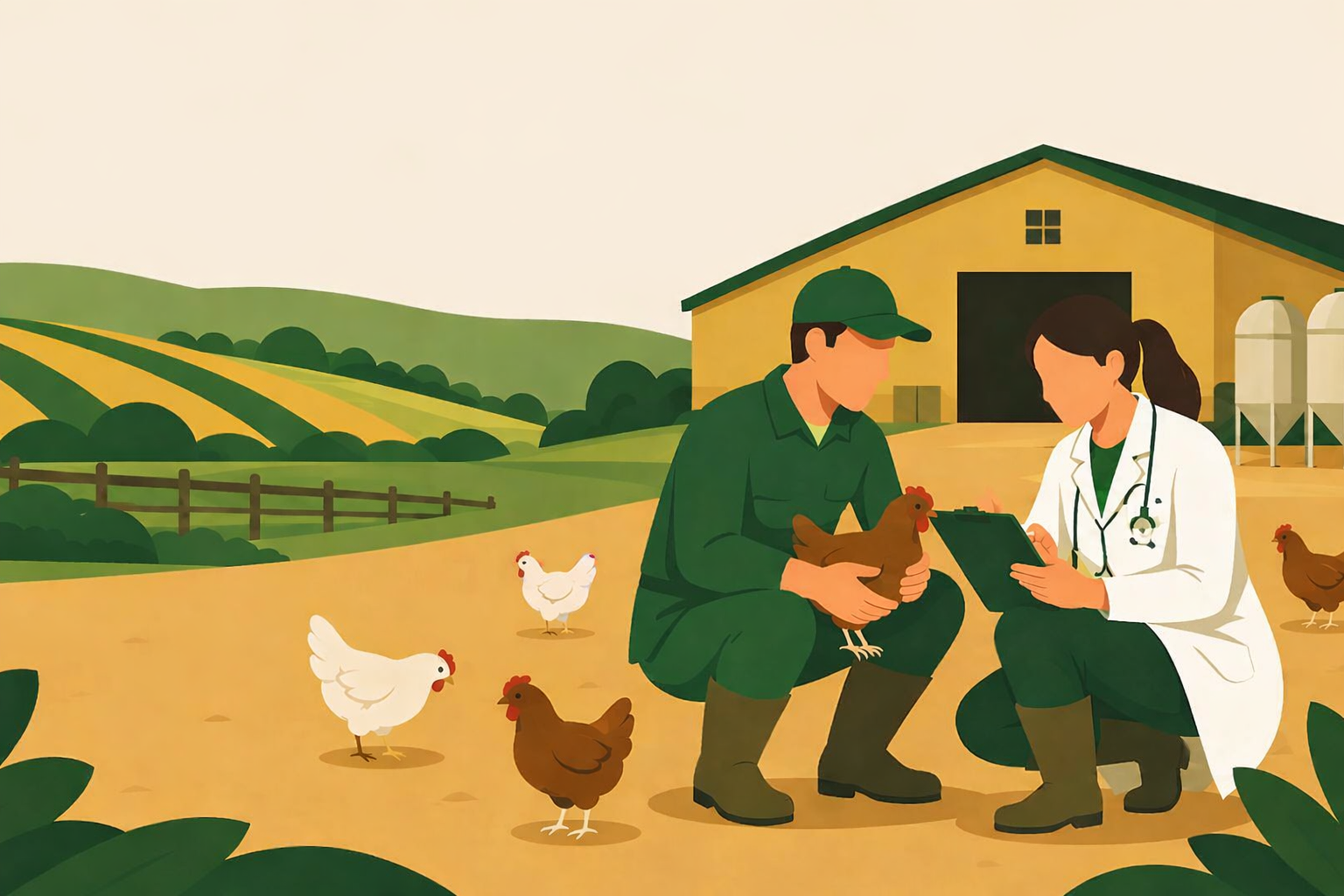
A swollen eye in a hen is usually a sign, not a disease of its own. The cause may be irritation from ammonia, an injury, a respiratory infection or an abscess under the eyelid. A single mild redness often clears up once you improve conditions in the coop. Pus, swelling in both eyes or several sick birds need a vet's assessment.
What conjunctivitis looks like in a hen
Conjunctivitis is inflammation of the mucous membrane that covers the eye and the inside of the eyelids. It shows as redness, swelling, watering and feathers stuck together around the eye. The discharge may start watery, then thicken and turn foamy or purulent. Foamy, bubbly discharge is often linked to chronic respiratory disease (CRD), caused by Mycoplasma gallisepticum. Not every swollen eye means mycoplasmosis, so look at the whole flock and the conditions in the coop.
When it is more serious
Mild redness from dust or straw usually goes away once conditions improve. Home care is not enough if you see a pus-filled eye, swelling in both eyes at once, coughing or rattling, or several sick birds at the same time. Swollen eyes that last despite fresh bedding and better ventilation also need an exam. A bird that stops eating because it cannot see the feed weakens fast.
Swollen eyes in a hen: signs that point to the cause
One eye or both
Start by asking how many eyes and how many birds are affected. Swelling in one eye of one hen usually means an injury, a foreign body or a local abscess. Swelling in both eyes at once, especially in several birds, points to a general cause: a respiratory infection or bad air in the coop. Also check the infraorbital sinuses, the area just below the eye. If they are swollen and there is discharge from the nostrils or eye, an infection is most likely going around the flock. Write down which birds are sick and since when, because the vet will ask about the course of the problem.
The table shows how signs match the most common causes. Use it as a guide for talking to your vet, not as a diagnosis.
| Sign | Common cause |
|---|---|
| Foamy, bubbly discharge, rattling, fewer eggs | Chronic respiratory disease (CRD, mycoplasmosis) |
| Watering and redness in many birds, sharp smell in the coop | Ammonia from bedding and poor ventilation |
| One eye, one bird, no breathing signs | Injury, pecking, foreign body |
| Pus, swelling that lasts despite better conditions | An infection that needs a vet's assessment |
What causes eye problems in chickens
Respiratory infections, including mycoplasmosis
The most commonly described cause of swollen eyes and foamy discharge is CRD caused by Mycoplasma gallisepticum. The Merck Veterinary Manual describes mycoplasmosis in poultry as a respiratory disease, and the World Organisation for Animal Health (WOAH) lists it among animal diseases. Other bacterial and viral infections give similar signs. The eye problem usually comes with rattling, sneezing or fewer eggs. For details on diagnosis and prevention, see CRD and mycoplasmosis in poultry.
Ammonia and poor ventilation
High ammonia from bedding that is changed too rarely, together with poor ventilation, is a cause you fully control. The gas irritates the conjunctiva and airways, and an irritated membrane gets infected more easily. Better ventilation and regular replacement of wet spots in the bedding can cut the problem down on their own. If your eyes sting when you walk into the coop, the hens feel it even more, because their heads are close to the floor. For ways to lower the gas level, see reducing ammonia emissions in the coop. Requirements for the house itself are in coop requirements for laying hens.
Injuries and foreign bodies
Less often, a swollen eye comes from an injury: a blow, a scratch on equipment, pecking by other birds, or irritation from a foreign body such as a piece of straw or a husk. This usually affects one bird and one eye, with no breathing signs in the rest of the flock. If you see a hen being attacked by others, separate her and check that there is enough space at the feeders and drinkers.
Other diseases that swell the area around the eye
Other infectious diseases of poultry, such as infectious coryza or the wet form of fowl pox, can also swell the face and eye. A long-term shortage of vitamin A damages mucous membranes and favors eye inflammation. Telling these apart needs an exam of the bird and sometimes a swab, so do not guess the cause from looks alone. For diet support, see vitamins for chickens.
A pus lump under the eye: why ointment alone is not enough
How to recognize an abscess
An abscess under the eye looks like a hard, raised lump under the eyelid or in the sinus. The eye is pushed out, half closed and does not open fully. The pus in a hen's eye is often thick and cheesy, so eyewash will not dissolve it. The lump grows slowly and presses on the eyeball, so waiting risks losing the eye. Do not squeeze or cut the lump in the coop. An open wound gets infected, and the mass can stay deep in the tissue.
Who removes it and what comes next
A vet removes the abscess, usually under local or general anesthesia, and then advises flushing and possibly an antibiotic. The vet chooses the drug and dose, not you. After the procedure, keep the bird apart in a clean, dry place and watch whether the lump returns. If abscesses appear in several hens, look for the cause in the flock: vitamin A shortage, very dusty air or a chronic respiratory infection.
Eye problems in chickens: care step by step
What you can do yourself
Separate the sick bird from the flock so she does not infect others and nobody pecks her. Gently rinse the eye with sterile saline and wipe away discharge with a clean, single-use gauze pad, a separate one for each eye. Improve ventilation, replace wet bedding and check that the coop is not too dusty. Give fresh water and feed in a spot the sick bird can find easily. These steps support hygiene and comfort, but they do not clear an infection if that is the cause. Do not give antibiotics from your own cabinet without a diagnosis.
Medicines and withdrawal periods
A vet treats eye and respiratory infections. The vet picks the antibiotic and dose after examining the bird and the conditions in the coop. After every medicine there is a withdrawal period, the time when eggs and meat must not be eaten or sold. The label and your vet give its length. Record the date of each dose and the end of the withdrawal period, because mistakes are easy with several sick birds. The treatment and withdrawal period module in DlaFerm is made for these records.
The comparison shows what you can do yourself and when home care is not enough. It draws on the signs described above.
| Situation | What you do |
|---|---|
| Mild redness from dust or straw | Improve coop conditions and watch the bird |
| Watery discharge in one bird | Isolate, rinse with saline, watch |
| Pus in the eye | See a vet as soon as possible |
| Swelling in both eyes or several sick birds | Vet visit, assessment of the whole flock |
| Coughing, rattling, foamy discharge | Suspected mycoplasmosis, exam and prescription treatment |
When you need a vet
Warning signs
A pus-filled eye, swelling that lasts or gets worse despite better conditions, signs in several birds at once, or coughing and rattling all mean home care is not enough. Suspected mycoplasmosis in particular needs confirmation and antibiotic treatment on prescription. Without a diagnosis it is easy to treat the sign and not the cause. If there is no improvement within a few days or signs get worse, the next step should be a visit, not another home remedy.
What to prepare for the visit
Note since when the bird has been sick, how many hens show signs, how egg laying has changed and whether new birds joined the flock recently. Also write down how ventilation looks and when you last changed the bedding. Tell the vet which vaccinations were given. Such details shorten the diagnosis and, in larger flocks, help find the source quickly. You can keep health notes for each coop in the coop records module.
How to limit eye problems in the flock
Air, bedding and stocking density
The cheapest prevention is a dry, airy house with no drafts over the perches. Replace wet bedding near the drinkers, do not overload the coop and clear dust from the feeders. Too high a density raises ammonia and encourages pecking. A run lowers the risk if it has dry ground and shade, because damp and cold weaken immunity. See also how to set up a chicken run.
New birds and immunity
Mycoplasmosis and other infections most often enter a flock with new birds, so keep them in quarantine and watch them before you join them with the rest. Balanced feed and added vitamins support the immunity of mucous membranes, but they do not replace treatment. Do not treat vitamins as a cure for a sick eye. A biosecurity plan helps organize quarantine and farm visitors; the biosecurity plan generator is made for this.
Frequently asked questions
What can I do for a chicken with a pus-filled eye?add
Isolate the bird and gently rinse the eye with sterile saline to remove built-up discharge. Pus is a sign of infection, and rinsing will not cure it. See a vet as soon as possible instead of waiting for it to pass.
What is the best treatment for a chicken eye infection?add
There is no single treatment. It depends on the cause (bacterial or viral infection, irritation), which a vet finds after examining the bird and the coop. If the cause is mycoplasmosis, you need a prescription antibiotic, and the vet chooses the drug and dose. Mind the withdrawal period after any medicine.
What are the symptoms of mycoplasma in chickens?add
Typical signs are swollen eyes and infraorbital sinuses, foamy, bubbly discharge from the eyes or nostrils, rattling, coughing and fewer eggs. For a full description of signs, course and prevention, see CRD and mycoplasmosis in poultry.
How do I treat a chicken eye problem at home?add
Home steps are isolating the sick bird, gently rinsing the eye with saline, and improving ventilation and bedding cleanliness. They support hygiene and comfort but do not cure an infection. If there is no improvement within a few days or signs get worse, see a vet.
Why does my chicken have one swollen eye?add
Swelling in one eye of one bird most often means an injury, a foreign body or an abscess under the eyelid. Check whether other hens are pecking her, and look at the area under the eye. If you see a hard mass or pus, take the bird to a vet.
Can a swollen chicken eye spread to other birds?add
If the cause is an infection such as mycoplasmosis, it can spread to the rest of the flock through direct contact, drinkers and air. Isolate the sick bird and watch the others. Swelling from an injury is not contagious, but you still need to find the cause.
Can ammonia in the coop damage chickens' eyes?add
Yes. Ammonia irritates the conjunctiva and airways, and an irritated membrane gets infected more easily. Replace wet bedding and improve ventilation. If many birds are affected at once, start by checking the air in the coop.
Sources & resources
- linkMerck Veterinary Manual — Mycoplasmosis in Poultry
- linkWOAH (World Organisation for Animal Health) — Avian mycoplasmosis
Prepared by: DlaFerm Team based on data from the sources listed · Publisher: INSTA-TECH sp. z o.o.
Record treatment and withdrawal periods in DlaFerm
The treatment and withdrawal period module in DlaFerm lets you record signs, treatment and the end of the withdrawal period for each coop in one place. Create a free farm account or get in touch, and we will show you how it works.
Phone
+48 796 258 151