Goat breeding: heat, mating season, buck and dates
Goats in Poland come into heat mainly in autumn, as days get shorter. The cycle lasts about 21 days and heat lasts 1–2 days, so you breed a doe in the middle of her heat. We cover the signs, choosing a buck and how to count the kidding date.
verifiedFrom the team that has organised work on poultry farms for years.
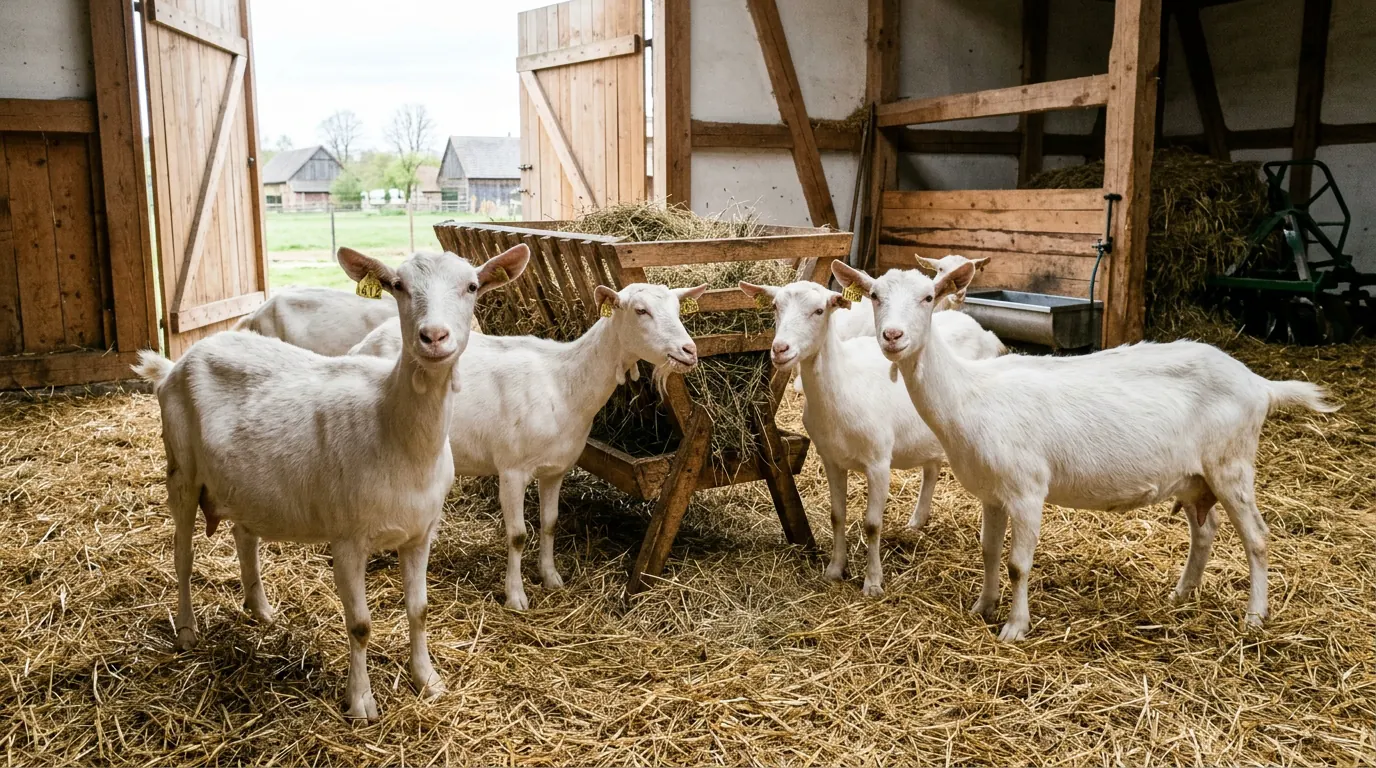
The goat is a seasonally polyestrous animal. In our climate the sexual cycles start in late summer or early autumn, when days get shorter, and usually last until winter. During that time heat returns about every 21 days, and each heat usually lasts one to two days. You breed a doe when she clearly shows the signs, not by the calendar. Pregnancy lasts about 150 days; we cover it in more detail in our article on goat pregnancy.
Why the breeding date shapes the whole year
The breeding date sets the kidding date, and that sets the whole year in the herd: start of lactation, feed demand, sale of kids and space in the goat house. Breeding in October gives kids at the turn of March and April, just before the grazing season. Does bred earlier kid in winter and need a warm, dry place. Before you plan the season, check that the building is big enough for mothers with young. We describe this in our article on the goat house.
Heat in goats: how to recognize it
Signs of heat
A doe in heat is restless, often bleats, and wags her tail quickly. The vulva is red and slightly swollen, and mucus runs from the vagina: thin and clear at first, thicker and cloudy toward the end of heat. Appetite drops, and in dairy goats milk yield often drops too. She mounts other goats, lets them mount her and stands still when the buck comes near. The surest sign is standing heat, meaning she accepts mounting by a buck or another doe.
Cycle and length of heat
The sexual cycle lasts about 21 days, though in individual does it can be shorter or longer. Heat usually lasts 24–48 hours, and ovulation comes near the end. So the best time to breed is the second half of heat. Write down the heat dates of each doe in a notebook. If the signs return after 21 days, you know the mating failed and must be repeated at the next heat. You will also spot does that do not come into heat at all and need a check of feeding or health.
When to breed goats
Breeding season in Poland
Most goat breeds come into heat from late summer to winter. Dairy breeds such as Saanen, kept in breeding herds, are usually bred in autumn so that kidding falls in early spring. Outside the season mating usually fails, because does show no heat. Extending the season with light or hormones is a decision you discuss with a veterinarian. We describe breed traits in our article on goat breeds.
Age and condition of the doe
Breed young does only when they reach the right body weight, about two thirds of the adult weight of a doe of that breed. Reaching a certain age is not enough. A doe bred too early bears weaker kids and develops worse. Bring adult does into the season in good condition, neither too thin nor fat. 3–4 weeks before breeding you improve the ration (so-called flushing), which raises the chance of more kids. We describe feeding rules in our article on what goats eat.
The breeding buck: choice and keeping
How to choose a buck
A breeding buck should come from a dam with good yield and fertility, and have sound legs, a correct bite and two well-formed testicles. For a dairy herd, descent from a dairy dam matters, because bucklings inherit production traits from their parents. Data from IZ PIB (Poland's National Research Institute of Animal Production) show that in Polish breeding one buck covers does in several herds, so his quality carries over to many farms. Choose a male with a documented pedigree, not by chance. The breed overview in our article on goat breeds helps.
Keeping the buck and his health
In the breeding season a buck loses appetite and condition, and after the season he needs extra feed. Out of season keep him apart from the does, so milk and meat do not pick up a strong smell. Isolate and examine a bought male before he joins the herd: parasites and diseases most often enter a farm with new animals. Agree worming and vaccination with a veterinarian; we covered dates and withdrawal periods in our article on worming goats. You also report a new animal under the rules in our article on registering goats with ARiMR (Poland's Agency for Restructuring and Modernisation of Agriculture).
Mating goats in practice
Hand mating and free mating
In hand mating you bring a doe in heat to the buck, watch one or two coverings and write down the date. You have full control over pedigree and kidding date, which helps with breeding evaluation. In free mating the buck runs with the herd for several weeks of the season, and you note the dates when you see mounting or marks on the does' backs. This method takes less work, but it is harder to see which doe conceived when. Breeding herds use hand mating.
After mating
After mating write down the date and the ear tag numbers of the doe and the buck. Add 150 days and you get the approximate kidding date. Watch the doe over the next 21 days. If heat returns, the mating must be repeated. It makes sense to confirm pregnancy with an examination by a veterinarian, especially in valuable herds. About two months before kidding you cut the milk ration and move to drying off, as we describe in our article on feeding dairy goats.
Fertility and kidding
How many kids to expect
Data from IZ PIB on a herd of Carpathian goats show average fertility of 95% and prolificacy of 158%. That means 100 does in the herd gave about 158 kids in one season. Results depend on breed, condition of the does, feeding and the quality of the buck. Dairy breeds usually give twins, and young does more often bear a single kid. Good care of does before breeding and in the first weeks of pregnancy shows in the number of kids born and raised.
Preparing for kidding
Once you know when the does were bred, you can plan kidding pens, bedding, warmth and first milk for the kids. We describe the birth and care of the young in our article on goat kidding. If you see problems with heat, repeated failures to conceive or abortions, call a veterinarian. Causes can be infectious diseases, feed deficiencies and parasites. You will find a list of herd diseases in our article on goat diseases. A veterinarian always chooses medicines and doses, and you keep to the withdrawal period for milk and meat.
Frequently asked questions
How long does a goat stay in heat?add
Heat usually lasts 24–48 hours, and the whole sexual cycle about 21 days. A doe accepts the buck most readily in the second half of heat. Timing varies between individuals, so write down the dates.
When should you breed goats in Poland?add
The goat breeding season falls in late summer, autumn and early winter, when days get shorter. Most keepers breed in autumn and plan kidding for early spring. Outside the season a doe usually shows no heat.
How do you know a goat is in heat?add
The doe is restless, wags her tail, often bleats and has a red, swollen vulva and mucus from the vagina. She mounts other goats and stands still near the buck. Appetite drops, and often milk yield too.
How many does can one buck cover?add
The number depends on the buck's age and condition and on the way of mating. A young male serves fewer does than a mature one at full strength. Agree the exact number for your herd with an adviser or a veterinarian.
When should you plan kidding after breeding?add
Goat pregnancy lasts about 150 days. Add five months to the mating date and write down the approximate kidding date. Before birth prepare a dry, warm place and dry off the doe.
What if a goat comes into heat again after mating?add
If heat returns after about 21 days, the mating failed and must be repeated. If several matings in a row give no pregnancy, ask a veterinarian to examine the doe and the buck.
Sources & resources
- linkIZ PIB (Wiadomości Zootechniczne) — Current problems in dairy goat breeding in Poland
- linkIZ PIB (Wiadomości Zootechniczne) — Current state of breeding and the genetic resources protection program for Carpathian goats
- linkIZ PIB (Wiadomości Zootechniczne) — Basics of goat feeding
- linkNational Research Institute of Animal Production (Instytut Zootechniki PIB) — izoo.krakow.pl
Prepared by: DlaFerm Team based on data from the sources listed · Publisher: INSTA-TECH sp. z o.o.
Buying a buck or new goats for your herd?
The biosecurity plan generator in DlaFerm.pl helps you set rules for bringing in new animals and for visitors to the farm, and the treatment and withdrawal module tracks dates after treatments. Create a free farm account or get in touch.
Phone
+48 796 258 151