Goat milk: how much a goat gives, composition and properties
Goat milk is close to cow milk in composition: 3.8% fat and 3.2% protein, according to Penn State Extension. It differs in protein structure and has smaller fat globules. How much milk you get depends on breed, feeding and stage of lactation, not on herd size alone.
verifiedFrom the team that has organised work on poultry farms for years.
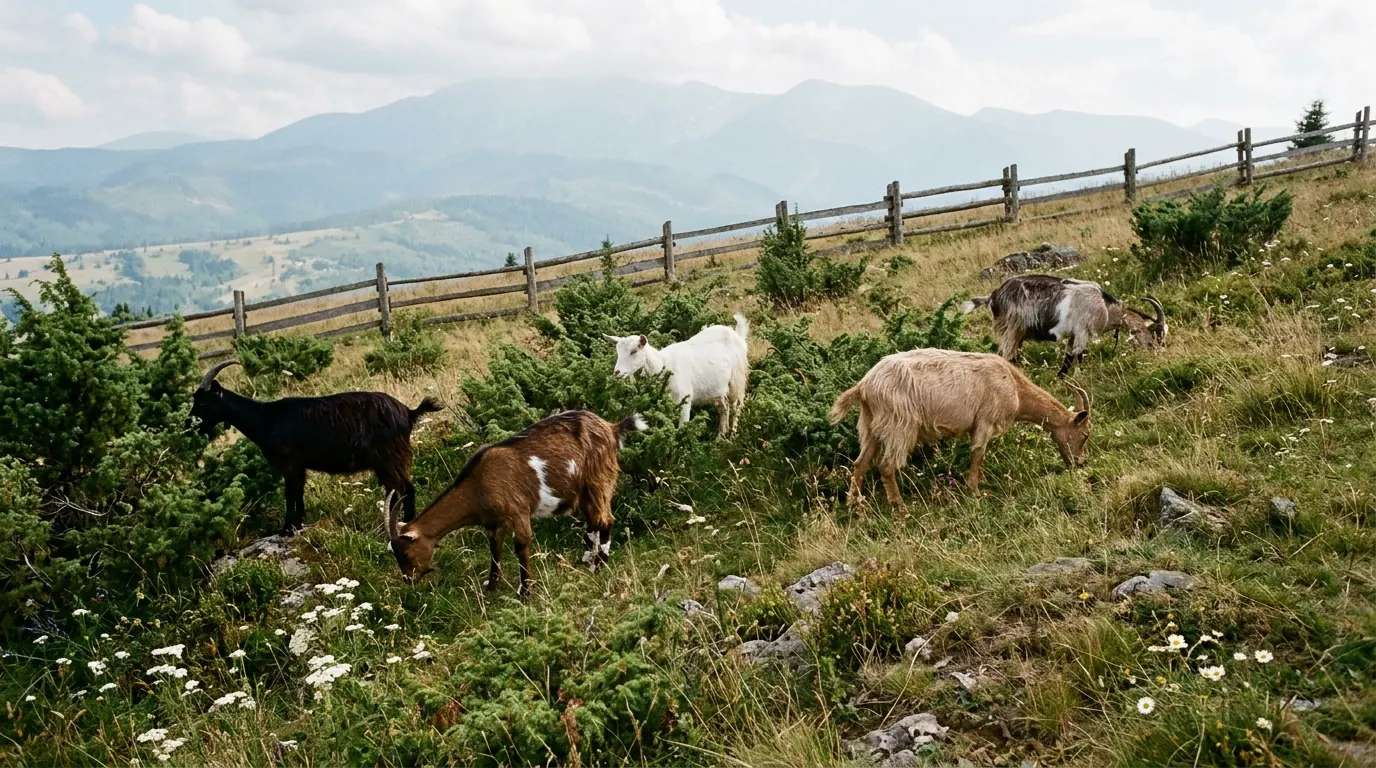
According to Penn State Extension, goat milk has 70 kcal per 100 ml, 3.8% fat, 3.2% protein and 4.1% lactose. Cow milk has 69 kcal, 3.6% fat, 3.5% protein and 4.7% lactose. The difference in composition is small, but goat milk has a different protein structure and smaller fat globules. How many liters a goat gives per day depends on breed, feeding and stage of lactation.
Why keepers need to know milk composition
Milk composition decides how much cheese you get from a liter, how the milk tastes and whether a customer will pay more for it. A keeper who knows the herd's results spots a drop in fat or protein sooner after a ration change. Below we bring together data from IZ PIB (Poland's Institute of Animal Science, National Research Institute) and foreign studies, and explain what they mean for daily work with the herd.
What goat milk is made of
Fat, protein and lactose
According to the Penn State Extension table, goat milk contains 3.8% fat, 3.2% protein and 4.1% lactose. Cow milk has 3.6% fat, 3.5% protein and 4.7% lactose. Human milk has 4.0% fat, but only 1.1% protein and as much as 7.3% lactose. So goat milk has slightly more fat than cow milk, a little less protein and less lactose. Energy value is almost the same: 70 kcal per 100 ml for goat and 69 kcal for cow. These are averages, and results in your herd may differ.
Calcium, phosphorus and cholesterol
The Penn State Extension table also lists minerals. Goat milk contains 0.19% calcium and 0.27% phosphorus, cow milk 0.18% calcium and 0.23% phosphorus. Ash is 0.8% in goat milk and 0.7% in cow milk. Cholesterol is lower: 12 mg per 100 ml in goat milk against 15 mg in cow milk. Both milks have little iron, 0.07% and 0.06% respectively, so neither one covers iron needs.
Properties of goat milk: what research confirms
Smaller fat globules and better digestibility
An IZ PIB monograph describes goat milk as having a similar chemical composition to cow milk, but a higher degree of fat dispersion and more digestible fat. Penn State Extension adds that smaller fat globules stay suspended longer, so cream separates more slowly. It looks like "natural homogenization". For a keeper who makes cheese this matters, because it affects the texture and yield of the product.
Allergy and immunity
According to Penn State Extension, people allergic to cow milk can often drink goat milk, because its protein has a different structure. The same publication states that science does not confirm most of the health benefits attributed to goat milk. The IZ PIB monograph mentions antibacterial and immune-stimulating properties and recommends goat milk for people with a weakened immune response. Do not promise customers a cure or guaranteed safety with allergies. Tell them to ask a doctor first.
How much milk a goat gives
Dairy breeds and how they differ
There is no single figure for all goats. Yield depends mainly on breed and on the line within your herd. The Saanen goat is considered the highest-yielding dairy breed. The Anglo-Nubian goat gives milk with a high fat content, so it is valuable for cheese making. The native Carpathian goat (koza karpacka) is kept mainly for milk used in regional cheeses. When choosing a breed, compare milk recording results in the specific herd you buy animals from.
Example of needs at 2 and 4 kg of milk a day
The INRA table from 2007, quoted in an IZ PIB paper on goat feeding, shows how appetite rises with yield. A dry goat weighing 50 kg eats 0.69 kg of dry matter a day. A dairy goat of the same weight giving 2 kg of milk a day eats 1.59 kg of dry matter, and one giving 4 kg eats 2.49 kg. So doubling daily yield takes about 57% more dry matter in the ration. Without that feed the goat cannot sustain high production.
What affects milk composition and quantity
Pasture in spring and summer
The INRA table from 2007 describes the nutritional value of pasture. On 10 May the grass contains 17% dry matter and 0.97 JPM per kilogram of dry matter, with 114 g of BTJN protein. On 26 June dry matter rises to 19%, but energy falls to 0.70 JPM and protein to 61 g BTJN. Older grass gives less energy and protein. Goats in full lactation on such pasture may give less milk unless they get concentrate feed or good hay on top.
Genetics, lactation and udder health
An IZ PIB paper on factors affecting goat milk yield and composition collects research on the effect of breed, feeding and genotype on protein and fat. Composition also changes during lactation and with udder disease. So results from a single day are not enough to judge a herd. Record yield and milk test results regularly, ideally monthly, and compare goats with each other and with their previous lactations.
Milking hygiene and somatic cells
Somatic cells
The somatic cell count in goat milk is an indicator of udder health. The Institute of Animal Science (IZ PIB) devoted a separate paper to it, citing studies on the link between cell count, mastitis and cheese yield. In goats the count also rises naturally at the end of lactation and during heat, so read the result together with the stage of lactation. If values are high, talk to a vet and do not try to treat animals on your own.
Milking and withdrawal period
Clean milking affects the taste and shelf life of milk. We describe it in our guide to milking goats by hand and by machine. If a goat is treated, the vet chooses the medicine and dose. The withdrawal period is the time after the last dose when you must not sell or process the milk. Its length is given on the medicine leaflet or by your vet, and you record the treatment date and the end of the withdrawal period so you do not mix up animals.
Goat milk for sale and in dairy products
The IZ PIB monograph notes that goat dairy products have a firm place in the diet of many Polish consumers. Shops carry drinking milk, rennet and curd cheeses, yogurt, kefir, buttermilk, cream, butter, milk powder and even sweets. Many cheeses from the Podkarpackie region are made from the milk of Carpathian goats. We cover the rules for farm sales in our article on selling goat milk and cheese. If you are only planning a herd, see goat keeping from scratch and the purchase cost in how much a dairy goat costs. We give no milk prices, because they depend on the buyer, region and season; check them with a dairy or on your local market.
Frequently asked questions
How much milk does a goat give per day?add
It depends on breed, feeding and stage of lactation. The 2007 INRA table uses goats giving 2 kg and 4 kg of milk a day as examples. Milk recording or your own milking records will show the exact results of your animals.
What is the composition of goat milk?add
According to Penn State Extension, goat milk has 70 kcal per 100 ml, 3.8% fat, 3.2% protein and 4.1% lactose. It also contains 0.19% calcium and 0.27% phosphorus. Composition changes with breed, feed and stage of lactation.
How is goat milk different from cow milk?add
It has slightly more fat but less protein and lactose. The fat is more dispersed and stays suspended longer, and the protein has a different structure. Energy value is almost the same.
Is goat milk healthier than cow milk?add
Penn State Extension notes that science does not confirm most of the health benefits attributed to it. People allergic to cow milk can often drink goat milk, but with an allergy ask a doctor first.
What affects the taste of goat milk?add
Goats readily eat strongly scented plants, which according to Penn State Extension can change the taste of milk and cheese. Taste is also affected by milking hygiene, cooling and udder health.
Can you sell milk from a goat that is being treated?add
Only after the withdrawal period given by the vet or on the medicine leaflet has passed. Record the treatment date and the end of the withdrawal period, and keep milk from the treated goat separate.
Sources & resources
- linkPenn State Extension — Agricultural Alternatives: Dairy Goat Production
- linkIZ PIB — Livestock keeping and breeding over 70 years. Cattle Breeding Department, Sheep and Goat Breeding Department
- linkIZ PIB (Wiadomości Zootechniczne) — Basics of goat feeding
- linkIZ PIB (Wiadomości Zootechniczne) — Factors affecting yield, chemical composition, nutritional value and technological suitability of goat milk
- linkIZ PIB (Wiadomości Zootechniczne) — Somatic cells in goat milk
Prepared by: DlaFerm Team based on data from the sources listed · Publisher: INSTA-TECH sp. z o.o.
Record treatment and withdrawal periods in one place
The treatment and withdrawal module in DlaFerm lets you keep records of treatments and withdrawal dates, so you know when milk can be sold. DlaFerm has no separate goat module, but the general one will help organize your paperwork: see <a href="/ewidencja-leczenia-i-karencja-lekow">treatment and withdrawal records</a>. Create a free farm account or get in touch with us.
Phone
+48 796 258 151