Selling goat milk and cheese from your farm: RHD and direct sales
You can sell milk and cheese from your own goats through direct sales or through RHD (rolniczy handel detaliczny, Poland's farm retail trade). We explain what decides the choice, which steps to take with the Veterinary Inspection (Inspekcja Weterynaryjna) and how to talk to customers about the health side of goat cheese without promising miracles. Legal state as of 23.11.2026.
verifiedFrom the team that has organised work on poultry farms for years.
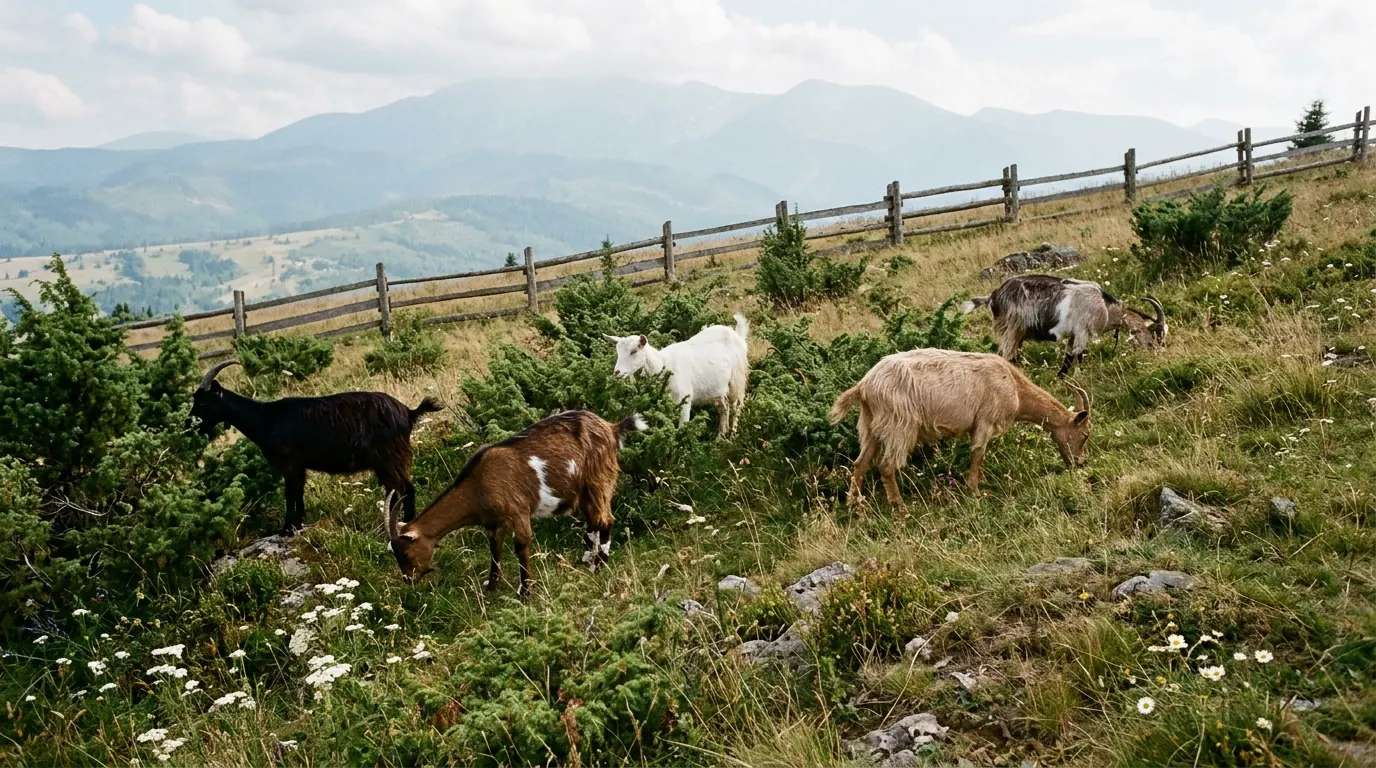
You can legally sell cheese and milk from your own herd if you pick a form of sale, notify the right authority and meet the hygiene requirements. Direct sales usually cover raw products from your own farm. RHD also covers processed products, including cheese you make yourself. The rules on products of animal origin change, so check the current wording of the legal acts before you start and ask your county veterinary officer (powiatowy lekarz weterynarii). It all starts with the herd described in goat farming: where to start.
What you sell: milk or cheese
Raw milk and cheese are two different products with different requirements. You sell milk fast and without ripening, but you must keep milking clean and cool the milk. Cheese gives more value per liter of milk, keeps longer and opens the way to local markets, but it needs a room, equipment and a notification of production. Start by working out how much milk you have in a season. We describe yield and composition in goat milk: yield, composition and properties.
Direct sales vs RHD
Direct sales
Direct sales means handing customers raw products from your own farm, with no processing in a plant. With goat milk, you are responsible for animal health, milking hygiene and chilling the milk fast. The rules, including any quantity limits and who can buy, are set by law. Check current limits in ISAP (Poland's online database of legal acts) and on the website of the Chief Veterinary Inspectorate (Główny Inspektorat Weterynarii). We cover milking and milk hygiene in milking goats by hand and by machine.
RHD: farm retail trade
RHD lets a farmer sell food from their own farm, including processed food, to final consumers and local outlets. Your own goat cheese fits this form if you meet the conditions for products of animal origin. In practice, inspectorates expect you to notify the activity to the county veterinary officer, describe your rooms and process, and label your products. Limits, the list of permitted products and the range of sales depend on current rules. Check them before your first batch of cheese. More on the scheme is in RHD farm retail trade.
Goat cheese and RHD: where to start with the authorities
Steps before your first sale
Before you buy a vat and molds, book a talk with the county veterinary officer. Ask what notification or approval your scale of production needs, and describe your plan: how many milking goats you have, where you milk, where you make cheese and how you store it. Write down the answers and keep the date of the talk. Also check that your herd is registered in the animal register of ARiMR (Poland's Agency for Restructuring and Modernisation of Agriculture). The Veterinary Inspection publishes a template for the goat registration book, for example the county office in Pruszków.
Room and testing
The cheese room must be easy to wash and disinfect, have drinking-quality water and separate the stages of work. You process only milk from healthy animals there. The herd should be under a vet's care, and the inspectorate can tell you the rules for testing and animal disease surveillance. When you treat an animal, respect the withdrawal period: you neither sell nor process milk from a goat after a drug until the withdrawal period on the leaflet ends, and the vet chooses the drug and dose. Record every treatment, for example in the treatment and withdrawal period module.
Hygiene and somatic cells
Clean milking and cooling
Most spoilage happens at milking. Wash udders and hands, use clean containers and chill the milk at once. After each milking, rinse and disinfect equipment as the vet advises. Milk from goats with mastitis is not fit for sale or for cheese. Infected milk goes into the vat with the whole batch, so one sick goat can ruin a cheese-making day. Practical tips are in our milking guide.
Somatic cells in goat milk
The somatic cell count helps assess udder health, but in goats it is read differently than in cows. Wiadomości Zootechniczne (the journal of IZ PIB, Poland's National Research Institute of Animal Production) collects studies on how the count depends on the stage of lactation, estrus and mastitis. For that reason, one result does not settle whether a goat is sick. Watch the udder, the look of the milk and the trend over several milkings, and discuss doubts with your vet.
Is goat cheese healthy: what you can promise customers
Goat milk composition
Penn State Extension compares average milk composition. Goat milk has 3.8% fat, 3.2% protein and 4.1% lactose, and cow milk has 3.6% fat, 3.5% protein and 4.7% lactose. Calcium is 0.19% in goat milk and 0.18% in cow milk. Energy is 70 kcal per 100 ml against 69 kcal in cow milk. The differences are small, so goat cheese is not a "light" alternative. The size of the fat globules and the protein structure do give a milder, different taste and texture.
Health claims without hype
Penn State Extension notes that science does not support most of the health properties attributed to goat milk. People allergic to cow milk often tolerate goat milk, and the smaller fat globules stay suspended longer, which gives an impression of "natural homogenization". You can describe it to customers this way. Do not write on the package or in an ad that the cheese cures or prevents disease, because such claims are regulated by food labeling rules.
Traditional goat cheeses and price
Traditional products as a model
A monograph from IZ PIB lists goat cheeses entered on Poland's List of Traditional Products. They include ser kozi łomnicki (Lower Silesia, entered 2010), kozi twaróg z Eufeminowa (Łódź region, 2009), bryndza kozia (from Carpathian goats' milk, 2005) and ser kozi z Machor (Świętokrzyskie, 2014). Ser łomnicki has the shape of a flattened cone about 10 cm high and weighs 50–70 dkg. Such a description shows that a local name, shape and taste build recognition. Check whether your cheese could stand out in a similar way.
What sets the price of cheese and milk
We give no amounts because they change from region to region and season to season. The price of cheese depends on ripening time, wheel size, additions (herbs, smoking), sales channel and the cost of your labor. Milk sold as is costs less than cheese but turns over faster. Work out the cost of a liter of milk including feed and labor, add the processing loss and compare prices with nearby sellers. Kid meat is another source of income, covered in goat meat: raising bucklings and selling.
Biosecurity and records when you sell from the farm
Visitors on the farm
Selling from the yard means strangers come close to where the goats live. Set a pickup point outside the animal zone, ideally by the gate. Log visitors in an entry book, and disinfect footwear and hands if they go further in. You can prepare a farm biosecurity plan in our generator and record entries in the QR entry and exit book. DlaFerm.pl has no separate goat module, but the general tools work on any farm.
Sales records
Write down when you milked, which batch of cheese you made from that milk, how much you sold and to whom. Simple records like these help during an inspection and with a complaint. For each batch note the production date and the use-by date, which you set from your own tests or the vet's advice. If you issue invoices, check the KSeF (Poland's national e-invoicing system) requirements in the KSeF invoicing module.
Frequently asked questions
Is goat cheese healthy?add
Goat cheese is similar in composition to cow cheese: goat milk has 3.8% fat, 3.2% protein and 4.1% lactose according to Penn State Extension. Science does not support most of the health properties attributed to it. People allergic to cow milk often tolerate it, but ask a doctor.
Can I sell goat milk from my farm?add
Yes, through direct sales or RHD, if you meet the legal requirements and notify the activity. Check limits and rules in the legal acts on ISAP and with the county veterinary officer. Legal state as of 23.11.2026.
Goat cheese and RHD: what do I have to notify?add
In practice, inspectorates require the county veterinary officer to receive a notification or approve the activity. Prepare a description of the room, the production process and the cheese labeling. Details depend on your scale of production and current rules.
Can I sell milk after treating a goat?add
Only after the withdrawal period on the drug leaflet has ended. The vet chooses the drug and dose. Record each treatment and the end date of the withdrawal period so no batch of milk is sold too early.
How do I name and describe goat cheese on the label?add
Give the product name, ingredients, use-by date and producer details as food labeling rules require. Do not add claims about curing diseases. Check the exact requirements with the veterinary inspectorate.
Sources & resources
- linkIZ PIB: Livestock keeping and breeding over 70 years. Cattle Breeding Department, Sheep and Goat Breeding Department
- linkPenn State Extension: Agricultural Alternatives: Dairy Goat Production
- linkIZ PIB (Wiadomości Zootechniczne): Somatic cells in goat milk
- linkPIW Pruszków (Veterinary Inspection): sheep/goat registration book (template)
- linkChief Veterinary Inspectorate: gov.pl/web/wetgiw
- linkInternet System of Legal Acts: isap.sejm.gov.pl
Prepared by: DlaFerm Team based on data from the sources listed · Publisher: INSTA-TECH sp. z o.o.
Selling from your farm? Look after biosecurity and records
In DlaFerm.pl you can log visitors in the QR entry book, track treatments and withdrawal periods to know when milk can be sold, and use the biosecurity plan generator to set rules for visitors. Create a free farm account or get in touch.
Phone
+48 796 258 151