Goat meat (chevon): fattening buck kids and selling
Chevon is meat from young goats, usually buck kids that are not kept for breeding. According to IZ PIB (Poland's Institute of Animal Production), the market for kid meat in Poland practically does not exist, so you need to plan the sale before the kids are born. We cover where to find a buyer, how to work out costs and what to check in your paperwork.
verifiedFrom the team that has organised work on poultry farms for years.
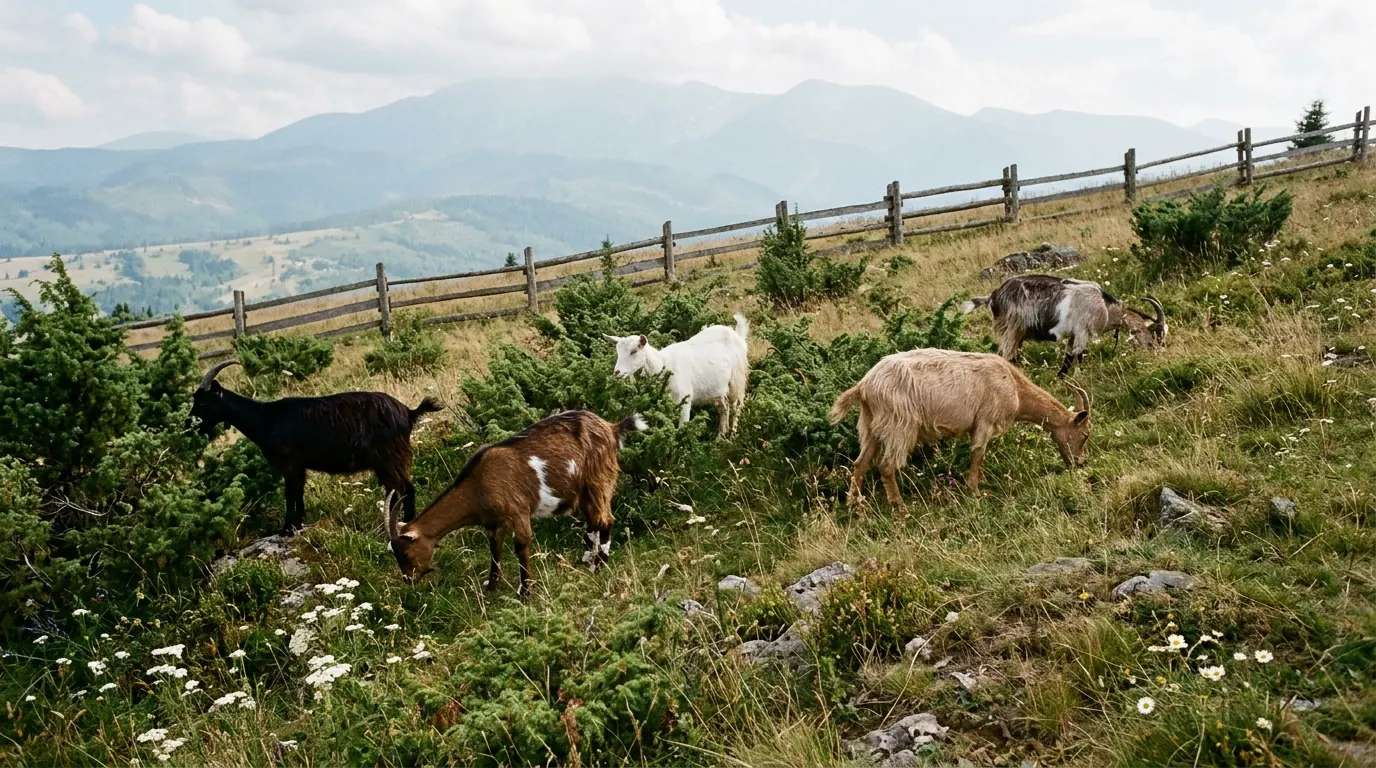
Chevon is meat from a young goat. Most of it comes from buck kids born in dairy herds, because dairy goats have as many male kids as female, and males give no milk. According to an IZ PIB analysis published in Wiadomości Zootechniczne (a Polish animal science journal), the market for kid meat in Poland practically does not exist, even though the meat is considered a functional food. If you want to sell goat meat, you have to find buyers yourself. It all starts with a herd plan, which we describe in our guide goat farming: where to start and whether it pays.
Where the supply of kid meat comes from
Buck kids are born at kidding, and kidding time follows the breeding season. The more dairy does you breed, the more buck kids you will have to deal with. We describe breeding dates in heat and breeding of goats, and the birth itself and the kid's first hours in goat kidding. Decide what you will do with the buck kids before you breed the does.
Goat meat in Poland: what demand looks like
What the IZ PIB data shows
The authors of the study "Current problems of dairy goat keeping in Poland" (Wiadomości Zootechniczne) write that interest in goat keeping is steady and the goat milk market grows slowly but consistently. The market for kid meat practically does not exist. They name the main problems of keepers as the lack of a goat meat market, low financial support for goat keeping and too little promotion of goat products. For you, this means there is no regular buying point with a price list, like the ones you know from pigs or cattle.
Goat meat prices
We give no price per kilogram, because on such a small market there is no single quotation. The price depends on the kid's age and weight, on whether you sell a live animal, a carcass or portioned meat, on the season (demand usually rises before holidays) and on the buyer: restaurant, shop or private customer. Check prices directly with several potential buyers and with other keepers in your region. Set your own price list and give it to customers openly.
Fattening buck kids: does it pay
Selling young
The simplest option is to sell buck kids soon after weaning, without long fattening. An example from abroad: a Penn State Extension calculation for a dairy herd assumes that males are sold for meat at 30 pounds, and the cost of concentrate for such kids is about 0.4 cwt per doe per year (US data, with different prices and conditions than in Poland). The same calculation assumes 8% losses of males. Treat these numbers as an illustration of how to calculate, not as a result for your farm.
Longer fattening
Longer fattening adds the cost of roughage, minerals, bedding and labor. Before you decide to keep buck kids for several months, work out: feed cost per head, the cost of milk or milk replacer for the young, losses and the price a specific buyer will pay you. We describe what goats eat through the year in what goats eat: feeding all year round. If you have no firm buyer, fattening without a contract is a risk.
Feeding milk
In the Penn State calculation, milk fed to kids is a separate cost item: 1.6 cwt per doe per year. Milk the kids drink is not sold. If you sell milk or cheese, include this loss in your calculation. For selling dairy products, see selling goat milk and cheese from the farm.
How to sell kid meat
Sales channels
On a small scale these work: direct sales to private customers, local restaurants, regional food shops, cultural communities where goat meat is traditional, and sales of live kids to other keepers. Collect orders ahead of time, ideally before the breeding season. Agree on weight, pickup date and form (live animal or carcass).
Slaughter and regulations
Meat for sale must come from slaughter carried out in line with veterinary rules. Check the detailed conditions for slaughter and selling meat from the farm with your county veterinary inspectorate (powiatowy inspektorat weterynarii) and in the goat farming section. Rules change, so ask about the current legal state before you start selling (legal state as of 23.11.2026). You can find legal texts in the Internet System of Legal Acts (ISAP), and guidance on the website of the Chief Veterinary Inspectorate (Główny Inspektorat Weterynarii).
Register, treatment and withdrawal period
Goat registration book
The Veterinary Inspection (Inspekcja Weterynaryjna) provides a template of the sheep and goat registration book (for example the one from the county office in Pruszków). Record movements and the animals in the herd in it, including buck kids sent to slaughter or sold on. Confirm the identification and registration requirements with the inspectorate and with ARiMR (Poland's Agency for Restructuring and Modernisation of Agriculture). You can record farm visitors in the QR entry and exit log module.
Treatment and withdrawal period
An animal treated with a drug that has a withdrawal period must not go to slaughter until that period has passed. The vet chooses the drug and dose. The withdrawal period is given on the product and in the vet's instructions. Record the date of treatment, the name of the drug and the date the withdrawal period ends, so you do not sell a buck kid too early. The treatment and withdrawal period module is made for these records.
Which goats give better meat
Most buck kids in Poland come from dairy breed herds, for example the White Improved or the Colored Improved (biała uszlachetniona, barwna uszlachetniona). IZ PIB also describes the native Carpathian goat (rasa karpacka), covered by a genetic resources protection program. Meat-type goats are not common here. Before you buy animals for a meat-oriented herd, check with IZ PIB and with keepers how the breed performs and whether breeding stock is available. We describe small breeds in miniature goats.
Frequently asked questions
Is there a market for goat meat in Poland?add
According to IZ PIB, the market for kid meat practically does not exist, even though the meat is considered a functional food. You have to find buyers yourself: direct sales, restaurants, regional shops.
What should I do with buck kids from a dairy herd?add
You can sell them to other keepers, raise them for meat or sell them soon after weaning. Decide before the breeding season, when you already know the buyer and the feed cost.
How much does goat meat cost?add
There is no single quotation. The price depends on the animal's age and weight, the form of sale, the season and the buyer. Check it with several buyers and keepers in your region.
Does fattening buck kids pay?add
It depends on feed cost, losses and the price you get. Count every item: concentrate, roughage, milk, bedding and labor. Without a contract with a buyer, fattening is risky.
Can I sell a buck kid after treatment?add
Only after the drug's withdrawal period has passed. The vet chooses the drug and dose, and you will find the withdrawal period on the leaflet and in the vet's instructions.
Where can I check the rules on slaughter and selling meat?add
With your county veterinary inspectorate, on the Chief Veterinary Inspectorate website and in the Internet System of Legal Acts.
Sources & resources
- linkIZ PIB (Wiadomości Zootechniczne): Current problems of dairy goat keeping in Poland
- linkPenn State Extension: Agricultural Alternatives, Dairy Goat Production
- linkPIW Pruszków (Veterinary Inspection): sheep and goat registration book (template)
- linkChief Veterinary Inspectorate (Główny Inspektorat Weterynarii): gov.pl/web/wetgiw
- linkInternet System of Legal Acts: isap.sejm.gov.pl
Prepared by: DlaFerm Team based on data from the sources listed · Publisher: INSTA-TECH sp. z o.o.
Track withdrawal periods before you sell buck kids
The treatment and withdrawal period module in DlaFerm lets you record each drug given and the date its withdrawal period ends, so no animal goes to slaughter too early. Create a free farm account or get in touch.
Phone
+48 796 258 151