Carpathian goat: a native Polish breed
The Carpathian goat is an old mountain breed from the Carpathians: small, with a long coat of hair, white or colored. In the second half of the 20th century it was declared extinct. Since 2005 the Institute of Animal Science (IZ PIB) has been rebuilding it in a genetic resources protection program. We cover how it looks, where it comes from and what you need to know before you keep it.
verifiedFrom the team that has organised work on poultry farms for years.
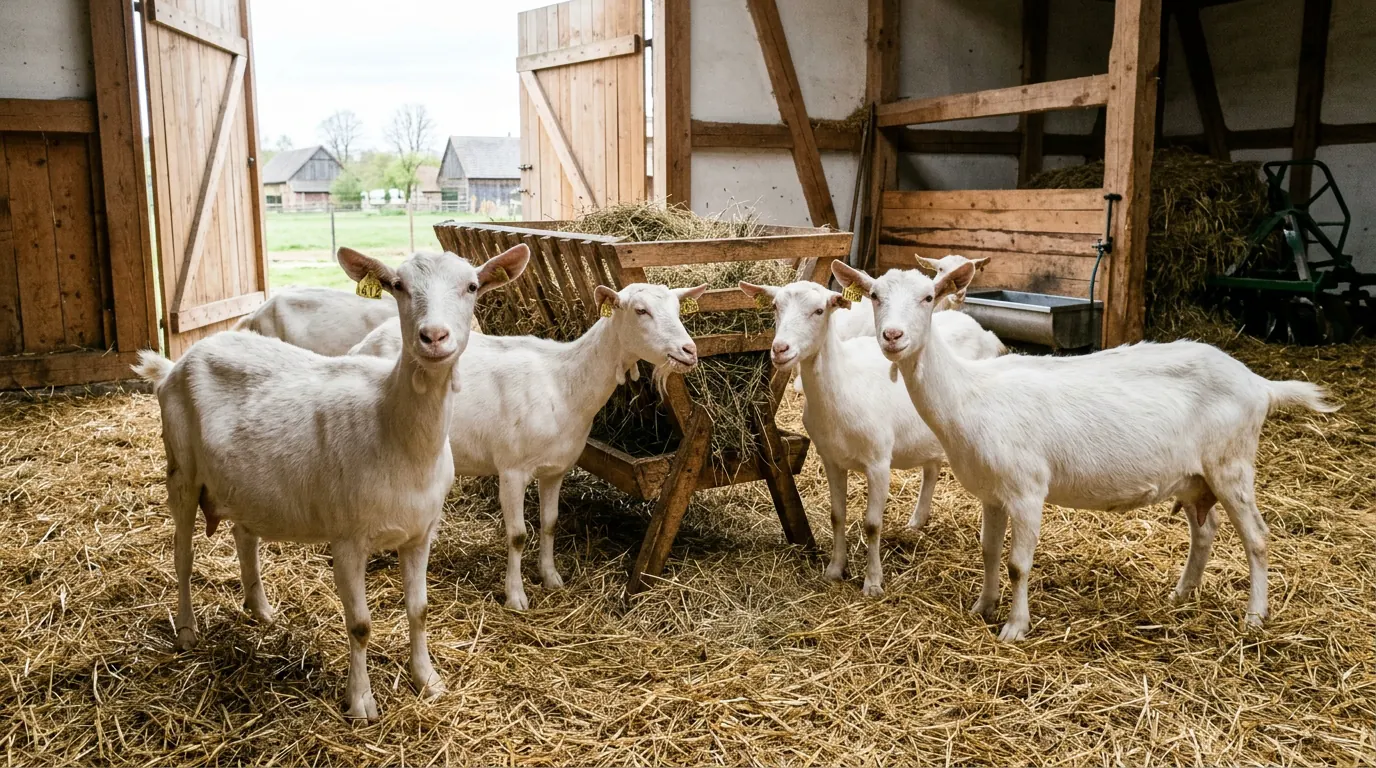
The Carpathian goat is a native Polish breed, kept for centuries in mountain areas. It was a small goat with a long or medium-long coat of hair, white or colored. According to the National Research Institute of Animal Production (Instytut Zootechniki PIB), the breed was declared extinct in the second half of the 20th century, because animals imported from abroad pushed it out. Today it lives on thanks to restitution and a genetic resources protection program. If you are only planning a herd, start with our general guide Goat farming: how to start, what it costs and whether it pays.
Why this breed matters
Carpathian goats are part of Polish biodiversity. They do not compete with dairy breeds on yield, because their value lies elsewhere: adaptation to mountain climate and pastures, and a unique gene pool. If you buy such a goat, you join a protection program with its own rules, not an ordinary market for production animals. Know this before you buy.
History of the Carpathian goat
A goat from the Polish mountains
A study by IZ PIB describes how many species of farm animals were kept in the Carpathians for centuries. Alongside large flocks of sheep and a few cows, people also grazed goats. A typical mountain goat was small, with a long or medium-long white or colored coat of hair. In the early 20th century Ludomir Sawicki (1919) described the white goat from the Polish mountains, called the Carpathian goat, as a typical variety of mountain goat.
Declared extinct
According to the same source, Carpathian goats were pushed out by imported animals. In the second half of the 20th century the breed was declared extinct (Tyszka, 1994). For a keeper the point is practical: today's herd is made up of rebuilt animals, not an unbroken breeding line. That is why the origin and records of each goat matter so much.
Restitution since 2005
For many years people returned to the idea of restoring the breed. The Institute of Animal Science decided to try. In early 2005 two herds of goats of the Carpathian type were found in Poland. The institute bought animals with their offspring and bucks, which started the herd that the later protection program was built on.
What a Carpathian goat looks like
Build and coat
Early descriptions quoted by IZ PIB (Ocetkiewicz, 1963) speak of a medium-sized goat with a well-arched chest and slight flanks. The coat of hair was long and dense, which protects well against cold in the mountains. Does were mostly horned, and bucks had wide, long horns twisted along their own axis. The color could be white or colored, so do not look for a single color pattern.
Performance
According to a historical source (Trybulski, 1939), these animals had good breeding traits and average yield was about 500 kg of milk a year. This is data from several decades ago, so do not expect it from a herd today. If milk matters to you, see how much milk a goat gives and what it contains in our article on goat milk. The Institute also studied meat performance and meat quality of the Carpathian goat against other breeds kept in Poland (Sikora, 2013).
The genetic resources protection program
What the program is
Carpathian goats are covered by a genetic resources protection program. The first version was published in 2009, the next in 2010, and the procedure for joining the program was described in a 2019 document. The documents are available on the biodiversity website of IZ PIB in Kraków. The program's authors, J. Sikora and A. Kawęcka, also describe the current state of breeding in Wiadomości Zootechniczne (a Polish animal science journal).
What it means for a keeper
A keeper in the program runs the herd by breed protection rules, not by their own crossing ideas. Check the rules for selecting animals, documenting origin and the conditions of joining in the current IZ PIB procedure. For possible financial support for native breeds, ask ARiMR (Poland's Agency for Restructuring and Modernisation of Agriculture), because conditions and rates change from year to year.
Keeping Carpathian goats on your farm
Feeding and pasture
The breed comes from the mountains, so it suits pasture-based keeping. Citing the INRA system (2007), IZ PIB gives example goat requirements: a dry goat weighing 50 kg eats 1.25 kg of dry matter, and a dairy goat of the same weight giving 2 kg of milk a day eats 1.90 kg. Pasture value falls through the season: in the INRA table the energy concentration per kilogram of dry matter is 0.97 JPM on 10 May and 0.70 JPM on 26 June. We cover the feeding plan in detail in What goats eat: feeding goats all year.
Breeding and kidding
Pregnancy in a Carpathian goat lasts as long as in other goats. Prepare for birth the same way as in other herds. We describe kidding and care of the kid in the first hours in Goat kidding: the birth and the kid's first hours. If there are complications, call a vet and do not wait until morning.
Registering your herd
Goats kept on a farm must be registered and records must be kept. The Veterinary Inspection (Inspekcja Weterynaryjna) publishes a template register for sheep and goats. Check current requirements with your county veterinary office and with ARiMR. You will find the template in the sources at the end of the article.
The Carpathian goat compared with other breeds
If milk is your goal
For intensive milk production keepers usually choose specialized breeds. If high yield is your goal, consider the Alpine goat or the Polish White or Colored Improved goat. A handbook from the US university Penn State Extension compares dairy breed yields using 2019 data and shows large differences between breeds.
If a native breed is your goal
Choose the Carpathian goat if you want to take part in protecting a native breed, have pasture and can work by the program's rules. Compare costs before you buy; for a sense of animal prices see How much a dairy goat costs and what to check when buying. You agree prices of animals in the program directly with the breeder.
Frequently asked questions
What is a Carpathian goat?add
It is a native Polish breed of mountain goat, small, with a long or medium-long coat of hair, white or colored. It was declared extinct in the second half of the 20th century, and since 2005 IZ PIB has been rebuilding it.
How much milk does a Carpathian goat give?add
According to a historical source (Trybulski, 1939), average yield was about 500 kg of milk a year. That is data from many years ago, and today's yield depends on the line, feeding and housing.
Is the Carpathian goat an extinct breed?add
It was declared extinct in the second half of the 20th century (Tyszka, 1994). Restitution has run since 2005: early that year two herds of goats of the Carpathian type were found in Poland, and the breed was rebuilt from them.
What does a Carpathian goat look like?add
It has a small build, a well-arched chest and a dense, long or medium-long coat of hair. Does are mostly horned, and bucks have long, wide horns twisted along their own axis.
How do I join the Carpathian goat protection program?add
The conditions are in the procedure for joining the genetic resources protection program for Carpathian goats, available on the biodiversity website of IZ PIB in Kraków. Confirm current requirements directly with the Institute.
Is the Carpathian goat suitable for keeping for milk to sell?add
The breed is not geared to high yield like specialized dairy breeds. If you plan to sell milk, compare it with dairy breeds and work out the profitability using our goat farming guide.
Sources & resources
- linkIZ PIB (Wiadomości Zootechniczne): Protection program for Carpathian goat genetic resources
- linkIZ PIB (Wiadomości Zootechniczne): Current state of breeding and implementation of the Carpathian goat genetic resources program
- linkIZ PIB (Wiadomości Zootechniczne): Basics of goat feeding
- linkPenn State Extension: Agricultural Alternatives: Dairy Goat Production
- linkPIW Pruszków (Veterinary Inspection): Sheep and goat register (template)
Prepared by: DlaFerm Team based on data from the sources listed · Publisher: INSTA-TECH sp. z o.o.
Keep your farm entry log in DlaFerm
The entry and exit log with a QR code helps you record who enters your farm and when, which also helps protect a valuable herd. Create a free farm account on DlaFerm.pl or get in touch and we will show you how it works. Details: <a href="/ksiega-wejsc-na-ferme">Entry and exit log with QR</a>.
Phone
+48 796 258 151